Choosing the right equipment depends on your space and goals. If you want functional, dynamic workouts, kettlebells are portable and great for full-body movements. Dumbbells are versatile and ideal for targeted exercises in smaller spaces. Barbells are best if you’re aiming for maximum strength and have enough room for heavy lifting. Combining these options offers a balanced routine. Keep exploring to find the perfect setup tailored to your fitness aims and space limitations.

Get comfort and recovery gear delivered free with Prime
- Fast, free delivery on millions of items
- Prime Video, Amazon Music and more included
- Member-only deals all year
Key Takeaways
- Kettlebells are ideal for functional, full-body movements and small spaces, enhancing cardio and dynamic strength.
- Dumbbells suit targeted muscle isolation, are space-efficient, and adaptable for various strength and rehabilitation routines.
- Barbells maximize raw strength and power, requiring more space and proper technique, suitable for dedicated gym setups.
- Combining all three offers a comprehensive workout, tailored to space availability and specific fitness goals.
- Assess your goals—functional fitness, targeted muscle work, or maximal strength—to select the most appropriate equipment.
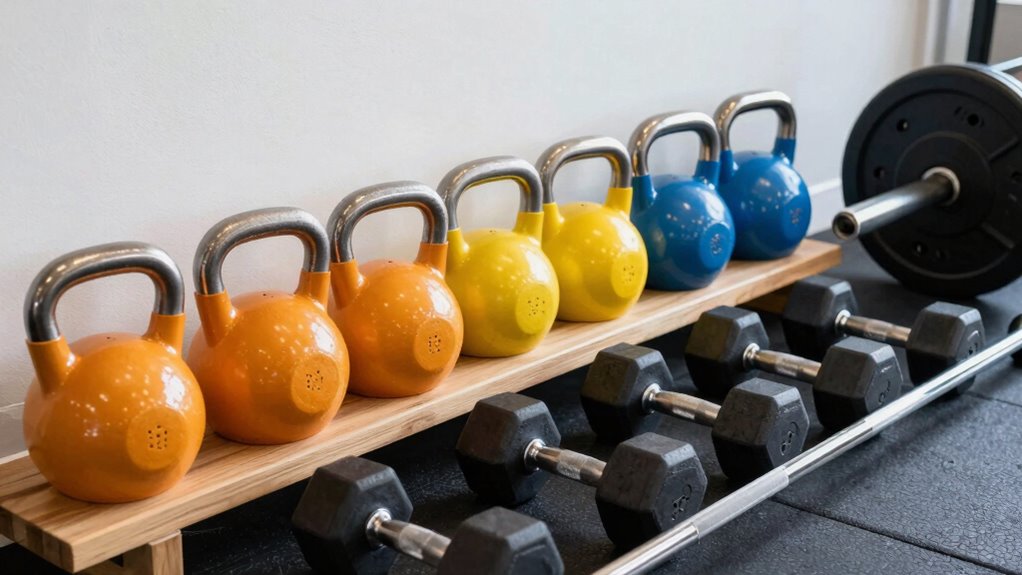
When it comes to strength training, kettlebells, dumbbells, and barbells each offer unique benefits that can help you achieve your fitness goals. Your choice depends on factors like your available space, specific training needs, and the results you want. If building functional strength is your priority, kettlebells are an excellent option. They’re designed for dynamic movements that mimic real-life activities, helping you develop muscles that work together efficiently. Kettlebell exercises, such as swings, cleans, and snatches, engage multiple muscle groups simultaneously, boosting your overall strength and stability. This makes them particularly effective for improving your ability to perform everyday tasks, whether lifting groceries or moving furniture. Additionally, kettlebells are highly portable, making them suitable for compact workout setups. Moreover, their versatility allows for a variety of training styles, from strength to cardio to mobility work.
Kettlebells boost functional strength with dynamic, full-body movements mimicking real-life activities.
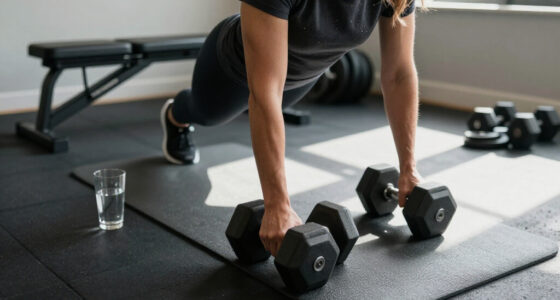
Dumbbells, on the other hand, offer versatility and are ideal for isolating specific muscles, making them perfect for targeted strength development. They’re compact and generally easier to store, fitting well into smaller spaces. With dumbbells, you can perform a wide range of exercises—bicep curls, shoulder presses, lunges—that help you strengthen individual muscle groups. This focused approach is beneficial if you’re working on symmetry or rehabilitating an injury. Dumbbells also lend themselves well to cardiovascular training when combined into circuit routines, keeping your heart rate elevated while building muscle. Moreover, their adjustable options can accommodate progressive overload, which is essential for continual strength gains. Incorporating proper technique when using dumbbells maximizes effectiveness and reduces the risk of injury.
Barbells are the go-to for lifting heavier weights and maximizing raw strength. They’re particularly useful if your goal is to increase muscle mass or improve power. Barbell exercises like squats, deadlifts, and bench presses allow you to load more weight comfortably, making them effective for progressive overload. Due to their size and weight, barbells require more space and proper technique, so they’re best suited for dedicated gyms or well-equipped home setups. If your focus is on building strength for athletic performance or competitive lifting, barbells are essential. They also support cardiovascular training when used in high-rep, circuit-style routines, helping you burn calories and boost endurance. Incorporating barbells can also enhance your lifting technique, leading to safer and more effective workouts. Overall, understanding the different types of equipment can help you optimize your training outcomes.
Ultimately, the decision hinges on your space constraints and fitness goals. If you want functional strength and efficient cardio, kettlebells are a fantastic choice. For targeted muscle work and convenience, dumbbells fit well. If your aim is maximal strength or power, barbells should be your primary tool. Many fitness enthusiasts find that combining all three provides a balanced approach, allowing you to tailor your workouts for strength, endurance, and functional fitness. Choosing the right equipment depends on what challenges you want to tackle and how much space you have to work with, so consider your goals carefully before investing.
adjustable dumbbells for small spaces
As an affiliate, we earn on qualifying purchases.
As an affiliate, we earn on qualifying purchases.
Frequently Asked Questions
Which Equipment Is Best for Rehabilitation Exercises?
For rehabilitation exercises, dumbbells are often the best choice because they allow for controlled, gradual movements that align with rehab protocols. They help you focus on injury prevention by enabling you to target specific muscles without overexertion. Dumbbells also offer versatility, making it easier to modify exercises as you progress. Overall, they support your recovery process while minimizing the risk of further injury.
How Do I Maintain and Clean My Weights?
To maintain and clean your weights, you should regularly wipe them down with a damp cloth and mild soap, focusing on handles and surfaces. Store your weights properly using storage options like racks or cabinets to prevent damage and clutter. Clean techniques include avoiding harsh chemicals that can damage finishes, ensuring your equipment stays hygienic and in good shape. Consistent cleaning and proper storage keep your weights safe, clean, and ready for use.
Can I Use These Tools for Cardio Workouts?
Yes, you can use kettlebells, dumbbells, and barbells for cardio workouts, especially for weighted cardio exercises. These tools serve as aerobic equipment that boosts your heart rate while building strength. Incorporate movements like kettlebell swings or dumbbell snatches to turn strength training into effective cardio. They’re versatile and allow you to customize your workout intensity, making them excellent options for combining strength and aerobic training in one session.
Are There Safety Considerations for Beginners?
A stitch in time saves nine, so safety matters early on. As a beginner, you should prioritize proper technique and always use safety gear like gloves or wrist wraps. Start light to master the movement, gradually increase weight. Pay attention to your body, avoid overexertion, and listen for any discomfort. This approach helps prevent injuries and builds confidence, making your workout both safe and effective.
What Are the Cost Differences Between the Options?
You’ll find kettlebells generally cost less upfront, making them a great budget comparison for beginners. Dumbbells vary widely in price depending on whether you choose fixed or adjustable sets, offering flexible options for your investment value. Barbells often cost more initially but provide durability and versatility for long-term use. Consider your goals and space, then choose the equipment that offers the best balance of cost efficiency and workout potential.
kettlebell set for full-body workouts
As an affiliate, we earn on qualifying purchases.
As an affiliate, we earn on qualifying purchases.
Conclusion
Choosing the right equipment depends on your space and goals, but don’t let limited room hold you back. Even if you think you need a big gym setup, a kettlebell or a dumbbell can fit in a closet or corner and still deliver powerful results. Picture yourself effortlessly lifting, swinging, or pressing in your living room—no fancy gym required. Small space, big gains—your fitness journey starts now.
As an affiliate, we earn on qualifying purchases.
compact kettlebell and dumbbell combo
As an affiliate, we earn on qualifying purchases.
As an affiliate, we earn on qualifying purchases.
Halloween Picks
halloween
As an affiliate, we earn on qualifying purchases.