
Before choosing a home care bed, make sure it offers ergonomic support for comfort and easy transfers. Check for safety features like sturdy side rails, lockable wheels, and reliable brakes to prevent falls. Look for adjustable height mechanisms that operate smoothly and securely, along with easy-to-clean surfaces. Consider additional safety alarms for higher fall risks and modular components for simple repairs. If you keep these factors in mind, you’ll find a bed that meets safety, comfort, and durability needs effectively.

Get comfort and recovery gear delivered free with Prime
- Fast, free delivery on millions of items
- Prime Video, Amazon Music and more included
- Member-only deals all year
Key Takeaways
- Ensure the bed has adjustable height and positioning features for ease of transfer and user comfort.
- Verify safety features like sturdy side rails, locking wheels, and reliable braking systems.
- Check for built-in safety sensors, alarms, and advanced safety options for high fall-risk users.
- Confirm the bed is made from durable, easy-to-clean materials for hygiene and longevity.
- Look for modular components and clear assembly instructions for easy maintenance and future upgrades.
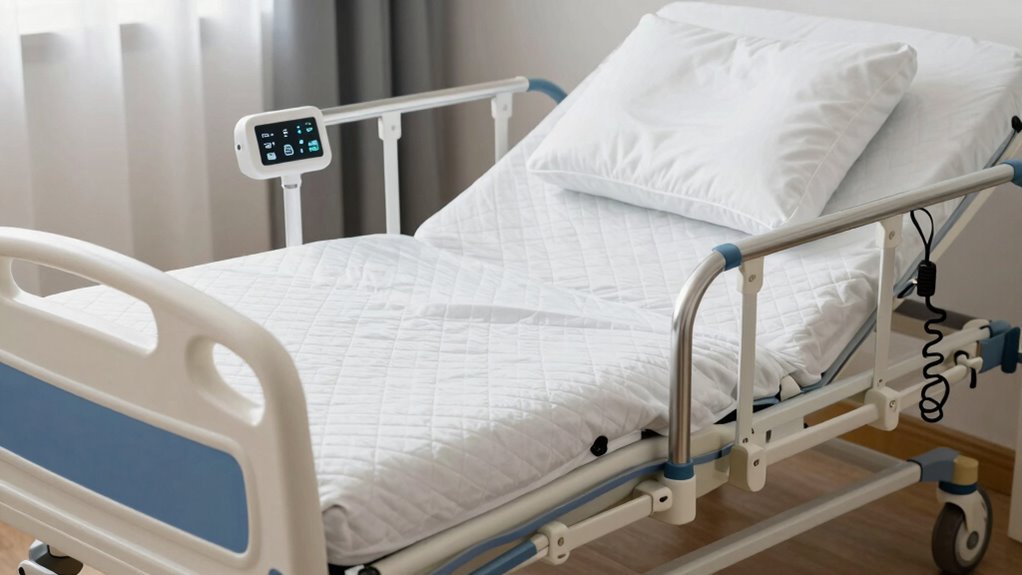
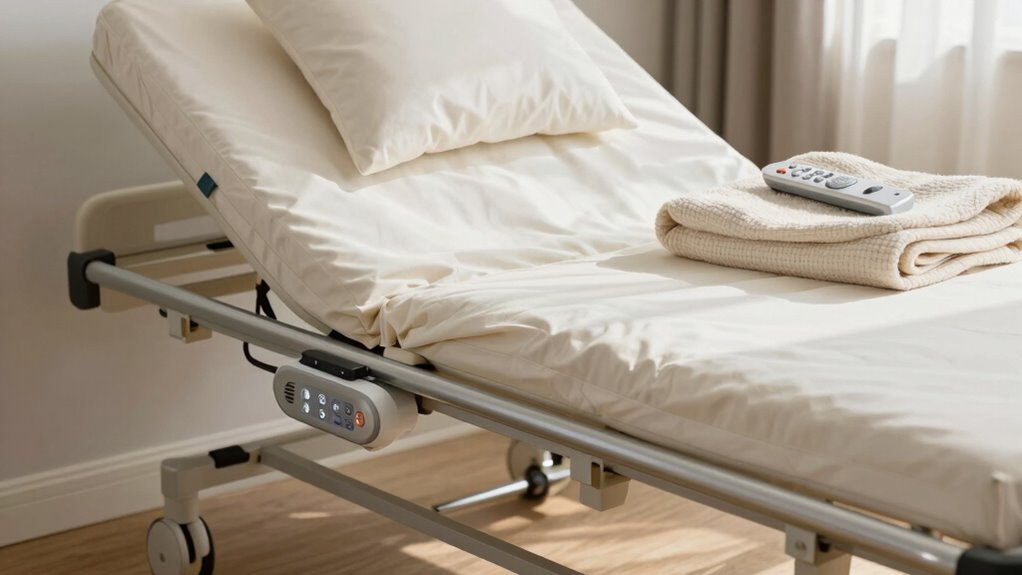
When caring for a loved one at home, ensuring their bed is safe and comfortable is essential. Choosing the right home care bed involves more than just picking a model that fits the space. You need to consider features that promote safety, ease of use, and comfort. First, look closely at the ergonomic design of the bed. An ergonomic design means the bed is built to support proper body alignment, reducing pressure points and making it easier for your loved one to get in and out of bed. A well-designed home care bed should have adjustable height options, allowing you to raise or lower it for easier transfers and to minimize strain on both of you. The bed’s surface should also be supportive but forgiving—padded enough for comfort yet firm enough to prevent sinking or discomfort. Check if the bed’s controls are simple and accessible, ideally with intuitive hand or foot controls, so your loved one can operate them independently if possible.
Safety features are just as critical as ergonomic design. You want a bed equipped with sturdy side rails or barriers that can prevent falls without causing discomfort or restricting movement. These rails should be easy to operate, with a quick-release mechanism for emergencies. Look for beds with lockable wheels to prevent unintended movement, especially if your loved one tends to shift or if the bed is on a slippery surface. It’s also important to confirm that the bed has a reliable braking system, so it stays securely in place when needed. Additionally, check for smooth, rounded edges and a sturdy frame that can withstand daily use without wobbling or creaking. Some beds come with built-in safety sensors or alarms that alert you if your loved one attempts to leave the bed unassisted, which can be a valuable safety feature if they’re at risk of falling. Moreover, paying attention to the ergonomic design and safety features can significantly enhance the overall safety and functionality of the bed. To ensure long-term durability and hygiene, select a bed made from easy-to-clean materials, which can facilitate regular maintenance and sanitation. Incorporating beds with adjustable components can also help accommodate changing needs over time and make adjustments easier. Choosing a bed with modular components can make repairs and adjustments easier over time.
Furthermore, researching beds with advanced safety features can provide additional peace of mind, especially for users with higher fall risk. Finally, consider the overall construction of the bed. It should be made from durable, easy-to-clean materials to maintain hygiene and longevity. The height adjustment mechanisms should operate smoothly and lock securely in place. When testing different models, pay attention to how easily you can assemble the bed and whether it comes with clear instructions. Remember, a home care bed isn’t just furniture—it’s a vital part of your loved one’s safety and well-being, so taking the time to check these features thoroughly ensures you’re making the best choice.
home care bed with adjustable height
As an affiliate, we earn on qualifying purchases.
As an affiliate, we earn on qualifying purchases.
Frequently Asked Questions
How Much Does a Home Care Bed Typically Cost?
A home care bed typically costs between $1,000 and $3,000, depending on features and brand. When budgeting, consider bed frame options like manual or electric models, which influence price. Also, check mattress compatibility, since some beds require specific mattresses for safety and comfort. Higher-end models with advanced features will naturally be more expensive, so weigh your needs against your budget to find the best fit.
Are There Insurance Options to Cover the Bed?
Think of insurance coverage as your safety net—many plans do help cover home care beds. You might find that your insurance, including Medicaid or Medicare, provides partial or full coverage, especially with proper documentation. Payment plans are also available through providers, easing the financial burden. I know someone who initially hesitated but found a flexible payment plan that made getting her loved one comfortable possible.
How Easy Is It to Clean and Maintain the Bed?
Cleaning ease and maintenance tips are essential when choosing a home care bed. You’ll find that beds with smooth, waterproof surfaces are easiest to clean, often requiring just a quick wipe-down. Regular maintenance involves checking for loose parts, lubricating moving components, and keeping the mattress and frame sanitized. Simplified cleaning routines help prolong the bed’s lifespan and guarantee a hygienic environment, making daily care more manageable for you.
Can the Bed Be Customized for Specific Medical Needs?
Yes, many home care beds can be customized for specific medical needs. You can adjust the height for easier transfer and guarantee mattress compatibility for comfort and safety. This customization helps cater to individual requirements, making caregiving more effective. Don’t worry about limited options—most beds offer adjustable features and accessories, so you can tailor the bed to support unique health conditions and improve overall well-being.
What Safety Features Should I Look for in a Home Care Bed?
You should look for safety features like side rails that are easy to operate and meet safety standards to prevent falls. Guarantee the bed has a sturdy frame and adjustable height for fall prevention. Check for lockable wheels to keep the bed stable and alarms that alert caregivers if the patient attempts to exit. Prioritizing these safety features helps protect your loved one and provides peace of mind.
safety side rails for medical bed
As an affiliate, we earn on qualifying purchases.
As an affiliate, we earn on qualifying purchases.
Conclusion
Choosing a home care bed is like finding the heartbeat of comfort for your loved one. By checking features, safety, and compatibility, you’re crafting a sanctuary where care and dignity flourish. Remember, this decision isn’t just about a piece of furniture—it’s about weaving a safety net that catches and supports with unwavering strength. Trust your instincts, and let your careful choices blossom into a haven where comfort and security grow hand in hand.
As an affiliate, we earn on qualifying purchases.
bed safety alarm system for elderly
As an affiliate, we earn on qualifying purchases.
As an affiliate, we earn on qualifying purchases.
Halloween Picks
halloween
As an affiliate, we earn on qualifying purchases.