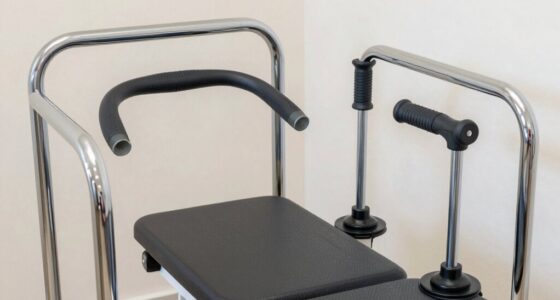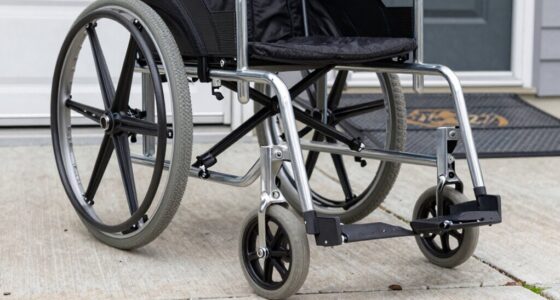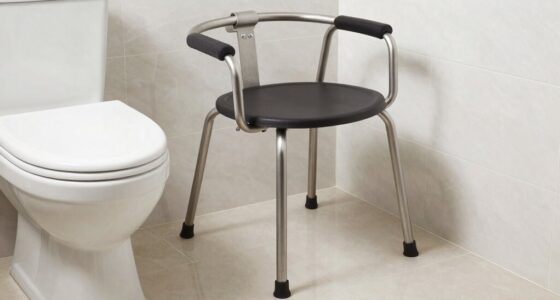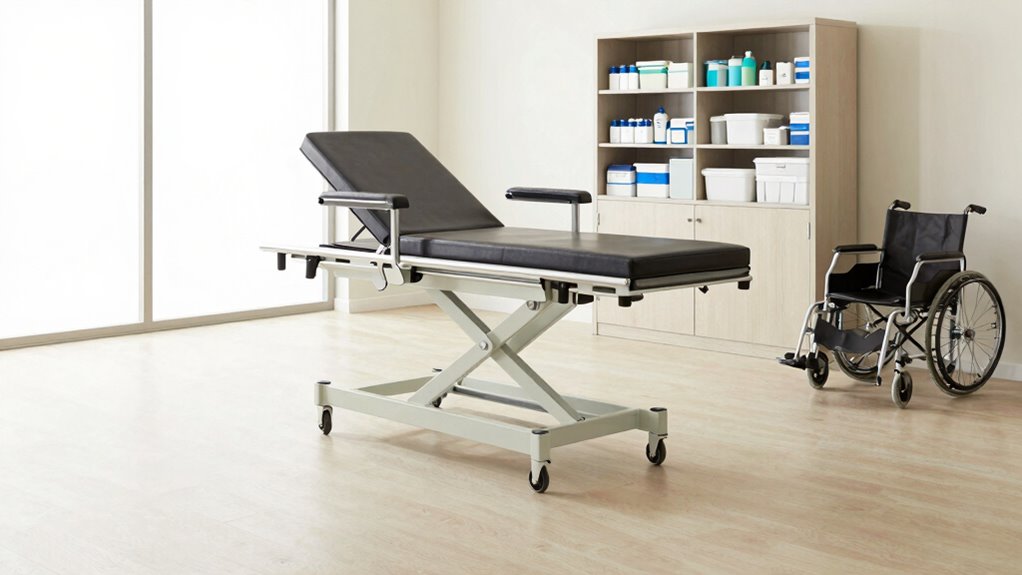

When planning space around larger home care equipment, identify high-traffic areas and position items like beds, wheelchairs, or lifts for easy access. Make sure pathways are clear of clutter and wide enough for safe maneuvering. Use vertical storage solutions to save space and keep essentials organized. Avoid placing equipment near rugs or uneven flooring, and manage cords to prevent tripping. For more tips on creating a safe and accessible environment, keep exploring these helpful strategies.

Get comfort and recovery gear delivered free with Prime
- Fast, free delivery on millions of items
- Prime Video, Amazon Music and more included
- Member-only deals all year
Key Takeaways
- Assess daily routines to determine optimal equipment placement for easy access and efficiency.
- Allocate sufficient clearance space around equipment for safe movement and maneuvering.
- Organize cords, wires, and accessories to prevent tripping hazards and clutter.
- Use vertical storage solutions to maximize space and keep pathways clear.
- Regularly review and adjust layout as needs or equipment change over time.
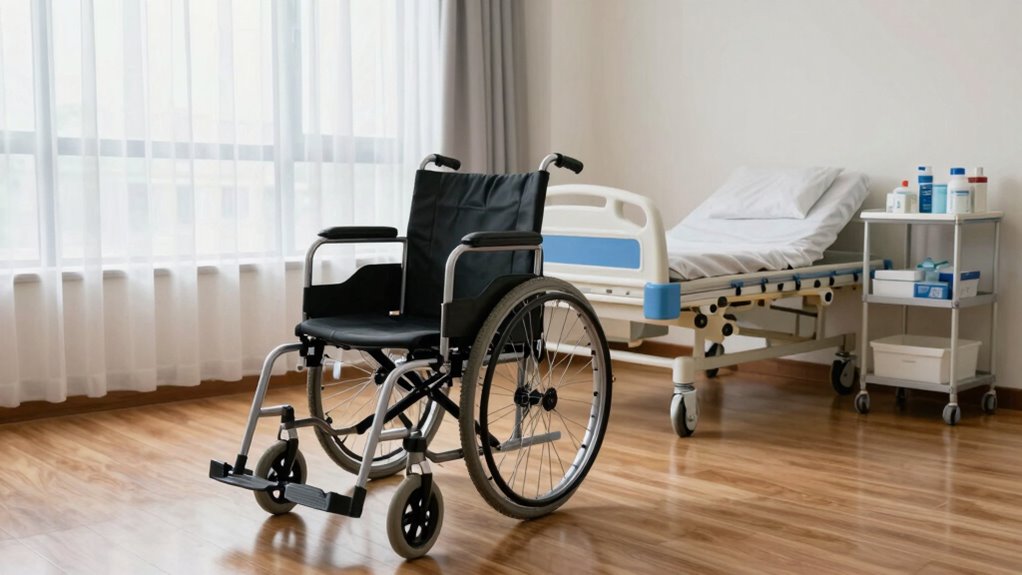
When you’re caring for a loved one at home, making sure larger home care equipment fits comfortably is essential for safety and convenience. Proper planning of space ensures that the equipment functions effectively without creating hazards or clutter. One of the first steps is to evaluate your current layout, identifying areas where the equipment will be used most often. You want to place items like wheelchairs, hospital beds, or lifts in spots that allow easy access and movement. This prevents accidents and reduces the risk of injury for both your loved one and caregivers.
Proper space planning enhances safety and ease of access for home care equipment use.
Storage solutions play a significant role in maintaining an organized and accessible environment. Consider installing shelves, hooks, or cabinets to store smaller accessories, such as gait belts or transfer straps, freeing up space around larger devices. Using vertical storage or wall-mounted units can maximize limited space, keeping pathways clear and reducing clutter. When planning, think about mobility paths and ensure there’s enough clearance around each piece of equipment. You should aim for at least 3 feet of space around bulky items to allow safe maneuvering, especially if your loved one uses mobility aids daily. This not only promotes safety but also makes it easier for caregivers to provide assistance without obstruction.
Safety considerations go beyond just space; they include guaranteeing the environment is hazard-free. For example, avoid placing equipment near rugs or uneven flooring that could cause slips or trips. Make sure cords and wires are neatly managed and out of walkways to prevent accidents. When selecting placement, think about lighting as well—adequate illumination around equipment helps prevent mishaps and makes tasks easier. Additionally, verify that any equipment you purchase adheres to safety standards and comes with proper instructions for use. Securing heavier items to walls or flooring can prevent tipping, especially in homes with children or pets. Regularly reviewing your setup and staying informed about safety standards can help you maintain a secure environment as needs evolve. Incorporating safety protocols into your routine can further reduce risks and promote peace of mind. Also, consulting resources on home modification can provide valuable insights for optimizing space and safety measures. Taking the time to understand and implement proper maintenance practices ensures that equipment remains safe and functional over time.
Careful planning also involves evaluating the daily routines of your loved one. Position equipment where it’s most accessible for activities like bathing, dressing, or transferring from a wheelchair. This minimizes unnecessary movement and strain, making caregiving smoother. Remember, comfort and safety go hand in hand—if a setup feels cramped or awkward, it’s worth re-evaluating and adjusting. Regularly review your space as needs change, and don’t hesitate to consult home modification professionals if you need expert advice. With thoughtful storage solutions and safety considerations, you can create a home environment that’s both functional and secure, giving your loved one the independence and safety they deserve.
hospital bed with adjustable height
As an affiliate, we earn on qualifying purchases.
As an affiliate, we earn on qualifying purchases.
Frequently Asked Questions
What Safety Features Should I Consider for Large Home Care Equipment?
You should consider safety features like remote monitoring to keep an eye on the equipment and guarantee proper operation. Emergency alerts are vital for quick responses if issues arise. Make certain the equipment has built-in safety mechanisms, such as automatic shut-offs or alarms, and that the area around it is clear of obstacles. Regular maintenance and clear instructions also help prevent accidents and keep your loved ones safe.
How Can I Personalize Space for Different Types of Equipment?
Imagine your home as a tailor-made suit, fitting each piece perfectly. To personalize space for different equipment, focus on customizing the layout to suit each device’s unique needs. Use ergonomic placement to guarantee accessibility and comfort, like arranging furniture in a way that invites easy movement. This way, each piece becomes part of a harmonious design, transforming your space into a functional, personalized sanctuary tailored just for you.
Are There Specific Flooring Requirements for Large Medical Devices?
For large medical devices, you should prioritize flooring durability to withstand weight and movement, ensuring long-term safety. Opt for non-slip surfaces to prevent accidents, especially in high-traffic areas or where liquids might spill. Consider materials like vinyl or rubber, which combine durability and slip resistance. Proper flooring not only supports the equipment’s weight but also enhances safety for everyone in your home.
How Do I Ensure Easy Access for Caregivers and Family Members?
To guarantee easy access for caregivers and family members, you should prioritize clear pathways, ideally at least 3 feet wide, to move around large equipment comfortably. Consider your decorating preferences by choosing furniture and decor that don’t obstruct access. Also, think about privacy considerations—position equipment and furniture to allow discreet use of spaces, ensuring both accessibility and confidentiality for the person receiving care.
What Are the Best Storage Solutions for Excess Equipment?
You can keep your space tidy with clever decor organization and ceiling storage solutions. Opt for stylish bins or baskets that blend with your decor to store excess equipment neatly. Ceiling storage is perfect for maximizing vertical space, keeping larger items out of sight yet accessible when needed. This approach not only maintains a clean environment but also adds a touch of design flair, making your home both functional and inviting.
As an affiliate, we earn on qualifying purchases.
Conclusion
Remember, planning space around larger home care equipment isn’t just about convenience — it’s about ensuring safety and dignity. While the equipment may be bulky, your thoughtful setup creates a haven of independence and comfort. It’s a delicate balance, like holding a fragile glass and a sturdy frame together. When you prioritize proper planning, you’re not just arranging furniture; you’re fostering trust, empowerment, and peace of mind for both yourself and your loved ones.
vertical storage shelves for mobility aids
As an affiliate, we earn on qualifying purchases.
As an affiliate, we earn on qualifying purchases.
As an affiliate, we earn on qualifying purchases.
Halloween Picks
halloween
As an affiliate, we earn on qualifying purchases.