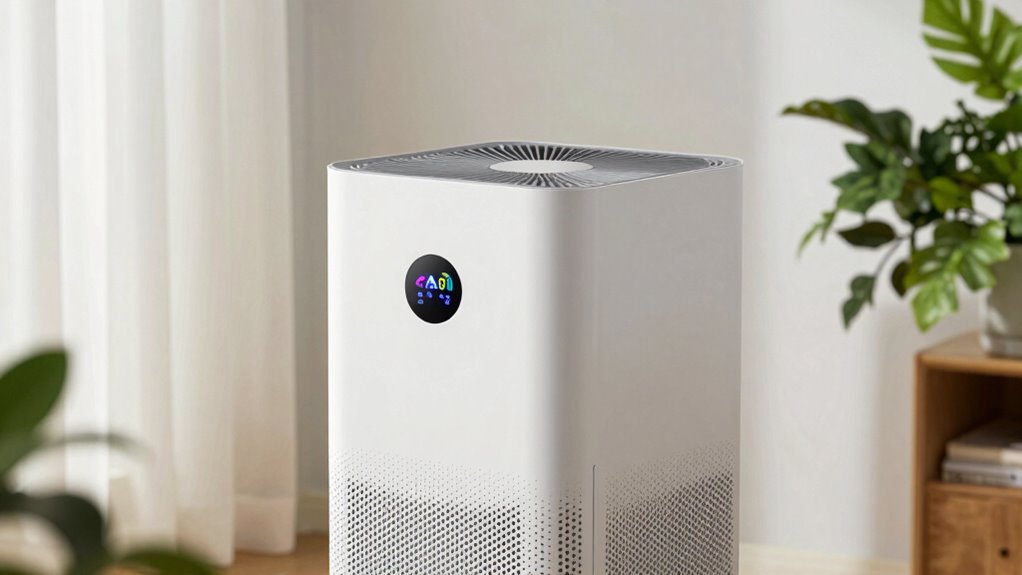

When choosing an air purifier, understanding CADR (Clean Air Delivery Rate) and room size is key. CADR shows how quickly it cleans specific particles like dust or smoke, so match it to your room’s size for maximum performance. Larger rooms need higher CADR units, while smaller spaces can use lower ones. Knowing filter types and maintenance helps keep your air clean and efficient. Stick around to discover how to get the best results from your air purifier.

Get comfort and recovery gear delivered free with Prime
- Fast, free delivery on millions of items
- Prime Video, Amazon Music and more included
- Member-only deals all year
Key Takeaways
- CADR measures how quickly an air purifier cleans specific pollutants; higher CADR means faster air purification.
- Match the purifier’s recommended room size with your actual room to ensure effective air cleaning.
- Proper filter maintenance, including regular replacements, is essential for sustained purifier performance.
- Understanding filter types and efficiencies helps select the best device for your air quality needs.
- An overpowered or underpowered purifier for your room size reduces efficiency and increases energy consumption.
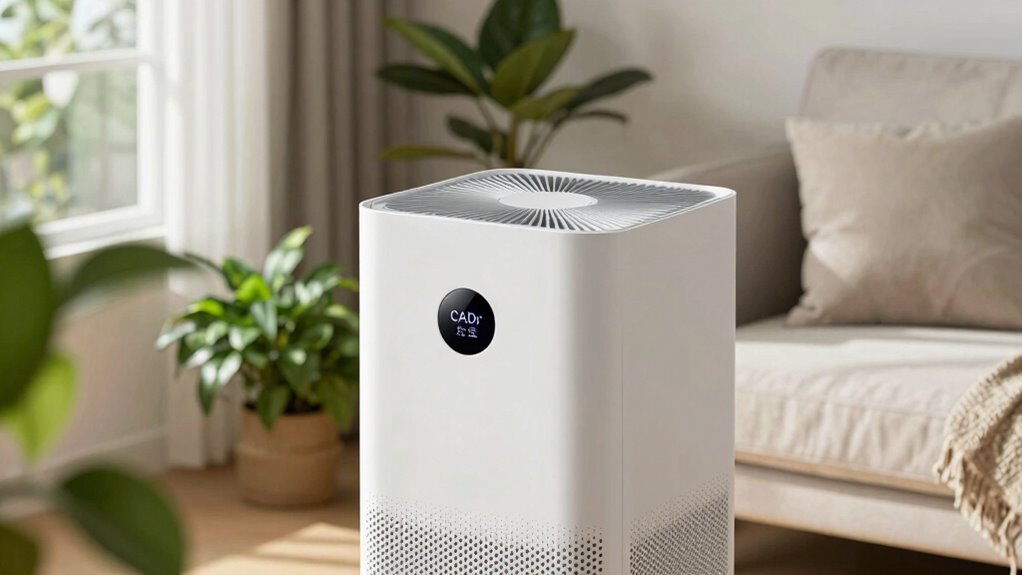
Have you ever wondered how to improve the air quality in your home? One of the most effective ways is by using an air purifier, but understanding the key terms can seem overwhelming. Let’s break down some of the most important factors, starting with CADR, or Clean Air Delivery Rate. CADR measures how quickly an air purifier cleans the air of specific particles like dust, pollen, and smoke. The higher the CADR, the faster it circulates clean air. When choosing a purifier, match its CADR to the size of your room to guarantee it’s effective. If your room is 300 square feet, look for a model with a CADR that’s proportionate, so you’re not wasting energy on an overly powerful device or settling for one that’s too weak.
Room size is a critical element because it directly impacts how well your air purifier performs. Many units specify the maximum room size they’re suitable for, so pay attention to this. If you place a small purifier in a large living room, you won’t see the results you want. Conversely, using a high-capacity purifier in a tiny bedroom can be more energy-consuming than necessary. Always measure your space and select a model that can handle that size comfortably. Remember, an air purifier working at its ideal capacity will filter the air more efficiently, making your environment healthier. Additionally, understanding air purifier specifications can help you make a more informed choice. It’s also helpful to familiarize yourself with filter types and their respective efficiencies to optimize your air quality. Being aware of CADR ratings can ensure you’re selecting a device that meets your specific needs. Incorporating knowledge about filter maintenance**** can assist in prolonging your device’s effectiveness over time.
Furthermore, selecting an air purifier with an appropriate filter efficiency can significantly impact its ability to remove pollutants effectively. Proper maintenance, especially filter replacement, is essential for sustained performance. Regular maintenance guarantees your device continues to perform well. Over time, filters trap dust, allergens, and other particles, but they become less effective as they fill up. Neglecting filter replacement not only diminishes air quality but can also cause your purifier to work harder, using more energy and reducing its lifespan. Check the manufacturer’s guidelines for how often to replace filters—some need changing every few months, others annually. Setting reminders can help you stay on top of this. Proper maintenance keeps your air purifier running smoothly, maintaining clean, fresh air in your home.
As an affiliate, we earn on qualifying purchases.
Frequently Asked Questions
How Often Should I Replace My Air Purifier Filters?
You should replace your air purifier filters based on the filter lifespan, which usually ranges from 3 to 6 months, depending on usage and air quality. Keep an eye on the replacement indicators, like a filter change alert or decreased airflow, as they signal it’s time for a new filter. Regularly replacing filters guarantees peak performance and maintains clean, healthy air in your space.
Do Air Purifiers Remove All Types of Indoor Pollutants?
Air purifiers don’t remove all indoor pollutants, but they can considerably reduce many, including airborne VOCs. Your device’s air purifier technology determines its effectiveness against various pollutants; for example, HEPA filters excel at trapping particles, while activated carbon filters target gases and VOCs. Keep in mind, some pollutants like odors or gases may require specialized filters or ventilation for ideal removal.
Can Air Purifiers Help With Allergies and Asthma?
Yes, air purifiers can greatly help with allergies and asthma. Imagine breathing easier—HEPA filters are key, offering high HEPA efficiency to trap allergens like pollen, pet dander, and dust mites. By removing these common triggers, your air becomes healthier, reducing allergy symptoms and asthma attacks. You’ll notice a difference almost immediately, creating a safer, more comfortable space where breathing feels natural again.
What Is the Noise Level of Different Air Purifier Models?
The noise levels of air purifier models vary, but most operate between 20 to 60 decibels. You’ll find quiet models around 20-30 decibels, comparable to a whisper or soft background noise, perfect for bedrooms. Higher settings can reach up to 60 decibels, similar to normal conversation. When choosing, compare decibel ratings to find a model that offers effective air cleaning without disrupting your comfort or sleep.
Are Air Purifiers Energy-Efficient and Cost-Effective?
Yes, air purifiers are generally energy-efficient and cost-effective. Their energy consumption varies based on size and features, but many models use less power than a standard light bulb. When you do a cost comparison, you’ll find that investing in an energy-efficient purifier can save you money on electricity over time, especially if you run it continuously. Look for Energy Star-rated models for peak efficiency and savings.
As an affiliate, we earn on qualifying purchases.
Conclusion
Think of choosing an air purifier like picking the right pair of shoes—you want comfort, fit, and purpose. When I first bought mine, I didn’t consider room size and ended up with a model that struggled to keep my space fresh. Now, I know better: matching the purifier’s capacity to your room size makes all the difference. With the right info, you’ll breathe easier, just like I did, walking confidently through a cleaner, healthier home.
As an affiliate, we earn on qualifying purchases.
As an affiliate, we earn on qualifying purchases.
Columbus Day / Indigenous Peoples' Day Picks
long weekend sales
As an affiliate, we earn on qualifying purchases.