Proper airflow can boost your sleep quality by ensuring fresh, comfortable air around you, but if it’s poorly placed, it can cause drafts or dryness that disturb you. Positioning fans, vents, or humidifiers so the airflow is gentle and unobtrusive helps maintain a cozy environment, while misaligned placement can lead to chilliness or uneven humidity. Carefully managing airflow will make your sleep space more relaxing; if you want to learn how to optimize your setup, keep exploring the details below.

Get comfort and recovery gear delivered free with Prime
- Fast, free delivery on millions of items
- Prime Video, Amazon Music and more included
- Member-only deals all year
Key Takeaways
- Proper airflow ensures fresh air and maintains comfortable humidity, promoting better sleep quality.
- Incorrect placement of fans or vents can cause drafts, disrupting sleep and causing discomfort.
- Strategic airflow helps prevent indoor pollutant buildup, leading to a healthier sleep environment.
- Excessive airflow directed at the bed can cause chilliness or wakefulness, negatively impacting rest.
- Positioning the bed away from direct airflow sources creates a more restful, draft-free sleep space.
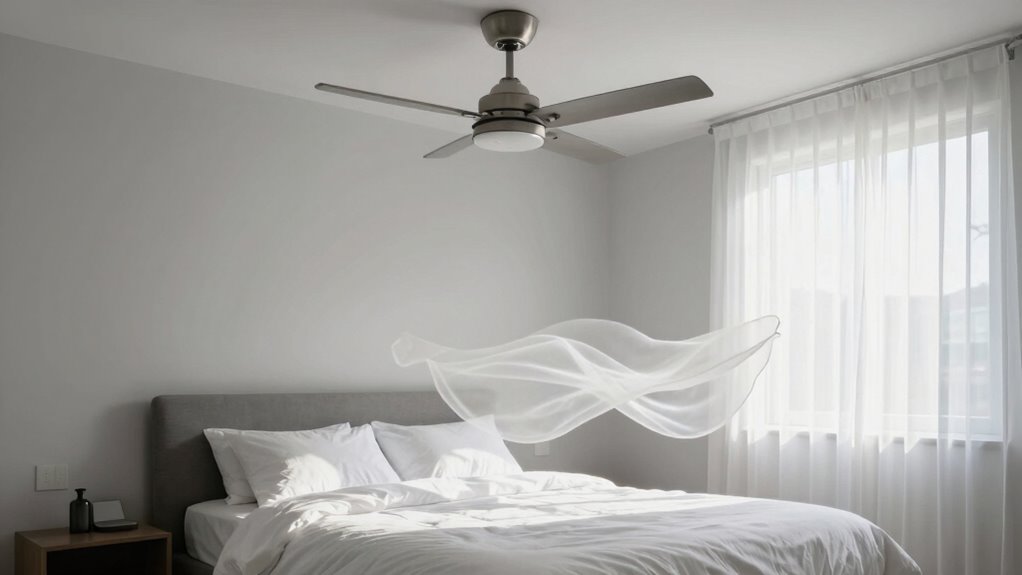
Have you ever wondered how airflow influences the quality of your sleep? The way air moves through your room can make a big difference, either helping you rest peacefully or disrupting your sleep altogether. Proper airflow guarantees fresh air circulation, which can improve your sleep environment, but poor placement of fans, vents, or humidifiers can have the opposite effect. Understanding airflow patterns in your space helps you optimize your setup so that airflow benefits rather than hinders your sleep.
Humidifier effects are closely linked to airflow because they depend on how air circulates around your room. If the humidifier’s airflow is directed toward your bed, it can make the air feel more comfortable, especially in dry climates or winter months. The right airflow from a humidifier can improve your sleep by maintaining ideal humidity levels, reducing dryness in your throat and nasal passages. However, if the humidifier directs moist air away from you or creates uneven humidity levels, it might lead to discomfort or even promote mold growth, which can impair sleep quality. So, positioning your humidifier to promote gentle, even airflow around your sleeping area is vital. Additionally, air circulation plays a crucial role in preventing the buildup of indoor pollutants, which can negatively impact your sleep. Proper airflow management also involves considering airflow direction to ensure that air moves gently and does not cause discomfort.
Your airflow patterns also influence how well your room stays ventilated and comfortable. If air moves too aggressively or from the wrong direction, it can cause drafts that wake you up or make you feel chilly during the night. Conversely, insufficient airflow can lead to stuffiness and a buildup of indoor pollutants, which can cause congestion or allergies, disturbing your rest. The key is to find a balance—allowing enough fresh air to circulate without creating strong drafts. Strategic placement of fans or vents can help establish gentle airflow patterns that promote a restful environment. Additionally, understanding indoor air quality and how ventilation impacts it can help you create a healthier space for sleep. Proper airflow management is also essential for maintaining air quality, as stagnant air can lead to the accumulation of indoor pollutants. Recognizing the importance of ventilation can help prevent issues like mold or stale air, which further affect sleep quality. Ensuring that airflow is balanced and unobtrusive is essential for long-term comfort and health.
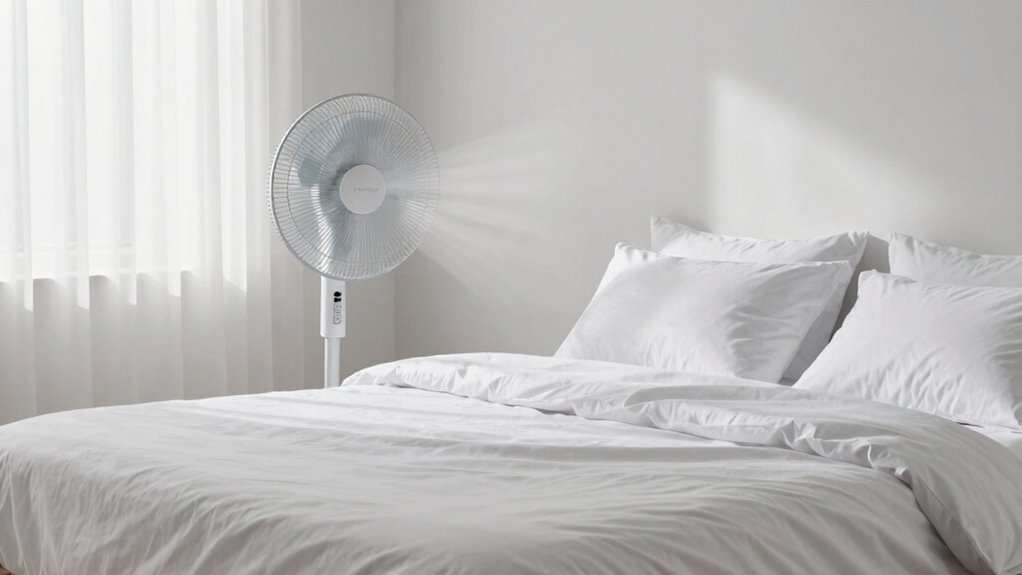
The positioning of your bed relative to airflow sources is essential. If your bed is directly in line with an air vent or fan, you might experience constant drafts, making it hard to stay warm and comfortable. On the other hand, placing your bed where airflow is minimal or diffused can help create a stable, cozy environment. Remember, airflow should feel natural and unobtrusive, not forceful or disruptive. Adjusting your room setup to promote even, gentle airflow helps your body relax and stay asleep longer.
Products Worth Considering

Coway Airmega 250 Air Purifier for Large Rooms

Levoit Core 400S-P Smart Air Purifier for Large Rooms

LEVOIT Vital 200S-P Smart Air Purifier for Large Rooms
As an affiliate, we earn on qualifying purchases.
Frequently Asked Questions
Can Airflow Impact Sleep Quality Differently for Children and Adults?
Airflow can impact sleep quality differently for children and adults due to ventilation comfort and air circulation patterns. You might notice that children are more sensitive to drafts, which can disturb their sleep, while adults may find steady airflow more comforting. Properly managing air circulation patterns guarantees a comfortable environment, preventing drafts that disrupt sleep or excessive dryness, ultimately helping everyone rest better.
How Does Airflow Affect People With Allergies or Respiratory Issues?
Airflow can considerably impact your allergies or respiratory issues, especially if it stirs up dust or pollen. You might worry about worsening your symptoms, but proper airflow improves air quality and promotes better respiratory health. Ensuring good ventilation with clean, filtered air helps reduce irritants, making breathing easier and sleep more restful. Just be mindful of airflow direction and filter quality to avoid aggravating allergies or respiratory conditions.
Are There Specific Airflow Patterns That Are More Beneficial for Sleep?
Certain airflow patterns, like gentle cross-ventilation or directed airflow away from your face, are more beneficial for sleep. Proper airflow direction promotes consistent air circulation, reducing stuffiness and allergens. Avoid strong, direct airflow onto your bed, as it can cause discomfort or respiratory issues. Maintaining steady, balanced air circulation patterns helps create a comfortable sleep environment, ensuring you breathe easier and wake up refreshed.
Does the Type of Fan or Air Conditioner Influence Sleep Comfort?
Like Goldilocks finding her perfect bed, you’ll want a fan or air conditioner that’s just right. The type affects sleep comfort through fan noise and air circulation. A quieter fan with steady airflow can help you drift off, while a loud or inconsistent one might disturb your sleep, like a mischievous fairy. Choose a device that balances noise and airflow to create a peaceful, cozy sleep environment.
Can Airflow Placement Affect Sleep During Different Seasons?
Yes, airflow placement can affect your sleep during different seasons. In warm weather, directing airflow downward or away from your face helps cool you down, improving comfort. During colder months, avoiding direct airflow toward you prevents drafts that disrupt sleep. Adjusting airflow direction based on seasonal temperature changes guarantees you stay comfortable, whether you’re cooling off in summer or staying warm in winter, leading to better sleep quality.
Conclusion
In the dance of sleep and wakefulness, airflow acts as both a gentle lullaby and a harsh critic, depending on where you place it. When aligned just right, it whispers calm and comfort; misaligned, it can stir unrest and discomfort. Remember, your bedroom’s airflow is like a delicate symphony—tune it with care, and you’ll find restful nights that feel like a soft, eternal embrace. After all, it’s not just about air, but the atmosphere you create.