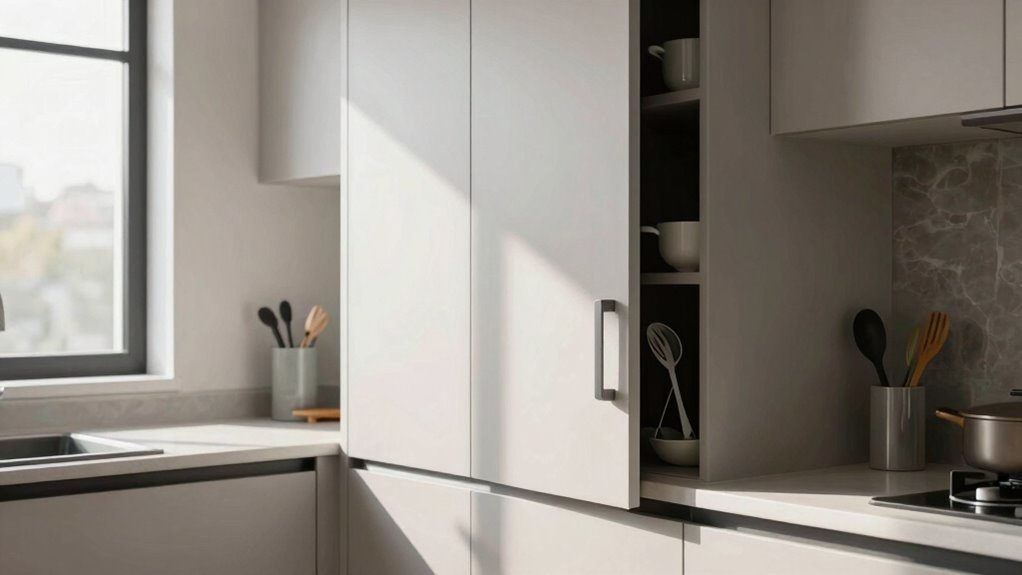
The room layout mistake that causes constant awkward reaching is placing furniture or key items far from your typical seating or activity areas. When items like remote controls, books, or everyday tools are stored in hard-to-reach spots, you’re forced to stretch, bend, or squeeze to access them. This not only creates discomfort but also hampers smooth movement through the space. Keep exploring to discover how better arrangement can make your room more functional and comfortable.
Key Takeaways
- Placing frequently used items too far from seating areas forces constant stretching and reaching.
- Overcrowding central spaces with furniture blocks easy access to essential zones.
- Positioning storage or accessories behind doors or in hard-to-reach corners increases awkward reaching.
- Ignoring traffic flow principles leads to cluttered layouts that require stretching to access items.
- Failing to plan pathways properly results in reaching across furniture or obstacles repeatedly.
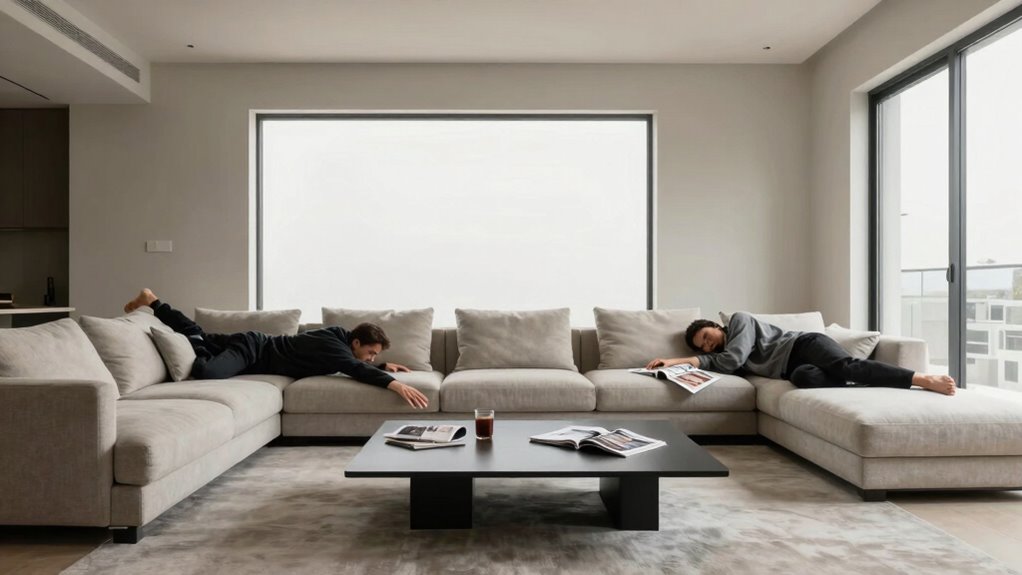
Have you ever wondered why your room feels cramped or unbalanced despite your efforts to arrange furniture? One common mistake that causes this feeling is poor furniture placement that disrupts smooth traffic flow. When you set up your space without considering how people move through it, you unintentionally create obstacles that force you to stretch, reach awkwardly, or sidestep. This isn’t just about aesthetics; it affects how comfortable and functional your room is.
The problem starts when furniture is placed too close to pathways or in a way that blocks natural movement. For example, if your sofa or coffee table sits directly in the middle of a walkway, you might find yourself constantly maneuvering around it. Instead of flowing effortlessly from one area to another, you have to reach across, bend, or squeeze past furniture pieces. Over time, this creates a sense of clutter and discomfort, making your space feel more cramped than it really is.
Good traffic flow is essential for a room that feels open and easy to navigate. When you position furniture with clear pathways in mind, you help your space breathe. Think of traffic flow as the arteries of your room: it should be unobstructed, allowing movement without effort. You want to place larger pieces like sofas, beds, or cabinets against walls or in corners, freeing up the central space for walking or other activities. Smaller pieces, like side tables or chairs, should be positioned so they don’t block access to doors, windows, or other key areas. Paying attention to furniture arrangement can make a significant difference in how your room functions daily. Additionally, spatial planning can help prevent these layout issues before they arise. Creating a functional layout involves more than just aesthetics; it enhances daily usability and comfort. Being mindful of room proportions ensures that furniture doesn’t overwhelm or underwhelm the space, contributing to better overall flow.
Ensure clear pathways by placing larger furniture against walls, keeping your space open and easy to navigate.
Another mistake that leads to awkward reaching is not considering how often you use certain items. For instance, if your remote control or books are stored far from your seating area, you’ll find yourself stretching or getting up repeatedly. To avoid this, place frequently used items within easy reach—ideally, close to where you sit or relax. Additionally, furniture placement should prioritize accessibility to create a more functional environment. This reduces unnecessary movement and makes your space more user-friendly.
Ultimately, the key to avoiding the room layout mistake that creates constant awkward reaching is to plan your furniture placement carefully. Think about how you move through the space, keeping pathways clear and accessible. Rethink your arrangement by stepping back and imagining yourself walking around—if you find yourself reaching or squeezing, adjust your furniture. When traffic flow is smooth and furniture is thoughtfully placed, your room will feel more spacious, balanced, and comfortable.
As an affiliate, we earn on qualifying purchases.
Frequently Asked Questions
How Can I Identify if My Room Layout Causes Awkward Reaching?
You can identify if your room layout causes awkward reaching by paying attention to where you struggle to access decorative accessories or frequently stretch uncomfortably. Notice if items like remote controls or books are placed far from your usual sitting spots. Also, evaluate your color schemes and furniture placement—if they block easy movement or make reaching for essentials inconvenient, it’s a sign you need to rearrange for better flow and accessibility.
Are There Specific Furniture Arrangements That Minimize Reaching Issues?
Yes, strategic furniture placement can minimize reaching issues. Arrange frequently used items within easy arm’s reach and keep pathways clear for obstacle avoidance. Position your sofa and chairs so you can access side tables and shelves without stretching or twisting. Place storage units close to your main seating areas, and avoid clutter blocking access. This setup reduces awkward reaching, making your space more comfortable and functional for everyday activities.
What Tools Can Help Plan an Ergonomic Room Layout?
You can use tools like room planning apps and online design software to optimize your decor placement and storage solutions. These tools help you visualize furniture arrangements and guarantee frequently used items are within easy reach, reducing awkward reaching. By experimenting with different layouts digitally, you can find the most ergonomic setup before moving furniture, creating a more comfortable and efficient space tailored to your needs.
How Does Room Size Impact Reaching Comfort?
Think of your room as a carefully balanced scale—size directly affects reaching comfort. A larger space allows for better space optimization, so you can position items within easy reach, reducing strain. Conversely, a smaller room forces you to stretch or reach awkwardly, disrupting aesthetic balance and causing discomfort. By adjusting your layout to your room’s size, you guarantee everything is within comfortable reach, making your workspace more efficient and inviting.
Can Lighting Placement Affect Reaching and Accessibility?
Yes, lighting placement can greatly influence reaching and accessibility. By creating distinct lighting zones, you illuminate key areas, making items easier to see and reach without stretching or awkward movements. Properly placing lights around accessibility zones guarantees you can access everything comfortably, reducing strain. Focus on even lighting and avoid shadows in essential spots, so you can move freely and reach items with minimal effort.
living room furniture with built-in storage
As an affiliate, we earn on qualifying purchases.
As an affiliate, we earn on qualifying purchases.
Conclusion
By avoiding this room layout mistake, you create a more functional and friction-free space. When you thoughtfully place your belongings, you prevent perpetual positioning problems and promote peaceful productivity. Remember, proper planning prevents poor performance. So, streamline, simplify, and structure your space with care. A well-placed layout leads to less reaching, less frustration, and more freedom to focus on what truly matters. Design your domain deliberately—deliberate decor delivers a delightful, distraction-free dwelling.
As an affiliate, we earn on qualifying purchases.
As an affiliate, we earn on qualifying purchases.