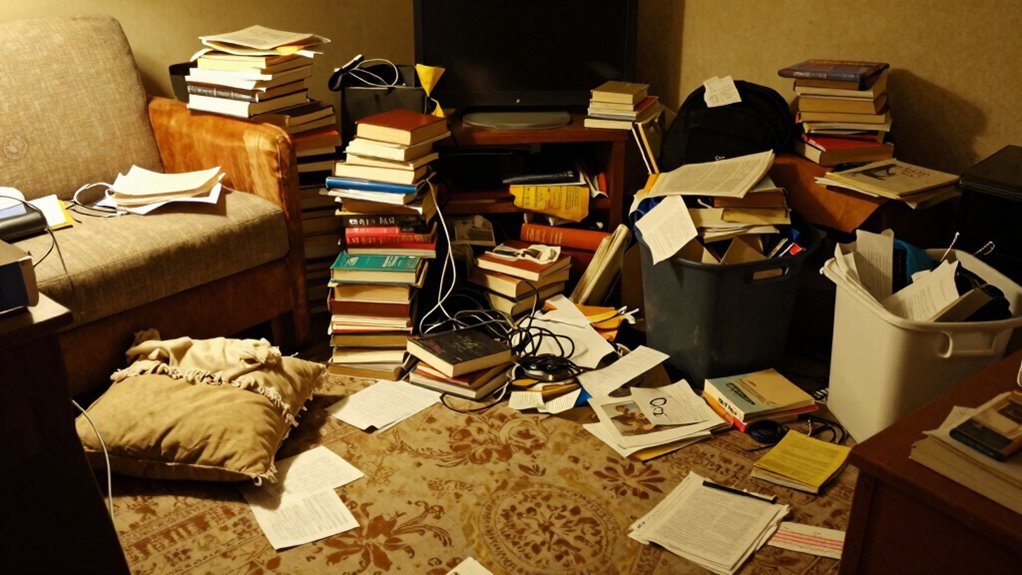
Clutter affects your mood, stress levels, and decision-making, not just how a room appears. It creates visual chaos that drains your mental energy and increases feelings of overwhelm or frustration. The more clutter you have, the harder it is to focus or feel in control, which can impact your wellbeing over time. If you keep exploring, you’ll discover how reducing clutter can boost your emotional resilience and mental clarity.

Get comfort and recovery gear delivered free with Prime
- Fast, free delivery on millions of items
- Prime Video, Amazon Music and more included
- Member-only deals all year
Key Takeaways
- Clutter increases stress and emotional strain, impacting mood and mental well-being beyond just visual appearance.
- It causes decision fatigue, depleting mental resources needed for important choices and reducing cognitive clarity.
- Persistent clutter signals a lack of control, fostering feelings of helplessness and anxiety.
- It hampers focus and memory, making daily tasks more difficult and frustrating.
- Clearing clutter enhances emotional resilience, promoting a sense of order, control, and mental stability.

Clutter does more than just make a space look chaotic; it can subtly influence your mood, stress levels, and overall well-being. When your environment is overwhelmed with things, it’s easy to feel overwhelmed yourself. The visual chaos creates a constant background noise that can drain your mental energy, even if you’re not consciously aware of it. This persistent clutter can heighten your emotional impact, making you more prone to feelings of frustration, anxiety, or helplessness. Over time, the constant exposure to disorder can erode your sense of calm and stability, leaving you feeling emotionally drained and less able to focus on what truly matters.
Clutter drains mental energy, heightens stress, and erodes calm over time.
One of the most significant ways clutter affects you is through decision fatigue. Every item in your space demands some level of mental engagement—whether it’s deciding where it belongs, whether to keep it, or how to organize it. When your environment is cluttered, these small decisions pile up, wearing down your mental resilience. As decision fatigue sets in, you start making poorer choices, procrastinating more, or feeling overwhelmed by even simple tasks. The clutter becomes a visual reminder of unfinished business, amplifying your stress and making it harder to prioritize or find clarity. It’s as if your brain is constantly working to process the chaos, leaving fewer cognitive resources for important decisions or creative pursuits. Incorporating organized storage solutions can help alleviate some of this mental burden by providing designated spaces for your belongings. Additionally, embracing minimalism can further reduce distractions and create a calmer mental state. Recognizing the importance of mental clarity underscores how physical environments directly impact emotional health.
You might notice that clutter impacts your emotional well-being by making everyday tasks seem more intimidating. Finding your keys, trying to get dressed, or preparing a meal can turn into frustrating endeavors because of the clutter surrounding you. This not only wastes your time but also chips away at your patience and optimism. Over time, the accumulated stress from clutter can lead to a cycle where you avoid tidying up, which only worsens the chaos and heightens your emotional distress. The more clutter you see, the more it signals a lack of control, which can intensify feelings of helplessness or guilt. Moreover, research shows that clutter can also influence your cognitive functioning, making it harder to concentrate on complex tasks or retain information effectively.
Reducing clutter isn’t just about aesthetics; it’s a powerful step towards protecting your mental health. When you clear your space, you’re removing visual distractions that contribute to emotional strain and decision fatigue. A tidy environment fosters a sense of order and control, helping you feel more focused, relaxed, and emotionally resilient. Your mental energy gets freed up to tackle important tasks, pursue goals, or simply enjoy moments of peace. Additionally, using airless paint sprayers for home projects can simplify decluttering efforts by making painting tasks more efficient and less messy, contributing to a more organized space overall. In summary, decluttering isn’t just about organizing your space—it’s about reclaiming your emotional well-being and mental clarity.
Products Worth Considering

Blueair Blue Pure 511i Max Air Purifier for Home and Bedroom

Dyson V8 Cyclone Cordless Vacuum

Roborock Q7 M5+ Robot Vacuum and Mop
As an affiliate, we earn on qualifying purchases.
Frequently Asked Questions
How Does Clutter Affect Mental Health Long-Term?
Clutter can profoundly impact your mental health long-term by impairing mental clarity and reducing emotional well-being. When your environment is chaotic, it’s harder to focus and feel calm, which can lead to increased stress and anxiety over time. Persistent clutter may also contribute to feelings of being overwhelmed or out of control, making it tough to maintain a positive outlook. Clearing clutter helps restore mental clarity and boosts your emotional well-being.
Can Decluttering Improve Productivity Instantly?
Imagine your workspace as a garden—clear, organized, and vibrant. Decluttering can instantly boost your productivity by clearing mental and physical chaos. When you adopt strong organizational habits and a minimalist mindset, you create space for focus and creativity to flourish. You’ll notice immediate improvements in efficiency and clarity, making tasks feel less overwhelming. This quick transformation helps you stay motivated, energized, and ready to tackle your goals.
What Are the Hidden Health Risks of Clutter?
Clutter can pose hidden health risks, like increasing your stress levels and causing sensory overload. Poor organizational habits trap dust, mold, and allergens, which can trigger respiratory issues or allergies. When your environment is chaotic, your mind struggles to focus, leading to anxiety and fatigue. Keeping your space tidy reduces these risks, promoting better mental clarity and physical health. Regular decluttering fosters healthier habits and calmer surroundings.
How Does Clutter Influence Relationships at Home?
Clutter can strain your home relationships by creating communication barriers and emotional tension. When spaces are overwhelmed with stuff, you might avoid conversations or shared activities, feeling overwhelmed or stressed. This emotional strain can lead to misunderstandings or resentment. You may also struggle to find a peaceful environment, which affects your mood and interactions. Clearing clutter helps foster open communication and reduces emotional stress, strengthening your connections with loved ones.
What Are Quick Strategies to Reduce Clutter Effectively?
Clutter is like a tangled ball of yarn—easily unraveled with the right approach. To reduce it quickly, start by setting aside 10-minute daily decluttering sessions. Use effective storage solutions like bins and shelves, and adopt simple organization methods such as categorizing items. Tackle one area at a time, and stay consistent. These strategies make clutter manageable and help keep your space tidy effortlessly.
Conclusion
So, next time you see clutter, remember it’s more than just a messy look. It’s like a weight on your mind, quietly shaping your mood and energy. Clearing it isn’t just about tidiness; it’s about reclaiming space for clarity and calm. When you tackle clutter, you’re not just organizing a room—you’re smoothing out the bumps in your mental space, like a gentle wave settling after a storm, leaving everything calmer and more balanced.