
You feel more fatigued in your home office because it often lacks the ambient noise you need to stay alert. Unlike a busy workplace with background sounds, silence at home makes your brain hyper-vigilant, increasing mental effort and tiredness. Without consistent noise, minor sounds become distracting, making focus harder. Creating a balanced sound environment can help, so stay tuned to discover simple ways to reduce that fatigue and boost your focus.

Get comfort and recovery gear delivered free with Prime
- Fast, free delivery on millions of items
- Prime Video, Amazon Music and more included
- Member-only deals all year
Key Takeaways
- Silence at home increases mental alertness, causing the brain to work harder and leading to faster fatigue.
- Lack of ambient noise makes minor sounds more distracting, heightening cognitive effort.
- Office noise masks small sounds, reducing the brain’s need to focus intensely.
- Sensory stimulation in offices provides a balanced environment, unlike the overstimulating silence at home.
- Introducing background sounds at home can improve focus and reduce mental exhaustion.
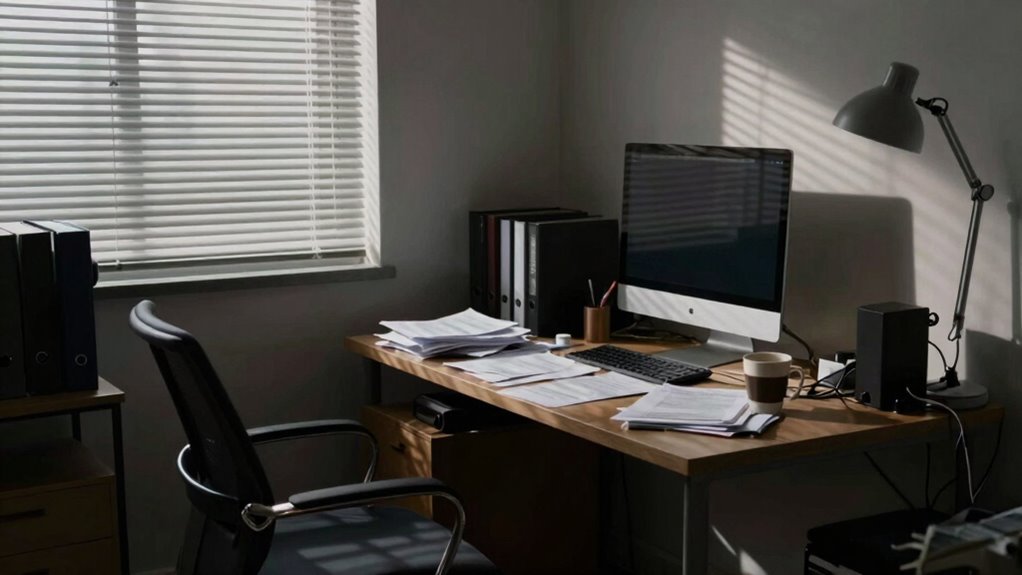
Many people find that working from home leaves them more exhausted than office days, even when there are no obvious distractions. The quiet environment itself can be surprisingly draining, and understanding why involves looking at subtle yet impactful factors. One key element is noise levels. At a corporate office, there’s often a constant hum of activity—people talking, printers whirring, footsteps echoing—that creates a background noise you can get used to. In contrast, your home office might be eerily silent, which might sound ideal but can actually increase mental fatigue. The absence of ambient sounds makes your brain hyper-alert, constantly on edge, trying to fill the silence or interpret every small sound. This heightened state of alertness can sap your energy faster than the steady buzz of a busy office. Additionally, the background noise in an office helps to mask distracting sounds, making it easier to focus. Without this masking effect, even minor sounds at home—like a ticking clock or distant traffic—can become disproportionately distracting. Maintaining a balanced indoor sound environment can help mitigate this issue and reduce fatigue. It’s also worth noting that constant sensory input from a lively workplace can sometimes be less mentally taxing than the stark silence of a home setting. Creating intentional background sounds, such as soft music or white noise, can also support a more comfortable and focused workspace.
Products Worth Considering

Sonos Roam (Gen 1) Portable Smart Speaker, White

Sonos Era 100 Wireless Smart Speakers, 2-Pack, Black

Sonos One Two-Room Set Smart Speakers with Built-In Alexa, Black
As an affiliate, we earn on qualifying purchases.
Frequently Asked Questions
How Does Lighting Affect Fatigue in Home Offices Versus Corporate Settings?
Lighting greatly impacts your fatigue levels in home offices versus corporate settings. Natural light boosts your mood and alertness, reducing tiredness, while insufficient or harsh lighting increases eye strain and fatigue. Task lighting helps you focus without overexerting your eyes. In home offices, inconsistent lighting often leads to more fatigue, unlike corporate environments with better-designed lighting systems. Improving natural light and using effective task lighting can help you stay energized longer.
Can Household Noise Contribute to Increased Tiredness During Remote Work?
Household noise acts like a relentless hum in the background, draining your energy and turning focus into a fragile thread. It fuels concentration challenges, making it harder to stay engaged and productive. As your mind constantly shifts to filter out distractions, fatigue sneaks in unnoticed, leaving you exhausted faster. That persistent background noise transforms your home office into a battlefield where mental stamina wears thin, increasing tiredness throughout your workday.
Does the Lack of Structured Routines Impact Home Office Fatigue Levels?
The lack of structured routines can increase your home office fatigue levels, as flexibility disadvantages lead to routine disruptions. Without set schedules, you might struggle to switch between work and rest, causing mental exhaustion. Routine disruptions make it harder to maintain focus and energy, resulting in burnout. To combat this, establish clear daily routines, set boundaries, and create a consistent work schedule to help manage fatigue effectively.
How Do Ergonomic Differences Influence Energy Levels at Home Versus in the Office?
Sure, your home workstation probably feels like a torture chamber. Poor ergonomic adjustments and uncomfortable furniture drain your energy faster than a coffee break. When your setup lacks proper ergonomic support, your body compensates with constant strain, leading to fatigue. In contrast, corporate offices usually invest in workstation comfort. So, if you want to stay energized, prioritize ergonomic adjustments, invest in a good chair, and create a workspace that supports your body’s natural posture.
Are There Psychological Factors Making Home Offices More Exhausting?
Yes, psychological factors like mental fatigue and social isolation make home offices more exhausting. You might feel mentally drained because there are fewer natural social interactions, leading to loneliness and decreased motivation. The constant presence of household distractions can also increase stress, adding to your fatigue. Without the clear boundaries of a corporate environment, you may struggle to switch off, intensifying feelings of exhaustion and making your workday more draining.
Conclusion
As you navigate your home office, remember it’s like tending a quiet garden—each task a delicate bloom, each distraction a wandering breeze. The serenity you seek can sometimes turn into an unspoken weight, whispering fatigue into your day. Embrace the subtle rhythm, tending to your mental landscape with care. In this quiet space, you have the power to cultivate balance, turning the tranquil chaos into a sanctuary where productivity and peace can flourish side by side.