TL;DR

Get comfort and recovery gear delivered free with Prime
- Fast, free delivery on millions of items
- Prime Video, Amazon Music and more included
- Member-only deals all year
A Fit&Well report featuring certified Pilates instructor Marina Enright identifies a common beginner error: attempting advanced exercise variations before learning foundational movement and control. Enright recommends prioritizing precise movement, coordinating breath and using modifications; the report does not provide injury data or evidence that the mistake affects nearly everyone.
A Fit&Well report featuring certified Pilates instructor Marina Enright warns beginners against choosing advanced exercise variations before establishing basic control and alignment. Enright says the approach can encourage compensation with other muscle groups and create avoidable tension, and recommends starting with manageable versions of movements instead.
Enright, founder of Amare Pilates, identifies moving too quickly to more difficult exercises as a mistake she sees among beginners. The report links that tendency in part to social media, where instructors demonstrate demanding movements that may look straightforward but require substantial core strength and control. It does not establish how common the mistake is across Pilates practitioners.
Enright says that when someone lacks the control needed for a variation, they may compensate by engaging the wrong muscles. She names the neck, shoulders and lower back as areas where unnecessary tension can develop, and says repeated poor movement patterns may contribute to discomfort or injury. These are her professional observations; the supplied report does not cite research or injury statistics quantifying the risk.
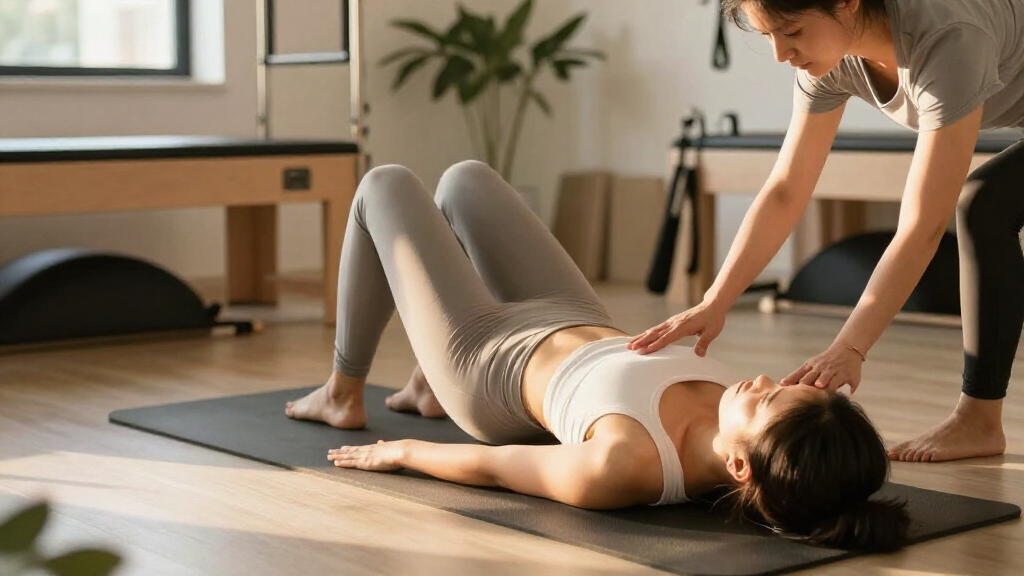
Her practical advice is to focus on slow, controlled repetitions and correct alignment rather than speed or difficulty. Beginners should pay attention to how they coordinate breathing with movement, which Enright says can support core engagement, control and body awareness. She also advises using an instructor’s modifications to learn a movement’s fundamentals, rather than treating an easier option as a failure.
Building Control Before Complexity
The guidance matters because beginners may use online demonstrations as a measure of what they should be able to do, even when a movement requires experience they have not yet built. Starting with a demanding variation can shift attention from alignment and control to simply completing the move. Enright’s advice instead treats manageable modifications as part of learning the practice.
For people exercising at home, the report also points to a practical limitation: there may be no instructor present to spot compensation or correct form. Choosing a simpler version and moving at a controlled pace can help a participant notice how a movement feels. The report does not claim that this approach eliminates injury risk, and readers with pain or a health concern should seek advice from a qualified professional.
As an affiliate, we earn on qualifying purchases.
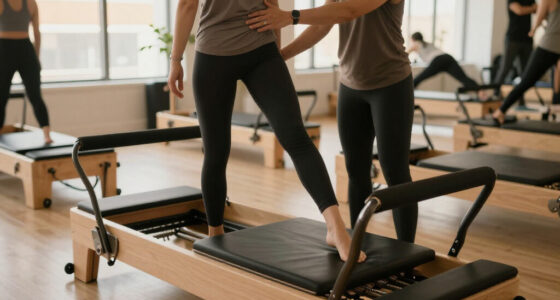
The report’s starting point is the contrast between highly polished Pilates content online and the level of practice needed to perform demanding exercises with precision. A video can show what a movement looks like, but it may not explain the strength, coordination or instruction behind it. That gap can make advanced variations appear more accessible than they are for a new participant.
Enright’s recommendations address three parts of that gap: prioritize movement quality, coordinate breathing with the exercise, and accept modifications while learning. She also suggests that people working toward a particular goal or returning from an injury consider instruction from a certified Pilates instructor, who can provide guidance and adapt exercises. The source gives no specific certification standard or referral protocol.
Pilates control and alignment training equipment
As an affiliate, we earn on qualifying purchases.
As an affiliate, we earn on qualifying purchases.
What The Report Does Not Measure
The supplied report does not provide a publication date, survey, clinical study or injury data to support the headline’s suggestion that nearly everyone makes this mistake. Enright describes what she sees in her work, so the frequency should be understood as her observation rather than a measured rate among beginners.
It is also unclear from the report how much risk varies by exercise, an individual’s experience or existing health conditions. Enright says poor patterns may lead to discomfort or injury, but does not quantify the likelihood or identify particular movements. The advice is general fitness guidance, not an assessment of an individual’s form or medical needs.
Pilates beginner modifications guide
As an affiliate, we earn on qualifying purchases.
As an affiliate, we earn on qualifying purchases.
Choosing A Safe Starting Point
For a beginner, the next step described by Enright is to select a version of each movement that can be performed with control and alignment, then pay attention to breathing rather than trying to match an advanced demonstration. If a class offers modifications, participants can use them while learning the fundamentals and increase difficulty as their control develops.
People pursuing a specific training goal or returning after an injury can seek personalized guidance from a certified Pilates instructor, as Enright recommends. Anyone experiencing pain or managing a pre-existing condition should consult an appropriate health professional before changing their exercise routine. The source does not announce a new study, program or policy; its development is the publication of this practical advice.
Pilates core strength training accessories
As an affiliate, we earn on qualifying purchases.
As an affiliate, we earn on qualifying purchases.
Key Questions
What mistake does Marina Enright identify for Pilates beginners?
Enright says beginners may choose advanced exercise variations before building a foundation in strength, alignment and control. The report presents this as her professional observation, not a measured finding about all beginners.
How should beginners approach Pilates repetitions?
Enright recommends slow, controlled movements with proper alignment instead of rushing through repetitions. She advises focusing on engaging the intended muscles rather than attempting the hardest variation.
Are Pilates modifications a sign of weakness?
No. Enright says modifications are a way to learn a movement’s fundamentals and build strength. She describes them as part of practicing safely and effectively.
Should someone recovering from an injury work with an instructor?
Enright recommends considering a certified Pilates instructor for people pursuing a specific goal or recovering from an injury. People with pain or health concerns should also seek advice from a qualified health professional.
Source: rss
Halloween Picks
halloween
As an affiliate, we earn on qualifying purchases.