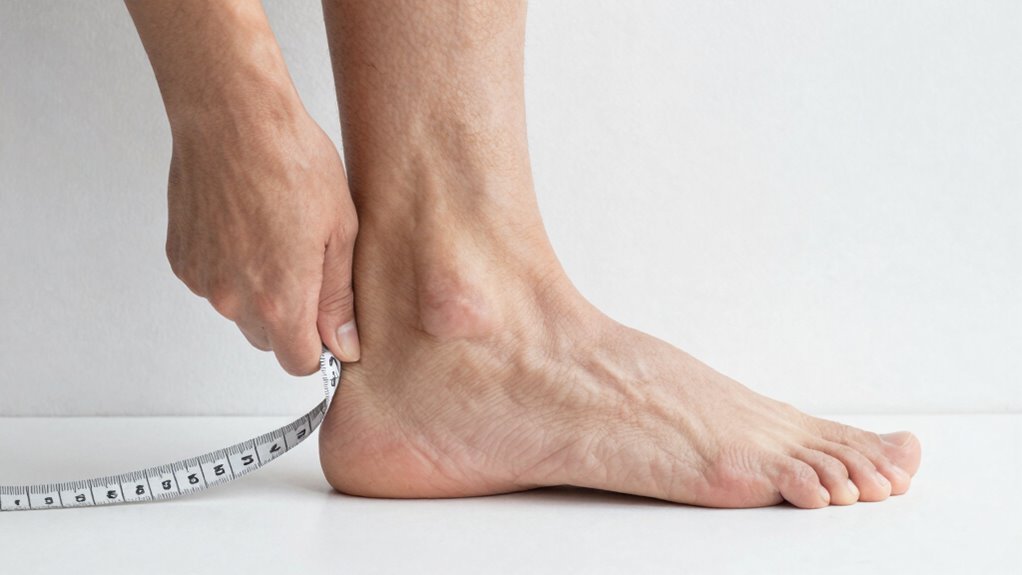

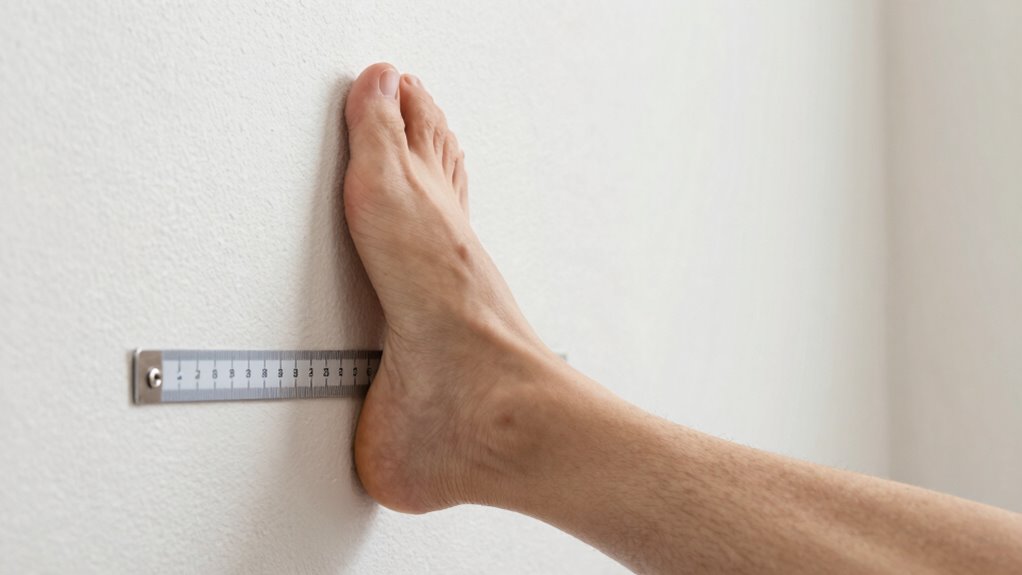
The knee-to-wall ankle dorsiflexion test is a simple way to check your ankle’s flexibility and mobility. To do it, stand facing a wall with one foot a few inches away, keeping your heel flat and knee straight, then slowly move your knee toward the wall without lifting your heel. Measure the distance from your toes to the wall to see how much your ankle can bend. If you want to understand what your results mean and how to improve, keep exploring.

Get comfort and recovery gear delivered free with Prime
- Fast, free delivery on millions of items
- Prime Video, Amazon Music and more included
- Member-only deals all year
Key Takeaways
- The knee-to-wall test measures ankle dorsiflexion range to assess ankle mobility and stability.
- Proper technique involves standing with heel flat, toes 2-4 inches from the wall, and moving the knee forward without heel lift.
- Measure the maximum distance from the big toe to the wall when the knee touches the wall without heel lifting.
- Limited dorsiflexion indicates potential mobility restrictions, compensations, or risk factors for injury.
- Regular testing helps monitor progress, guide flexibility exercises, and prevent gait or joint issues.
ankle dorsiflexion flexibility tester
As an affiliate, we earn on qualifying purchases.
As an affiliate, we earn on qualifying purchases.
What Is the Knee-to-Wall Ankle Dorsiflexion Test and Why It Matters
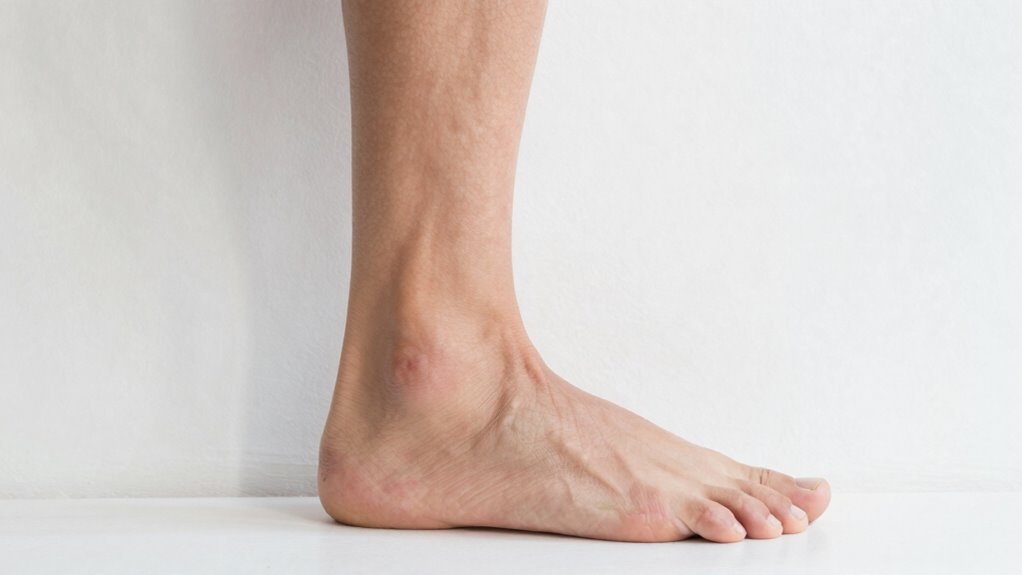
Have you ever wondered how limited ankle mobility can affect your movement or increase injury risk? The knee-to-wall ankle dorsiflexion test is a simple way to assess this. By measuring how far your knee can move over your toes without your heel lifting, you gain insight into your ankle’s dorsiflexion range. This test helps evaluate ankle stability, which is vital for proper gait analysis and overall movement efficiency. Restricted dorsiflexion can cause compensations that impact your gait, leading to joint stress or injury over time. Understanding your ankle mobility through this test allows you to identify potential issues early, so you can work on improving flexibility and stability. Additionally, proper assessment techniques ensure accurate results and help in designing effective intervention strategies. Ultimately, it’s a valuable tool to optimize movement and prevent injury risks.
As an affiliate, we earn on qualifying purchases.
How to Properly Perform the Knee-to-Wall Ankle Mobility Test
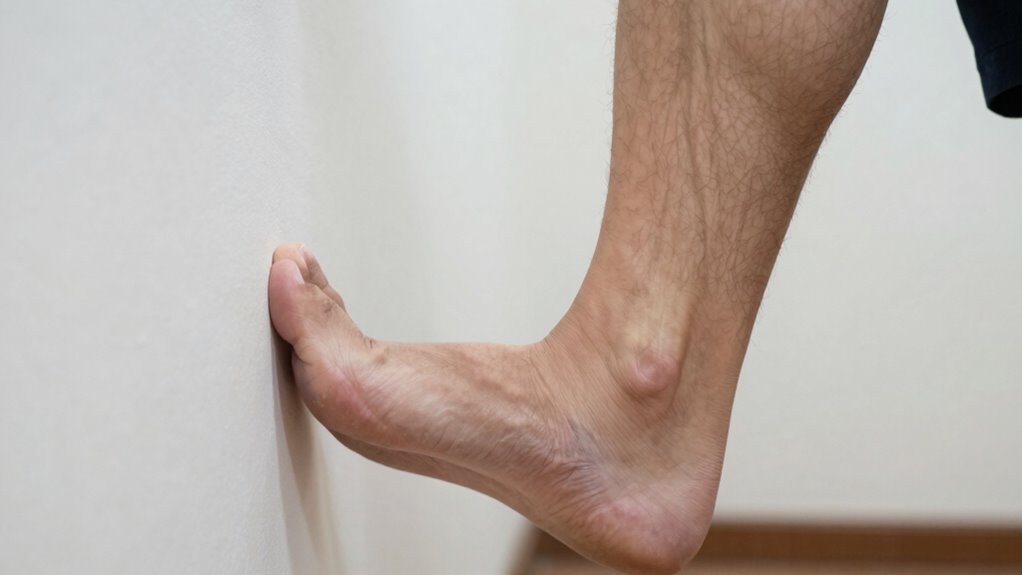
To get accurate results, start with the correct position, ensuring your foot is placed properly against the wall. Focus on maintaining a stable stance and proper alignment throughout the test. Use precise measurement techniques to track your ankle’s mobility accurately. Remember that proper Victorian steampunk attire and etiquette can also influence your overall presentation during assessments. Being aware of muscle flexibility is essential, as it directly impacts the outcome of the ankle mobility test and can help you identify areas needing improvement. Additionally, understanding dog breeds overview can help tailor your approach to physical activities based on the specific needs of different breeds. Incorporating fiber-rich foods into your diet can also promote better overall health and support mobility. Moreover, paying attention to joint health can further enhance your mobility and reduce the risk of injury.
Proper Starting Position
Position yourself facing a wall with your toes placed about 2 to 4 inches away, depending on your foot flexibility. Make certain your feet are pointing straight ahead, and your heel remains flat on the ground. Maintain good ankle stability by keeping your leg straight and engaged. This starting position allows for an accurate assessment of ankle dorsiflexion without unnecessary movement or compensation. Keep your body upright, shoulders relaxed, and gaze forward. Proper alignment helps prevent errors caused by improper posture, guaranteeing the test measures true ankle mobility. Remember, the key is to establish a stable, comfortable stance that supports precise measurement. Adjust your foot placement slightly if needed to find the ideal distance that challenges your ankle without compromising stability.
Accurate Measurement Technique
Begin by aligning your body properly against the wall, with your toes placed 2 to 4 inches away, ensuring your heel stays flat on the ground. To accurately measure ankle dorsiflexion, focus on maintaining ankle stability and understanding joint anatomy. Here are three key tips:
- Keep your heel firmly pressed to the ground throughout the movement, avoiding heel lift to prevent skewed results.
- Move your knee forward slowly, tracking over your toes without collapsing inward or outward, ensuring proper joint alignment.
- Use a ruler or measuring tape to record the distance from your big toe to the wall at the point where your knee touches the wall without heel lift, ensuring precise measurement.
- Pay attention to your joint mechanics to better understand how your ankle’s structure influences mobility and stability. Additionally, being aware of joint flexibility can help identify specific limitations affecting your movement quality.
- Understanding biomechanics can provide deeper insights into how different factors influence your ankle movement and overall mobility. Recognizing how joint stability impacts your movement can help prevent injury and improve performance. Incorporating movement patterns into your assessment can also reveal compensations or restrictions that affect mobility.
Following these steps helps you assess ankle mobility accurately, considering the joint’s anatomy and stability.
ankle stretching and mobility exercises equipment
As an affiliate, we earn on qualifying purchases.
As an affiliate, we earn on qualifying purchases.
What Do Your Test Results Mean? Interpreting Your Knee-to-Wall Measure
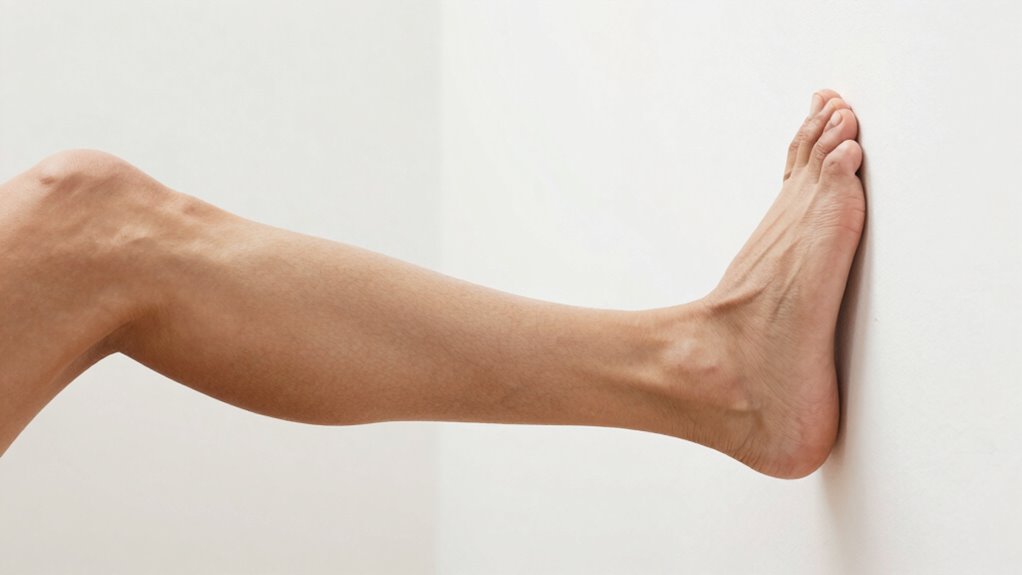
Your knee-to-wall measure provides a quick snapshot of your ankle’s dorsiflexion flexibility, which can reveal important information about your mobility and potential injury risk. If your measurement shows limited dorsiflexion, it may indicate decreased ankle stability, affecting your overall gait analysis. Reduced flexibility can lead to compensations in your walking or running patterns, increasing strain on other joints. Conversely, a higher measurement suggests good dorsiflexion, supporting proper gait mechanics. Keep in mind that your results should be considered alongside other assessments for a complete picture of your ankle health. Understanding what your knee-to-wall test indicates helps you identify areas to improve, whether through mobility exercises or targeted therapy, ultimately enhancing your movement efficiency and reducing injury risk. Additionally, maintaining optimal ankle mobility can also contribute to better indoor air quality by supporting proper movement patterns that reduce strain and injury. Recognizing the connection between ankle flexibility and overall joint health underscores the importance of regular mobility assessments.
As an affiliate, we earn on qualifying purchases.
Common Reasons Your Ankle Flexibility Might Be Limited
Your ankle flexibility can be limited by several common factors. You might experience this due to restricted joint mobility or muscle tightness in your calves and surrounding muscles. Understanding these causes can help you target the right areas for improvement. Additionally, proper ergonomic positioning during daily activities can reduce strain and improve overall flexibility. Incorporating stretching techniques that target the lower leg muscles can further enhance ankle mobility over time. Being aware of muscle imbalances can also assist in addressing underlying issues that contribute to limited ankle flexibility. Recognizing joint restrictions and addressing them through appropriate interventions can significantly improve your ankle mobility. Moreover, muscle tightness often results from repetitive movements or prolonged inactivity, which can be addressed with consistent stretching and strengthening exercises.
Limited Joint Mobility
Limited joint mobility is a common reason why ankle dorsiflexion might be restricted. When your ankle’s joint biomechanics are compromised, it affects how smoothly your ankle moves, limiting flexibility. This reduced mobility can stem from issues like joint capsule tightness, cartilage wear, or previous injuries. These factors can also impact ankle stability, making your joint less responsive to movement. To better understand, consider these possibilities:
- Stiff or thickened joint capsule reducing overall range of motion.
- Cartilage degeneration or damage hindering smooth joint movement.
- Structural changes from past injuries affecting joint biomechanics and stability.
- Proper joint function is essential for maintaining optimal ankle flexibility and overall movement efficiency. Addressing joint capsule tightness through targeted stretching or therapy can help restore mobility.
- Additionally, joint health plays a crucial role in maintaining flexibility, and inflammation or degeneration can further limit movement. Recognizing the role of joint biomechanics can aid in developing effective treatment strategies. Regular movement and joint maintenance can help prevent further restrictions.
Muscle Tightness or Stiffness
Muscle tightness or stiffness is a common reason for restricted ankle flexibility, often resulting from prolonged inactivity, overuse, or inadequate stretching. When your calf muscles or Achilles tendon become tight, they limit your ankle’s ability to dorsiflex properly, affecting ankle stability and overall movement. This stiffness can develop gradually, making it harder to perform activities requiring full range of motion. To visualize this, consider the following:
| Muscle Group | Impact on Flexibility |
|---|---|
| Calf muscles | Tightness reduces dorsiflexion, affecting ankle stability |
| Achilles tendon | Stiffness limits ankle mobility and stability |
| Soleus muscle | Tightness restricts ankle flexion |
| Peroneal muscles | Stiffness affects ankle control and stability |
| Tibialis anterior | Limited flexibility impairs dorsiflexion |
Maintaining muscle flexibility is key for ideal ankle function and stability. Proper stretching and muscle flexibility exercises can help prevent and alleviate these issues. Additionally, addressing muscle imbalances through targeted stretching routines can improve overall ankle mobility. Incorporating regular flexibility training into your routine can also support long-term ankle health.
Easy Tips to Improve Your Ankle Dorsiflexion and Reduce Stiffness
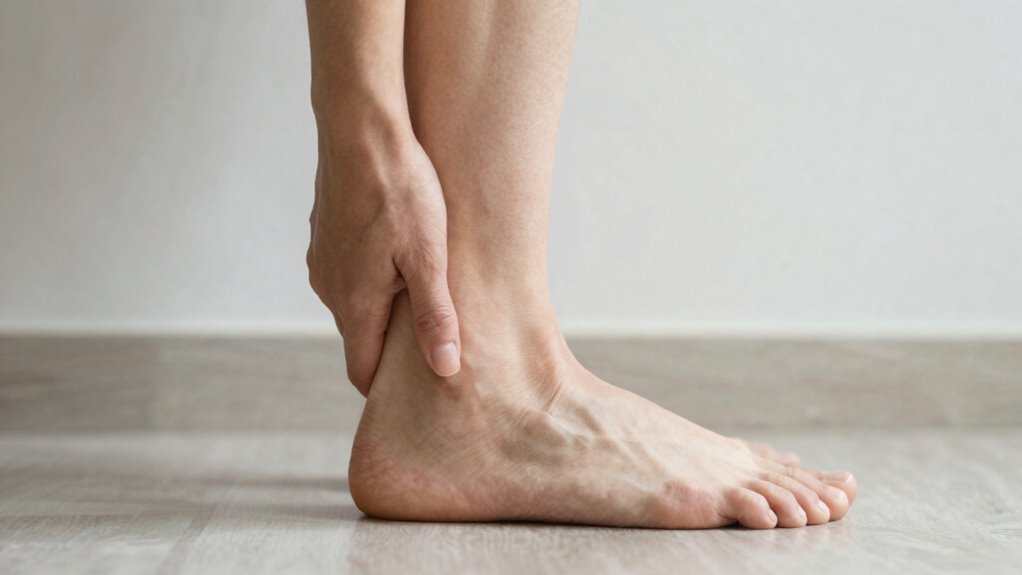
Improving ankle dorsiflexion and reducing stiffness can often be achieved with simple, targeted exercises. Focusing on ankle strengthening and flexibility exercises helps loosen tight tissues and enhance mobility. Here are easy tips to get started:
Simple exercises can improve ankle mobility and reduce stiffness effectively.
- Incorporate regular ankle circles and calf stretches to boost flexibility and loosen stiff muscles.
- Use resistance bands for ankle strengthening exercises, which improve overall joint stability.
- Practice heel raises and toe taps to build strength and increase range of motion gradually.
- Engaging in Neat movement activities can complement these exercises and support overall mobility.
Consistency is key—perform these exercises daily or several times a week. Over time, you’ll notice increased flexibility and less stiffness, making daily activities easier and reducing the risk of injury. Keep moving and stay patient with your progress.
When to See a Professional About Your Ankle Mobility Issues
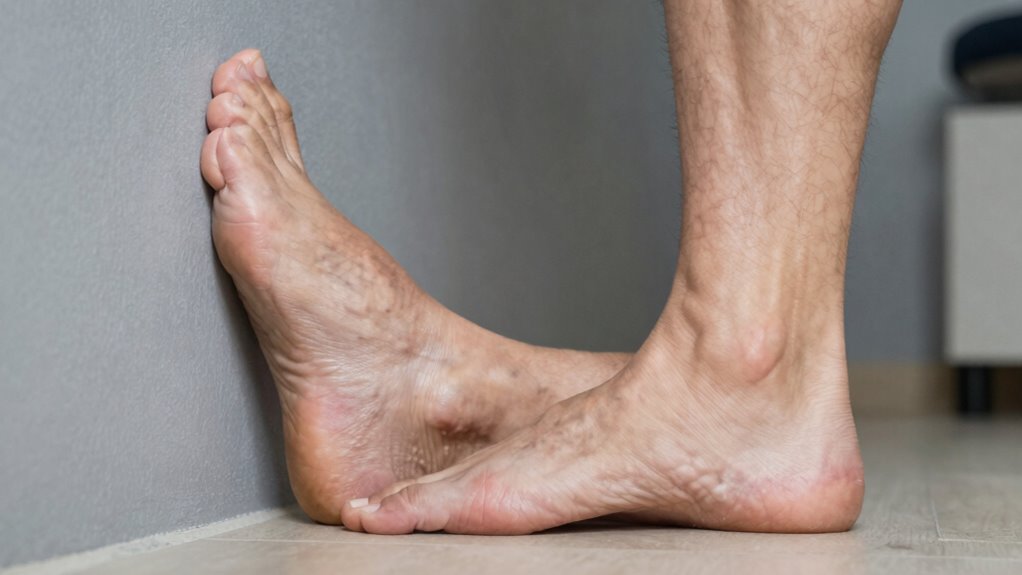
While minor stiffness and occasional discomfort in your ankle can often be managed with mobility exercises, persistent or worsening issues require professional evaluation. If you notice limited ankle dorsiflexion despite consistent efforts, it’s essential to contemplate underlying factors like ankle anatomy or joint restrictions. You should see a healthcare professional if pain, swelling, or instability accompanies your stiffness, or if mobility doesn’t improve over time. A specialist can assess your ankle’s structure and recommend targeted treatments. Here’s a quick guide:
| Symptom | When to Seek Help | Possible Causes |
|---|---|---|
| Chronic pain | If pain persists despite exercises | Structural issues or injury |
| Swelling or instability | If swelling or wobbliness appears | Ligament or cartilage damage |
| No improvement | After consistent mobility exercises | Restricted ankle anatomy |
Incorporate the Knee-to-Wall Test Into Your Routine for Better Movement and Injury Prevention
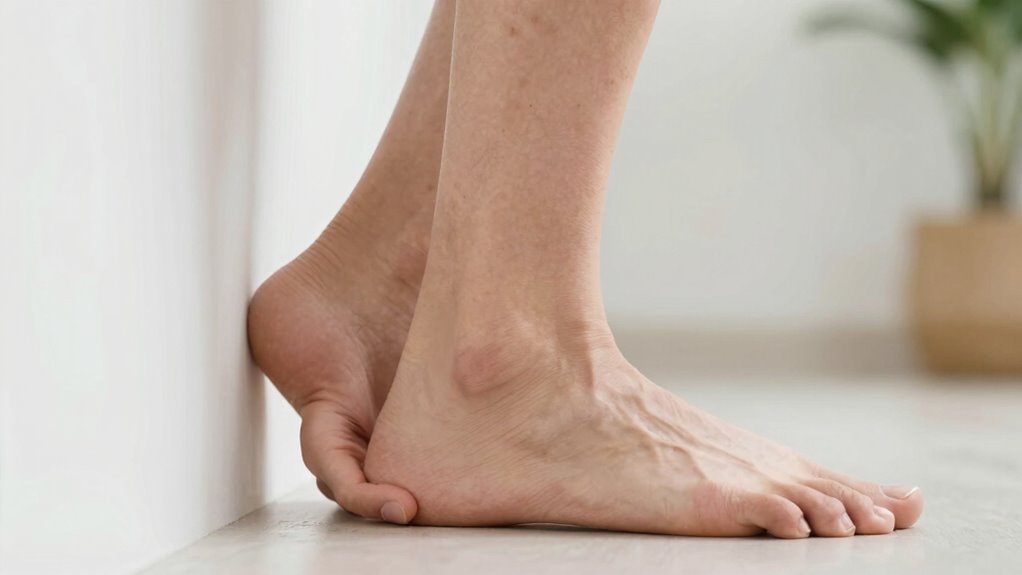
Incorporating the knee-to-wall test into your routine can help you assess and improve your ankle mobility, reducing the risk of injuries during activity. By regularly checking your ankle dorsiflexion, you can enhance ankle stability and optimize joint biomechanics. Here are three ways to make it part of your routine:
- Set a weekly reminder to perform the test, tracking progress over time.
- Use proper technique—keep your heel flat, knee aligned, and avoid compensations.
- Combine with mobility exercises to strengthen your ankle and improve joint function.
Doing this consistently helps identify limitations early, allowing you to adjust training or seek professional help if needed. Better ankle mobility supports safer movement patterns and reduces injury risk during sports or daily activities.
Frequently Asked Questions
Can the Test Identify Specific Causes of Limited Ankle Mobility?
The test helps identify if limited ankle mobility exists, but it doesn’t pinpoint specific causes. Through biomechanical analysis, you can assess joint flexibility and determine whether restrictions are due to soft tissue tightness or joint restrictions. While the knee-to-wall check indicates overall dorsiflexion limitations, further evaluation is needed to understand the precise biomechanical factors involved. This helps tailor effective treatment strategies.
How Often Should I Perform the Knee-To-Wall Ankle Test?
You should perform the knee-to-wall ankle test once every 2 to 4 weeks to monitor your progress. This test frequency helps you track improvements in ankle mobility over time and adjust your stretching or strengthening routines as needed. Consistent testing allows you to see if your mobility is improving, stagnating, or worsening, so you can take appropriate action to enhance your ankle flexibility and prevent injury.
Does Age or Gender Affect Ankle Dorsiflexion Scores?
Age factors and gender differences do influence ankle dorsiflexion scores. Studies show that older adults typically have reduced dorsiflexion compared to younger individuals, affecting mobility. Men generally tend to have slightly better dorsiflexion than women, though individual variation is common. So, when evaluating your ankle flexibility, consider these factors, as they can impact your baseline and progress during exercises or rehab.
Are There Contraindications for Performing the Test?
You should consider safety considerations and medical conditions before performing the test. If you have recent injuries, joint instability, or severe pain, avoid doing it until cleared by a healthcare professional. Always guarantee proper technique to prevent strain or discomfort. If you experience dizziness, numbness, or worsening symptoms, stop immediately and seek medical advice. Taking these precautions helps protect your safety and ensures accurate assessment results.
Can Improvement in Dorsiflexion Prevent Certain Injuries?
Improving your ankle flexibility can considerably help in injury prevention, especially for activities involving running, jumping, or sudden directional changes. Better dorsiflexion allows for more natural movement patterns, reducing stress on joints and tissues. When your ankle mobility increases, you’re less likely to experience strains, sprains, or overuse injuries. So, focusing on enhancing dorsiflexion can be a proactive step toward protecting yourself from common sports or movement-related injuries.
Conclusion
Regularly checking your ankle dorsiflexion with the knee-to-wall test can markedly boost your mobility and reduce injury risk. Did you know that limited ankle flexibility is linked to a 70% higher chance of ankle sprains? By staying proactive and addressing stiffness early, you’ll move better and stay safer during activity. Incorporate this simple test into your routine and take control of your ankle health—your body will thank you!
Halloween Picks
halloween
As an affiliate, we earn on qualifying purchases.