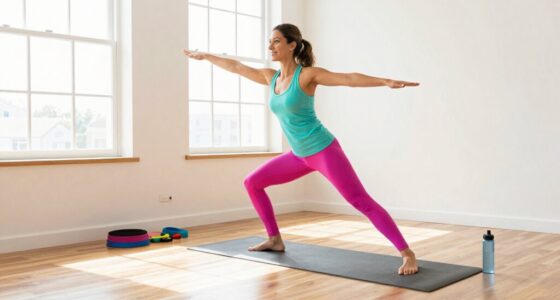

If movement feels intimidating, start with tiny, manageable steps to ease into it. Focus on simple actions like deep breathing, gentle stretches, or short, slow movements that feel comfortable. Use mindfulness to notice how your body responds and stay present in the moment. Don’t push yourself too hard at first—gradually build confidence and calm your mind. Keep exploring small ways to reconnect with movement, and you’ll find that it becomes less overwhelming over time.

Get comfort and recovery gear delivered free — and shop member deals
- Fast, free delivery on millions of items
- Access to Prime Big Deal Days deals on October 6–7
- Prime Video, Amazon Music and more included
Key Takeaways
- Begin with small, manageable movements to build confidence gradually.
- Practice mindful breathing to create calm and reduce anxiety before moving.
- Incorporate gentle stretches to ease tension and foster a positive mindset.
- Focus on sensations and awareness during each movement to stay present and comfortable.
- Avoid pushing yourself into intense routines; prioritize slow, steady progress.
Feeling overwhelmed by the idea of exercising can make even the simplest movements seem intimidating. The thought of jumping into a full workout or running a mile might feel like too much right now. That’s perfectly normal. Instead of forcing yourself into intense routines, start small. Focus on tiny, manageable steps that help you reconnect with your body without feeling pushed or overwhelmed. This approach can make a huge difference in how you perceive movement and help build confidence over time.
One of the easiest ways to ease into movement is by practicing mindful breathing. It’s simple yet powerful. Find a quiet space, sit comfortably, and take slow, deep breaths. Pay attention to how the air feels as it enters and leaves your body. Mindful breathing helps calm your nervous system, reduce anxiety, and anchor you in the present moment. When you’re more relaxed, even gentle movements become more approachable. It’s not about doing anything complicated; it’s about creating a sense of calm and awareness that makes movement feel less intimidating. Incorporating mindfulness techniques can enhance your overall sense of control and comfort during movement.
Alongside mindful breathing, gentle stretching can be incredibly effective. You don’t need fancy equipment or a lot of space—just your own body and some patience. Start with basic stretches, such as gently reaching your arms overhead, rolling your shoulders, or stretching your legs while seated. These movements don’t take much time or effort, but they can considerably improve your flexibility and release tension. When you combine gentle stretching with mindful awareness, you create a mindful movement practice that’s both soothing and empowering. Focus on how each stretch feels—notice the stretch, the tension, and the relief as you ease into each move. This mindfulness transforms stretching from a chore into a calming ritual that helps you feel more connected and in control of your body. Recognizing how your body responds during these small movements can deepen your understanding of your physical sensations and foster a positive attitude toward movement. Being mindful of your breathing and sensations can also strengthen your overall sense of physical awareness, making movement feel more natural and less daunting.
mindful breathing exercises for beginners
As an affiliate, we earn on qualifying purchases.
As an affiliate, we earn on qualifying purchases.
Frequently Asked Questions
Can I Do Tiny Movements at Home Without Equipment?
Yes, you can do tiny movements at home without equipment. These small exercises add variety to your routine and help you stay consistent with movement. You might do slow leg lifts, gentle arm circles, or subtle core twists. Small, manageable motions are perfect for building confidence and maintaining exercise variety without feeling overwhelmed. Keep moving regularly, and you’ll see progress while fitting workouts into your daily life.
How Often Should I Practice Tiny Movements?
You should practice tiny movements daily or at least several times a week. This consistency helps reinforce positive mindset shifts and keeps you motivated. Set small, achievable goals to track your progress and build confidence. Remember, regular practice creates momentum, making movement feel less intimidating over time. By committing to a routine, you’ll develop a healthier mindset and gradually increase your comfort and strength with these tiny exercises.
Are Tiny Movements Effective for Weight Loss?
Yes, tiny movements can be effective for weight loss if you maintain exercise consistency and incorporate them into your fitness routines regularly. They help build strength, improve mobility, and boost metabolism over time. While they may seem small, consistent effort pays off. Starting with these manageable movements can boost your confidence and make it easier to stay committed, ultimately helping you reach your weight loss goals steadily and sustainably.
What Are Common Mistakes When Starting Tiny Movements?
A common mistake is rushing into big changes without proper mindset shifts, which can lead to burnout. You might also neglect consistency strategies, skipping days or losing focus. To succeed, start small, stay patient, and celebrate tiny wins. Avoid overcomplicating your routine. Instead, embrace steady progress, develop a positive mindset, and implement consistent habits. This approach keeps you motivated and helps build momentum over time.
How Do I Stay Motivated With Small, Gradual Changes?
Staying motivated is like tending a delicate plant—small, consistent effort nurtures growth. Focus on mindset shifts, celebrating tiny wins to boost confidence, and track your progress regularly to see how far you’ve come. Remember, motivation can ebb and flow, but dedication keeps you moving forward. Keep your goals realistic, and each small change becomes a building block toward bigger achievements, making persistence feel natural and rewarding.
As an affiliate, we earn on qualifying purchases.
Conclusion
Remember, even the smallest steps echo the journey of a thousand miles, just like the first pebble that starts an avalanche. When movement feels overwhelming, embracing this tiny format is your secret weapon—your moment to begin, to build confidence, and to reclaim your rhythm. Just as the sun rises each day, each tiny effort shines brighter over time. So, take that first step today, and watch how even the tiniest movement can ignite a transformation.
small movement exercise equipment
As an affiliate, we earn on qualifying purchases.
As an affiliate, we earn on qualifying purchases.
relaxation and tension release tools
As an affiliate, we earn on qualifying purchases.
As an affiliate, we earn on qualifying purchases.
Fall Picks
fall essentials
As an affiliate, we earn on qualifying purchases.