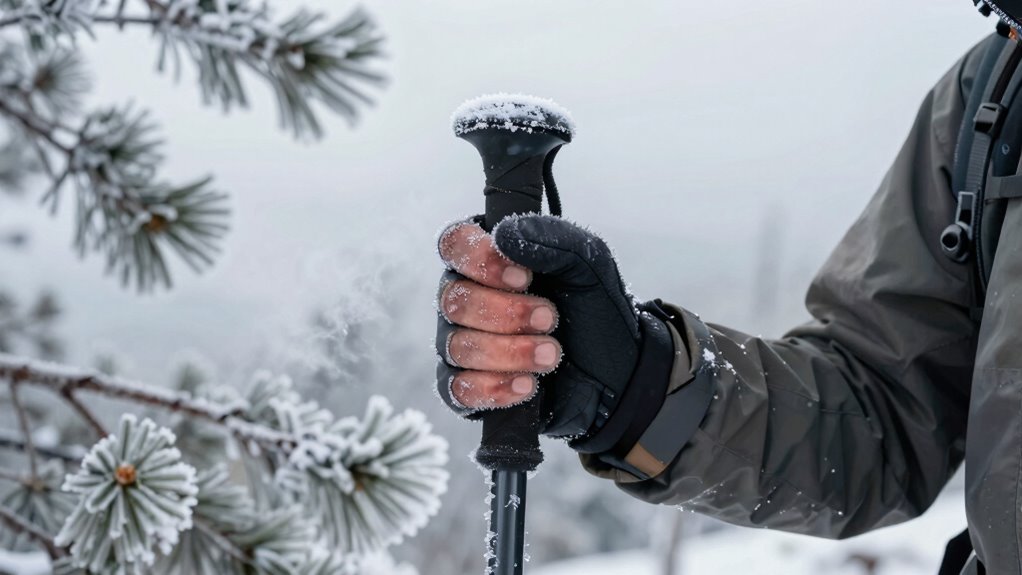

If you notice signs like shivering that won’t stop, numbness, tingling, or skin turning pale or bluish, it’s time to stop and seek warmth immediately. Watch for confusion, poor coordination, or extreme fatigue, which indicate your body is struggling to cope with the cold. Stay alert for symptoms of frostbite or hypothermia, and don’t push through these warning signs. Understanding these cues helps keep you safe—learn more to stay protected in cold conditions.
Key Takeaways
- Stop exposure immediately if you notice uncontrollable shivering or numbness in extremities.
- Watch for skin color changes like pallor or bluish tint, indicating poor circulation or frostbite risk.
- Seek shelter if you feel confused, disoriented, or lose coordination to prevent hypothermia complications.
- Remove wet clothing and warm up promptly when skin feels extremely cold or signs of frostbite appear.
- Always prioritize safety when symptoms of cold stress or hypothermia are present to avoid serious health consequences.
How to Recognize Early Signs of Cold Overexposure
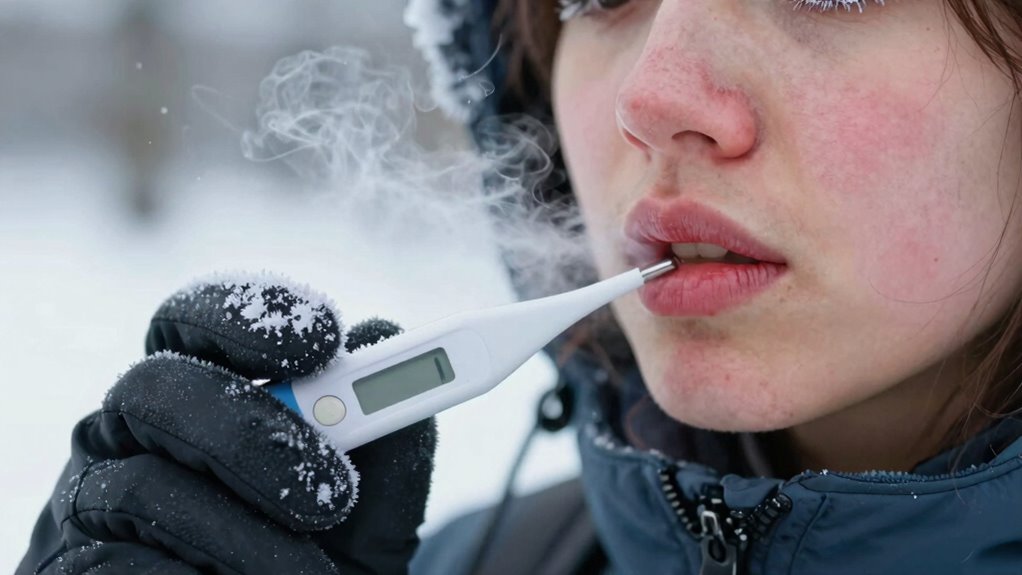
Recognizing the early signs of cold overexposure is essential for preventing serious health issues. Pay attention to subtle clues like shivering, which your body uses to generate heat. If you notice yourself feeling unusually tired or confused, it could indicate hypothermia prevention is needed. Cold weather gear plays a critical role in keeping your body warm; ensure it’s layered properly and covers exposed skin. Watch for pale or mottled skin, especially on extremities, as these can signal your body is struggling to maintain warmth. Feeling numb or experiencing clumsiness are also warning signs. Acting promptly by adding insulation and seeking shelter can prevent the progression of cold-related illnesses. Staying alert to these early indicators helps you respond quickly and stay safe in cold environments. Understanding the importance of proper clothing can make a significant difference in cold safety, especially when considering the performance of equipment in harsh conditions. Additionally, being aware of regional climate variations can help you better prepare for different cold weather scenarios. Being familiar with natural environmental factors such as wind chill and humidity can further enhance your awareness and safety measures. Incorporating knowledge about body response to cold can help you recognize these signs even more effectively.
Watch for Numbness, Tingling, or Skin Changes
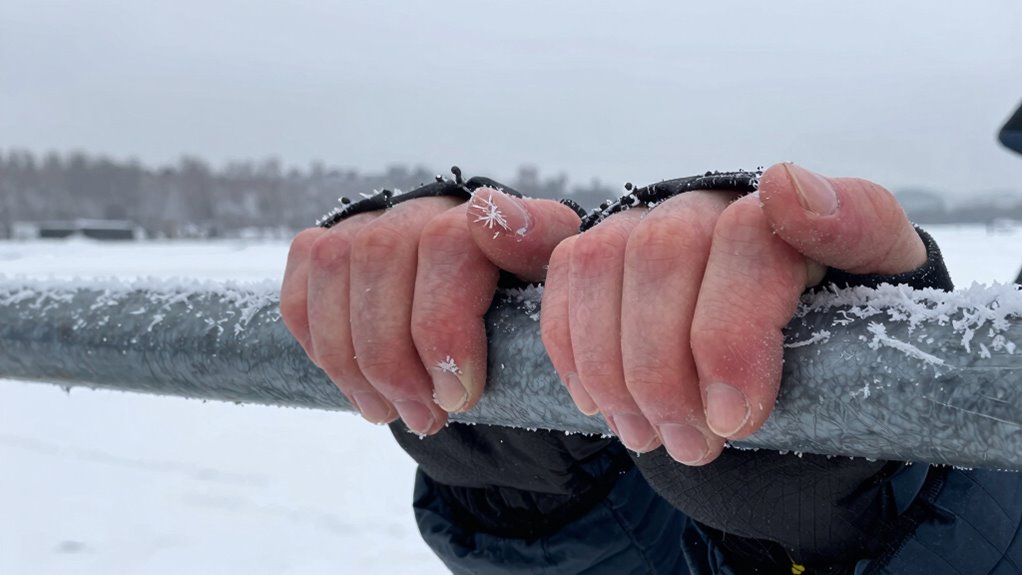
Numbness, tingling, or noticeable skin changes are important signals that your body is struggling to stay warm. If you notice a tingling sensation or skin discoloration, it’s time to act. These signs often indicate poor circulation or early frostbite. Pay close attention to affected areas, especially fingers, toes, or exposed skin. Recognizing these symptoms early can prevent serious injuries and help you seek prompt treatment. Being aware of dangerous symptoms can make a significant difference in preventing lasting damage. In addition, understanding home safety tips can help you better prepare for cold weather conditions and reduce the risk of cold-related injuries. Staying informed about cold exposure signs ensures you respond quickly to potential threats, including recognizing the importance of proper clothing layers to maintain body heat.
Look Out for Uncontrollable Shivering
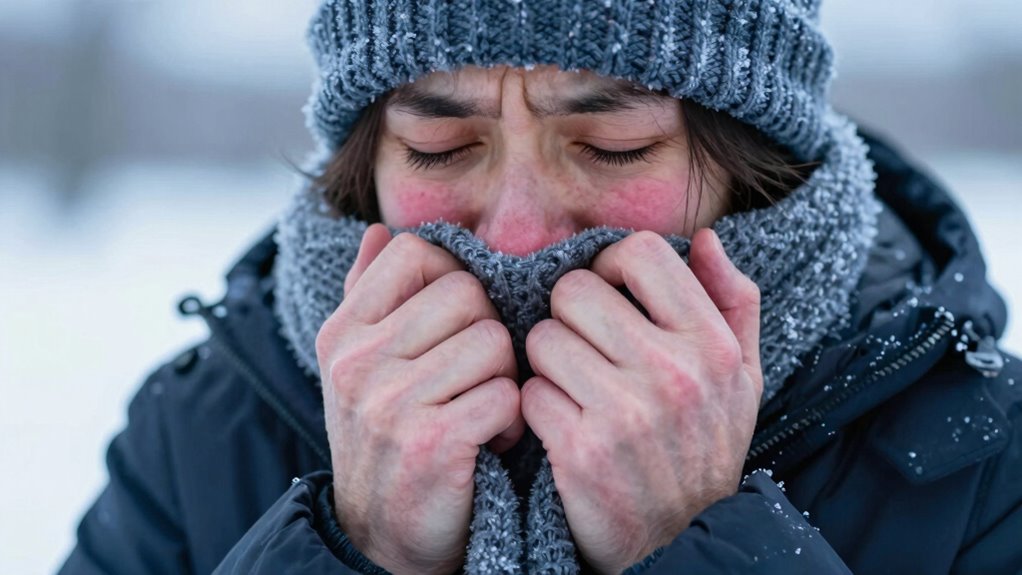
Uncontrollable shivering is a clear warning sign that your body is struggling to maintain its core temperature. If your shivering intensity increases rapidly and becomes difficult to stop, it’s time to act. This involuntary response indicates your body is desperately trying to generate heat. Don’t ignore it—your body’s signals are telling you to seek warmth immediately. Adjust your clothing by adding layers or covering exposed skin to trap heat. Removing wet or sweaty clothes can also help prevent further cooling. Keep in mind, persistent or intense shivering means you’re at risk of hypothermia, so don’t delay taking action. Recognizing uncontrollable shivering early can help you prevent serious cold-related health issues. Always prioritize warming up when this sign appears. Using wearable fitness tech can help monitor your body’s responses during cold exposure and alert you to dangerous signs early. Additionally, understanding body temperature regulation can enhance your ability to respond effectively in cold environments. Learning about early hypothermia symptoms can further improve your awareness and response strategies. Being informed about the body’s heat production mechanisms can also empower you to take more effective measures to stay warm.
Signs of Cold-Induced Confusion and Loss of Coordination
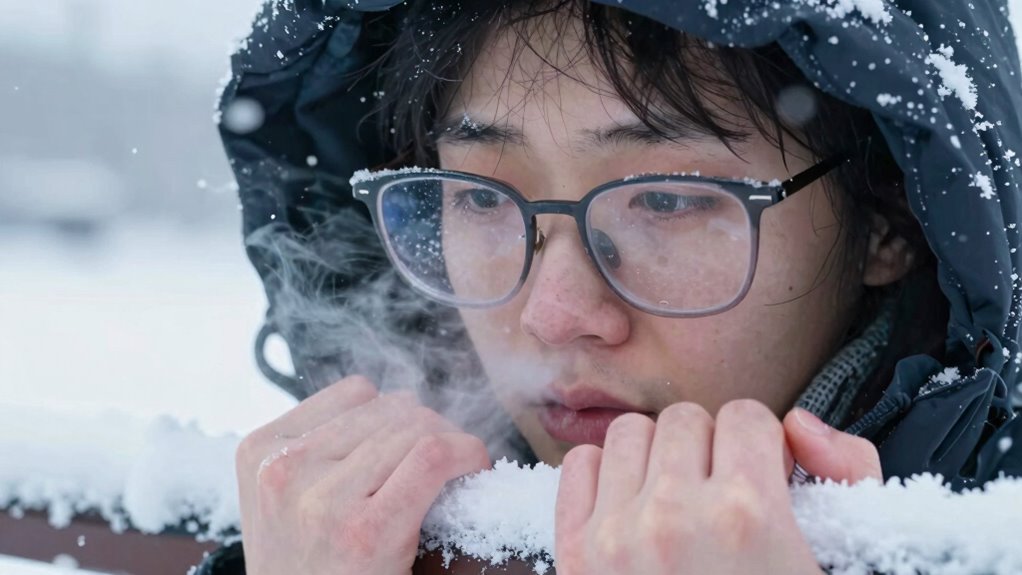
As your body struggles to stay warm, you may notice confusion and a decline in coordination that can catch you off guard. Cold mental disorientation might make you forget simple tasks or become disoriented, while coordination impairment affects your ability to move smoothly. You might stumble or have trouble with fine motor skills. Watch for these signs:
- Slurred speech or difficulty understanding others
- Clumsiness or unsteady gait
- Confusion about your surroundings or what you’re doing
Additionally, effective performance parts like properly functioning flywheels and engine upgrades are essential for maintaining your vehicle’s optimal operation in cold conditions, just as your body needs proper care to stay warm and alert. Recognizing body response to cold can help you take immediate action before symptoms worsen.
These symptoms indicate your body is losing its ability to function properly due to the cold. Ignoring them can lead to more serious issues, so it’s vital to recognize these early signs of cold-induced confusion and act quickly to protect yourself. Recognizing early warning signs can help prevent severe hypothermia and other cold-related health risks.
Recognize Symptoms of Frostbite and Hypothermia
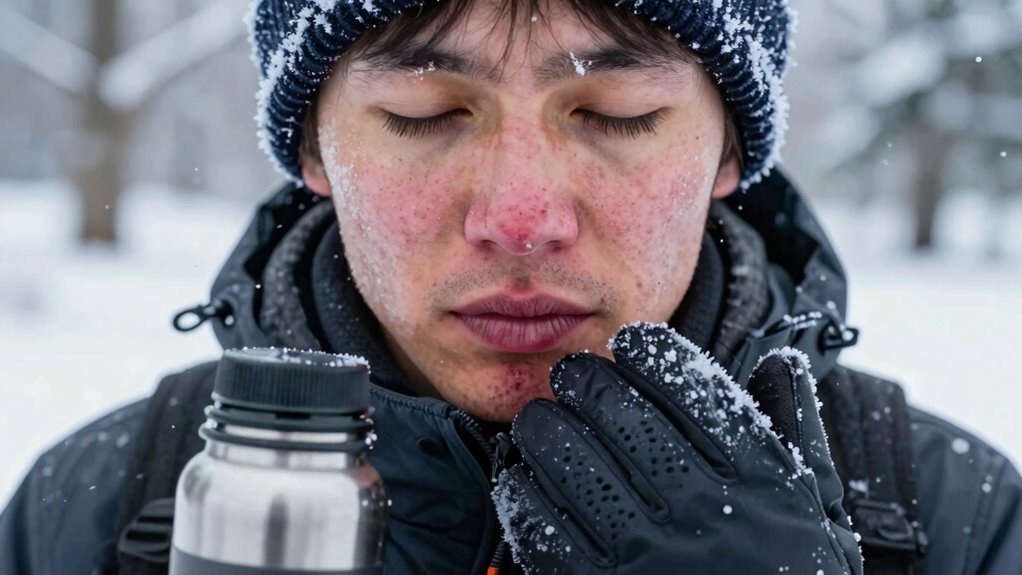
When your body starts to struggle with the cold, it can show early signs of frostbite and hypothermia that you need to recognize immediately. Frostbite symptoms include numbness, pale or waxy skin, and tingling sensations, especially in fingers, toes, nose, or ears. Hypothermia risk factors include shivering, confusion, exhaustion, and slurred speech. To prevent frostbite, you should keep extremities covered and stay dry, while hypothermia symptoms require you to warm up gradually and remove wet clothing. Recognizing these signs early helps you take quick action to prevent further injury. Knowing frostbite prevention tips and understanding hypothermia risk factors are essential to stay safe during cold exposure. Always monitor your body’s responses and seek warmth at the first signs of trouble. Proper gear selection can also help protect you from cold-related injuries and enhance your safety. Additionally, understanding the importance of body temperature regulation aids in effective response and prevention. Being aware of cold exposure symptoms allows for timely intervention and reduces the risk of serious complications.
Notice When You Feel Fatigued or Weak
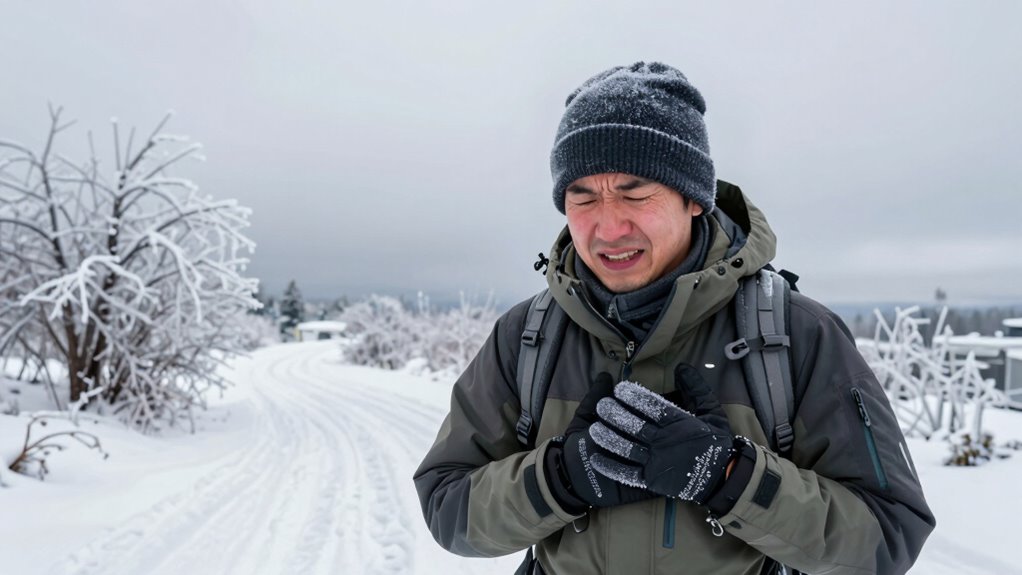
Feeling fatigued or weak during cold exposure is a clear warning sign that your body is struggling to maintain warmth. Recognizing fatigue awareness and weakness signals early can prevent serious issues. If you notice yourself feeling unusually tired or unable to perform basic tasks, it’s time to stop. Your body’s energy reserves are depleting, and continuing risks hypothermia. Keep an eye out for these signs:
Feeling weak or fatigued in cold conditions signals your body needs warming—stop and rest to prevent hypothermia.
- Sudden loss of strength or coordination
- Excessive drowsiness or inability to focus
- Feeling faint or dizzy
These symptoms indicate your body is overwhelmed and needs to be warmed up immediately. Ignoring fatigue signals can lead to dangerous conditions, so always listen to your body and prioritize safety when exposed to cold environments. Understanding your body’s signals is essential for safe cold exposure practices. Additionally, body temperature regulation varies depending on individual factors and environmental conditions, so staying attentive to these signs is crucial. Recognizing early warning signs can help you take prompt action before conditions worsen. Being aware of the importance of body awareness can help you prevent escalation of cold-related health risks. Monitoring your physical responses is vital for effective cold exposure management.
Warning Signs: Pale or Blue Skin
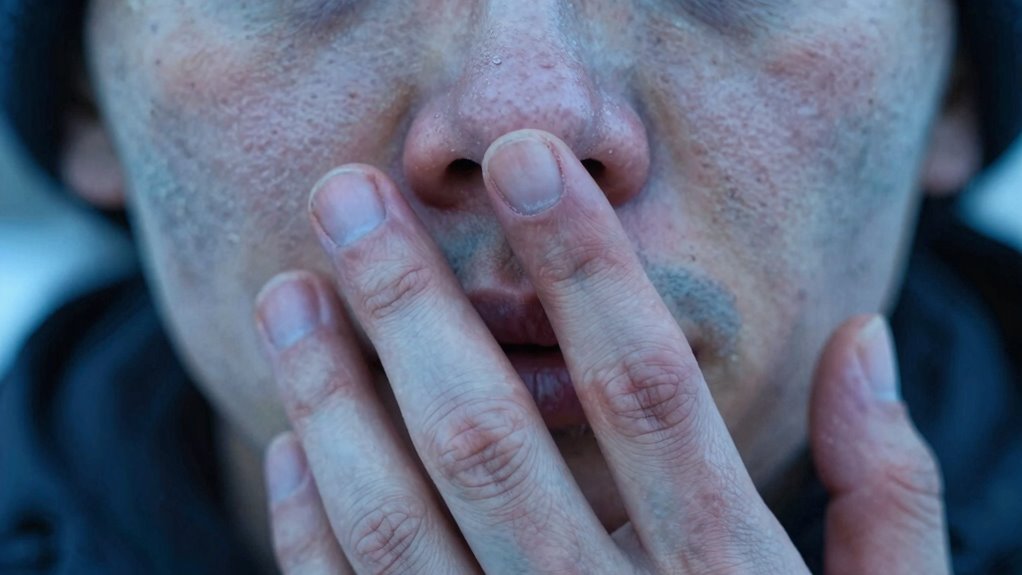
If you notice your skin turning pale or taking on a bluish hue, it’s a clear sign that your body is struggling to circulate oxygen effectively. Changes in skin color often indicate poor blood circulation, which can happen when exposed to cold temperatures. Pale skin suggests your body is diverting blood flow away from the surface to preserve core warmth, while a bluish tint, or cyanosis, signals low oxygen levels in the blood. These signs mean your body is under stress and you need to take action immediately. Recognizing these warning signs can help you prevent more serious issues like frostbite or hypothermia. Ignoring these warning signs can lead to more serious issues like frostbite or hypothermia. Pay close attention to your skin color during cold exposure, and recognize it as a critical indicator of your body’s response to the environment. Understanding the body’s response to cold exposure can help you better recognize when to seek help. Additionally, being aware of microplastics in dust and other indoor pollutants can impact overall health, especially when combined with cold stress.
When to Get Out and Warm Up Immediately
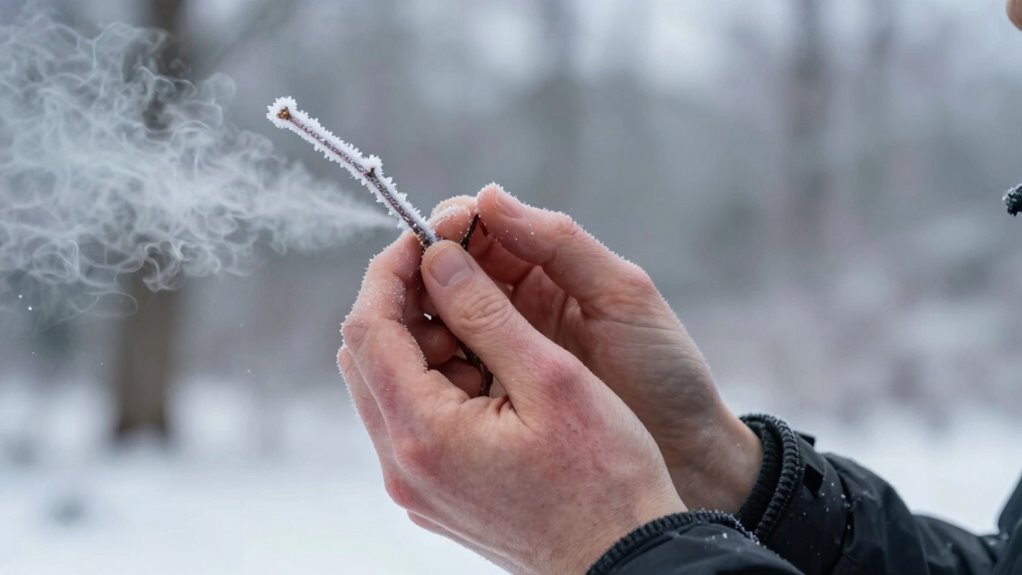
Recognizing the need to get out and warm up immediately can be lifesaving during cold exposure. If you notice symptoms like uncontrollable shivering, numbness, or skin turning pale or blue, it’s time to stop and seek warmth. Ignoring these signs increases the risk of hypothermia or frostbite. Proper clothing choices, such as layering and moisture-wicking fabrics, are vital for maintaining body heat. Always prioritize emergency preparedness by carrying extra clothing or blankets when venturing into cold environments. Be alert to these warning signs:
Get out of the cold immediately if you notice shivering, numbness, or pale blue skin to prevent hypothermia or frostbite.
- Persistent shivering or loss of coordination
- Skin turning pale, blue, or extremely cold to touch
- Inability to move limbs or respond normally
Act quickly—exit the cold, get into a warm environment, and begin warming your body immediately.
Frequently Asked Questions
How Long Can I Safely Stay in Cold Conditions?
You should limit your time in cold conditions to prevent hypothermia and support proper body heat regulation. Generally, stay no more than 30 minutes in very cold weather, but this varies based on clothing, activity level, and individual tolerance. Keep monitoring your body for signs of cold stress, and always prioritize hypothermia prevention by wearing appropriate gear and taking breaks indoors if needed. Your safety depends on listening to your body’s signals.
Are Certain Clothing Materials Better for Cold Exposure?
Certain clothing materials are better for cold exposure because they provide superior insulation and moisture management. Look for clothing with good insulation properties, like wool or synthetic fibers designed for cold weather, to keep you warm. Moisture-wicking fabrics are essential—they pull sweat away from your skin, preventing chills. Avoid cotton, as it retains moisture and reduces insulation. Layering with these materials helps you stay dry, warm, and safe in cold conditions.
Can Cold Exposure Affect Mental Health?
Cold exposure can affect your mental health by triggering cold-induced depression and increasing anxiety and cold sensitivity. When exposed to cold, your mental resilience may weaken, making it harder to cope with stress. You might notice mood changes, fatigue, or difficulty concentrating. To protect your mental well-being, it is crucial to recognize these signs early and take steps to stay warm and mentally resilient during cold conditions.
What Are the Long-Term Effects of Repeated Cold Exposure?
Repeated cold exposure can be like walking a tightrope over icy waters—you risk hypothermia and frostbite if you’re not careful. Long-term, it may weaken your immune system, damage skin, or impair circulation. To avoid these dangers, always stay vigilant for frostbite prevention signs and limit exposure time. Over time, your body adapts, but ignoring safety still leaves you vulnerable to serious health consequences.
How Does Alcohol Consumption Influence Cold Safety?
Alcohol impairments can reduce your ability to recognize cold symptoms and make you feel warmer than you actually are, increasing your hypothermia risk. When you drink alcohol, your blood vessels dilate, causing heat loss and making you more susceptible to the cold. So, if you’re exposed to cold environments, avoid alcohol, as it hinders your body’s natural response to cold and raises the danger of hypothermia.
Conclusion
Remember, about 80% of cold-related injuries could be prevented if you pay attention to early signs. If you start feeling numb, shivering uncontrollably, or notice skin changes, it’s time to warm up and seek help. Ignoring these signals increases your risk of frostbite or hypothermia. Stay vigilant, listen to your body, and don’t push your limits in cold weather. Your safety depends on recognizing when it’s time to stop and warm up.