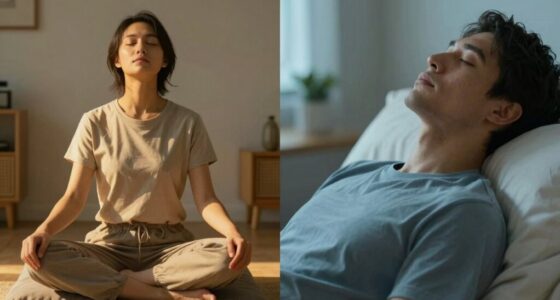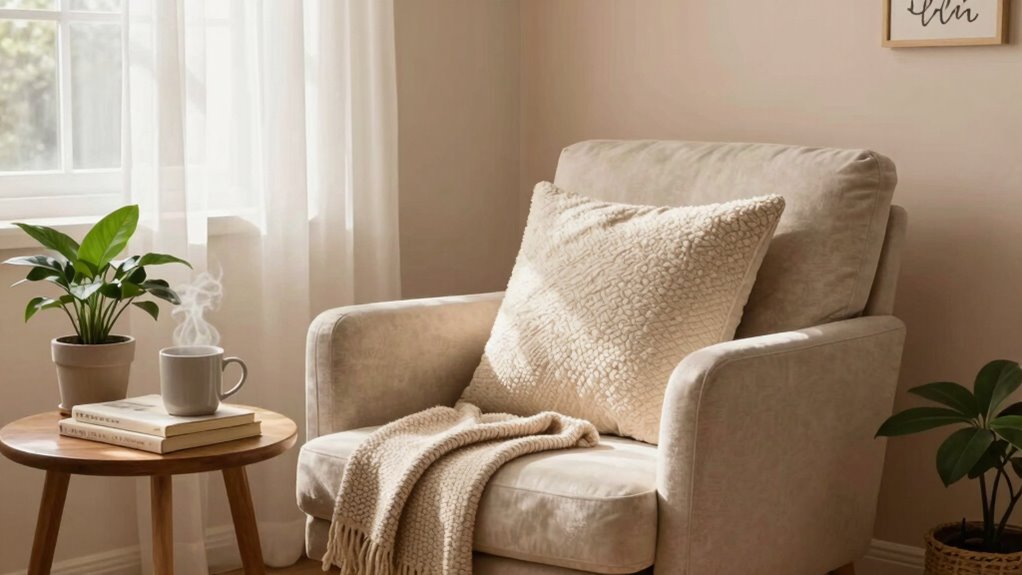

To create a recovery corner you’ll actually use, choose a quiet, clutter-free spot in your home that feels inviting. Add comfy elements like cushions, soft lighting, and calming scents with aromatherapy. Incorporate personal touches such as favorite music or journals, and keep essentials nearby. Make the space versatile, easy to access, and reflect your style for regular use. If you keep exploring, you’ll discover simple tips to transform this space into your perfect sanctuary.
Prime for Young Adults — start your free trial
Fast free delivery, streaming and member deals for eligible 18–24 year olds.
As an affiliate, we earn on qualifying purchases.
Key Takeaways
- Choose a quiet, clutter-free spot dedicated solely to relaxation and mindfulness.
- Incorporate comfortable seating, soft textiles, and soothing lighting to create a cozy ambiance.
- Use aromatherapy with calming essential oils like lavender to enhance relaxation.
- Add personal touches such as journals, candles, or visuals that resonate with you.
- Establish a daily routine that includes mindfulness, aromatherapy, and self-care practices.
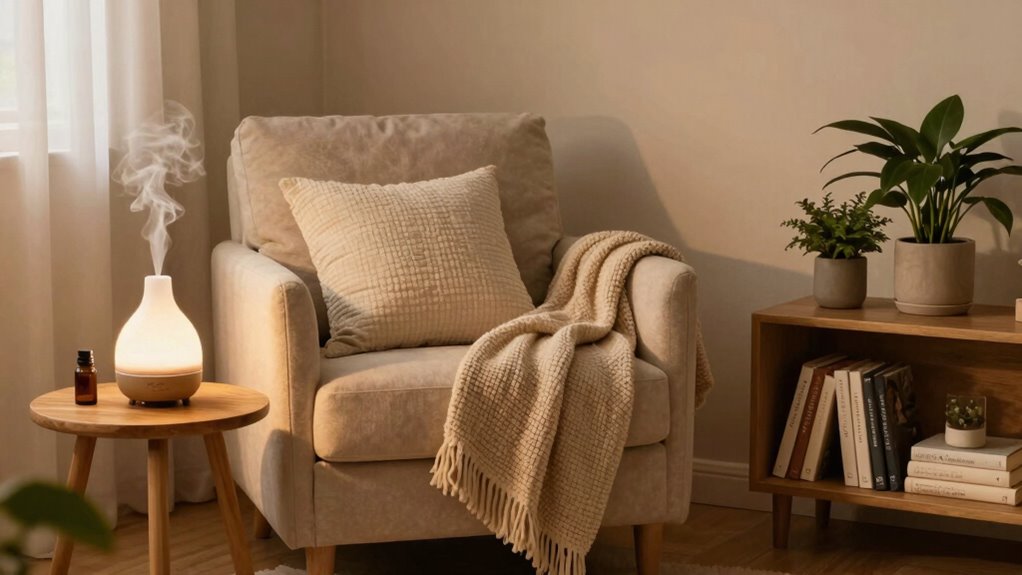
Have you ever thought about dedicating a space in your home solely for relaxation and recovery? Creating a recovery corner isn’t just about setting aside a seat or a small area; it’s about designing a sanctuary that encourages you to pause, breathe, and recharge. To make it truly effective, you want this space to feel inviting and purposeful. Start by choosing a quiet corner or a spot where you won’t be easily disturbed. Clear out clutter to keep the area simple and calming, which immediately sets a peaceful tone.
Create a peaceful sanctuary by choosing a quiet, clutter-free corner to pause, breathe, and recharge.
Next, consider incorporating elements that promote mindfulness techniques. These could be a comfy chair or floor cushion that invites you to sit comfortably during meditation or deep breathing exercises. Add a small table or shelf nearby for essentials like a journal, a candle, or calming visuals. The goal is to create an environment that encourages present-moment awareness, helping you disconnect from daily stress. When you practice mindfulness techniques here, you’ll find it easier to center yourself, reduce anxiety, and improve overall mental clarity.
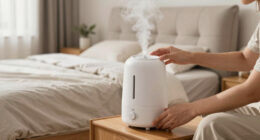
Aromatherapy benefits are another powerful addition to your recovery corner. Incorporate a diffuser with essential oils like lavender or chamomile, which are known for their calming properties. The gentle scent can help ease tension and promote relaxation, making it easier to unwind after a hectic day. Keep a few essential oil bottles nearby so you can switch scents depending on your mood or needs. The aroma creates an ambiance that signals your brain it’s time to relax, making your recovery corner more than just a visual space — it becomes an olfactory retreat as well. Additionally, selecting calming scents that resonate with you can enhance the overall effectiveness of your relaxation routine.
Comfort is key, so include soft textiles like throw blankets or cushions that invite you to settle in. Ambient lighting, such as a warm lamp or dimmable lights, can enhance the soothing atmosphere. If you enjoy music or guided meditation, keep a speaker handy. These additional touches make your recovery corner a versatile space that adapts to various relaxation methods. Incorporating gadgets and electronics like sound machines or smart lighting can further enhance this ambiance and help you customize your experience. Remember, a well-designed space can also support scientific breakthroughs in relaxation and mental health, making your routine even more beneficial.
Ultimately, your recovery corner should reflect your personal preferences and be easy to access daily. When you combine mindfulness techniques, aromatherapy benefits, and comfort, you create a dedicated area where you’ll genuinely want to spend time. Creating a space that is easy to access encourages you to integrate relaxation into your daily routine more seamlessly. Over time, this space will become your go-to refuge for mental clarity, physical relaxation, and emotional balance. Making it a part of your routine ensures you prioritize self-care, helping you feel more grounded and refreshed day after day.
aromatherapy diffuser for relaxation
As an affiliate, we earn on qualifying purchases.
As an affiliate, we earn on qualifying purchases.
Frequently Asked Questions
What Are the Essential Items to Include in a Recovery Corner?
You should include personalized decor to make your recovery corner inviting and relaxing. Add aromatherapy options like essential oils or diffusers to enhance comfort and reduce stress. Include a cozy chair or cushion for relaxation, along with soothing lighting. Don’t forget a few favorite books or calming visuals to create a peaceful atmosphere. These essentials help you unwind effectively, making your recovery corner a space you’ll genuinely enjoy using regularly.
How Much Space Do I Need to Create an Effective Recovery Corner?
You only need about 4×4 feet to create an effective recovery corner, making it easy to personalize decor and incorporate aromatherapy without taking up much space. Surprisingly, 80% of wellness spaces are small yet impactful. Focus on a cozy chair or mat, add personal touches, and include aromatherapy elements. This compact setup helps you relax and recover, proving that bigger isn’t always better for a soothing space.
Can a Recovery Corner Be Used for Mental Wellness?
Yes, your recovery corner can definitely support mental wellness. You can incorporate mindfulness practices like meditation or deep breathing exercises, creating a calming atmosphere. Adding elements like inspiring quotes or soothing sounds offers emotional support strategies that help ease stress. By making your space inviting and tailored to your mental health needs, you encourage regular use, fostering a peaceful environment where you can recharge mentally and emotionally whenever needed.
How Often Should I Update or Refresh My Recovery Corner?
You should refresh your recovery corner every few months or when it starts to feel less inviting. Incorporate personalization tips like adding new decor, changing lighting, or updating your favorite calming items. Establish simple maintenance routines, such as tidying up regularly and rotating wellness tools, to keep the space inviting and functional. This keeps the area fresh, inspiring, and aligned with your evolving needs, encouraging consistent use and maximizing its benefits.
Are There Any Specific Colors That Promote Relaxation in a Recovery Space?
Calming hues, soothing shades, and gentle tones all promote relaxation in your recovery space. According to color psychology, soft blues, tranquil greens, and warm neutrals create a peaceful atmosphere that helps you unwind. These colors reduce stress, encourage calmness, and foster a sense of safety. By choosing these hues, you set the perfect tone for your recovery corner, making it a welcoming retreat where you can truly relax and recharge.
soft lighting lamps for cozy spaces
As an affiliate, we earn on qualifying purchases.
As an affiliate, we earn on qualifying purchases.
Conclusion
So there you have it—your very own oasis of “recovery” amidst the chaos. Just remember, creating a corner is the easy part; actually using it requires a bit of discipline and perhaps a gentle nudge from your inner couch potato. But hey, if all else fails, at least you’ve got a fancy space to guiltlessly lounge and pretend you’re “self-care-ing.” Because let’s be honest, isn’t that what relaxation is really all about?
comfortable floor cushions for meditation
As an affiliate, we earn on qualifying purchases.
As an affiliate, we earn on qualifying purchases.
essential oils lavender chamomile
As an affiliate, we earn on qualifying purchases.
As an affiliate, we earn on qualifying purchases.
NFL season / tailgating Picks
team gear
As an affiliate, we earn on qualifying purchases.