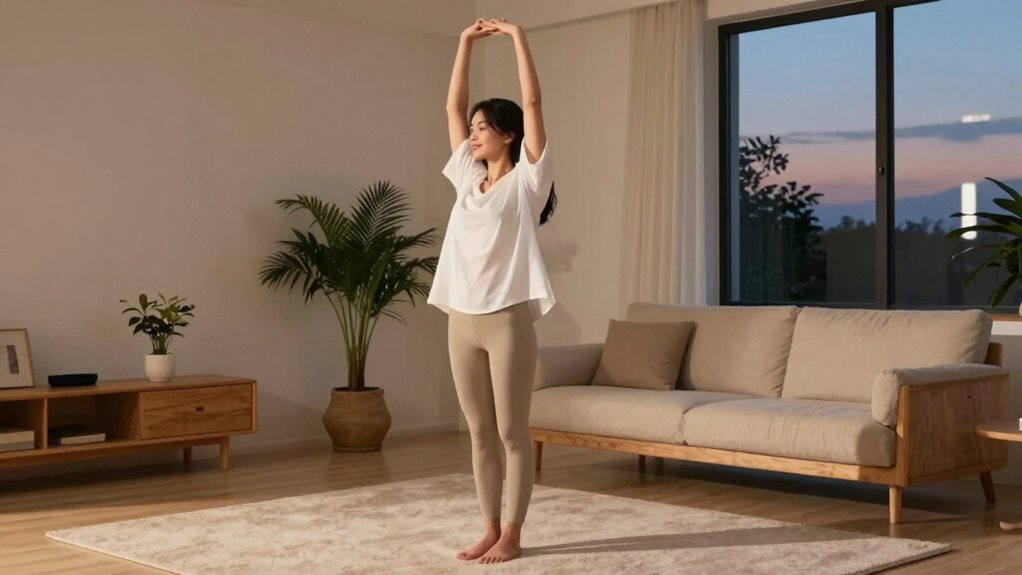
A gentle evening stretching routine focused on “less is more” helps you unwind and prepares your body for restful sleep. Keep it simple by choosing calming stretches like neck rolls, shoulder shrugs, and spinal twists, performed slowly and mindfully. Create a peaceful space, breathe deeply, and stick to a short, consistent routine each night. If you want to discover easy steps to develop this relaxing habit and tackle common issues, keep exploring.
Key Takeaways
- Focus on slow, mindful stretches that target neck, shoulders, and back to promote relaxation without overstimulation.
- Keep routines brief—5 to 10 minutes—to maintain consistency and prevent fatigue before sleep.
- Create a calm environment with dim lighting, aromatherapy, and comfortable clothing to enhance relaxation.
- Incorporate deep breathing techniques during stretches to activate the relaxation response effectively.
- Use simple, strain-free movements like gentle spinal twists or shoulder rolls to avoid overexertion.
Why Nighttime Stretching Helps You Relax and Sleep Better
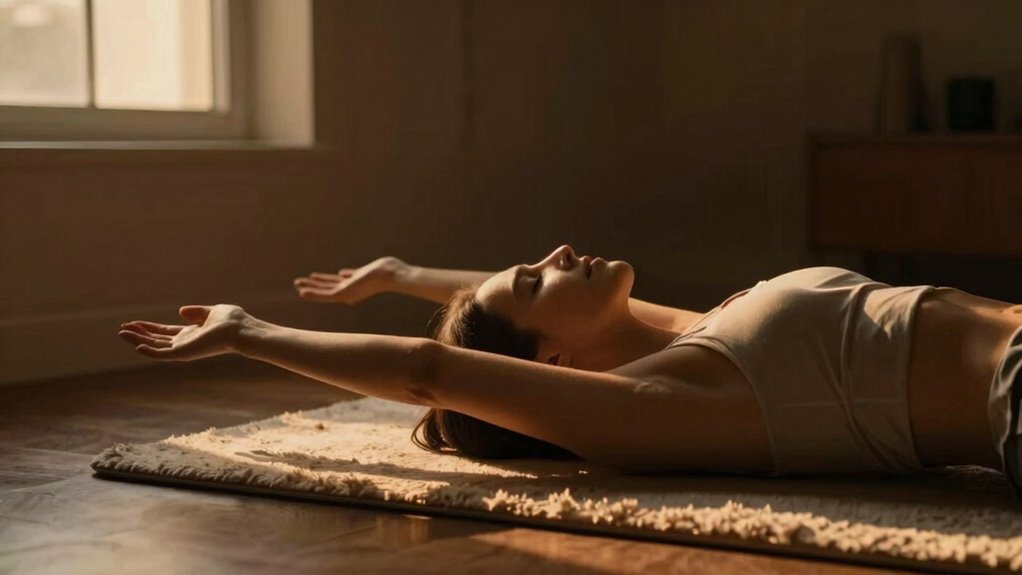
Nighttime stretching can considerably improve your ability to relax and fall asleep more easily. When you incorporate breathing techniques into your routine, you activate your body’s relaxation response, easing tension built up during the day. Slow, deliberate breaths help reduce stress relief by calming your nervous system, making it easier to unwind. Stretching gently loosens tight muscles and relieves physical discomfort that might keep you awake. As you focus on your breath and gentle movements, your mind shifts away from worries, promoting mental calmness. This combination of mindful breathing and light stretching signals to your body that it’s time to relax, helping you shift smoothly into restful sleep. Regular evening stretches create a calm foundation for a peaceful night. Incorporating ergonomic principles into your routine can further enhance your comfort and sleep quality. Additionally, paying attention to your body alignment during stretches can prevent discomfort and improve overall effectiveness. Properly aligning your posture during stretches can also prevent strain and support better sleep, ensuring your body is in a comfortable position for rest. Engaging in mindful movement during your routine can deepen relaxation and increase the benefits for your sleep quality.
How to Prepare Your Space and Mind for Evening Stretching
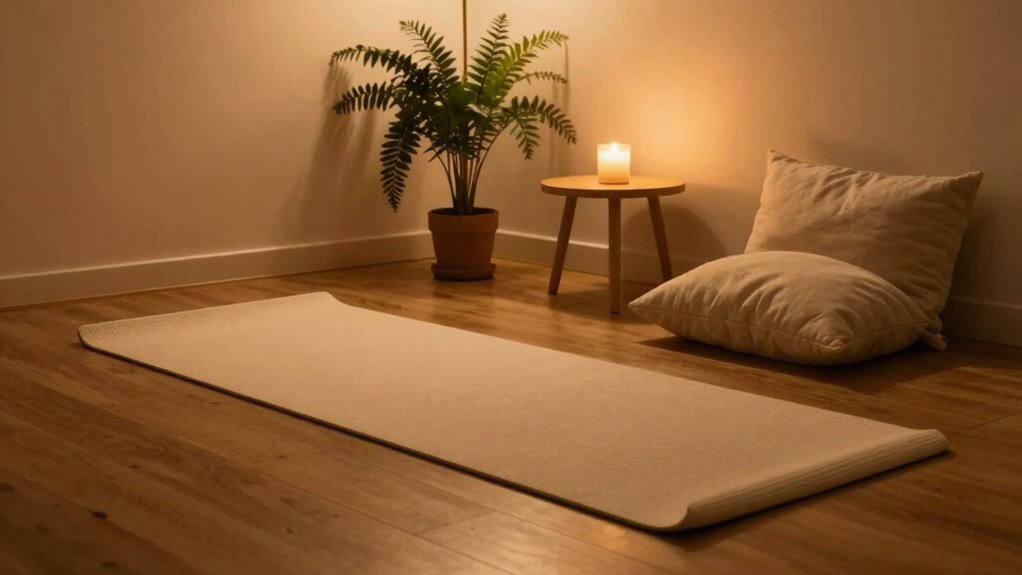
Creating a calm and inviting space sets the tone for a successful evening stretching routine. Choose a quiet, clutter-free area where you won’t be disturbed. Dim the lights or add calming visuals like candles or soft lamps to create a soothing atmosphere. Before starting, take a few moments for mindful breathing—inhale slowly through your nose, then exhale gently through your mouth. This helps relax your mind and body, making it easier to focus on your stretches. Guarantee your clothing is comfortable and your space is warm enough to prevent tension from cold. Additionally, ensuring your environment is free of air leaks can contribute to maintaining a comfortable temperature. Proper ventilation and outdoor elements can also enhance your sense of tranquility. Be mindful of your environmental factors such as noise or drafts, which can impact your relaxation. Incorporating climate control measures can further optimize your environment for relaxation. Making sure your space is free of distractions allows you to fully focus on your stretching. By setting up your environment thoughtfully, you’ll create a peaceful mindset that prepares you mentally and physically for gentle, effective evening stretching.
Easy Stretches to Unwind Your Body Before Bed
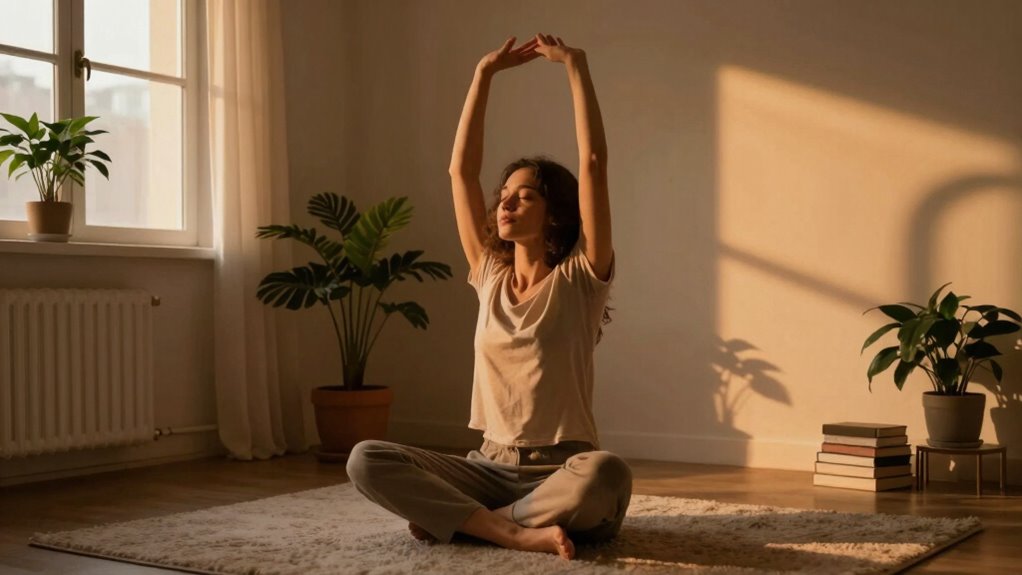
To unwind your body before bed, incorporate simple stretches that release tension and promote relaxation. Gentle stretches help ease your muscles and calm your mind, making it easier to shift into restful sleep. Focus on slow, deliberate movements such as neck rolls, shoulder shrugs, and gentle spinal twists. These stretches target common areas of tension and encourage deep breathing, enhancing bedtime relaxation. Keep your movements smooth and controlled, avoiding any strain. By dedicating a few minutes to these easy stretches, you signal to your body that it’s time to relax. Practicing mindfulness during your stretching routine can further deepen relaxation and reduce stress. Being mindful of your home comfort and environment can also help create an ideal setting for winding down. Incorporating aromatherapy into your pre-bed routine can enhance the calming effects and promote better sleep. Establishing a consistent bedtime routine can also reinforce your body’s cues for relaxation. Creating a peaceful environment in your bedroom can significantly enhance the effectiveness of your relaxation practices. Consistently practicing these gentle stretches before bed can improve your overall sleep quality and help you wake up feeling refreshed. Remember, less is more when it comes to evening stretching.
Tips to Make Nightly Stretching a Consistent Habit
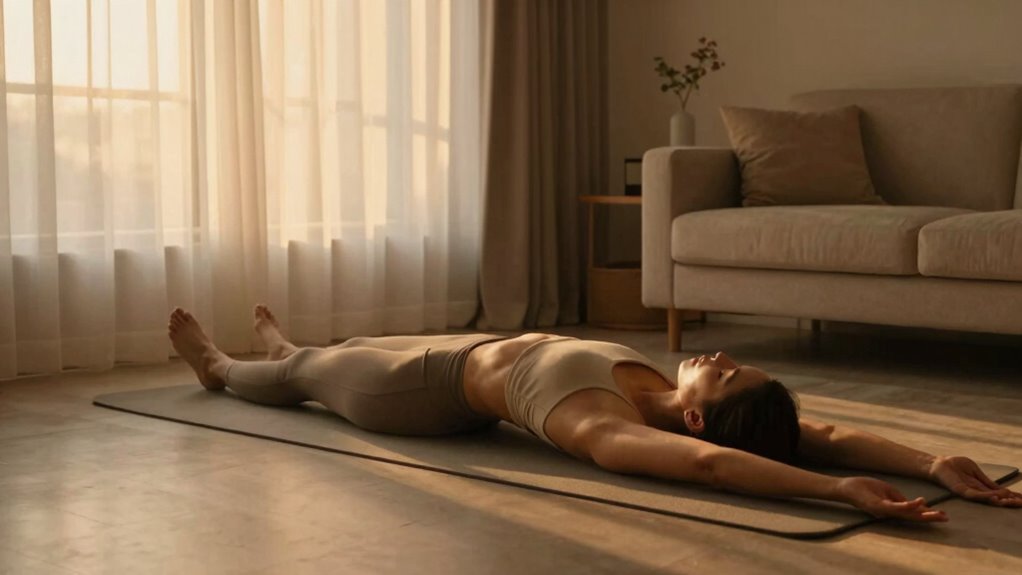
Have you struggled to make nightly stretching a regular part of your routine? To build consistency, start by setting a specific, relaxing time each evening. Use mindfulness techniques, like focusing on your breath, to help you stay present and avoid distractions. Incorporate stretching accessories such as foam rollers or resistance bands to enhance your routine and motivate you to stick with it. Keep your space inviting—dim lighting, comfortable surface, and minimal noise—so you associate it with relaxation. Make it easy by preparing your accessories in advance, so you’re ready to go. Remember, routine consistency is key, so even if your session is short, doing it every night reinforces the habit. Utilizing familiar home automation tools can also serve as a calming ritual to signal the start of your stretching session. Developing a habit formation mindset can further support your long-term commitment. Over time, these small steps will help you develop a sustainable nightly stretching practice.
Common Nighttime Stretching Problems and Simple Fixes
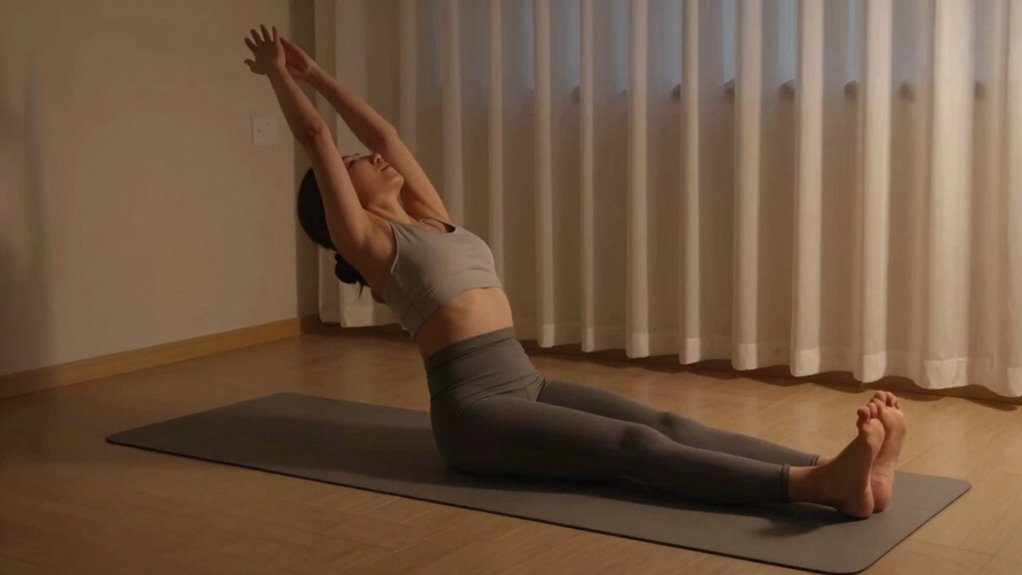
Many people encounter common issues when trying to stick to their nighttime stretching routines, such as feeling too sleepy to focus or losing motivation after a busy day. These problems can hinder progress in posture correction and breath awareness. To overcome them, consider these simple fixes:
- Set a consistent, relaxing time for stretching each night
- Use gentle, accessible stretches to prevent fatigue
- Focus on slow, deep breaths to improve breath awareness
- Ensure proper posture during each stretch to maximize benefits
- Create a calming environment to reduce distractions and enhance focus
- Incorporate smart strategies from personal finance planning to develop a sustainable routine
- Stay informed about market trends that can influence your motivation and routine consistency
- Paying attention to piercing healing times and proper aftercare practices can help prevent discomfort and setbacks during your routine
- Additionally, understanding emotional well-being concepts can enhance your motivation and resilience in maintaining your routine
- Recognizing the training needs of your dog can help you create a more effective and enjoyable bonding experience during your routine.
Addressing these issues helps you stay committed, improves your stretching effectiveness, and makes your routine more enjoyable. Small adjustments can lead to significant progress in your nightly practice.
Frequently Asked Questions
How Long Should Each Evening Stretch Session Last?
For each evening stretch session, aim for about 10 to 15 minutes, following the duration guidelines for gentle stretching. You don’t need to overdo it; focus on maintaining each stretch for 15 to 30 seconds to improve flexibility without strain. Keep the stretching duration moderate, and listen to your body—if anything feels uncomfortable, ease up. Consistency matters more than length, so make this routine a calming nightly habit.
Can Gentle Stretching Improve Nighttime Anxiety or Stress?
Yes, gentle stretching can help reduce nighttime anxiety or stress. When you combine it with mindfulness meditation and breathing exercises, you create a calming routine that relaxes your mind and body. Focus on slow, deliberate movements, deep breaths, and being present in the moment. This approach helps lower cortisol levels, quiets racing thoughts, and prepares you for restful sleep, making your evenings more peaceful.
Is It Safe to Stretch if I Have Existing Injuries?
Yes, it’s safe to stretch if you have existing injuries, but you should follow injury precautions. Avoid overstretching or pushing into pain, and focus on gentle, controlled movements. Stretching benefits include improved flexibility and reduced muscle tension, which can aid recovery. Always listen to your body and consult a healthcare professional if you’re unsure about specific stretches or if your injuries require special care.
What Are Signs I Might Be Overdoing My Stretches?
You might be overdoing your stretches if you feel persistent pain, sharp discomfort, or increased soreness afterward. Pay attention to your stretching intensity—if it causes strain rather than gentle release, reduce the effort. Overstretching can lead to injury, so always listen to your body and avoid pushing through pain. Properly managing your stretching routine helps with injury prevention and guarantees you gain flexibility safely.
Should I Stretch Before or After My Nightly Skincare Routine?
You should stretch after your nightly skincare routine. Stretching timing matters because it helps relax your muscles and enhances flexibility without causing skin irritation. Doing it post-skincare guarantees your skin stays protected and your products absorb better. Plus, gentle stretching can be a calming signal to your body, making it easier to unwind. Just keep your routines compatible, avoid overstretching, and enjoy a peaceful, restorative evening routine.
Conclusion
By making gentle evening stretching your nightly ritual, you’ll open the secret to falling asleep faster than you ever thought possible—like a magic spell for your body and mind. With just a few simple moves, you’ll transform your nights into blissful, rejuvenating escapes from stress. Stick with it, and soon you’ll wonder how you ever survived without this “less is more” routine—your new superpower for perfect sleep awaits!