To prevent muscle cramps, staying well-hydrated with water alone isn’t enough; you need to maintain a proper balance of electrolytes like sodium, potassium, magnesium, and calcium. Drinking water helps, but overdoing it without replenishing minerals can worsen imbalances. To truly support muscle function and recovery, incorporate electrolyte-rich drinks, nutrient-dense foods, and scheduled hydration. Understanding these strategies can make a real difference—keep exploring to learn more about effective hydration and cramp prevention.
Key Takeaways
- Proper hydration with water and electrolytes prevents muscle cramps caused by imbalances.
- Replenishing electrolytes through foods like bananas and greens supports muscle function and recovery.
- Drinking water alone often isn’t enough; electrolyte-rich drinks are more effective.
- Stretching, massage, and magnesium supplements can relieve cramps but don’t replace hydration.
- Overhydrating with plain water without electrolytes can dilute salts and worsen cramps.
How Dehydration Causes Muscle Cramps
Dehydration can directly lead to muscle cramps because when your body lacks sufficient water, it disrupts the balance of electrolytes like sodium, potassium, and magnesium that are essential for proper muscle function. This imbalance can cause muscle stiffness and increase the likelihood of cramps. If you don’t hydrate properly, your muscles can become more prone to sudden contractions. Hydration timing matters—you should drink fluids consistently throughout the day, especially before and during physical activity. Waiting until you’re thirsty isn’t enough; staying ahead of dehydration helps maintain electrolyte balance and prevents muscle stiffness. Keep in mind that inadequate hydration can impair muscle performance, making cramps more likely. Proper hydration supports muscle relaxation and reduces the risk of cramps caused by dehydration. Additionally, engaging in aquatic exercises can help improve muscle flexibility and reduce cramping tendencies by promoting gentle stretching and circulation. Staying well-hydrated can also enhance overall muscle recovery, which is vital for preventing cramps during intense activities. Maintaining adequate hydration levels is also crucial for electrolyte balance, which directly impacts muscle function and cramp prevention. Regular hydration can also help avoid muscle fatigue, further lowering the chances of cramps occurring during physical exertion.
The Role of Electrolytes in Preventing Cramps and Staying Hydrated
Electrolytes like sodium, potassium, magnesium, and calcium play an indispensable role in maintaining muscle function and preventing cramps. When your electrolytes are balanced, your muscles work smoothly, reducing cramp risk. To support this, focus on:
- Electrolyte replenishment: Consume foods and drinks rich in electrolytes, especially after exercise or sweating.
- Salt intake: Moderate salt intake helps maintain sodium levels, vital for nerve signals and muscle contractions.
- Balanced hydration: Drinking water with electrolytes ensures proper absorption and minimizes imbalances.
How Proper Hydration Supports Muscle Function and Recovery
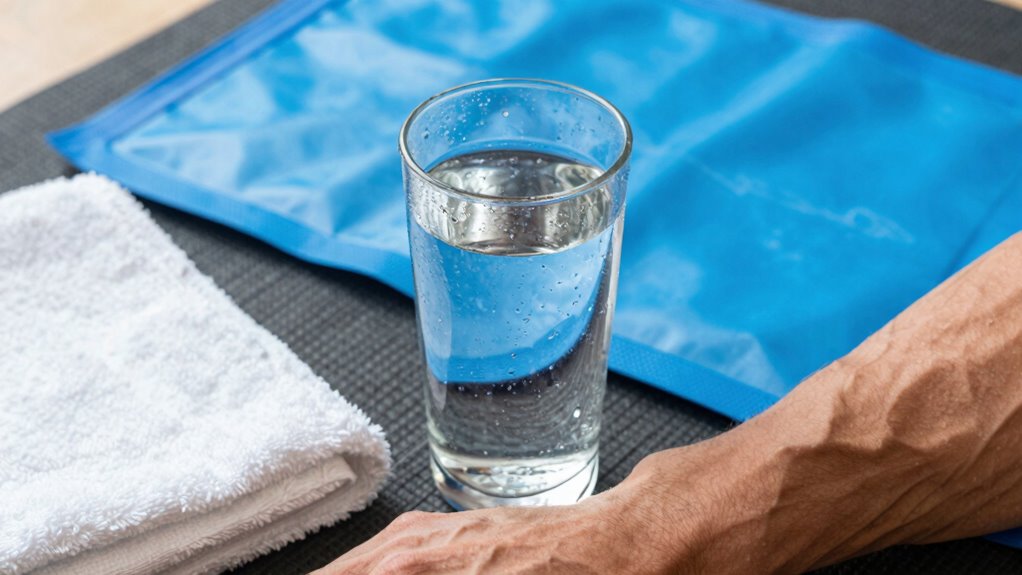
When you stay properly hydrated, your muscles function more efficiently and recover faster after activity. Maintaining a balance of electrolytes is key to preventing cramps and supporting this process. Drinking enough water helps your muscles stay strong and ready for your next workout. Additionally, hydrating ingredients in drinks can further enhance muscle performance and recovery.
Electrolyte Balance Importance
Proper hydration plays a crucial role in maintaining the delicate balance of electrolytes in your body, which directly impacts muscle function and recovery. When your electrolyte levels are balanced, your muscles contract smoothly and reduce cramping risks. To support this, consider these hydration strategies:
- Use electrolyte supplements during intense activity to replenish lost minerals.
- Drink fluids rich in potassium, magnesium, and sodium to maintain balance.
- Monitor your hydration status, adjusting intake based on activity level and sweat loss.
- Choosing products from reputable Gold IRA markets can ensure transparency and quality in your investment choices.
Additionally, incorporating essential oils for muscle relief, such as peppermint oil, may help soothe muscle tension and improve recovery. Ensuring you maintain proper hydration supports overall electrolyte balance, which is vital for preventing cramps and optimizing muscle performance. Regular hydration also helps maintain fluid balance, essential for efficient muscle function and avoiding fatigue. Maintaining hydration levels is especially important during hot weather or intense exercise when sweat loss is higher.
Hydration and Muscle Recovery
Staying well-hydrated is essential for peak muscle function and efficient recovery after exercise. Proper hydration helps reduce muscle fatigue by maintaining ideal fluid balance, ensuring nutrients reach your muscles effectively. When hydration timing is off—either drinking too little or too late—you risk prolonging soreness and delaying recovery. Drinking water before, during, and after your workout supports muscle repair and minimizes cramping caused by dehydration. Adequate hydration also flushes out metabolic waste products that accumulate during exercise, speeding up recovery. Mammography guidelines emphasize the importance of early detection and appropriate screening, just as proper hydration is key to maintaining muscle health. Additionally, research into sound vibrations suggests that external stimuli can influence cellular regeneration and overall health, highlighting the importance of supportive recovery practices. By paying attention to your hydration habits, you can improve muscle performance, reduce fatigue, and recover faster. Remember, consistent hydration is key to sustaining your muscles’ health and avoiding setbacks caused by dehydration or improper hydration timing.
How to Stay Hydrated Before, During, and After Exercise
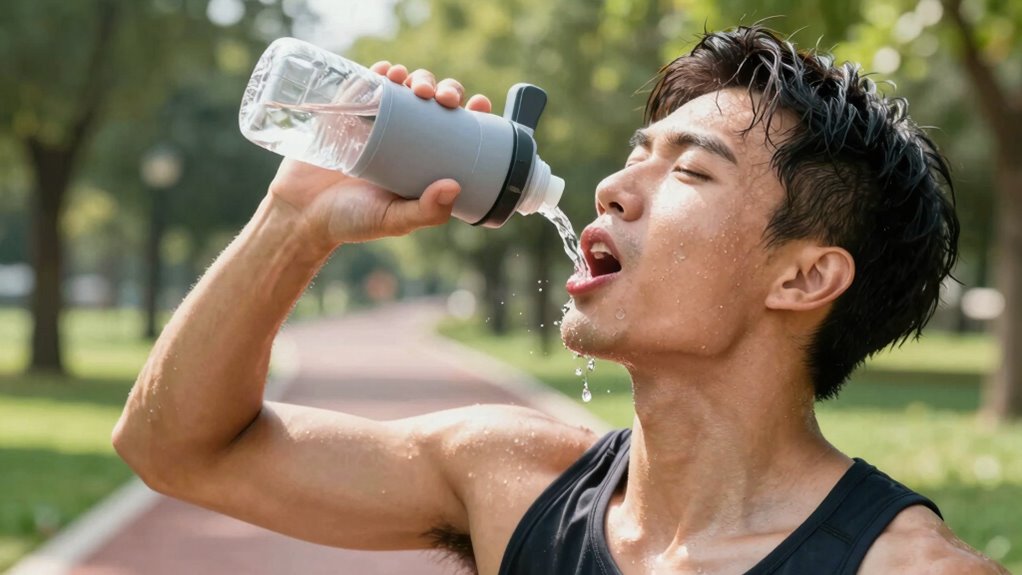
To maintain ideal hydration during exercise, you need to drink fluids at the right times and in the right amounts. Effective hydration strategies depend on your exercise timing and individual needs. Before exercising, drink 16-20 ounces of water about 2-3 hours ahead to ensure proper hydration. During activity, consume 7-10 ounces every 10-20 minutes to replace fluids lost through sweat. Afterward, rehydrate with 16-24 ounces of water within 30 minutes to aid recovery. Pay attention to signals like thirst and color of your urine. Adjust your intake if you’re exercising in hot or humid conditions. Remember, consistent hydration is key to preventing cramps and maintaining performance. Following these simple guidelines helps you stay optimally hydrated throughout your workout. Proper hydration is essential for supporting your body’s functions during exercise and preventing issues like cramps. Incorporating hydration timing into your routine helps optimize fluid absorption and overall effectiveness. Ensuring adequate fluid intake is crucial for maintaining electrolyte balance and preventing dehydration-related cramps.
Common Myths About Hydration and Muscle Cramps Debunked
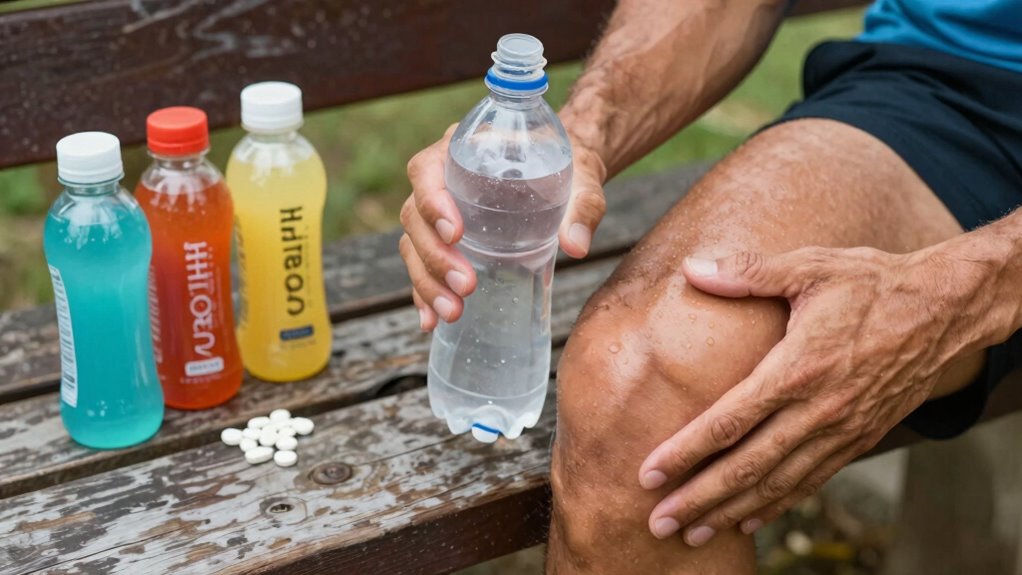
Many common beliefs about hydration and muscle cramps are actually myths that can lead to unnecessary worry or improper practices. One widespread myth is that dehydration alone causes cramps; however, muscle fatigue from overuse is often the real culprit. People also assume that drinking large amounts of water instantly prevents cramps, but excessive water intake can dilute electrolytes essential for muscle function. Another misconception is that all cramps are due to dehydration, ignoring factors like electrolyte imbalances or muscle fatigue. These myths might cause you to focus solely on water intake, neglecting other important aspects of maintaining proper hydration and muscle health. Additionally, understanding the role of electrolyte balance is crucial, as imbalances can contribute significantly to cramp development. Proper hydration involves not just water but also maintaining electrolyte levels, which are vital for correct muscle function. Recognizing the importance of muscle fatigue can help you prevent cramps through appropriate rest and conditioning. Understanding these misconceptions helps you approach hydration smarter, avoiding unnecessary or ineffective remedies.
When Drinking Water Isn’t Enough: Other Remedies That Help
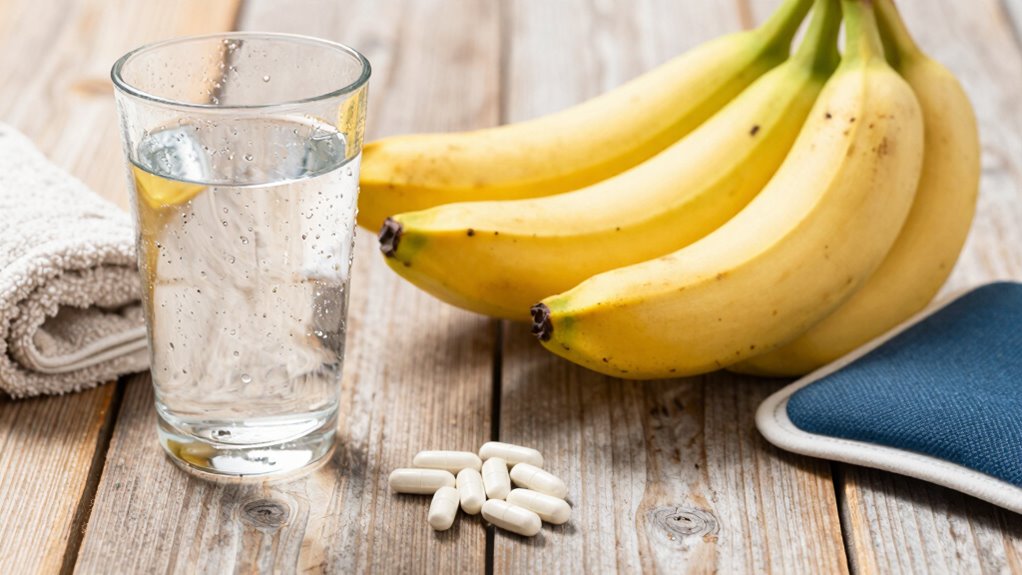
When water alone doesn’t resolve muscle cramps, exploring other remedies can make a real difference. Home remedies and herbal solutions can provide relief when hydration isn’t enough. Consider these options:
- Stretch and Massage – Gently stretch the cramped muscle and massage it to promote blood flow and ease tension.
- Herbal Teas – Sip on teas like chamomile or ginger, which have anti-inflammatory properties that can soothe muscle tightness.
- Magnesium Supplements or Baths – Magnesium helps relax muscles; taking supplements or soaking in a magnesium-rich bath may prevent future cramps. Incorporating magnesium-rich foods or supplements is a practical way to support muscle function.
- Regional Flavors and Therapeutic Infusions – Incorporating regional flavors and herbal infusions known for their relaxing and anti-inflammatory properties can also support muscle recovery and overall relaxation. Exploring traditional herbal remedies rooted in cultural practices can enhance muscle recovery efforts.
These remedies target muscle relaxation and recovery, offering additional support beyond drinking water. Always consult a healthcare professional before trying new herbal solutions or supplements.
How to Recognize Dehydration and Electrolyte Imbalance
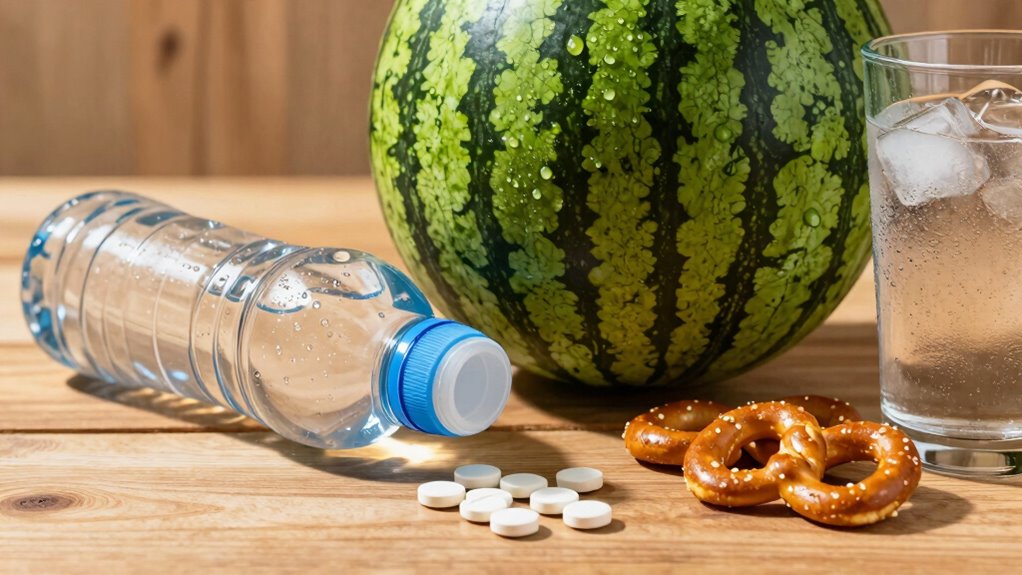
Even after trying remedies like stretching, herbal teas, or magnesium baths, recognizing the signs of dehydration and electrolyte imbalance is key to preventing muscle cramps in the first place. Focus on your fluid intake and be alert to symptoms that indicate a problem. Signs of dehydration include dry mouth, dark urine, fatigue, and dizziness. Electrolyte imbalances may cause muscle weakness, twitching, or cramps, especially after intense exercise or sweating. Monitoring these symptoms helps you identify when your body needs more hydration or electrolyte replenishment. Keep track of how much fluid you’re drinking and pay attention to how your body feels. Recognizing these early warning signs allows you to address dehydration or imbalances before cramps become severe. Additionally, maintaining proper electrolyte balance through diet and hydration supports overall muscle function and reduces the likelihood of cramps. Proper hydration and electrolyte intake are crucial for muscle health, which can be supported by understanding the importance of balanced electric power generation and how it relates to overall physical well-being. Consuming plant-based sources of electrolytes, such as celery juice powder, can also help support this balance naturally.
Tips for Preventing Cramps and Staying Hydrated Long-Term
To effectively prevent cramps and stay hydrated over the long term, establishing consistent hydration habits is essential. Adopt effective hydration strategies like drinking water regularly throughout the day and monitoring your fluid intake based on activity levels. Incorporate nutritional supplements, such as magnesium or potassium, to support electrolyte balance. Here are some tips to help you stay on track:
- Schedule regular water breaks, especially during exercise or hot weather.
- Include electrolyte-rich drinks or supplements to replenish minerals lost through sweat.
- Maintain a balanced diet with foods high in hydration-supporting nutrients like bananas, nuts, and leafy greens.
- Be mindful of natural pools and landscaping to select foods and drinks that support optimal hydration and electrolyte balance.
Frequently Asked Questions
Can Certain Medications Increase the Risk of Dehydration-Related Cramps?
Certain medications can increase your risk of dehydration-related cramps by causing side effects like dry mouth, increased urination, or sweating. These dehydration symptoms make you more prone to cramps, especially if you’re active or in hot weather. Always check your medication labels or talk to your doctor about potential side effects, and stay well-hydrated to help prevent cramps caused by dehydration.
Are There Specific Foods That Help Prevent Muscle Cramps?
You’d think eating more bananas or oranges would prevent cramps, but ironically, focusing solely on foods to avoid like salty snacks might be more helpful. Foods rich in potassium and magnesium, such as leafy greens and nuts, support muscle function. Pair these with proper hydration strategies—like drinking water throughout the day. This combo can help keep cramps at bay, proving sometimes the best cure is prevention through smart food choices.
How Does Alcohol Consumption Affect Hydration and Cramp Risk?
Alcohol effects your hydration by acting as a diuretic, which increases dehydration risk. When you drink, it prompts your body to lose more fluids, making you more prone to muscle cramps. To reduce this risk, stay well-hydrated before, during, and after drinking alcohol. Keep in mind that excessive consumption worsens dehydration, so moderation is key to avoiding cramps and maintaining proper hydration.
Do Genetic Factors Influence Susceptibility to Dehydration and Cramps?
Sure, your genes definitely play a sneaky role in dehydration and cramps. Genetic predispositions and hereditary factors mean some folks are naturally more prone to losing fluids or experiencing muscle spasms. So, if you think you’re cursed with a body that’s overly sensitive to dehydration, blame your DNA—because your genes are quietly setting the stage for those pesky cramps and dehydration risks, even before you hit the gym or hot day.
What Are the Signs of Severe Dehydration Requiring Medical Attention?
If you notice dizziness, confusion, rapid heartbeat, or fainting, you’re likely experiencing severe dehydration. These symptoms often signal electrolyte imbalance or heat exhaustion, both requiring urgent medical care. You might also have dry skin, dark urine, or extreme fatigue. Don’t ignore these signs; seek medical attention promptly to prevent serious complications. Proper hydration and electrolyte balance are vital to recovery and avoiding long-term health issues.
Conclusion
Staying hydrated isn’t just about drinking water; it’s about understanding your body’s needs and recognizing signs of imbalance. When you listen, you may find that cramps fade away just as suddenly as they appeared. Proper hydration, balanced electrolytes, and awareness work together, often when you least expect it. So, keep these tips in mind, stay consistent, and you might just find that cramps become a thing of the past—sometimes, relief comes when you least expect it.