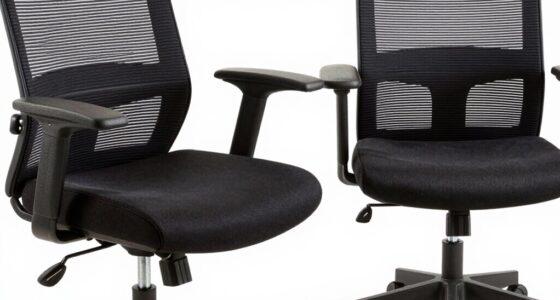

Resting your arm heavily on one armrest can cause uneven weight distribution, leading to increased shoulder tension and muscle imbalance. When you lean more on one side, it strains your shoulder, neck, and upper back muscles, potentially causing discomfort or long-term pain. This habit makes your muscles work unevenly, which can lead to persistent issues. If you want to learn how to prevent this tension and improve your posture, keep exploring these strategies.

Get comfort and recovery gear delivered free — and shop member deals
- Fast, free delivery on millions of items
- Access to Prime Big Deal Days deals on October 6–7
- Prime Video, Amazon Music and more included
Key Takeaways
- Resting heavily on one armrest causes uneven weight distribution, leading to muscle imbalance and shoulder tension.
- Habitually leaning or slouching on armrests increases muscle strain in shoulders and neck.
- Prolonged poor armrest positioning reduces muscle engagement, contributing to discomfort and long-term pain.
- Using armrests excessively or with poor posture heightens tension in shoulder and upper back muscles.
- Inconsistent armrest use promotes muscle imbalance, increasing the risk of chronic shoulder tension.

Many people unknowingly worsen their shoulder tension by habitually resting their arm on the armrest in a way that strains their muscles. This habitual position can lead to increased stress on the shoulder, neck, and upper back, especially if you’re not mindful of your overall posture. When you lean heavily on one armrest, you often tilt your upper body, causing uneven distribution of weight and muscle imbalance. Over time, this can result in persistent discomfort or even chronic pain. To counteract this, it’s essential to adopt an ergonomic posture that supports your body naturally. Keep your shoulders relaxed and aligned with your hips, avoiding slouching or leaning excessively to one side. Sit back in your chair so that your back is supported, and your feet rest flat on the floor. Position your computer screen at eye level to prevent craning your neck, which can further contribute to shoulder strain.
In addition to maintaining an ergonomic posture, incorporating relaxation techniques into your routine can help ease shoulder tension. Regularly stretching your neck and shoulders, practicing deep breathing exercises, or using progressive muscle relaxation can make a significant difference. These techniques help release muscle tightness and promote better circulation, reducing the likelihood of pain caused by sustained muscle contraction. Be mindful of how often you shift your position; staying static for long periods exacerbates tension, so make it a habit to move around or stretch every 30 minutes. When you do use the armrest, do so with moderation, ensuring your arm remains relaxed rather than tense or elevated for extended periods. Recognizing muscle imbalance and addressing it early can prevent long-term discomfort. Paying attention to your overall body awareness can help you identify and correct poor habits before they lead to pain. Developing mindful sitting habits can also reduce the tendency to adopt unhealthy postures unconsciously. Additionally, incorporating ergonomic accessories like cushioned armrests or lumbar support can significantly improve your sitting comfort and posture. It’s also beneficial to be aware of your muscle engagement during sitting, as excessive tension can contribute to discomfort. Remember, the goal isn’t just to prevent shoulder tension but to foster a sustainable, healthy sitting habit. By combining ergonomic posture with simple relaxation techniques, you’ll reduce the strain caused by habitual armrest use and develop a more comfortable, balanced sitting position. Ultimately, small adjustments can make a big difference in preventing and alleviating shoulder tension, helping you feel less stiff and more at ease throughout your day.
ergonomic office armrest cushion
As an affiliate, we earn on qualifying purchases.
As an affiliate, we earn on qualifying purchases.
Frequently Asked Questions
Can Armrest Habits Affect Neck or Back Pain?
Yes, your armrest habits can affect neck and back pain. If you lean heavily on armrests or position them poorly, it can lead to poor posture and increased tension. To prevent this, focus on posture correction and make ergonomic adjustments to your workspace. Make sure your armrests support your arms comfortably without forcing you to hunch or twist your neck. Proper setup helps reduce tension and promotes better spinal health.
Are There Specific Armrest Designs That Reduce Tension?
Yes, ergonomic armrests with adjustable height and width, padded comfort, and rounded edges can considerably reduce tension. These designs support your arms naturally, alleviate shoulder strain, and promote better posture. Look for armrests that allow customization to fit your body, ensuring your shoulders stay relaxed and your muscles aren’t overworked. Prioritizing ergonomic design and padding comfort helps you maintain comfort and reduce long-term tension.
How Long Does It Take to See Relief From Shoulder Tension?
You can usually notice relief from shoulder tension within a few days to a couple of weeks after making ergonomic adjustments and increasing your posture awareness. Consistently practicing proper posture, adjusting your chair and armrests correctly, and taking regular breaks help reduce tension faster. Stay mindful of your shoulder position throughout the day, and within this timeframe, you’ll likely experience decreased discomfort and improved shoulder comfort.
Is Shoulder Tension From Armrest Habit Reversible?
Shoulder tension from your armrest habit is definitely reversible, like turning back a clock. You can achieve this through posture correction and ergonomic adjustments, which help realign your shoulders and reduce strain. By consciously changing how you rest your arms and setting up your workspace properly, you’ll gradually ease tension. Consistency is key—your shoulders can recover and feel more relaxed with mindful habits and ergonomic support.
Should I See a Specialist for Persistent Shoulder Pain?
Yes, you should see a specialist for persistent shoulder pain. They can assess your condition and recommend ergonomic improvements and targeted treatments. Your posture awareness plays a vital role in recovery, so a professional can guide you on proper ergonomics and exercises to reduce tension. Ignoring ongoing pain might worsen your condition, so consulting a specialist guarantees you get personalized advice and effective strategies to alleviate discomfort.
adjustable lumbar support pillow
As an affiliate, we earn on qualifying purchases.
As an affiliate, we earn on qualifying purchases.
Conclusion
So, next time you’re tempted to rest your arm on the armrest all day, remember it’s a double-edged sword. While it might feel comfy at first, it can lead to more shoulder tension down the line. Don’t let this habit sneak up on you; break it before it’s too late. Keep your shoulders relaxed and avoid the trap, because sometimes, a little awareness can save you from a world of pain.
ergonomic desk chair with armrest
As an affiliate, we earn on qualifying purchases.
As an affiliate, we earn on qualifying purchases.
cushioned armrest for office chair
As an affiliate, we earn on qualifying purchases.
As an affiliate, we earn on qualifying purchases.
Fall Picks
fall essentials
As an affiliate, we earn on qualifying purchases.