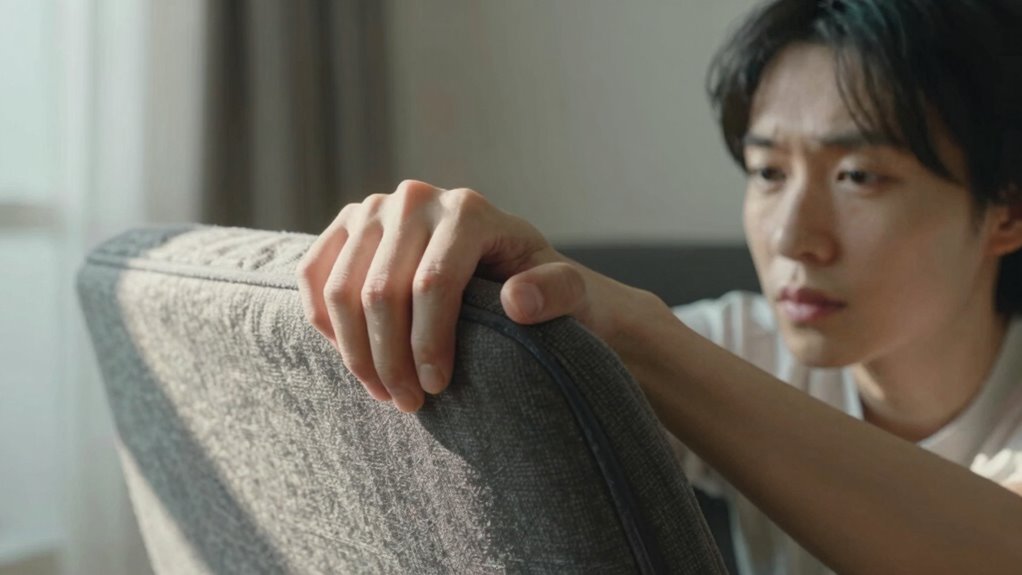

Perching on the edge of your chair feels helpful at first because it immediately boosts your alertness and focus. By shifting to this position, you engage your core and straighten your spine, which increases awareness of your posture and reduces sluggishness. It also gives a quick sense of control over your sitting habits. If you keep exploring, you’ll discover how this simple move can set the foundation for better ergonomic habits and long-term comfort.

Get comfort and recovery gear delivered free with Prime
- Fast, free delivery on millions of items
- Prime Video, Amazon Music and more included
- Member-only deals all year
Key Takeaways
- Perching increases alertness by reducing contact with the chair, making you more aware of your posture.
- It encourages upright spine and shoulder alignment, promoting immediate ergonomic benefits.
- The position engages core muscles, providing a quick energy and focus boost.
- Perching creates a psychological sense of control and relief, enhancing perceived comfort.
- It acts as a cue to monitor and adjust sitting habits for better long-term posture.
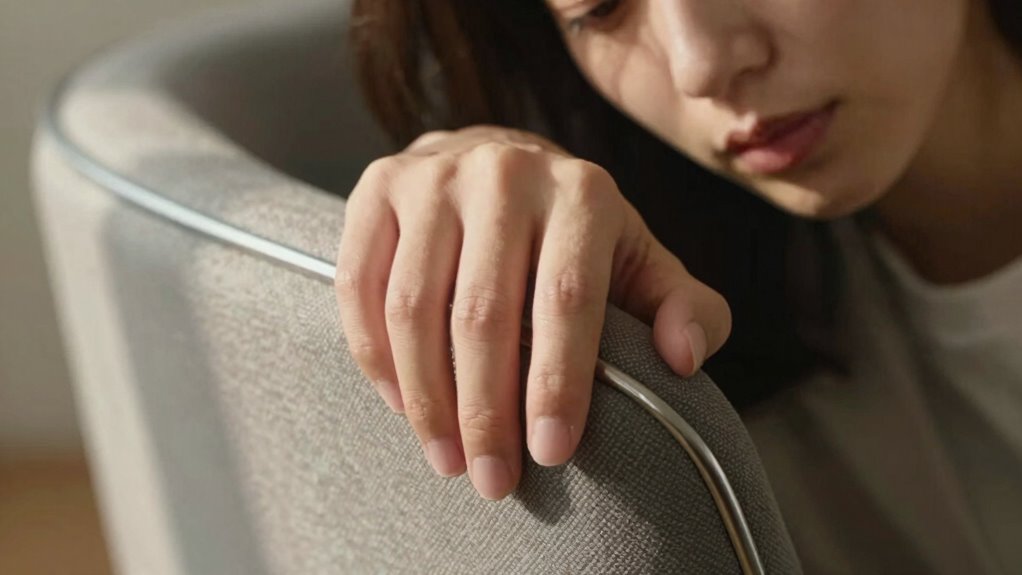
At first, perching on the edge of a chair can feel surprisingly helpful, offering a quick way to stay alert or regain focus. When you sit this way, you might notice a burst of energy or a feeling of increased control over your posture. This position often minimizes the contact your body has with the chair, making you more aware of your back and core muscles. It’s a natural instinct to want to adjust your position when you feel uncomfortable, but perching on the edge can temporarily seem like a simple fix—an easy way to avoid slouching or feeling sluggish.
Perching on the chair edge boosts alertness and helps you feel more in control of your posture temporarily.
This feeling of relief isn’t accidental. When you perch, you’re making subtle ergonomic adjustments that help keep your spine more upright and your shoulders aligned. You’re essentially engaging your core muscles to support your upper body, which can improve posture awareness. The position forces you to sit upright, preventing the tendency to slump, which often happens when you settle back into a more relaxed, reclined posture. The act of balancing on the edge encourages quick, instinctive adjustments to your sitting habits that feel right in the moment. Additionally, recognizing these sensations can motivate you to adopt healthier sitting habits overall.
However, this sensation of alertness and comfort is partly psychological. The change in how your body feels can trick you into thinking you’ve found a better position. In reality, sitting on the edge of a chair isn’t always the best for long-term comfort or health. Still, it highlights how small ergonomic adjustments—like shifting your weight forward—can make a difference in your posture awareness. When you’re more conscious of how your body sits, it’s easier to recognize when you need to move or straighten up, preventing poor habits from settling in. Incorporating ergonomic awareness into your routine can help reinforce good sitting habits.
Many people find that perching helps them break out of a cycle of slouching or leaning too far back. It temporarily engages muscles that might otherwise stay dormant, making you more mindful of your body’s alignment. Still, it’s important to remember that maintaining good ergonomic adjustments throughout the day is key. Relying solely on perching isn’t sustainable; instead, it’s a reminder to stay attentive to how you sit, ensuring your workspace encourages a healthy posture. Over time, this increased posture awareness can lead to better sitting habits, reducing discomfort and fatigue. Developing posture awareness can ultimately improve your overall comfort and reduce the risk of musculoskeletal issues.
In the end, the initial helpfulness of perching comes from its ability to trigger quick ergonomic adjustments and heighten your awareness of your posture. It’s a small, immediate fix that can boost alertness, but it also serves as a cue to regularly check in with your body and make more sustained, ergonomic choices. Recognizing the importance of ergonomic adjustments can help you develop more comfortable and healthy sitting habits over time.
ergonomic office chair with adjustable height
As an affiliate, we earn on qualifying purchases.
As an affiliate, we earn on qualifying purchases.
Frequently Asked Questions
Does Perching on the Edge Improve Posture Long-Term?
Perching on the edge of a chair doesn’t provide long-term posture improvement. It might offer ergonomic benefits temporarily, like reducing pressure on your lower back or encouraging alertness. However, to truly improve your posture, you need consistent, proper ergonomic habits, such as sitting back fully with support. Relying solely on perching can lead to strain or misalignment over time, so it’s best combined with a thorough approach.
Can This Habit Cause Any Physical Discomfort Over Time?
Like a fragile bridge, perching can strain your muscles and block circulation over time. You might notice muscle strain in your back or neck, and circulation issues can cause numbness or tingling. This habit may seem helpful initially, but it risks creating discomfort or long-term health problems if you don’t switch to a more balanced sitting position. Pay attention to your body’s signals before it’s too late.
Is There an Optimal Chair Height for Perching?
The ideal chair height for perching is one that promotes ergonomic design and guarantees chair stability. You should sit with your feet flat on the ground, knees bent at a 90-degree angle, and your hips slightly higher than your knees. This position helps maintain proper posture and prevents discomfort. Make certain the chair provides stable support, so you can comfortably perch without risking imbalance or strain over time.
How Often Should I Switch Between Perching and Sitting Normally?
You should switch between perching and sitting normally every 20 to 30 minutes to maximize ergonomic benefits and maintain posture awareness. Regularly alternating helps prevent strain, reduces fatigue, and keeps your muscles engaged. By changing positions frequently, you promote better circulation and spinal health. Stay mindful of your body’s signals, and adjust your sitting habits to stay comfortable and supported throughout your work or activity.
Does This Technique Work for All Body Types?
Perching on the edge of a chair can work for many body types, but it depends on your ergonomic adjustments and comfort. You might find it helps with muscle engagement and posture initially, but if you have specific health concerns or different body proportions, it may not be ideal long-term. Listen to your body, adjust your setup, and consider consulting a professional to make sure this technique benefits your unique needs.
As an affiliate, we earn on qualifying purchases.
Conclusion
At first, perching on the edge of a chair feels like taking control—a quick boost of energy or clarity, like a hiker reaching a ridge to catch their breath. But just like that ridge can become a crumbling ledge if you stay too long, this posture might offer temporary relief but can lead to discomfort or fatigue. Sometimes, the brief summit is enough to see the path ahead—just don’t forget to step down carefully afterward.
As an affiliate, we earn on qualifying purchases.
As an affiliate, we earn on qualifying purchases.
Halloween Picks
halloween
As an affiliate, we earn on qualifying purchases.