
To beat the heat, start by maximizing your bedroom’s airflow with ceiling fans, cross-ventilation, and open curtains during the day. Choose breathable, moisture-wicking bedding and lightweight blankets to stay cool throughout the night. Manage lighting by using natural light and energy-efficient bulbs, and declutter to improve air circulation. These simple changes can make a big difference, and if you want more tips, you’ll find plenty of helpful ideas below.
Key Takeaways
- Maximize airflow by opening windows on opposite sides for cross-ventilation and using ceiling or window fans.
- Use breathable, moisture-wicking bedding and lightweight blankets to keep the bed cool.
- Keep window coverings light and airy, and declutter to improve air circulation throughout the room.
- Employ natural light during the day and switch to energy-efficient bulbs at night to prevent heat buildup.
- Incorporate strategic ventilation techniques and manage indoor heat sources to maintain a cooler sleeping environment.
How Can You Maximize Room Airflow for Better Cooling?
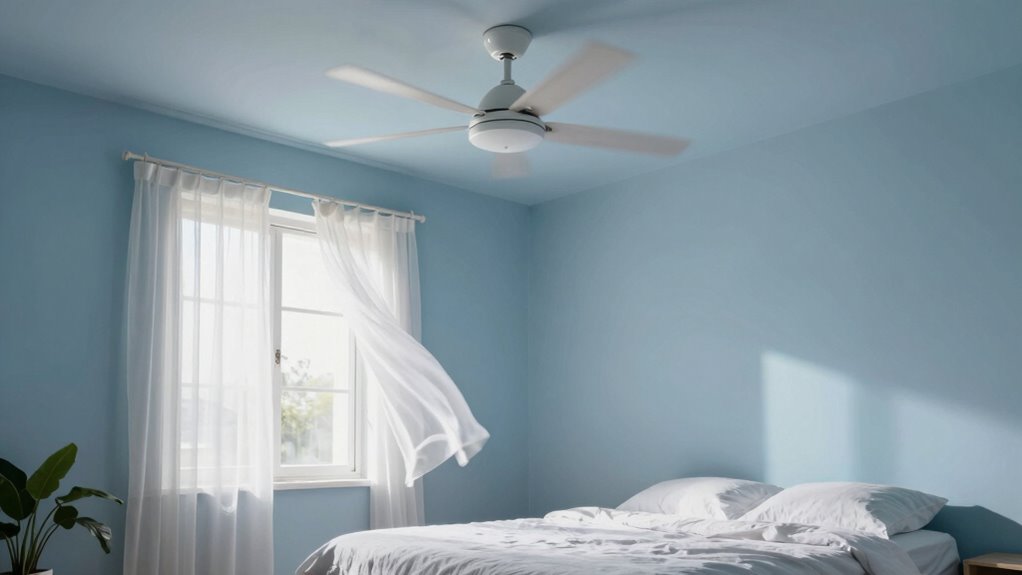
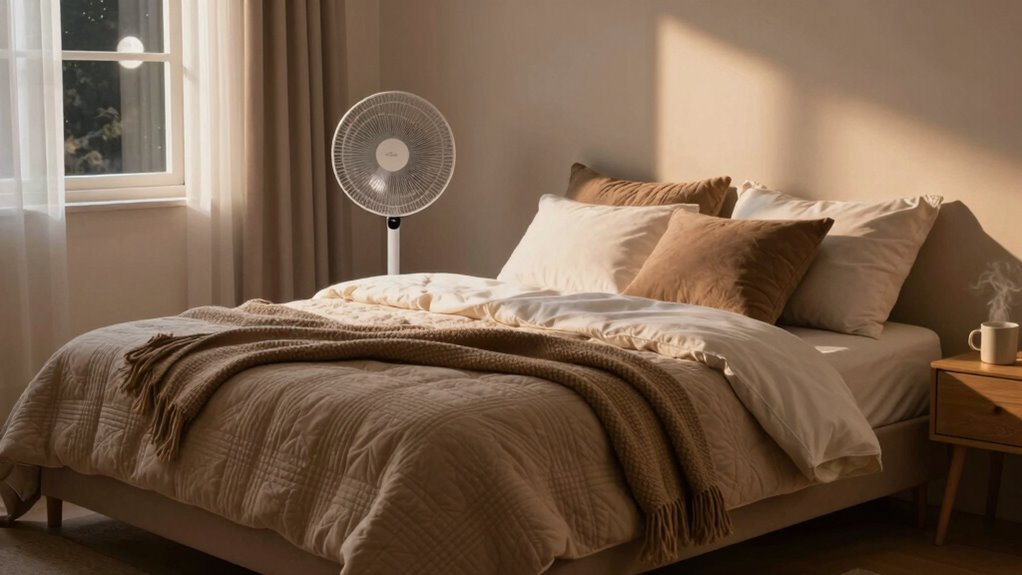
To improve your bedroom’s cooling, maximizing airflow is essential. Ceiling fan benefits are significant—they help circulate air, creating a breeze that cools your space naturally. Make sure your ceiling fan rotates counterclockwise during warmer months to push air downward. Additionally, effective window ventilation tips can drastically improve airflow. Open windows on opposite sides of the room to create cross-ventilation, allowing fresh air to enter and hot air to escape. Use window fans if needed to boost airflow further. Keep curtains or blinds open during the day to prevent heat buildup and close them at night to trap cooler air inside. Combining ceiling fans with strategic window ventilation helps maintain a comfortable, cooler bedroom environment all night long. Understanding how airflow dynamics influence temperature regulation can further optimize your cooling strategy, especially when considering ventilation techniques that enhance natural cooling processes. Properly managing air circulation can significantly reduce indoor temperatures and improve overall comfort.
What Are the Best Cooling Bedding and Sleep Accessories?
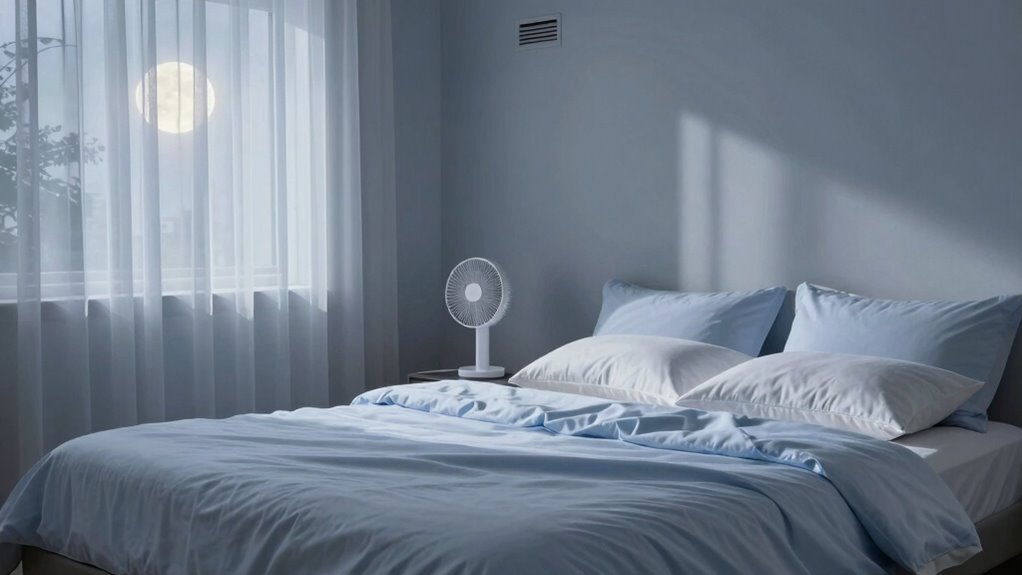
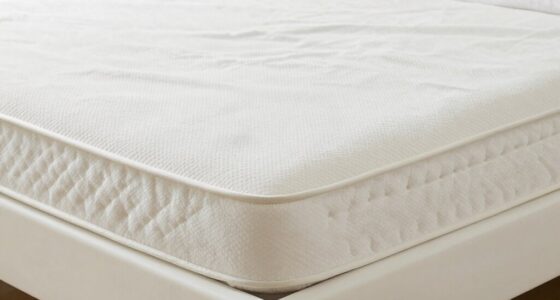
Choosing the right bedding and sleep accessories can make a significant difference in staying cool throughout the night. Start with a cooling mattress, which helps dissipate heat and maintains a comfortable temperature. Pair it with breathable sheets made from natural fibers like cotton or linen, as these materials promote airflow and wick away moisture. Avoid heavy, synthetic fabrics that trap heat and can cause discomfort. Consider adding cooling pads or gel-infused pillow inserts to further enhance your sleep environment. Lightweight blankets or duvet covers are also effective, especially if you tend to overheat. For optimal comfort, look into breathable fabrics, which are specifically designed to improve airflow and keep you cooler. Additionally, choosing moisture-wicking bedding can help manage sweat and moisture buildup during the night. Incorporating temperature-regulating materials can further optimize your sleep environment by maintaining a consistent and comfortable temperature. By selecting these cooling bedding options, you’ll create a more comfortable sleep setup that helps regulate your body temperature and keeps you cooler all night long.
How to Use Lighting and Decluttering to Keep Your Bedroom Cooler
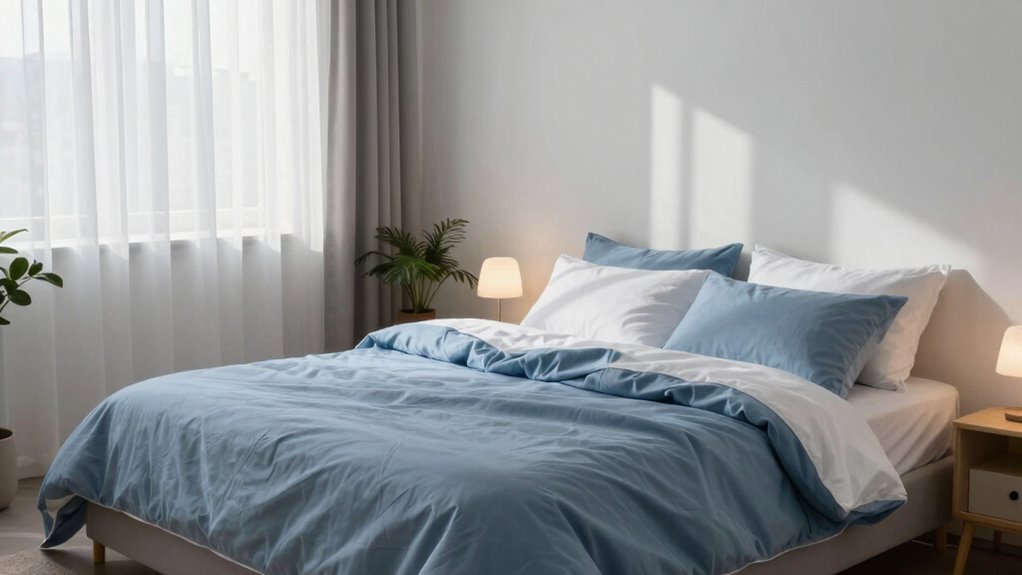
Lighting and clutter can substantially impact the temperature in your bedroom. Poor lighting design often leads to increased heat from lamps or fixtures, so opt for natural light during the day and switch to cooler, energy-efficient bulbs at night. Keep window coverings light and airy to prevent heat buildup. Decluttering tips help reduce heat retention by allowing better airflow and minimizing materials that trap heat. Clear surfaces and organize your space to improve ventilation and make your room feel cooler. Removing unnecessary items and bulky furniture that can trap warm air also contributes to a more comfortable environment. Incorporating proper room airflow management techniques can further optimize cooling and ventilation in your space. Ensuring proper ventilation is essential for maintaining a comfortable temperature and air circulation efficiency. A tidy, well-ventilated space with carefully chosen lighting design can markedly lower your bedroom’s temperature, making it more comfortable for restful sleep even during hot nights. Additionally, incorporating traditional Romanian Halloween crafts can add a cool, cultural touch to your decor while maintaining a breezy, open atmosphere. Implementing smart ventilation techniques can further enhance airflow and cooling efficiency in your space.
Frequently Asked Questions
What Are Some Natural Remedies to Stay Cool at Night?
To stay cool at night naturally, try using cooling gadgets like a portable fan or a cooling pillow to regulate your temperature. Drinking herbal teas such as chamomile or peppermint before bed can also help you relax and maintain a cooler body temperature. Additionally, keep your bedroom well-ventilated, wear lightweight sleepwear, and avoid heavy meals before bedtime to enhance comfort and stay cool throughout the night.
How Does Humidity Affect Bedroom Cooling?
Humidity impacts your bedroom cooling by making the air feel hotter and more uncomfortable. High humidity levels hinder moisture management, causing sweat to evaporate slowly and making you feel stickier. To stay cool, focus on humidity control by using a dehumidifier or air conditioner with a dehumidifying feature. Proper moisture management reduces humidity, improves airflow, and keeps your room cooler and more comfortable throughout the night.
Can Plants Help Reduce Bedroom Temperature?
Think of indoor greenery as natural air conditioners—plants like snake plants or pothos can help reduce bedroom temperature through plant cooling. I once noticed my bedroom felt cooler after adding a few potted plants, thanks to their transpiration process. Studies show that plant cooling can lower room temperature slightly, making your space more comfortable. Incorporating these plants not only improves air quality but also creates a calming, cooling environment.
What Are Effective Ways to Insulate My Bedroom?
To insulate your bedroom effectively, start by installing energy-efficient window treatments like blackout curtains or cellular shades to block heat transfer. Use ceiling fans to circulate air and keep the room cooler. Additionally, consider sealing gaps around windows and doors with weatherstripping or caulk to prevent warm air from entering. These simple steps help maintain a comfortable temperature, making hot nights much more manageable.
How Do Sleep Positions Influence Body Temperature?
Your sleep posture considerably impacts your body heat. If you tend to curl up or sleep in a fetal position, you conserve heat, which might make you feel warmer. Conversely, sleeping on your back with arms and legs spread out allows better air circulation, helping you stay cooler. Adjusting your sleep position based on your body’s heat levels can improve sleep comfort, especially if you’re prone to sleeping hot.
Conclusion
By tweaking your bedroom just a little, you’ll turn it into a cool oasis amid the heat. Think of your space as a invigorating breeze on a hot summer day—simple changes can make all the difference. With better airflow, cozy bedding, and clever lighting, you’ll sleep like a snowflake on a winter night. So, start these tweaks tonight and let your bedroom become the cool retreat you deserve. Sweet dreams await!