Setting your desk bike seat to the right height is key to comfort and efficiency. Make certain your seat is level and allows for a knee bend of about 25-35 degrees when your foot is on the pedal. If your hips tilt or you feel cramped, adjust accordingly. Proper height prevents strain and improves your workout. Keep these tips in mind, and you’ll discover how the perfect seat height can transform your experience. To learn more, keep exploring the essential setup tips.
Key Takeaways
- Proper seat height ensures ergonomic posture, reduces back and joint strain, and enhances comfort during desk bike use.
- Adjust the seat so your knees are bent about 25-30 degrees at pedal bottom for optimal power and efficiency.
- Keep hips level and aligned with knees to prevent tilting, which can cause discomfort and reduce workout effectiveness.
- Avoid setting the seat too high or low, as incorrect positioning strains joints and hampers proper pedaling mechanics.
- Regular fine-tuning and body alignment checks maximize comfort, performance, and long-term musculoskeletal health.
Why Proper Seat Height Matters for Your Desk Bike
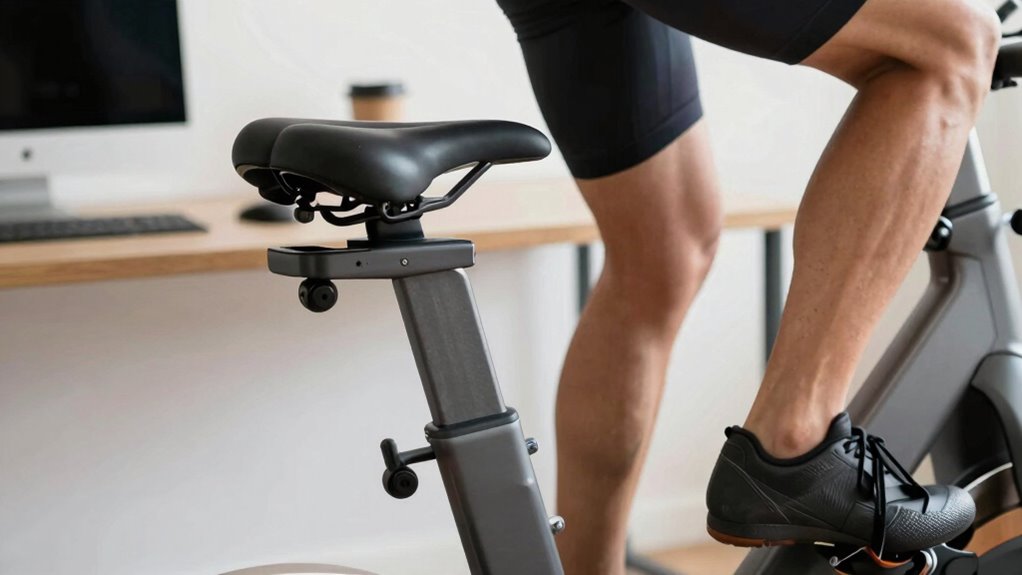
Having the correct seat height on your desk bike is essential because it directly impacts your comfort and safety during use. When your seat is properly adjusted, it encourages an ergonomic posture, reducing strain on your back, neck, and shoulders. Proper seat height also ensures that your muscles are engaged correctly, preventing overexertion or fatigue. If the seat is too high, you might hyperextend your knees or feel unstable, which can lead to discomfort and poor form. Conversely, a seat that’s too low can cause unnecessary pressure on your hips and limit your range of motion. By setting your seat at the right height, you promote better muscle engagement and maintain proper alignment, making your workout more effective and comfortable. Additionally, correct seat adjustment can help prevent long-term musculoskeletal issues associated with improper ergonomics. Ensuring your seat height is ergonomically optimal is crucial for sustained health and performance, especially since ergonomic positioning plays a vital role in overall comfort during exercise. Properly adjusted seat height also contributes to improved circulation and reduces the risk of numbness or tingling during extended periods of cycling.
How to Measure Your Desk Bike Seat Height Correctly
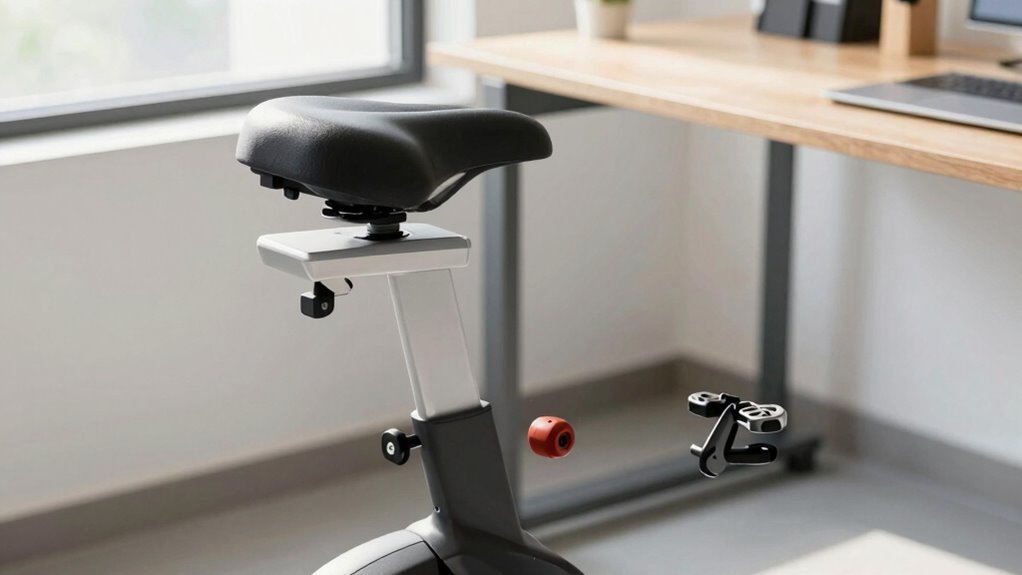
To guarantee your desk bike seat is set to the right height, you need to measure it accurately. Start by sitting on the seat with your ergonomic posture, ensuring your feet rest flat on the pedals and your knees are slightly bent. Use a tape measure to find the distance from the seat cushion to the pedal axle. Adjust the seat height until your knee is about 25-30 degrees bent when the foot is on the pedal. Keep your hips level and avoid slouching. Proper seat height is crucial for comfort and efficiency during your workout. Here’s a quick reference:
| Step | Action | Tip |
|---|---|---|
| 1 | Sit on the seat with ergonomic posture | Keep your back straight |
| 2 | Place your foot on the pedal | Heel on the pedal, ball slightly raised |
| 3 | Measure from seat cushion to pedal axle | Record the distance |
| 4 | Adjust seat height accordingly | Ensure knees are slightly bent |
| 5 | Check for comfortable pedaling | Avoid overextending or slouching. Additionally, ensuring your ergonomic posture promotes better blood flow and reduces strain during exercise. |
How Can You Tell If Your Seat Is Too High or Too Low?
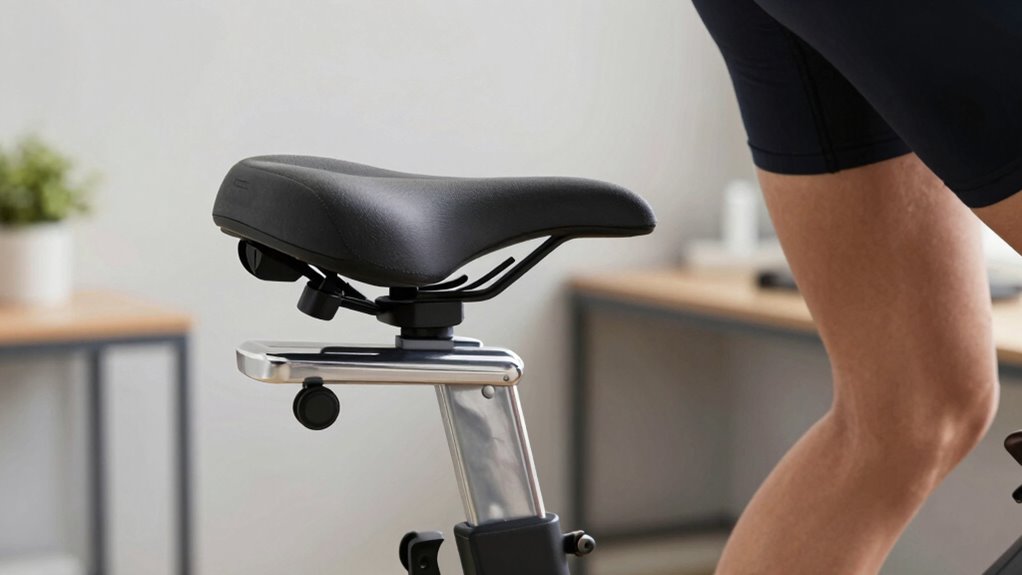
To see if your seat height is right, start by checking your knee bend; it should be around 25 to 35 degrees when pedaling. Make sure your hips stay level and don’t tilt forward or backward, which indicates improper height. Also, verify you can comfortably reach the pedals without overstretching or feeling cramped. Being aware of fandom’s influence on equipment choices can help you understand how community trends might affect your preferences. Additionally, paying attention to ergonomic principles can guide you toward a setup that reduces fatigue and prevents injury over time. Recognizing proper bike fit is essential for maintaining comfort and efficiency during your rides. Regularly inspecting your body jewelry measurements can help ensure your bike seat remains suited to your body’s needs.
Knee Bend Degree
Ensuring your seat height is correct involves paying attention to your knee bend degree during your pedal stroke. When you sit correctly, your knee should have a slight bend—around 25 to 35 degrees—at the bottom of each pedal stroke. If your knee is too straight, your seat might be too high, which can strain your joint flexibility and cause discomfort. Conversely, if your knee is overly bent, your seat could be too low, leading to poor ergonomic posture and inefficient pedaling. Check this angle by observing your knee’s position during cycling. Maintaining the right knee bend not only supports proper joint health but also ensures a more comfortable, efficient workout. Adjust your seat until your knee bend feels natural and balanced during each rotation. Proper bike fit is essential for preventing injury and optimizing performance. Additionally, understanding seat height adjustments can significantly enhance your cycling experience and reduce fatigue. Properly aligning your seat height helps prevent joint strain and promotes smoother pedaling motion. Being aware of how seat height impacts your overall cycling biomechanics can help you make more precise adjustments.
Hip Alignment Check
If your seat height isn’t properly adjusted, your hips may shift out of alignment while pedaling. Check your hip posture by observing whether your hips stay level or tilt excessively. If your pelvis tilts forward or backward, the seat might be too high or too low. A high seat often causes you to rock side to side or lift your hips, leading to an improper pelvis tilt. Conversely, a low seat can force your hips to sway or drop, creating strain and discomfort. To test this, sit comfortably and pedal naturally. Your hips should stay stable, with minimal movement, and your pelvis should maintain a neutral tilt. Proper hip alignment is essential for injury prevention and optimal performance. Correct alignment guarantees efficient pedaling and reduces strain on your lower back and hips. Ensuring your seat height supports proper ergonomic posture can help prevent long-term discomfort and improve your riding experience. Additionally, paying attention to proper bike fit can further enhance your comfort and efficiency during rides. Maintaining correct pelvic position is crucial for sustaining proper hip alignment throughout your ride. Remember that hip stability during pedaling also contributes significantly to overall riding comfort and efficiency.
Pedal Reach Comfort
When adjusting your seat height, paying attention to pedal reach can reveal if your seat is too high or too low. Proper pedal ergonomics guarantees your knees aren’t overly bent or straightened, supporting an ergonomic posture. To check, sit on the seat and place your foot on the pedal at the 3 o’clock position. Your leg should be nearly straight with a slight bend at the knee. If your hips rock side to side, the seat may be too high. If you reach or stretch excessively, it could be too low. Ensuring the right seat height can also improve the overall aesthetic of your workspace, reminiscent of luxury interior design elements. Additionally, selecting the appropriate ergonomic setup can help prevent discomfort and promote better posture during your workout. Paying attention to proper adjustments can enhance comfort and efficiency during your cycling sessions. Understanding regional flavor profiles can also help tailor your cycling experience to complement your personal style and environment. Moreover, consulting with a professional or using precise measurement tools can further optimize your bike fit for maximum comfort and performance.
How to Adjust Your Desk Bike Seat for Comfort and Performance
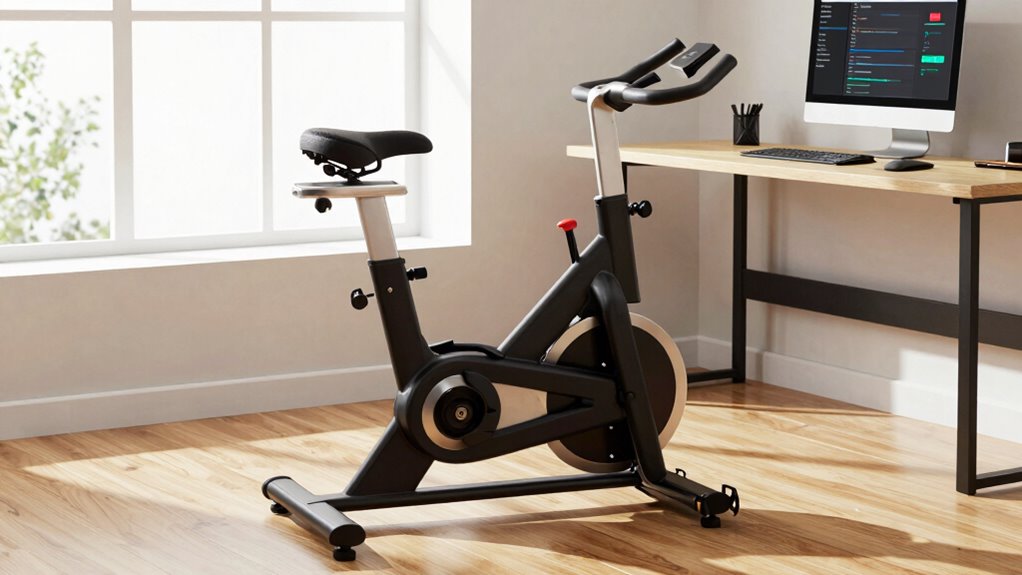
Adjusting your desk bike seat properly is key to comfortable and efficient pedaling. Make sure the height allows your knees to bend slightly when your feet are on the pedals. When set correctly, you’ll pedal smoothly without strain or discomfort.
Proper Seat Height Adjustment
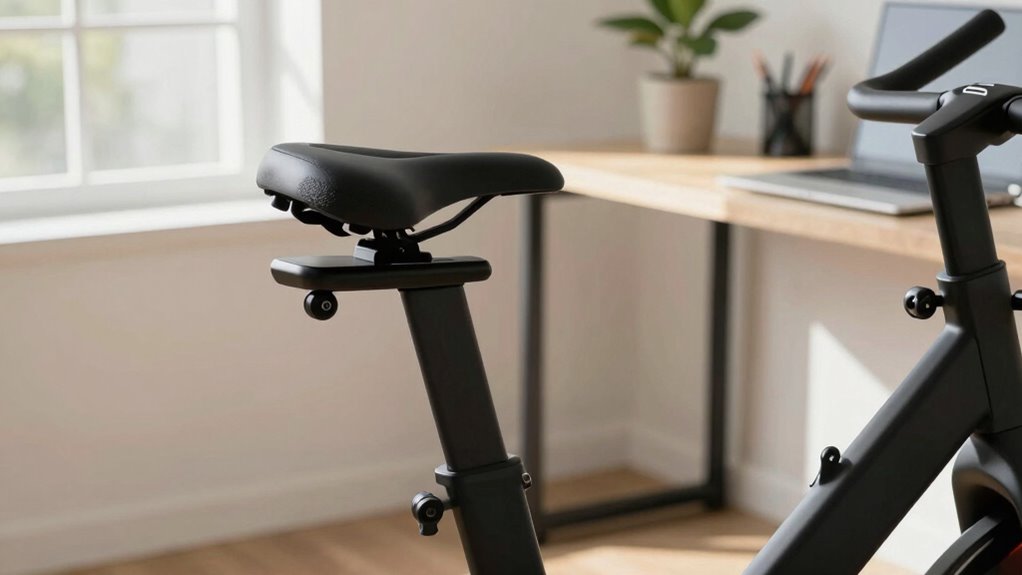
Ever wondered how to set your desk bike seat for maximum comfort and efficiency? The key is proper seat height adjustment. Your seat should be level with your hips or slightly lower to maintain an ergonomic posture. When seated, your knees should be bent at about a 25-30 degree angle, allowing smooth pedaling without overextending. Adjust the seat so that the seat cushion supports your thighs comfortably without putting pressure on your hips. This positioning prevents strain on your lower back and promotes better circulation. Take the time to sit on the bike and test your posture, making small adjustments as needed. Remember, the right seat height ensures your body is aligned, reducing fatigue and improving overall performance during your workout or work session.
Ensuring Comfortable Pedaling
To make certain comfortable pedaling on your desk bike, it’s essential to fine-tune the seat position for smooth and efficient movement. Adjust the seat so your hips remain level and your knees are slightly bent at the bottom of each pedal stroke. This promotes ergonomic posture, reducing strain on your back and joints. Focus on pedal biomechanics by ensuring your feet are properly aligned with the pedals, avoiding outward or inward tilting. A comfortable seat position helps distribute your weight evenly and minimizes fatigue during extended use. Remember, small adjustments can make a big difference in comfort and performance. Regularly check your seat height and angle to maintain ideal pedaling efficiency and prevent discomfort over time.
Tips for Finding the Most Comfortable Seat Position
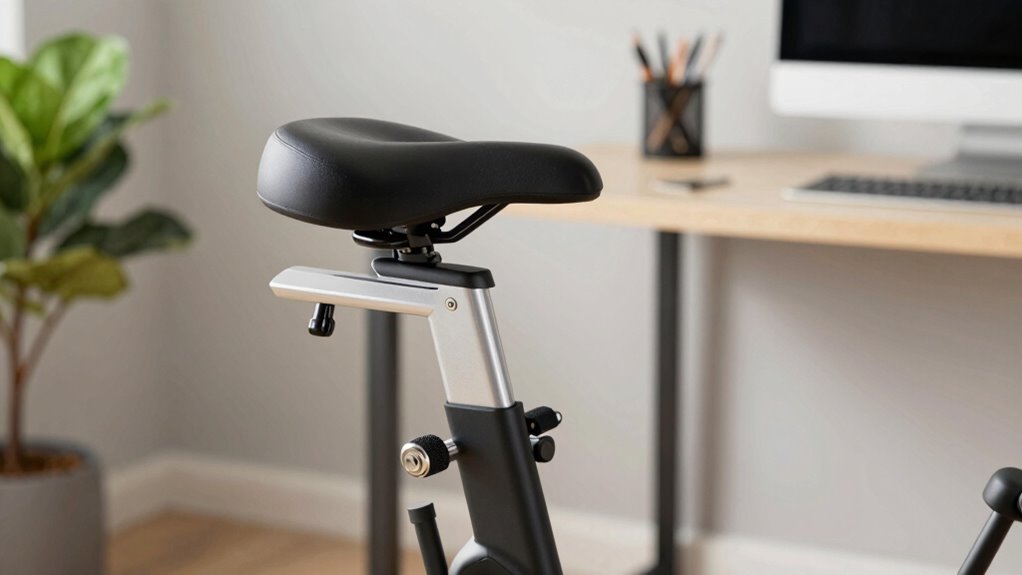
Finding the most comfortable seat position on your desk bike is key to preventing discomfort and maximizing workout efficiency. Start by adjusting the seat height so your knees are slightly bent at the bottom of each pedal stroke, promoting ergonomic posture. Ascertain your hips remain level and not tilted, which helps avoid strain. Consider the seat material—preferably cushioned and breathable—to enhance comfort during longer sessions. When you’re seated, your hips should be centered over the pedals, and you should feel stable without excessive pressure on your sit bones. Take time to test different positions, paying attention to how your muscles and back feel. Proper alignment reduces fatigue and encourages longer, more effective workouts. Finding the right seat position really makes a difference in your overall comfort.
Common Mistakes When Setting Your Desk Bike Seat
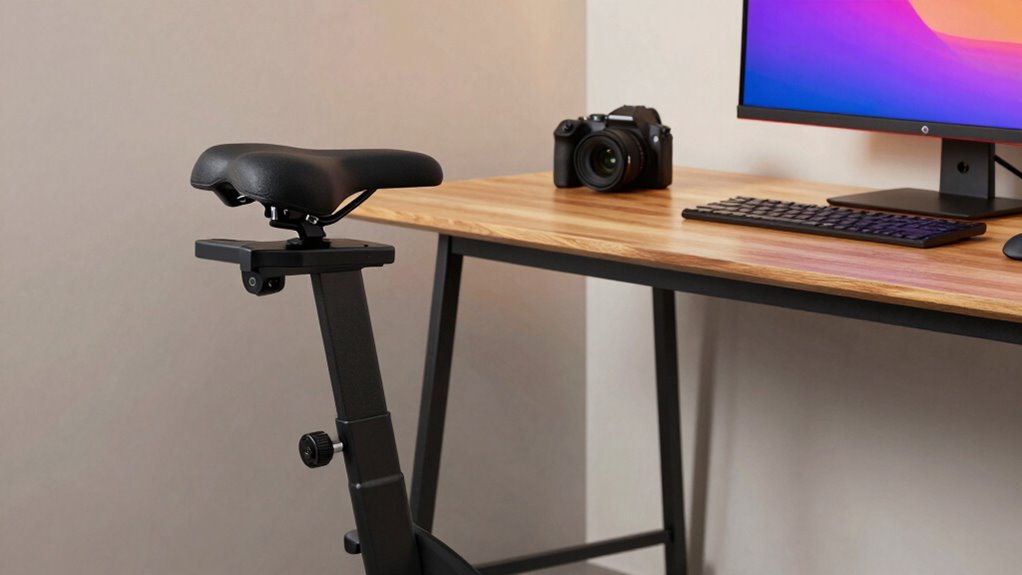
One common mistake when setting your desk bike seat is positioning it too high or too low, which can lead to discomfort and inefficient pedaling. If the seat is too high, you may strain your hips and compromise your ergonomic posture, causing unnecessary fatigue. Conversely, a seat that’s too low can restrict your cycling biomechanics, reducing power transfer and increasing knee stress. Many overlook the importance of aligning the seat height to maintain proper joint angles, which is essential for comfort and effectiveness. Failing to contemplate these factors can result in poor posture, discomfort during extended use, and a less productive workout. To avoid this, always aim for a seat position that promotes a natural, ergonomic posture while supporting smooth, biomechanically sound pedaling motion.
How Seat Height Affects Your Workout Effectiveness
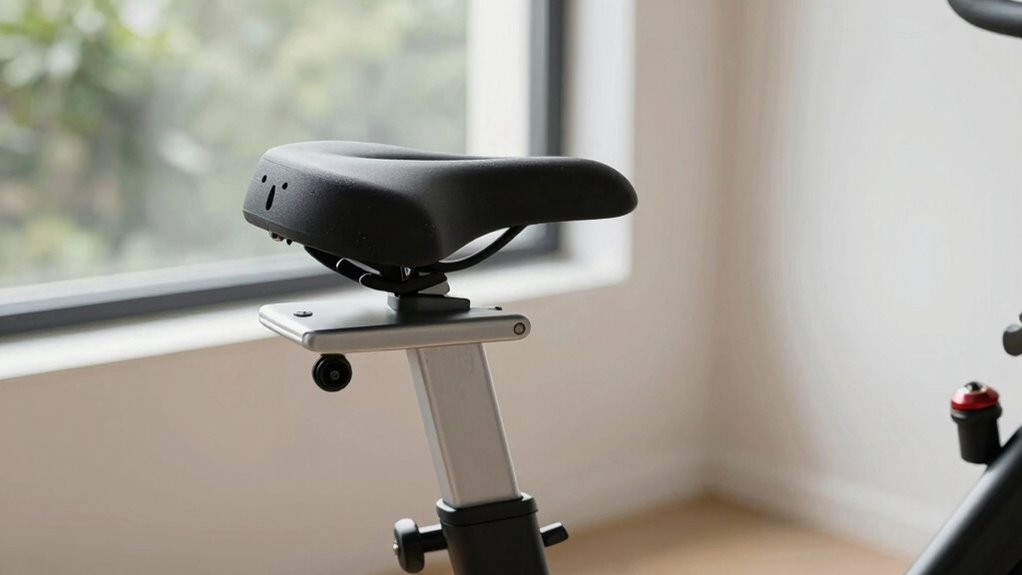
Proper seat height directly impacts how effectively you work out on your desk bike. When your seat isn’t set correctly, it compromises the ergonomic design and reduces pedal efficiency, making your workout less effective. A proper height guarantees your knees bend comfortably at the top of each pedal stroke, maximizing power transfer. It also helps prevent strain or injury during longer sessions. When your seat is too high or low, you might find yourself pedaling with inefficient motion, wasting energy. Adjusting your seat height optimizes your workout by promoting proper posture and smooth pedal movement. Keep these factors in mind:
- Ensures comfortable knee bend
- Improves pedal efficiency
- Promotes ergonomic posture
- Prevents strain and injury
- Maximizes workout effectiveness
Tools and Accessories to Help Fine-Tune Your Seat
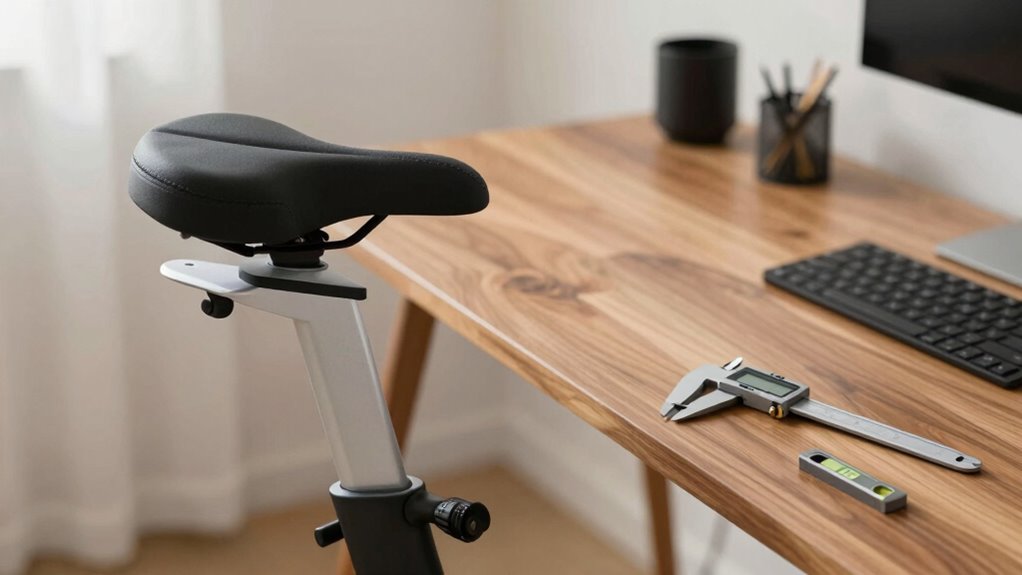
To make certain your seat height is perfectly tuned, there are several tools and accessories that can make the adjustment process easier and more accurate. Ergonomic accessories, like seat height gauges and measurement apps, help you determine the ideal height quickly. Height adjustment tools, such as quick-release levers or digital torque wrenches, allow for precise modifications without hassle. These accessories assure you’re not guessing and help you achieve maximum comfort and efficiency. Using ergonomic accessories can also prevent over-tightening or misadjustments, reducing wear and tear on your desk bike. With the right tools at your disposal, you’ll find it easier to fine-tune your seat, ensuring a safe, comfortable, and effective workout or work session every time.
When and How to Reassess Your Seat Height
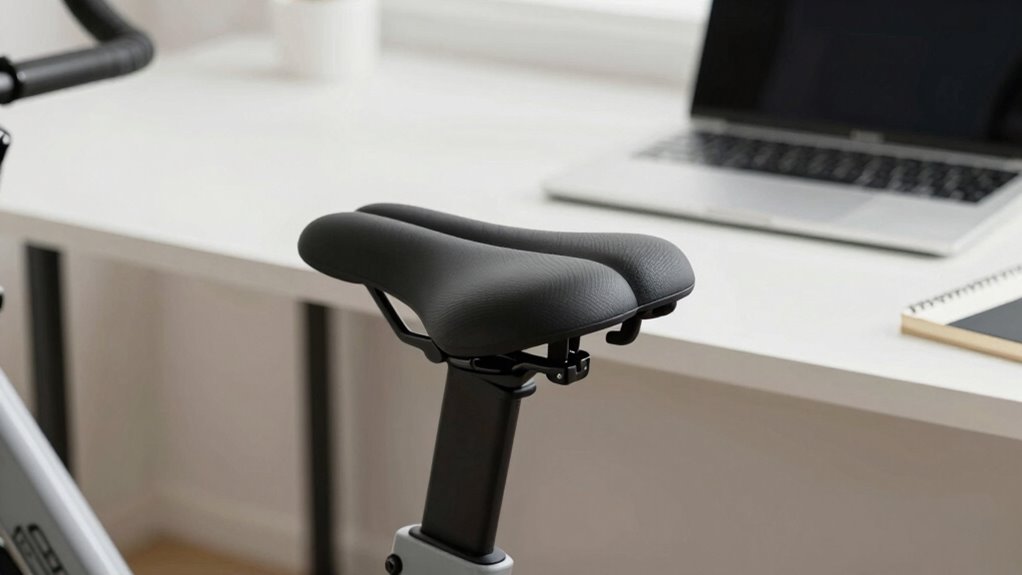
Regularly reassessing your seat height guarantees you maintain peak comfort and efficiency during your workouts or work sessions. Your ergonomic posture and muscle engagement can shift over time, making it essential to revisit your setup. Watch for signs like discomfort, reduced range of motion, or fatigue in your legs and hips. Check your seat height when you notice your knees feeling strained or if your hips aren’t aligned properly. Adjustments should be gradual, ensuring your leg maintains a slight bend at the bottom of each pedal stroke. Regularly testing your position helps prevent strain and keeps your muscles engaged effectively.
Regularly check your seat height to stay comfortable and prevent strain during workouts or work sessions.
- Feel for discomfort or pain during use
- Notice if your knees aren’t aligned
- Check for fatigue in leg muscles
- Observe if your posture feels off
- Reassess after prolonged use
Frequently Asked Questions
Can Seat Height Adjustments Prevent Common Desk Bike Injuries?
Yes, adjusting your seat height can prevent common desk bike injuries. When you set the seat at the right ergonomic level, you reduce strain on your knees, hips, and lower back. Make sure your desk bike has adjustable components so you can customize the fit. Using ergonomic accessories, like cushioned seats or footrests, also helps maintain proper posture and prevents discomfort or injury during extended use.
What Signs Indicate My Seat Height Needs Changing Over Time?
If you notice persistent discomfort or your knees feel strained after riding, it’s a sign your seat height needs adjusting. For example, a user reported knee pain that eased after raising the seat for better ergonomic comfort. You should also check for seat stability—if it shifts or feels loose, it’s time to readjust. Keep an eye on these signs to maintain proper support and prevent injury.
How Does Seat Height Influence Overall Posture at the Desk?
Your seat height directly influences your posture at the desk. When set correctly, it promotes ergonomic benefits, helping you sit upright with feet flat on the floor and knees at a 90-degree angle. This optimizes comfort and reduces strain on your back and legs. If your seat is too high or low, you might slouch or experience discomfort, so adjusting it guarantees better posture and comfort during your work or exercise.
Are There Recommended Seat Heights for Different User Heights?
Think of your seat height as a tailored suit—perfectly fitted to your frame. For ideal ergonomic principles, your seat should be adjusted so that when you sit, your knees are at a 90-degree angle, and your feet rest flat. Shorter users might need a lower seat, while taller ones benefit from a higher position. Always perform a seat adjustment to find that sweet spot for comfort and efficiency.
How Often Should I Revisit My Desk Bike Seat Settings?
You should revisit your desk bike seat settings every few weeks or if you notice discomfort. Adjust the ergonomic armrests to improve posture and reduce strain, and check the pedal resistance to make sure it matches your fitness level. Frequent adjustments help maintain proper alignment, prevent soreness, and enhance comfort. Keep an eye on how you feel during use, and don’t hesitate to tweak the seat height to stay ergonomic and effective.
Conclusion
Getting your desk bike seat height just right can transform your comfort and workout. Imagine working at your desk, feeling no strain, and effortlessly staying active—all because you took a few minutes to adjust your seat properly. For example, Jane found that a small tweak in her seat height boosted her energy and eased her back pain. So, take the time to fine-tune your setup—you’ll enjoy smoother rides and better results every day.