
Focusing only on a standing desk’s weight capacity can lead you to overlook key features like ergonomic adjustment and construction quality. Just because a desk supports more weight doesn’t mean it’s more durable or comfortable. An overly high capacity may distract from important factors like height adjustability and stability, which are essential for comfort and long-term use. To find the best fit, consider all aspects carefully—more details will help you make a smarter choice.

Get comfort and recovery gear delivered free with Prime
- Fast, free delivery on millions of items
- Prime Video, Amazon Music and more included
- Member-only deals all year
Key Takeaways
- A high weight capacity doesn’t guarantee better durability or ergonomic support; focus on build quality and features instead.
- Prioritize adjustable height and ergonomic design over weight capacity to ensure comfort and proper posture.
- Material quality and construction are critical for stability and long-term durability, regardless of weight limits.
- Ensure the desk’s weight capacity comfortably exceeds your equipment’s total weight to avoid overloading.
- Balance weight capacity with ease of adjustment and ergonomic features for a workspace that promotes health and productivity.
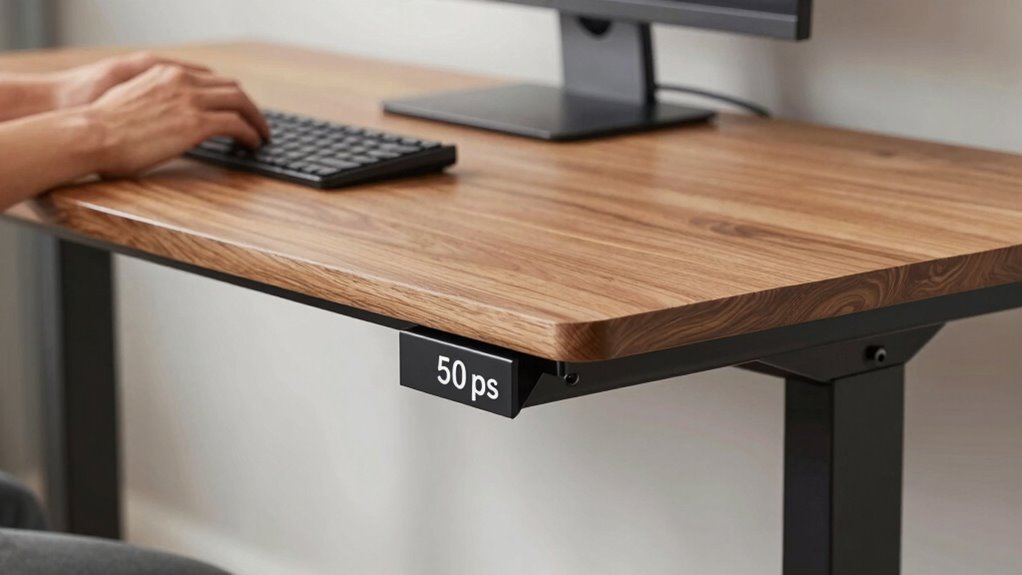
When shopping for a standing desk, it’s easy to fall into the weight capacity trap—assuming that a higher weight limit automatically means better durability and quality. While it might seem logical to prioritize a desk with the highest possible weight capacity, this focus can distract you from more important features like ergonomic benefits and proper desk height. The weight capacity mainly indicates how much weight the desk can support without sagging or becoming unstable, but it doesn’t necessarily reflect the overall quality or suitability for your needs. Instead, you should consider how the desk’s design promotes good posture and comfort during long work hours.
Your primary goal should be to find a desk that allows you to adjust to an optimal desk height. An adjustable height feature ensures you can set the surface at a level that encourages ergonomic benefits, such as reducing strain on your neck, shoulders, and wrists. If a desk’s maximum weight capacity is high but it lacks smooth, precise height adjustments, you might end up with a setup that forces you into uncomfortable positions. Conversely, a desk with a modest weight capacity but easy, reliable height adjustments can offer better ergonomic support, making it easier to switch between sitting and standing throughout the day.
Additionally, considering material quality and construction is crucial because they influence the desk’s overall stability and durability over time. material quality, construction, and stability are more relevant factors, and a well-built desk with a lower weight capacity can often hold your equipment more securely than a poorly constructed, higher-capacity model. Proper framing and stability features are essential to ensure the desk maintains its position and height, especially when fully loaded. Investing in a desk with robust support can prevent wobbling and ensure longevity, especially with regular use. Incorporating ergonomic principles into your choice can further enhance comfort and reduce fatigue during extended use. It’s also beneficial to think about how the desk’s adjustment mechanism performs under regular use, as this impacts long-term satisfaction and safety. Additionally, consider the size and weight of your equipment—if you have multiple monitors, a printer, and other accessories, ensure the desk’s weight capacity exceeds the combined weight comfortably, but don’t ignore the importance of a sturdy, stable frame that maintains proper desk height at all times.
Ultimately, the best standing desk for you balances sufficient weight capacity with ergonomic benefits and adjustable desk height. Remember, a desk that supports your posture and fits your workspace needs will serve you better than one that simply boasts a high weight limit. Focus on how easily and precisely you can change the desk height, and ensure it promotes healthy movement and comfort. This approach guarantees you won’t fall victim to the weight capacity trap, and instead find a workspace setup that enhances your productivity and well-being.
ergonomic height adjustable standing desk
As an affiliate, we earn on qualifying purchases.
As an affiliate, we earn on qualifying purchases.
Frequently Asked Questions
How Does Weight Capacity Affect Desk Stability Over Time?
If your standing desk’s weight capacity isn’t sufficient, it can compromise stability over time, affecting your ergonomic comfort and aesthetic appeal. As you add more weight or use heavier equipment, the desk may sag or wobble, making it less stable. This instability can cause discomfort and diminish the desk’s visual appeal. To maintain long-term stability, choose a desk with a higher weight capacity suited to your needs, ensuring it stays sturdy and comfortable.
Are Lighter Desks More Prone to Wobbling Under Load?
Like a vintage typewriter, lighter desks can wobble more under load. You’ll notice that their material durability and design stability aren’t as robust as heavier options. When you place substantial weight on a lightweight desk, it’s more prone to wobbling or instability over time. To avoid this, consider desks with sturdy materials and solid construction, ensuring long-term stability and safety during your work sessions.
Can a Desk’s Weight Capacity Change With Regular Use?
Yes, a desk’s weight capacity can change with regular use. Over time, the structural integrity may weaken, affecting ergonomic comfort and stability. If you frequently place heavy equipment on your desk, its aesthetic design might also suffer as joints and supports wear down. To maintain ideal support and appearance, consider inspecting your desk regularly and avoiding exceeding its recommended weight limits, ensuring both comfort and durability.
What Materials Are Best for High Weight Capacity Standing Desks?
Think of sturdy materials as the backbone of your workspace—steel, solid wood, and high-density laminate stand out for their material durability and aesthetic appeal. Steel offers exceptional strength and longevity, ensuring your desk can handle high weight capacity demands. Solid wood combines durability with natural beauty, while high-density laminate provides a sleek look and resilience. Choosing these materials means investing in a standing desk that lasts and looks great, no matter the workload.
How Do I Determine My Ideal Weight Capacity Needs?
You determine your ideal weight capacity needs by considering your ergonomic posture and desk height requirements. First, assess your typical workload and the weight of equipment you’ll place on the desk, including monitors, keyboards, and accessories. Make certain the desk can support this weight comfortably while maintaining proper ergonomics. Opt for a slightly higher capacity than your current needs to accommodate future equipment or adjustments, ensuring your workspace remains safe and functional.
sturdy standing desk with smooth height adjustment
As an affiliate, we earn on qualifying purchases.
As an affiliate, we earn on qualifying purchases.
Conclusion
Don’t fall into the weight capacity trap when shopping for a standing desk. Focusing solely on maximum weight can lead you to overlook other essential features like stability, adjustability, and build quality. Remember, a desk that’s too close to its limit might not serve you well in the long run. Isn’t investing in a sturdy, reliable desk worth your comfort and safety each day? Choose wisely, and enjoy a healthier, more productive workspace.
standing desk with high stability and build quality
As an affiliate, we earn on qualifying purchases.
As an affiliate, we earn on qualifying purchases.
standing desk for multiple monitors
As an affiliate, we earn on qualifying purchases.
As an affiliate, we earn on qualifying purchases.
Halloween Picks
halloween
As an affiliate, we earn on qualifying purchases.