
To add standing without burning out your feet, start with ergonomic shoes that offer good cushioning and arch support. Begin by standing for short intervals, like 10-15 minutes, and gradually increase these times over days or weeks. Focus on maintaining proper posture and shifting your weight occasionally to keep circulation flowing. Stay hydrated, stretch gently, and listen to your body. Keep these tips in mind, and you’ll discover how to stand comfortably for longer periods.
Key Takeaways
- Gradually increase standing time to allow muscles to adapt and prevent fatigue.
- Wear ergonomic footwear with cushioned insoles and proper arch support for comfort.
- Maintain good posture with even weight distribution and avoid locking knees.
- Incorporate small movements and shifting to promote circulation and reduce strain.
- Support overall well-being through hydration, stretching, and regular rest periods.
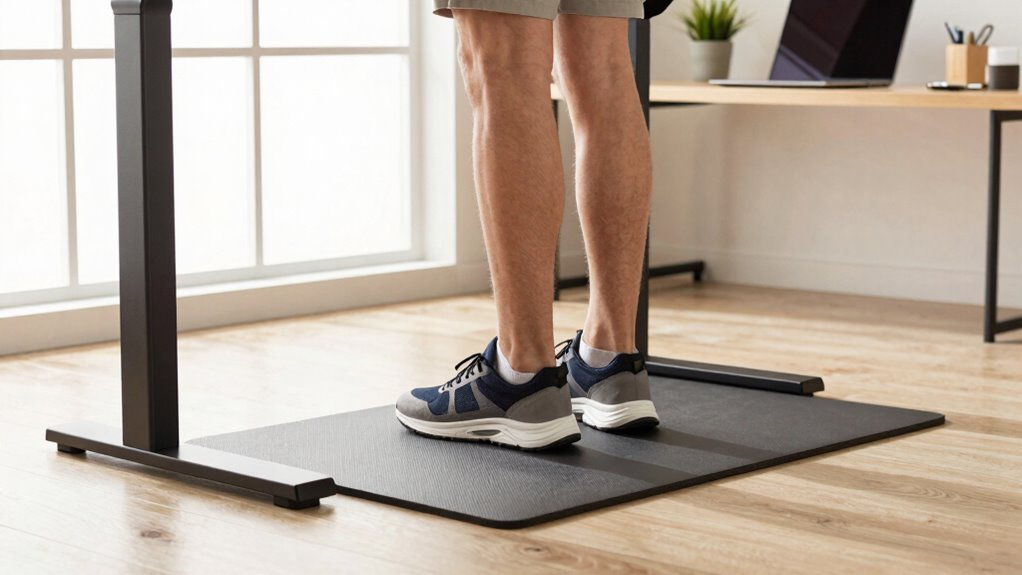
Have you ever wondered how to incorporate more standing into your day without ending up with sore, tired feet? The key is to do it smartly, and that starts with choosing the right footwear. Ergonomic footwear is designed to support your feet properly, reducing strain and preventing discomfort during longer periods of standing. Look for shoes with cushioned insoles, arch support, and a stable heel. When you wear supportive shoes, you give your feet what they need to stay comfortable, which makes it easier to stand for extended periods without feeling exhausted.
Choose ergonomic shoes with cushioned insoles and arch support for comfortable, extended standing.
But simply switching to ergonomic footwear isn’t enough if you suddenly start standing much more than usual. Your body needs time to adapt. That’s where a gradual transition comes into play. Instead of jumping from a mostly sitting routine to hours on your feet, ease into it. Start by adding small intervals of standing, maybe 10 or 15 minutes at a time, and gradually increase as your body adjusts. This slow buildup helps prevent soreness and fatigue, giving your muscles and joints a chance to strengthen gradually. You’ll find that over days or weeks, standing becomes less taxing and more of a natural part of your routine.
In addition to footwear and gradual transition, pay attention to your posture and movement. Stand upright with your shoulders relaxed and your weight evenly distributed on both feet. Avoid locking your knees or leaning heavily on one leg. Incorporate small movements, shifting your weight from one foot to the other or taking brief steps if possible. These tiny adjustments keep blood flowing and reduce muscle fatigue, making standing feel more comfortable and less strenuous. Proper posture also plays a crucial role in minimizing discomfort and preventing strain during prolonged standing. Incorporating muscle engagement techniques can further enhance endurance and reduce fatigue over time. Additionally, understanding how ergonomic design influences comfort can help you select better footwear and setup for standing tasks. Incorporating body alignment principles can further optimize your stance and reduce unnecessary stress on your muscles and joints.
Hydration and proper nutrition also play roles in supporting your muscles and joints. Staying well-hydrated helps prevent cramping and fatigue, while nutrient-rich foods provide the energy your body needs to adapt to increased standing. If you experience discomfort, don’t ignore it. Rest when necessary, elevate your feet, and consider gentle stretching exercises to relieve tension.
ergonomic cushioned insoles for standing
As an affiliate, we earn on qualifying purchases.
As an affiliate, we earn on qualifying purchases.
Frequently Asked Questions
How Long Should I Stand at a Time for Optimal Health?
You should aim to stand for about 15-30 minutes every hour to support ideal health. Use ergonomic flooring to reduce strain and standing desk accessories like cushioned mats or anti-fatigue mats to keep comfort high. Incorporate movement, shift your weight, and take short breaks to prevent fatigue. Listening to your body ensures you avoid burnout, making your standing routine sustainable and beneficial for your overall well-being.
Are There Specific Shoes That Help Reduce Foot Fatigue?
Yes, certain shoes can help reduce foot fatigue. Look for footwear with ergonomic insoles that support your arches and cushion your feet, reducing strain. Cushioned footwear also absorbs impact and offers extra comfort during prolonged standing. Choose shoes with good arch support, shock absorption, and a comfortable fit to prevent fatigue and discomfort. Investing in quality, supportive shoes can make a significant difference in your standing experience.
Can Standing All Day Improve My Posture?
Sure, standing all day can boost your posture, but only if you do it right. Embrace ergonomic standing practices and posture correction techniques to avoid turning into a stiff, sore statue. Without proper support and breaks, you might just trade back pain for better posture—an ironic win. So, yes, standing can help, but only when you balance it wisely with mindful ergonomics and proper footwear.
What Are Some Quick Exercises to Relieve Foot Strain?
To quickly relieve foot strain, try a simple foot massage by rolling a tennis ball under your foot to loosen tight muscles. Incorporate arch stretches by sitting down, crossing one leg over the other, and gently pulling your toes toward your shin. These quick exercises boost circulation and reduce discomfort, helping your feet feel better fast. Make them a regular part of your routine for ongoing relief.
How Can I Tell if I’M Standing Too Much?
You can tell you’re standing too much if you notice persistent foot discomfort, swelling, or fatigue. Pay attention to signs that comfort maintenance is slipping, like aching arches or sore heels. To prevent this, choose proper footwear that offers support and cushioning, and take regular breaks to stretch or sit down. Listening to your body’s signals helps you balance standing and rest, keeping your feet healthy and pain-free.
arch support shoes for long standing
As an affiliate, we earn on qualifying purchases.
As an affiliate, we earn on qualifying purchases.
Conclusion
So, before you start standing all day, consider this: evidence suggests that alternating between sitting and standing can boost your energy and reduce fatigue. But don’t assume standing alone is the answer—your body needs variety. Instead, experiment with smart intervals, like 20-minute stretches, to prevent burnout. The real secret? Listen to your body. When you find the right balance, you’ll stay energized without risking those aching feet.
As an affiliate, we earn on qualifying purchases.
comfortable supportive footwear for standing
As an affiliate, we earn on qualifying purchases.
As an affiliate, we earn on qualifying purchases.