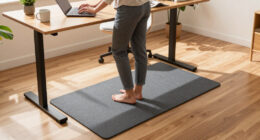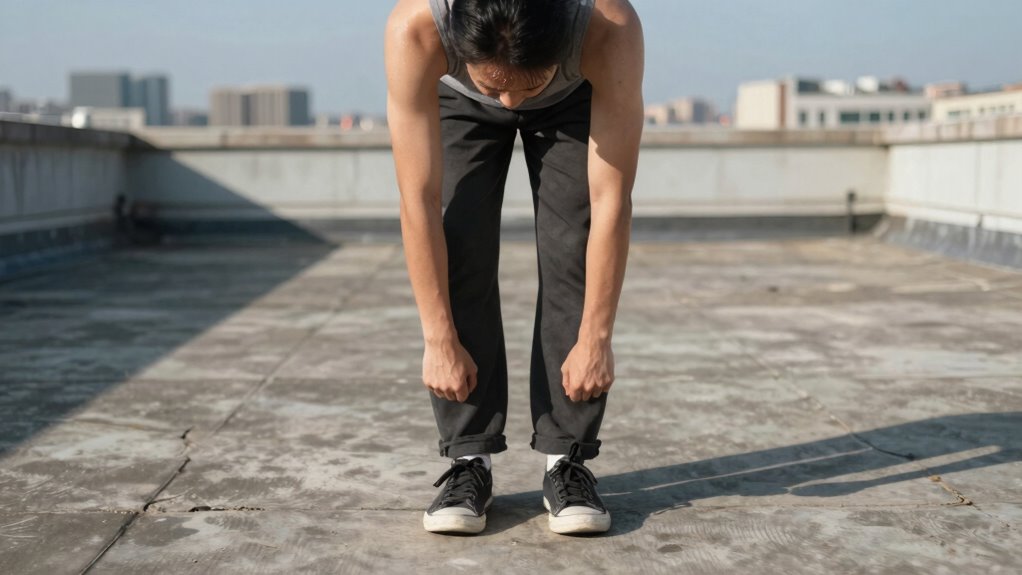
Standing still for long periods is tough because your muscles aren’t built for constant stillness. They quickly tire, creating discomfort, heaviness, and a need for tiny adjustments to stay balanced. As muscles fatigue, others work harder, making you feel even more unstable and fatigued. The cycle continues as your nervous system constantly compensates. If you want to understand how your body manages this challenge and ways to improve, keep exploring these dynamics further.

Get comfort and recovery gear delivered free with Prime
- Fast, free delivery on millions of items
- Prime Video, Amazon Music and more included
- Member-only deals all year
Key Takeaways
- Static standing requires continuous muscle engagement, leading to fatigue more quickly than anticipated.
- Micro-adjustments for balance increase muscle workload, causing discomfort over time.
- Fatigue reduces support efficiency, forcing muscles to work harder and amplifying tiredness.
- Weak core muscles and poor proprioception hinder efficient posture maintenance, increasing effort.
- Natural muscle fatigue during standing results from the body’s effort to sustain an inherently demanding position.

Standing still for extended periods often feels more exhausting than expected, even if it seems simple at first. You might think that simply staying upright shouldn’t be too taxing, but your body’s response tells a different story. When you stand in one place for too long, muscle fatigue quickly sets in. Your muscles aren’t meant to hold the same position for hours on end, and as they tire, you start to feel it in your legs, back, and feet. This fatigue isn’t just about tiredness—it can make maintaining your posture feel harder, forcing your muscles to work harder to keep you upright. Over time, this increased effort can lead to discomfort and a sense of heaviness, making standing feel like a chore rather than a neutral stance.
Beyond muscle fatigue, balance challenges play a significant role in why standing feels so exhausting. When you stand still, your body constantly makes tiny adjustments to keep you balanced. These micro-adjustments require coordination among your muscles, joints, and inner ear. If your core muscles aren’t strong enough or if your proprioception—the sense of where your body is in space—is slightly off, maintaining balance becomes more difficult. This causes your stabilizer muscles to activate more frequently and intensely, leading to quicker fatigue. As your muscles tire, your stability diminishes, and you may notice wobbling or a feeling of instability, which adds to the mental and physical strain of standing.
The combination of muscle fatigue and balance challenges creates a cycle that makes standing increasingly uncomfortable the longer you do it. When your muscles tire, they struggle to support your body efficiently, and your body compensates by engaging additional muscles. This extra effort amplifies fatigue, making your entire stance feel more burdensome. Meanwhile, subtle shifts in balance require constant correction, which keeps your nervous system busy and your muscles engaged. Additionally, proprioception plays a critical role in how well you can maintain your posture without wobbling or overexerting specific muscles. Improving your muscle endurance** through targeted exercises can help mitigate some of these issues and make standing less tiring. Recognizing the importance of muscle control can also help you develop strategies to reduce fatigue and enhance stability during prolonged standing. It’s also helpful to be aware that postural awareness** can significantly influence how efficiently you maintain your stance over time.
In essence, standing still isn’t as passive as it appears. Your body’s muscles are constantly working, even if you don’t realize it. The fatigue and balance challenges you experience are a natural result of your muscles trying to sustain a position that’s inherently demanding. Recognizing this helps you understand why standing for long periods can be so draining. To alleviate some of this strain, you can incorporate movement, stretch regularly, or strengthen your core muscles, all of which can improve your endurance and make standing feel less like a chore.
As an affiliate, we earn on qualifying purchases.
Frequently Asked Questions
Can Standing for Short Periods Improve Endurance?
Yes, standing for short periods can improve your muscle endurance. When you stand regularly, you develop better standing habits and strengthen muscles involved in maintaining posture. Over time, this builds your endurance, making it easier to stand longer without discomfort. Start with brief intervals and gradually increase, allowing your muscles to adapt. Consistent practice helps you stand longer comfortably, enhancing overall muscle endurance and reducing fatigue during static standing.
Does Footwear Impact Static Standing Comfort?
Footwear profoundly impacts static standing comfort. When your shoes prioritize cushioning and ergonomic design, they provide better support and reduce strain, making standing feel simpler and less stressful. Conversely, poorly fitted shoes with inadequate cushioning can cause discomfort and fatigue. By choosing footwear with proper ergonomics and ample cushioning, you create a cushion of comfort, supporting your stance and sustaining your stand longer without soreness or strain.
How Does Hydration Affect Standing Fatigue?
Hydration plays a key role in standing endurance because it boosts muscle endurance and prevents fatigue. When you’re well-hydrated, your muscles function efficiently, reducing discomfort during static standing. On the other hand, dehydration hampers your body’s ability to manage fatigue, making standing feel harder and more tiring. To stay comfortable and alert, make sure you drink enough water throughout the day, especially if you’ll be standing for extended periods.
Are There Specific Muscles Responsible for Standing Discomfort?
You mainly rely on your calf muscles, back muscles, and hip stabilizers for standing, and muscle fatigue here can cause discomfort. Nerve compression, especially in your lower back or hips, might also lead to pain or numbness. When these muscles tire or nerves get pinched, standing feels harder and more uncomfortable. Regular movement and stretching can help reduce muscle fatigue and alleviate nerve compression symptoms.
Can Posture Correction Reduce Static Standing Difficulty?
Sure, posture correction can help reduce static standing difficulty—who knew? By improving your posture alignment, you actually lessen muscle tension that causes discomfort. When you stand with proper form, your muscles work more efficiently, making standing feel easier. Ironically, the very act of fixing your posture can turn static standing from a chore into a more comfortable experience, proving that sometimes, the simplest adjustments make the biggest difference.
As an affiliate, we earn on qualifying purchases.
Conclusion
Standing still may feel like trying to hold a fragile glass in your hand—delicate yet demanding. Your muscles work tirelessly, like a symphony endeavoring to stay in tune, even when the melody seems simple. Remember, it’s not just about balancing on your feet, but about trusting your body’s quiet resilience. With patience, each stand becomes a quiet victory—an unspoken proof of your strength, waiting patiently for the moment when you can finally breathe freely again.
proprioception training equipment
As an affiliate, we earn on qualifying purchases.
As an affiliate, we earn on qualifying purchases.
As an affiliate, we earn on qualifying purchases.
Fall Picks
fall essentials
As an affiliate, we earn on qualifying purchases.