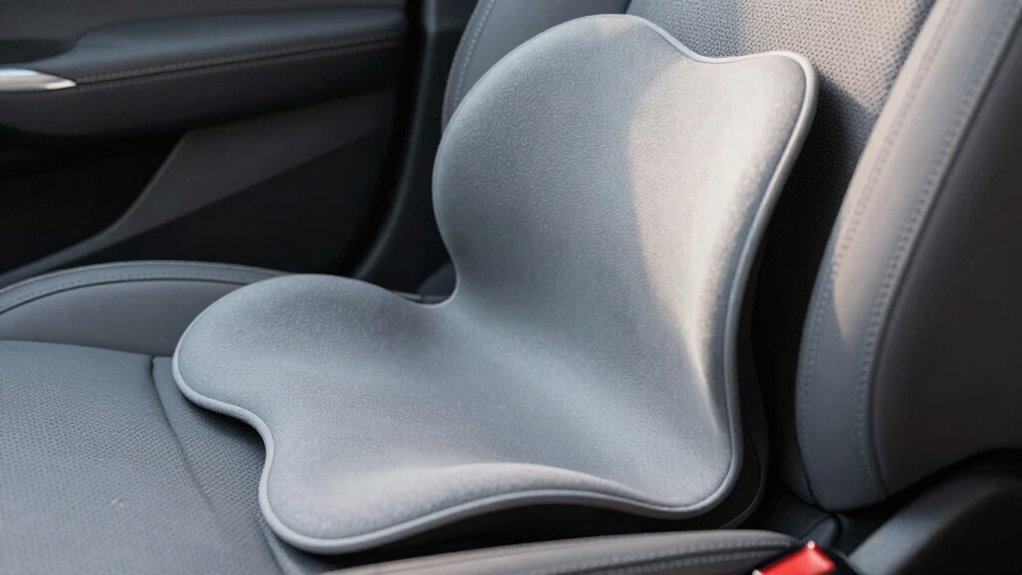
To find the right lumbar support for driving, focus on a shape that contours to your lower back’s natural inward curve, providing gentle, consistent pressure to promote proper spinal alignment. Place it just above your beltline at the small of your back, filling the hollow without pressing too tightly. Make certain it’s adjustable for a snug fit and easy to reposition if needed. Keep these tips in mind to improve comfort, and you’ll discover more ways to optimize your support.
Key Takeaways
- The lumbar support should contour to the lower back’s inward curve for proper spinal alignment.
- It is best placed just above the beltline at the small of the back to support the most pronounced lumbar curve.
- Proper placement fills the hollow of the lower back without pressing too tightly, preventing slouching.
- Supports should be adjustable or inflatable to customize firmness and ensure secure, comfortable fit.
- Correct positioning promotes even weight distribution, reduces fatigue, and maintains good posture during long drives.
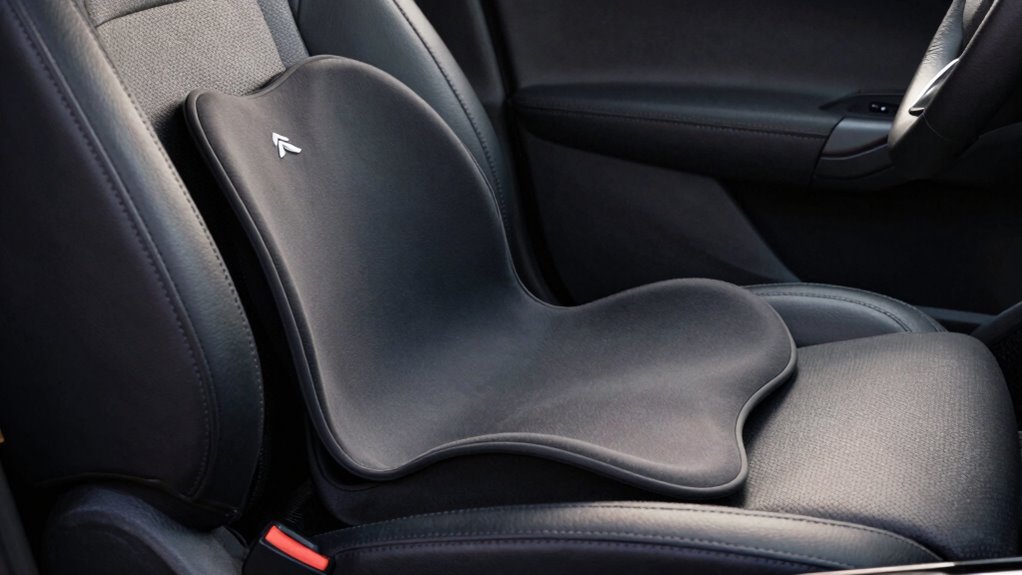
Long hours behind the wheel can strain your lower back, making lumbar support vital for comfortable driving. If you’re tired of nagging soreness after long trips, understanding how lumbar support works can make a big difference. The key lies in choosing supports with an ergonomic design, which is crafted to align with your spine’s natural curve. An ergonomic lumbar cushion encourages proper posture, reduces pressure on your lumbar discs, and minimizes fatigue. When selecting a lumbar support, you’ll find various lumbar cushion types—some are simple foam pads, while others feature adjustable straps or inflatable designs. Each type aims to fit your unique shape and provide targeted support where you need it most.
Proper lumbar support promotes better posture and reduces lower back strain during long drives.
The shape of your lumbar support is essential. It should contour to your lower back’s natural inward curve, offering a gentle, consistent push that promotes correct spinal alignment. A poorly shaped cushion can cause discomfort or shift out of place during your drive, defeating its purpose. Opt for supports that are designed to fill the gap between your lower back and the seat, maintaining a natural posture without forcing your spine into an unnatural position. Many lumbar cushions are ergonomically shaped to provide this precise fit, so you can enjoy a more relaxed, supported ride. Additionally, selecting a support that promotes ergonomic spinal alignment can help prevent long-term discomfort and injury. Proper placement is crucial, as even the best support won’t be effective if positioned incorrectly.
Placement is equally important. The support should be positioned just above the beltline, at the small of your back, where the lumbar curve is most pronounced. You want to slide it into place so it fills the hollow of your lower back comfortably, but without pressing too tightly. Adjustability is key—look for supports with straps or adjustable features that allow you to customize the height and firmness, ensuring it stays securely in place. If your support has inflatable features, you can fine-tune the firmness for different driving conditions or personal comfort levels. Proper placement prevents slouching and helps distribute your weight evenly, reducing muscle fatigue and preventing pain. Understanding ergonomic principles can help you select the most effective support for your needs. Investing in an ergonomic support that suits your needs can significantly improve your driving posture and comfort over time. Moreover, paying attention to correct positioning can enhance overall comfort and prevent discomfort from developing during extended periods of driving. Keep in mind that adjustable features not only improve fit but also allow for quick modifications if your seating position or preferences change.
ergonomic lumbar support cushion for car
As an affiliate, we earn on qualifying purchases.
As an affiliate, we earn on qualifying purchases.
Frequently Asked Questions
Can Lumbar Supports Be Customized for Individual Back Shapes?
Yes, lumbar supports can be customized for your back shape. You should look for supports that offer personalized ergonomics and adjustable positioning, so you can tailor the fit to your unique curvature. This customization helps reduce discomfort during long drives and promotes proper posture. By choosing supports with adjustable features, you guarantee ideal support, making your driving experience more comfortable and healthier, especially if you have specific back needs.
How Often Should Lumbar Support Cushions Be Replaced?
Think of your lumbar support cushion as a trusty sidekick—eventually, it wears out. You should substitute it every 6 to 12 months, depending on cushion durability and how often you drive. Regular replacement ensures continued comfort and proper back support, preventing discomfort from prolonged use. Keep an eye out for signs like flattening or loss of support, which indicate it’s time for a new cushion to keep your back happy and healthy.
Are There Specific Materials Best for Long-Term Comfort?
For long-term comfort, memory foam lumbar supports with an ergonomic design are your best bet. Memory foam molds to your back, providing tailored support and reducing pressure points during long drives. The ergonomic shape ensures proper alignment, helping prevent discomfort and fatigue. Look for high-quality, durable materials to guarantee the cushion maintains its shape over time, and always choose a design that fits your specific lumbar curvature for maximum comfort.
Do Lumbar Supports Work Equally Well in All Vehicle Types?
Back in the day, lumbar supports didn’t have the ergonomic design we enjoy now. Today, they work well in most vehicle types because of their adaptable shapes and sturdy material durability. Whether you’re in a compact car or an SUV, a properly placed lumbar support can relieve back strain. Make sure it fits your seat well and is adjustable for maximum comfort, regardless of the vehicle’s size or style.
How Do I Know if My Lumbar Support Fits Properly?
You’ll know your lumbar support fits properly if it feels comfortable and promotes good ergonomics tips for posture correction. It should support the natural curve of your lower back without causing pressure or discomfort. Adjust its position so that it aligns with your lumbar region, and guarantee it doesn’t push forward or collapse. Proper fit helps prevent fatigue and back pain, making your driving experience more comfortable and healthier.
adjustable inflatable lumbar support for driving
As an affiliate, we earn on qualifying purchases.
As an affiliate, we earn on qualifying purchases.
Conclusion
By choosing the right lumbar support, you can boost your comfort and reduce back pain during long drives. Proper placement and shape matter—think of it as giving your spine a personalized hug. Did you know that poor lumbar support can increase back discomfort by up to 60%? That’s like adding an extra hour of discomfort to every trip. So, invest in quality support, and make every drive feel a little easier on your back.
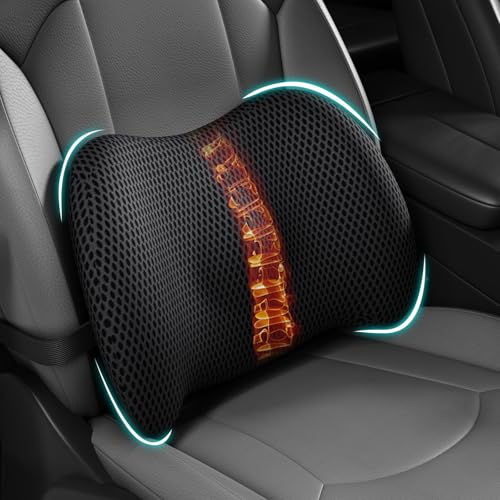
BYMECOST Lumbar Support Pillow for Car, Memory Foam Car Back Cushion
- Ergonomic Design for Pain Relief: Supports lower back and relieves sciatic pain
- Designed for Drivers: Fills gap between tailbone and seat
- Moderate Size and Fit: Compatible with most car seats
As an affiliate, we earn on qualifying purchases.
As an affiliate, we earn on qualifying purchases.
contoured lower back support for car seat
As an affiliate, we earn on qualifying purchases.
As an affiliate, we earn on qualifying purchases.