TL;DR

Get comfort and recovery gear delivered free with Prime
- Fast, free delivery on millions of items
- Prime Video, Amazon Music and more included
- Member-only deals all year
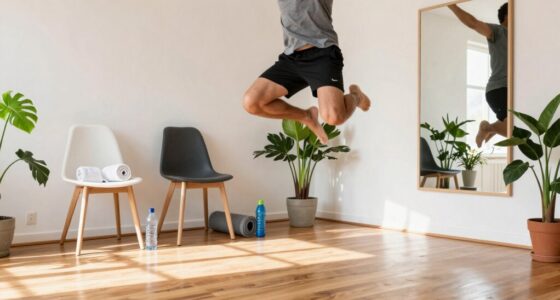
A Fit&Well report recommends four exercises—sit-to-stands with knee lifts, a dumbbell leg raise, farmer carries and shoulder presses—to work strength and balance for everyday activities. The suggested routine is two rounds, with a sturdy chair and controllable weights; it is an exercise recommendation, not evidence that the routine prevents falls or guarantees independence.
Fit&Well has published a four-exercise routine intended to build strength and balance for everyday tasks in later life, including standing from a chair, carrying shopping and reaching overhead. The report’s instructor recommends two rounds of the moves, using a sturdy chair and dumbbells that can be controlled comfortably.
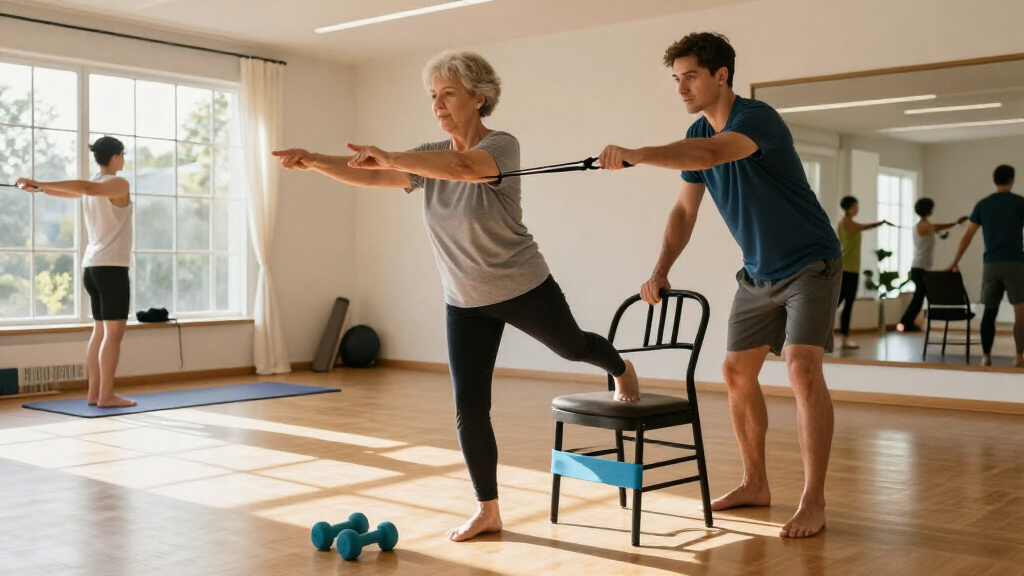
The routine combines a seated knee lift and sit-to-stand, a standing dumbbell hold with a side leg raise, a farmer carry and a shoulder press. The first move pairs lifting each knee while seated with standing up and sitting down under control. The report suggests eight repetitions, with the leg raise performed eight times on each side.
For the farmer carry, participants walk while holding a dumbbell in each hand for 30 seconds, then rest for 30 seconds. The shoulder press is performed seated or standing, pressing the weights from shoulder height overhead and lowering them slowly. The report calls for eight repetitions and two sets of each exercise, with weights light enough to manage throughout.
The instructor links the moves to specific activities: the knee lifts and sit-to-stands to getting in and out of a car, the leg raise to balance, the carry to holding grocery bags, and the press to placing objects on a high shelf. These are the report’s explanations for choosing the exercises, rather than measured outcomes from a formal study of the routine.
Training for Everyday Tasks
The routine is framed around functional strength: the ability to manage movements that can support day-to-day independence. Its exercises require little equipment and can be adapted to a chair, making the plan relatively straightforward to try at home, although a safe setup and appropriate weights matter.
The instructor says the older adults in her classes attend because they want to keep walking, carrying items and moving between seats and standing. She describes clients who found particular activities easier after training, but these are personal examples, not proof that the four-move routine produces the same results for everyone. Readers should treat the exercises as a suggested way to practise strength and balance, not a guarantee of independence or protection from falls.
As an affiliate, we earn on qualifying purchases.
An Instructor’s Class Experience
The report is written by a person who teaches chair workout classes to adults from their late 60s into their 90s. She says her participants often focus on maintaining independence and recounts examples of clients reporting improvements in activities such as getting into a car and walking farther.
One example concerns a client who had a hip replacement: the instructor says a nurse commented on the client’s upper-body strength when she got out of her hospital bed. The report does not provide the client’s medical history, a comparison group or a formal evaluation. Its wider recommendation—that people practise strength before later life—is the instructor’s view, supported in the article by these class experiences rather than research findings specific to the routine.
As an affiliate, we earn on qualifying purchases.
Evidence and Individual Safety
The supplied report does not give a publication date, cite a clinical trial of the four exercises or quantify changes in strength, balance or fall risk. It is unclear how broadly the instructor’s clients’ experiences apply, and the report does not establish that this particular sequence is suitable for every older adult.
People with existing health conditions, recent surgery, pain or concerns about balance may need professional guidance before starting or changing an exercise routine. Use a stable chair, clear walking space and manageable weights; stop if an exercise causes pain or unusual symptoms. The report does not specify how often to repeat the routine each week or how to increase resistance over time.
As an affiliate, we earn on qualifying purchases.
How to Approach the Routine
The report offers the routine as an exercise option, with no follow-up study or formal outcome data announced in the supplied material. Anyone trying it can begin with a single round or lighter weights if needed, while keeping movements controlled and using support where appropriate. The article itself recommends two rounds, but individual ability should guide the starting level.
Readers who are new to strength work or have health or mobility concerns can ask a qualified health professional or exercise instructor for guidance on suitable variations. The report provides no schedule for progression; increasing repetitions or weight should not be assumed to be necessary or appropriate for every person.
balance exercise equipment for seniors
As an affiliate, we earn on qualifying purchases.
As an affiliate, we earn on qualifying purchases.
Key Questions
What are the four exercises in the routine?
The routine includes a seated knee lift and sit-to-stand, a dumbbell hold with a side leg raise, a farmer carry and a shoulder press.
How many repetitions and rounds does the report recommend?
It recommends eight repetitions for each move, with the leg raise done on each side, and two rounds overall. The farmer carry is timed at 30 seconds, followed by a 30-second rest.
What equipment is needed?
The report lists a sturdy chair and a pair of dumbbells. It advises choosing weights that can be controlled comfortably throughout each movement.
Does the routine prevent falls or guarantee independence?
No such result is established in the supplied report. The exercises are presented as ways to practise strength and balance for everyday tasks; the instructor’s client stories are personal examples, not proof of a guaranteed outcome.
Should everyone try the exercises?
Not necessarily. People with health conditions, recent surgery, pain or balance concerns should seek professional guidance about suitable exercises and adaptations. Use a stable setup and stop if movements cause pain or unusual symptoms.
Source: rss
Columbus Day / Indigenous Peoples' Day Picks
long weekend sales
As an affiliate, we earn on qualifying purchases.