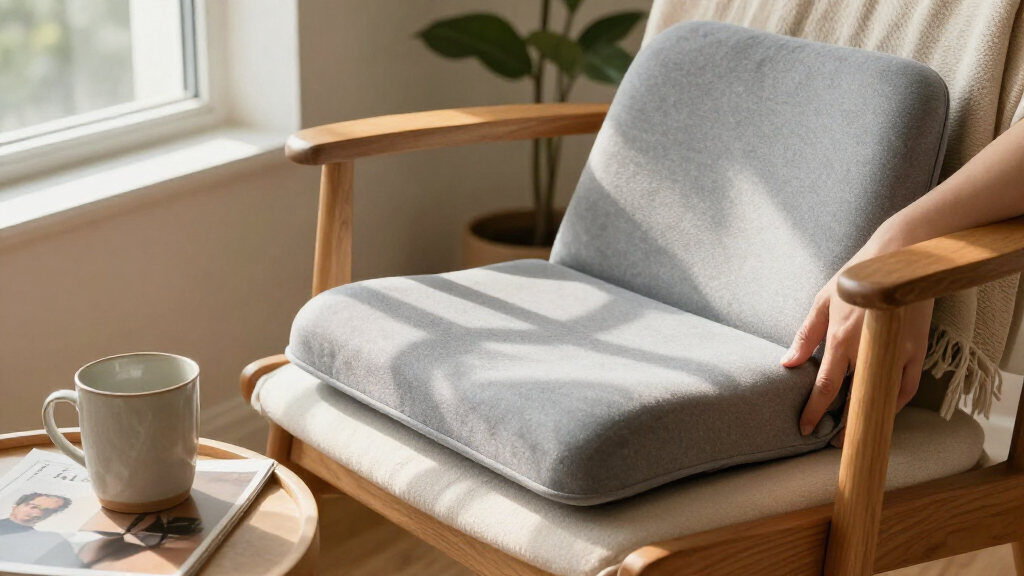

Choosing an ergonomic support cushion is a tradeoff between a surface that adapts closely to your body and one that feels cooler and more structured. Memory foam cushions compress around the hips and thighs, which can make long periods of sitting feel more cushioned; gel cushions are often chosen for their cooler feel and resistance to a soft, sinking sensation. Neither material corrects poor posture or makes an unsuitable chair ergonomic on its own.

Get comfort and recovery gear delivered free with Prime
- Fast, free delivery on millions of items
- Prime Video, Amazon Music and more included
- Member-only deals all year

CHANCEE Ergonomic Seat Cushion with L‑Shaped Design for Office Chair
- ✔ Dimensions: 15.8 × 16.5 × 13.4 inches
- ✔ Core: High-density memory foam
- ✔ Cover: 80% milk silk fabric

CushZone Memory Foam Seat Cushion and Lumbar Support Pillow, Black
- ✔ Pieces: Seat cushion and lumbar pillow
- ✔ Seat cushion dimensions: 18.1 × 14.2 × 3.2 inches
- ✔ Lumbar pillow dimensions: 13 × 4 × 13 inches
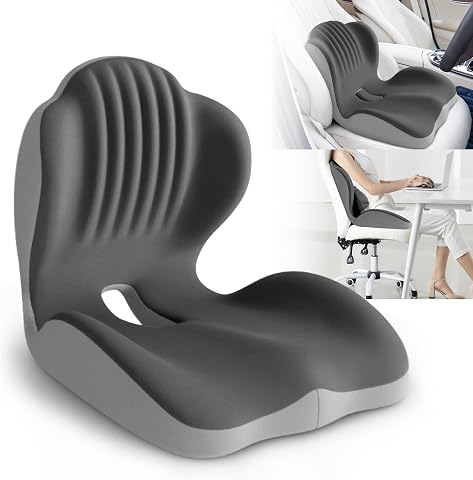
LVGREEEN Ergonomic L-Shaped Memory Foam Seat Cushion, Dark Grey
- ✔ Dimensions: 16.5 × 15.8 × 13.4 inches
- ✔ Core: High-density, slow-rebound memory foam
- ✔ Shape: Semicircular with hollow coccyx design
The better choice depends on what bothers you during a typical day. Choose memory foam if you want contouring and pressure relief and do not mind some heat or gradual compression. Choose gel if warmth and a stable feel are bigger concerns. Cushion shape, thickness, firmness, cover, and how well it fits your chair can matter as much as the material, so compare the specific design rather than relying on the label alone.
At a Glance
| Criteria | Memory foam ergonomic support cushion | Gel ergonomic support cushion | Winner |
|---|---|---|---|
| Pressure distribution | Contours to the body and spreads pressure; feel varies with foam density and firmness. | Offers cushioning, but may not conform around the body as closely as foam. | A |
| Temperature and airflow | Can retain warmth, particularly with a dense foam core or an insulating cover. | Often feels cooler to the touch; an insulating cover can reduce that advantage. | B |
| Support and stability | Soft, cushioned feel; very plush models may allow more sinking. | Typically feels more even and stable; firmness varies by design. | Depends |
| Fit across chairs | Usually conforms to different seat shapes, though thickness can raise the sitter too much. | A flat or thick design may fit some chairs poorly or shift during use. | A |
| Durability and shape retention | Quality foam can last, but repeated compression may leave a lasting dip. | Gel can retain its feel, but seams, layers, and construction affect service life. | Depends |
| Maintenance and portability | Often lightweight; removable covers are common, but the foam core may need airing. | Can be heavier; covers and care instructions vary by model. | A |
| Value | Usually a strong value when contouring is the priority and a basic model fits the chair. | Worth a premium when cooler contact and a stable feel solve a real daily problem. | Depends |
CHANCEE Ergonomic Seat Cushion with L‑Shaped Design for Office Chair
For buyers who want one cushion to address both seat and lower-back positioning, CHANCEE’s integrated L-shaped profile is the clearest all-in-one option in this group. Its high-density, medium-firm memory foam is paired with a lumbar support section and a hollow, breathable design intended to reduce pressure around the coccyx. That combination gives it a more joined-up support approach than the CushZone two-piece set, where we place and adjust the back pillow separately.The design’s reach across office chairs, car seats, wheelchairs, sofas, and beds makes it versatile in principle, and a non-slip bottom helps keep it in place. The tradeoff is its substantial listed height and L-shaped form: in a low-backed or narrow chair, the lumbar section may sit awkwardly or crowd the seat. CushZone offers more flexibility when we want to position the lumbar pillow independently, while CHANCEE makes more sense when a unified shape matches our chair.Care is another consideration. The cover is described as skin-friendly and breathable, but the foam itself is not machine washable; cleaning is limited to the removable cover if it can be removed as intended. Choose CHANCEE for an integrated support layout and skip it if our chair has little clearance or we need a cushion that can be washed through completely.
Pros:
- Integrated lumbar and coccyx support in one L-shaped design.
- High-density, medium-firm memory foam core.
- Breathable hollow design and non-slip bottom.
- Listed for use across office chairs, cars, wheelchairs, sofas, and beds.
Cons:
- Foam core is not machine washable; care is limited to the cover.
- L-shaped profile may not fit narrow or low-backed chairs.
Best for: People seeking a single, shaped cushion with both lumbar and coccyx support for a compatible office chair or other seat.
Not ideal for: People with very narrow or low-backed chairs, or anyone who needs the foam core itself to be machine washable.
Bottom line: We rank CHANCEE first for its combined lumbar and coccyx support, provided its taller L-shaped profile fits our chair.
“We rank CHANCEE first for its combined lumbar and coccyx support, provided its taller L-shaped profile fits our chair.”
CushZone Memory Foam Seat Cushion and Lumbar Support Pillow, Black
CushZone’s two-piece format suits buyers who prefer to set the seat and back support independently. The seat cushion has a non-slip base, while the lumbar pillow uses adjustable straps; together, the pieces can be arranged to match a chair more precisely than CHANCEE’s fixed L-shaped profile. That flexibility can be useful when built-in lumbar support lands too high or too low, though we still need to check whether the pillow’s dimensions work with our chair.Its strongest everyday distinction is maintenance. Both polyester covers are removable and machine washable, and the seat cushion includes a carrying handle. Compared with CHANCEE’s integrated shape, this set asks us to manage two pieces, but it offers more straightforward cover care. The listed medium-firm memory foam is a familiar middle ground; the product details do not establish that it will suit every preferred firmness or seating posture.The lumbar pillow measures 13 × 4 × 13 inches, so the adjustable straps do not guarantee a comfortable fit on every seat. If we want a single cushion with a connected lumbar section, CHANCEE is the more unified choice. If we value independent placement and washable covers, CushZone is the practical alternative; buyers who want a dedicated hollow coccyx cutout may prefer LVGREEEN or CHANCEE instead.
Pros:
- Two-piece design allows separate seat and lumbar positioning.
- Both removable polyester covers are machine washable.
- Lumbar pillow has adjustable straps; seat cushion has a non-slip base.
- Carrying handle supports moving the seat cushion between locations.
Cons:
- Lumbar pillow dimensions may not suit every chair or preference.
- Two separate pieces require positioning and may not suit buyers seeking a unified profile.
Best for: People who want separate seat and lumbar pieces, adjustable pillow placement, and washable covers for regular use.
Not ideal for: People who want a single integrated cushion, a specific coccyx cutout, or a lumbar pillow that fits every chair without adjustment.
Bottom line: We recommend CushZone when adjustability and washable covers matter more than an integrated coccyx-focused shape.
“We recommend CushZone when adjustability and washable covers matter more than an integrated coccyx-focused shape.”
LVGREEEN Ergonomic L-Shaped Memory Foam Seat Cushion, Dark Grey
LVGREEEN centers its design on a hollow coccyx area and a high-density, slow-rebound memory foam core. It is a focused option for buyers comparing shaped seat cushions and looking for support around the lower back and buttocks. CHANCEE shares the hollow, shaped approach and adds explicitly described integrated lumbar support; LVGREEEN’s distinguishing emphasis is its slow rebound and its recommendation to allow one to three hours to recover after unpacking.The listed dimensions are close to CHANCEE’s, so chair fit deserves the same attention: a tall or shaped cushion can change how we sit, and compatibility across office chairs, cars, wheelchairs, and gaming chairs does not ensure a good fit in every model. LVGREEEN also lists a recommended user weight up to approximately 180 pounds. Buyers outside that guidance should not assume the cushion is intended for them based on the broad seating-use list.There are a couple of practical caveats. The cushion may have a slight odor when first unpacked, and it needs time to regain its shape before use. Unlike CushZone, the supplied details do not specify washable covers or adjustable lumbar placement. That makes LVGREEEN a more targeted pick for those prioritizing the hollow seat shape, rather than buyers who want the easiest care or configurable back support.
Pros:
- Hollow coccyx design is intended to create space around the tailbone.
- High-density, slow-rebound memory foam core.
- Listed for office chairs, cars, wheelchairs, and gaming chairs.
- Dimensions are similar to CHANCEE’s shaped option.
Cons:
- May have a slight odor when first unpacked.
- Needs one to three hours to regain shape after unpacking.
- Recommended user weight is listed up to approximately 180 pounds.
Best for: People seeking a shaped, hollow coccyx-support cushion with slow-rebound memory foam for a compatible seat.
Not ideal for: People who need washable-cover details, adjustable lumbar support, immediate use after unpacking, or a product intended for users above the listed weight guidance.
Bottom line: LVGREEEN is our focused hollow-design pick when its weight guidance and shape suit the buyer and chair.
“LVGREEEN is our focused hollow-design pick when its weight guidance and shape suit the buyer and chair.”
As an Amazon Associate we earn from qualifying purchases.
Key Differences
The clearest difference is how each surface responds to pressure. Memory foam compresses and contours, which can make it feel more personalized beneath the hips. That cushioning is useful for people who find a firm chair uncomfortable, though a soft model can feel like it lets the sitter sink. Gel usually gives a more even, supported feel and may feel cooler at first contact. These are tendencies, not guarantees: foam density, gel construction, cover material, and cushion shape all affect the result.
For an all-day desk setup, the chair and the person using it matter as much as the cushion. A thick cushion can raise the seat and affect desk, armrest, or foot positioning. A cushion that slides or does not fit the seat can distract from any material benefit. Memory foam is the safer starting point when contouring is the main need; gel makes more sense when heat and a stable surface are the main complaints. Paying extra for gel is sensible only if its cooler, firmer feel matters enough in daily use to justify it.
Detailed Comparison
Pressure distribution (Memory foam ergonomic support cushion wins — moderate)
Memory foam wins for close contouring; the gap is moderate. It compresses under the sitter and can spread pressure over a broader area, which may improve comfort on a firm seat. Gel cushions also add cushioning, but many retain a more uniform surface. If you prefer a molded, softer feel, foam is the stronger starting point; if you dislike being cradled, gel may feel better. Individual comfort varies, and neither material should be treated as a medical treatment.
Temperature and airflow (Gel ergonomic support cushion wins — moderate)
Gel often wins on perceived coolness; the gap is moderate. Its surface can feel cooler than foam, which may appeal to people who sit for hours or find a warm cushion uncomfortable. Foam can hold warmth, especially in a dense core under a thick cover. But the cover and room temperature matter: a breathable cover can help either style, while a padded cover may blunt gel’s advantage. Choose gel for a recurring heat problem, not simply because its product label promises cooling.
Support and stability (moderate difference)
Gel may win for a firmer, more even feel, but this depends on the model. The difference is minor to moderate because both categories include a range of firmness levels. Soft foam contours more and can feel less steady if it compresses deeply. A firmer foam cushion can remain supportive, while a gel design with a soft base can still sink. Compare firmness and construction descriptions, and use a return period if the feel is hard to predict from specifications.
Fit across chairs (Memory foam ergonomic support cushion wins — minor)
Memory foam has a small advantage in adaptability. Its shape can settle into varied seat contours more readily, while a rigid or unusually shaped gel cushion may sit awkwardly. For either option, dimensions, thickness, and a nonslip base often matter more than the material. Check that the cushion does not push you too high for your desk or prevent your feet from resting comfortably. A well-fitting gel cushion beats a poorly sized foam one.
Durability and shape retention (minor difference)
No consistent winner; the gap is minor without model-specific evidence. Foam can lose resilience and develop a compressed area after repeated use, while gel cushions can vary in how well their layers and seams hold together. Material name alone is not enough to predict lifespan. Look for construction details, a clear warranty, and care guidance. If the cushion will see daily, extended use, a stronger build and a usable return policy are worth more than an unsupported longevity claim.
Maintenance and portability (Memory foam ergonomic support cushion wins — minor)
Foam often has a slight portability advantage, though the difference is minor. Many foam cushions are light and easy to move between home and office. Gel models can weigh more, depending on the insert and base. Care is product-specific: a removable, washable cover is useful for either, but the core usually needs different care from the cover. Check the label before cleaning, and do not assume that an insert is washable or safe to leave in direct heat.
Value (moderate difference)
Value depends on which discomfort the cushion addresses. A basic foam cushion is often the more economical choice for contouring and added cushioning. Paying more for gel makes sense when a cooler surface or a firmer, more even feel is a meaningful improvement for your routine. The difference is moderate for someone who sits for long stretches and dislikes warmth, but minor if both materials feel comfortable. Do not pay a premium for a feature you will barely notice.
Memory foam ergonomic support cushion: Pros and Cons
Pros:
- Contours closely and can make a firm seat feel more cushioned.
- Often adapts to a range of seat shapes.
- Many models are light and easy to move.
Cons:
- Can retain warmth during extended sitting.
- Soft designs may feel too yielding or allow sinking.
- Repeated pressure can reduce resilience over time.
Gel ergonomic support cushion: Pros and Cons
Pros:
- Often feels cooler at first contact than foam.
- Can provide a more even, stable sitting surface.
- May suit people who dislike a deeply contoured feel.
Cons:
- May not conform as closely to the body.
- Can cost more, with value tied to whether coolness or firmness matters.
- Some designs are heavier or fit unusual chairs poorly.
Who Should Choose What
Choose Memory foam ergonomic support cushion if:
- You want a contoured, cushioned feel on a firm chair.
- You prioritize pressure distribution over a cool surface.
- You need a lightweight cushion to move between chairs.
Choose Gel ergonomic support cushion if:
- Your main complaint is a warm-feeling seat.
- You prefer a more uniform, stable feel over deep contouring.
- You are willing to pay more for cooler contact that you expect to notice daily.
Skip both if: Neither material is a good fit if the cushion makes your chair height or desk position uncomfortable, slips during use, or fails to address the source of persistent pain. Check the chair setup and seek qualified medical advice for ongoing symptoms.
Value for Money
Memory foam is usually the better value when your goal is a softer, body-conforming surface. A modestly priced cushion can be enough if its dimensions and firmness suit your chair; a premium label alone does not guarantee a better fit. Gel earns its higher price when you regularly feel too warm or want a steadier surface, and the particular model offers construction and cover details that support that use.
Pay more only for a difference you expect to feel during ordinary sitting. If you are unsure, prioritize a removable cover, nonslip base, suitable dimensions, clear care instructions, and a return policy over claims about advanced materials. The cheapest cushion is poor value if it changes your seated height or shifts around, while an expensive cushion is poor value if its defining feature does not address your comfort needs.
Final Verdict
For most people seeking more cushioning and contouring, start with a well-sized memory foam cushion at a sensible price. It is the more flexible choice across chairs and offers the clearest benefit for people who want a softer surface. Choose a gel cushion if heat or a more stable feel is the specific problem, and its extra cost is justified by a feature you will notice every day.
The deciding factor is your comfort priority: contouring favors foam; cooler contact favors gel. In either case, fit the cushion to your chair and desk setup, and do not expect it to compensate for an unsuitable workstation or resolve persistent pain.
Frequently Asked Questions
Is memory foam or gel better for sitting all day?
Neither is best for everyone. Memory foam suits people who want close contouring and a cushioned feel; gel is a better candidate if warmth or a sinking sensation bothers you. The right size and firmness are as important as the material.
Do gel cushions stay cooler than memory foam?
They often feel cooler at first contact, but the effect depends on the gel design, cover, room, and how long you sit. A thick or nonbreathable cover can reduce the difference.
Will an ergonomic cushion fix my posture?
A cushion can change how your seat feels, but it cannot guarantee good posture or correct a poorly fitted workstation. Check seat height, desk position, and foot support along with cushion fit.
Is a more expensive gel cushion worth it?
It can be worth paying more if you regularly feel too warm or prefer a firmer, more even surface. If contouring is your main goal, a suitable memory foam cushion may provide better value.