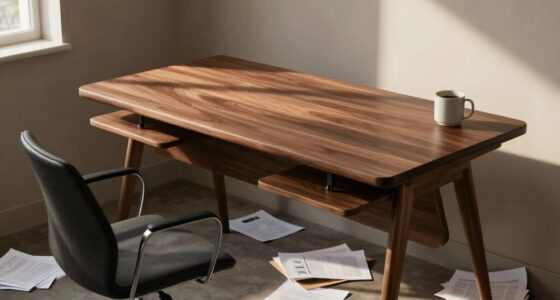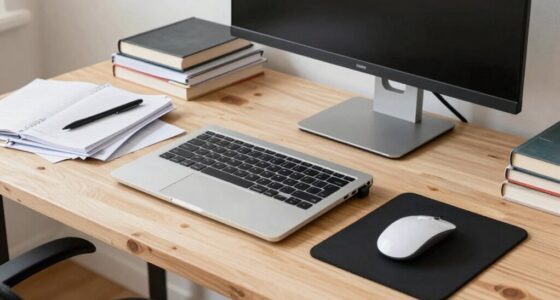
To make a small workspace feel bigger, position larger furniture pieces against walls to free up floor space and create an open, flowing layout. Let natural light flood the room by placing desks near windows and avoiding clutter, which helps the space seem airy and expansive. Use light, neutral colors to reflect light and add a sense of brightness. Master these strategic tips, and you’ll discover even more ways to maximize your workspace’s size and comfort.

Get comfort and recovery gear delivered free — and shop member deals
- Fast, free delivery on millions of items
- Access to Prime Big Deal Days deals on October 6–7
- Prime Video, Amazon Music and more included
Key Takeaways
- Arrange furniture against walls to maximize open floor space and create an airy feel.
- Position larger pieces near windows to enhance natural light flow and openness.
- Use light-colored, cohesive furniture and decor to reflect light and visually expand the room.
- Maintain an open layout with clear pathways to promote a sense of spaciousness.
- Incorporate vertical storage to reduce clutter and free up floor space for a more open environment.
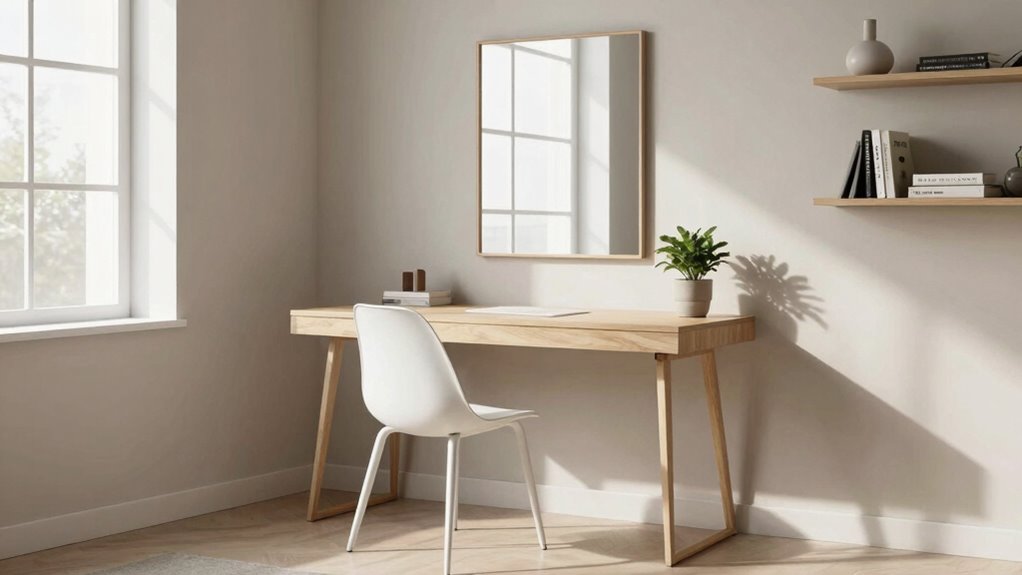
Have you ever struggled to make a layout look clean and organized? If so, you’re not alone. Small workspaces can easily feel cluttered and cramped, but there’s a simple trick that can make a significant difference: strategic furniture placement combined with thoughtful color coordination. When you arrange your furniture with purpose, you create a sense of flow and openness. Instead of crowding your desk or stacking storage in a chaotic manner, consider leaving open pathways that guide the eye naturally through the space. Position larger pieces, like your desk or filing cabinets, against the walls to free up the center of the room. This not only maximizes the available floor space but also creates the illusion of more room to move around comfortably. Additionally, incorporating visual balance by evenly distributing furniture and decor helps maintain harmony and prevents the space from feeling lopsided or cluttered. Maintaining a balanced layout is key to achieving this effect and can be further enhanced by adjusting the placement based on natural light sources. Color coordination plays an equally important role in enhancing the sense of space. Stick to a cohesive color palette that uses light, neutral tones to reflect light and open up the room visually. Bright whites, soft beiges, or pastel shades can make the space appear larger and less confined. Avoid overly dark or busy patterns that tend to absorb light and create a feeling of heaviness. When choosing your furniture, opt for pieces in matching or complementary colors. This consistency helps the eye travel smoothly across the room without interruption, reducing visual clutter and making the space seem more expansive. Incorporating color harmony principles can further enhance this effect by creating a seamless visual flow. For example, using a color palette that includes shades from the same family promotes a harmonious look. Combining furniture placement with strategic color choices is where the real magic happens. For instance, if you have a small desk, placing it near a window with light-colored curtains can amplify natural light, making the room feel airy. Keep the accessories and storage containers in the same color family to avoid visual chaos. Use vertical storage options like shelves or tall cabinets to utilize height, which adds dimension without taking up valuable floor space. Incorporating biodiversity by selecting eco-friendly furniture and sustainable materials can also enhance your workspace’s harmony and promote sustainable living practices. With these simple adjustments, your workspace will feel less crowded, even if it’s physically small.
As an affiliate, we earn on qualifying purchases.
Frequently Asked Questions
Does Furniture Placement Impact Workspace Perception More Than Color?
Furniture arrangement impacts workspace perception more than color because it directly influences flow and openness. Strategic furniture placement creates pathways and minimizes clutter, making your space feel larger. While color psychology can affect mood, it’s less impactful on perceived size. You should focus on arranging furniture to maximize open areas, ensuring your workspace feels more spacious and comfortable, rather than relying solely on color to create the illusion of a bigger environment.
Can Adding Mirrors Enhance the Feeling of Space Effectively?
Yes, adding mirrors can effectively enhance the feeling of space by creating visual expansion. Proper mirror placement is key; position them opposite windows or in areas where they reflect light and open views. This trick tricks your eye into perceiving a larger, brighter workspace, making small areas feel more open and inviting. Use mirrors thoughtfully to maximize their impact without cluttering your workspace.
Are There Specific Lighting Tips for Small Work Areas?
To make your small work area feel more spacious, focus on task lighting and natural illumination. Use bright, focused task lights to reduce shadows and increase clarity, making the space feel more open. Maximize natural light by positioning your desk near windows and using light, airy curtains. Combining these lighting tips creates a well-lit environment that boosts productivity and visually expands your workspace, making it feel larger and more inviting.
How Does Clutter Influence the Perception of Space?
Clutter can instantly shrink your space, making it feel like a tiny closet rather than a functional workspace. It disrupts the visual flow and overwhelms your senses. Embracing minimalist decor clears the chaos, creating a sense of openness. When you keep your area tidy, your workspace feels larger, more inviting, and easier to focus. Less clutter means more room for your ideas to breathe and flourish—trust me, it’s a game-changer.
What Are Quick Fixes to Make a Workspace Appear Larger Instantly?
To instantly make your workspace appear larger, prioritize ergonomic essentials like a compact desk and adjustable chair to maximize space. Add acoustic treatments such as wall panels or hanging baffles to reduce noise and create an open feel. Keep surfaces clear and organize clutter with smart storage solutions. Using light colors and mirrors also enhances the illusion of space, making your workspace feel bigger and more inviting right away.
vertical storage shelves for office
As an affiliate, we earn on qualifying purchases.
As an affiliate, we earn on qualifying purchases.
Conclusion
By applying this simple layout trick, you can instantly make your small workspace feel more open and inviting. Remember, a study shows that cluttered or cramped spaces can reduce productivity by up to 20%. So, take a few moments to organize and optimize your layout—it’s a quick change that can boost your mood and efficiency. Small tweaks make a big difference, turning your workspace into a place where creativity and focus thrive.
As an affiliate, we earn on qualifying purchases.
As an affiliate, we earn on qualifying purchases.
Fall Picks
fall essentials
As an affiliate, we earn on qualifying purchases.