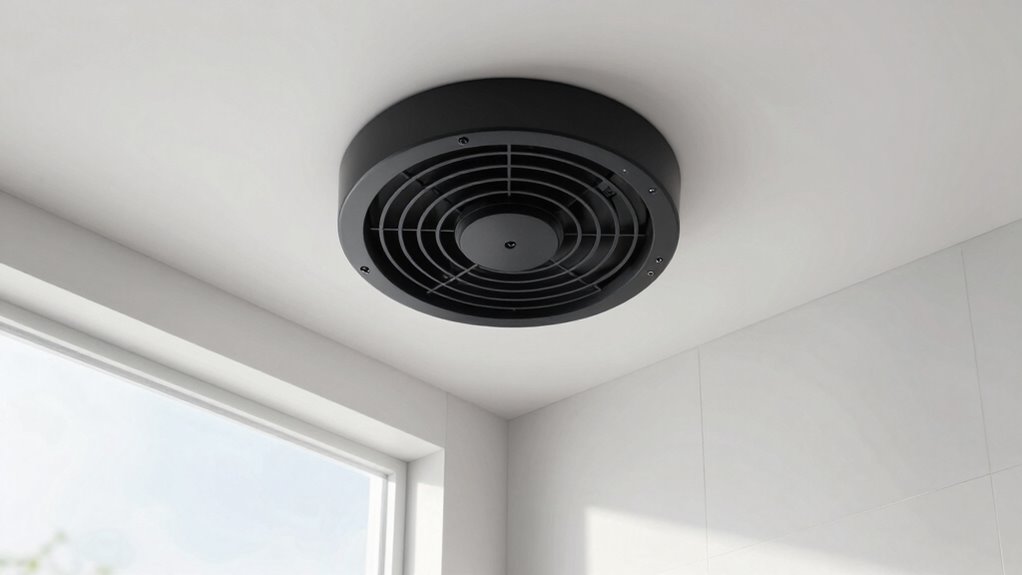

When choosing a bathroom exhaust fan, look for one with a low sone rating—ideally 1 or less—to guarantee quiet operation. Features like sound dampening technology, insulated motor housings, and rubber mounts can also reduce noise. Balancing quietness with proper ventilation is key, so pick a fan that moves air efficiently without disrupting your peace. If you keep these features in mind, you’ll find a model that keeps your bathroom fresh and peaceful.

Get comfort and recovery gear delivered free — and shop member deals
- Fast, free delivery on millions of items
- Access to Prime Big Deal Days deals on October 6–7
- Prime Video, Amazon Music and more included
Key Takeaways
- Check the fan’s sone rating; 1 sone or less indicates a very quiet operation.
- Look for sound dampening features like insulated motor housings and rubber mounts.
- Read reviews or listen to fan samples to assess actual noise levels.
- Choose fans with advanced noise-reduction technology for optimal quietness.
- Balance ventilation efficiency (CFM) with low noise to ensure effective yet silent airflow.
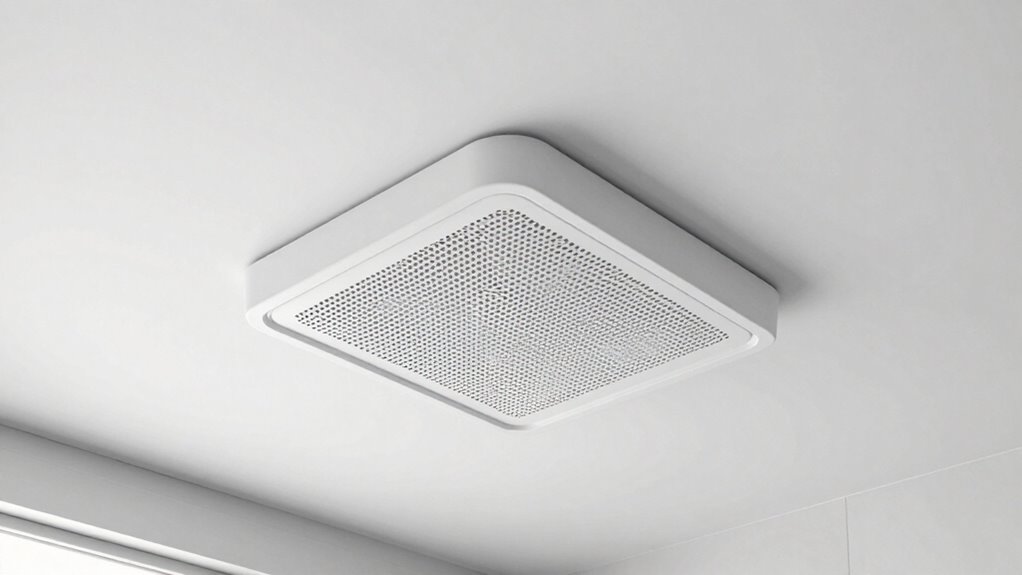
Bathroom exhaust fans are vital for maintaining a fresh and healthy environment in your space. They remove excess moisture, prevent mold growth, and eliminate odors, contributing to overall air quality. When shopping for a new fan, one of the most important features to consider is its quiet operation. You don’t want a noisy appliance disrupting your privacy or peace, especially in small or shared bathrooms. The key to finding a good quiet exhaust fan lies in checking its noise levels and how well it maintains ventilation efficiency without creating unnecessary noise.
Quiet exhaust fans keep your bathroom fresh and peaceful by effectively removing moisture and odors without disruptive noise.
Ventilation efficiency is what guarantees your bathroom stays dry and odor-free. A fan with high ventilation efficiency moves air effectively, reducing humidity quickly and preventing mold buildup. Efficient fans operate smoothly and require less energy, which can save you money over time. But don’t let high performance fool you into choosing a loud model. Many modern fans are designed to deliver excellent ventilation while remaining whisper-quiet. Look for fans that specify their airflow capacity in cubic feet per minute (CFM), ensuring they match the size of your bathroom for maximum performance without overworking the motor. Additionally, selecting a fan with good airflow capacity is essential for optimal ventilation.
Noise levels are equally vital. Even the most powerful fan isn’t worth much if it produces loud, disruptive sounds. Manufacturers often rate noise levels in sones; the lower the sone rating, the quieter the fan. A fan with a sone rating of 1 or less is typically very quiet and unlikely to disturb your activities or sleep. When evaluating options, pay close attention to these ratings and, if possible, listen to the fan in person or read customer reviews that comment on noise levels. Remember, a quiet fan doesn’t mean sacrificing ventilation efficiency. Many brands now incorporate sound dampening features and noise-reduction technology to provide both quiet operation and effective airflow. Incorporating sound dampening technology can significantly enhance your bathroom experience.
In your search, prioritize models that strike a balance between low noise levels and high ventilation efficiency. Proper ventilation is essential to prevent moisture buildup and maintain air quality, especially in small or poorly ventilated bathrooms. Quiet operation enhances your comfort, especially during nighttime or when you’re using the bathroom for extended periods. Features like insulated motor housings or rubber mounts can help reduce operational noise and improve overall quietness. Additionally, understanding the importance of ventilation efficiency can help you select a fan that effectively maintains air quality without excess noise. Ultimately, a bathroom exhaust fan that combines quiet operation with maximum ventilation efficiency ensures your bathroom remains fresh, dry, and peaceful—exactly what you deserve.
quiet bathroom exhaust fan low sone
As an affiliate, we earn on qualifying purchases.
As an affiliate, we earn on qualifying purchases.
Frequently Asked Questions
How Loud Should a Bathroom Exhaust Fan Ideally Be?
You should look for a bathroom exhaust fan with noise levels around 1.5 to 3 sones, which translates to a quiet operation. Pay attention to sound ratings, as lower sones indicate less noise. Ideally, the fan should operate silently or only produce a faint hum during use. This way, you enjoy effective ventilation without disturbing your peace or compromising comfort in your bathroom.
What Is the Average Lifespan of a Bathroom Exhaust Fan?
You might worry about replacing your bathroom exhaust fan often, but with proper ventilation technology and noise reduction features, it can last 10 to 15 years. These advancements help maintain efficiency and quiet operation, reducing frustration. Investing in a high-quality fan guarantees you won’t face frequent replacements, keeping your bathroom fresh and peaceful. Don’t settle for noisy, short-lived fans—choose one built to last and enjoy a quieter, more comfortable space.
Can a Bathroom Exhaust Fan Be Energy-Efficient?
Yes, a bathroom exhaust fan can be energy-efficient. Look for models with energy-saving features like LED lighting and high-efficiency motors. Noise reduction technology also helps, since quieter fans often operate more smoothly and use less energy. By choosing a fan with these features, you guarantee effective ventilation while saving on energy costs. Always check the ENERGY STAR label for verified energy efficiency.
How Often Should I Clean My Bathroom Exhaust Fan?
Think of your bathroom exhaust fan as a silent guardian—regularly cleaning it keeps it running smoothly. You should clean your fan at least every six months to prevent dust buildup that hampers ventilation. Regular ventilation maintenance also includes checking for debris and grease. If your fan’s noise level has increased or it’s not working efficiently despite cleaning, consider fan replacement tips like upgrading to a quieter, more powerful model.
Are There Specific Models Suitable for Small Bathrooms?
Yes, there are specific models suitable for small bathrooms. Look for compact fans designed for small space ventilation options, which fit easily without overwhelming the room. These models often feature quiet operation and efficient airflow tailored for limited areas. When choosing, make certain it’s powerful enough to prevent moisture buildup but small enough to blend seamlessly into your space. This way, you get effective ventilation without sacrificing comfort or style.
sound dampening bathroom exhaust fan
As an affiliate, we earn on qualifying purchases.
As an affiliate, we earn on qualifying purchases.
Conclusion
When shopping for a bathroom exhaust fan, remember that quiet operation isn’t just a luxury—it’s essential. Think of it as the silent guardian of your comfort, quietly working behind the scenes while you go about your day. Don’t settle for noise that’s louder than your morning alarm. By prioritizing quietness, you’ll create a peaceful space where fresh air flows in smoothly, and tranquility reigns—making every bathroom visit a gust of fresh air.
energy efficient bathroom ventilation fan
As an affiliate, we earn on qualifying purchases.
As an affiliate, we earn on qualifying purchases.
insulated motor bathroom exhaust fan
As an affiliate, we earn on qualifying purchases.
As an affiliate, we earn on qualifying purchases.
Fall Picks
fall essentials
As an affiliate, we earn on qualifying purchases.