
When choosing exercise equipment for joint-friendly training, focus on durability, safety, and ergonomic design. Look for machines that withstand regular use, feature padded surfaces, adjustable settings, and smooth movements to reduce impact and protect your joints. Prioritize equipment with secure safety features and ergonomic handles to promote proper posture. Versatile, easy-to-use options help you stay consistent and minimize discomfort. Keep these factors in mind, and you’ll find solutions that support your joint health and long-term fitness goals.

Get comfort and recovery gear delivered free with Prime
- Fast, free delivery on millions of items
- Prime Video, Amazon Music and more included
- Member-only deals all year
Key Takeaways
- Prioritize equipment with durable, high-quality materials to ensure safe, consistent support and reduce the need for repairs.
- Choose machines with impact-reducing features like padding and controlled movements to protect joints during exercise.
- Opt for ergonomic designs that promote proper joint alignment and adjustable resistance for personalized, joint-friendly workouts.
- Ensure equipment encourages correct biomechanics and movement patterns to prevent joint stress and long-term injury.
- Select user-friendly, versatile equipment with easy controls and customizable settings to support sustainable, comfortable training.
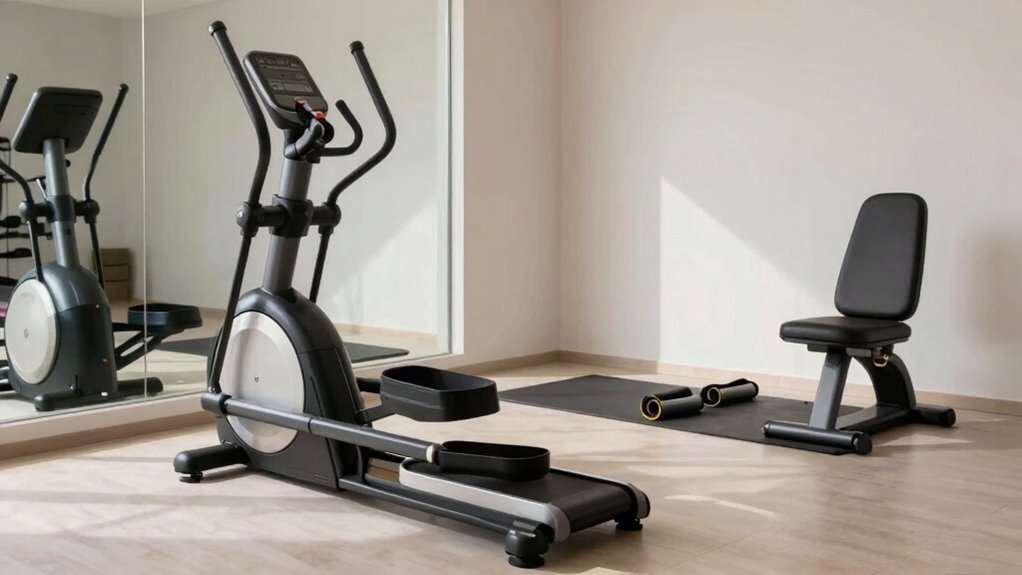
If you’re aiming for joint-friendly training, selecting the right exercise equipment is crucial. The equipment you pick should support your goal of reducing joint stress while still providing an effective workout. One of the first things to weigh is equipment durability. Durable equipment withstands regular use without loosening, breaking, or wearing down, which can compromise safety. Investing in well-made machines or gear means you’ll have consistent support, and the risk of sudden malfunctions that could cause injury decreases considerably. Look for reputable brands with high-quality materials, and read reviews to guarantee the equipment holds up over time. Durable equipment also means fewer repairs and replacements, saving you money in the long run.
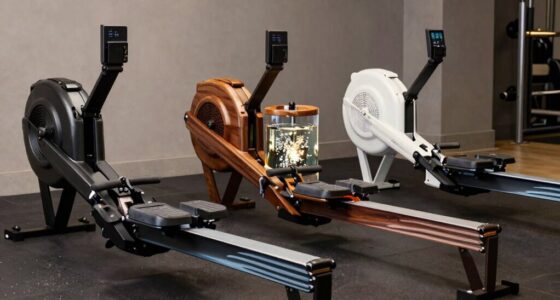
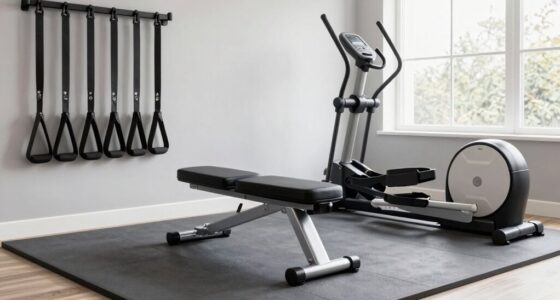
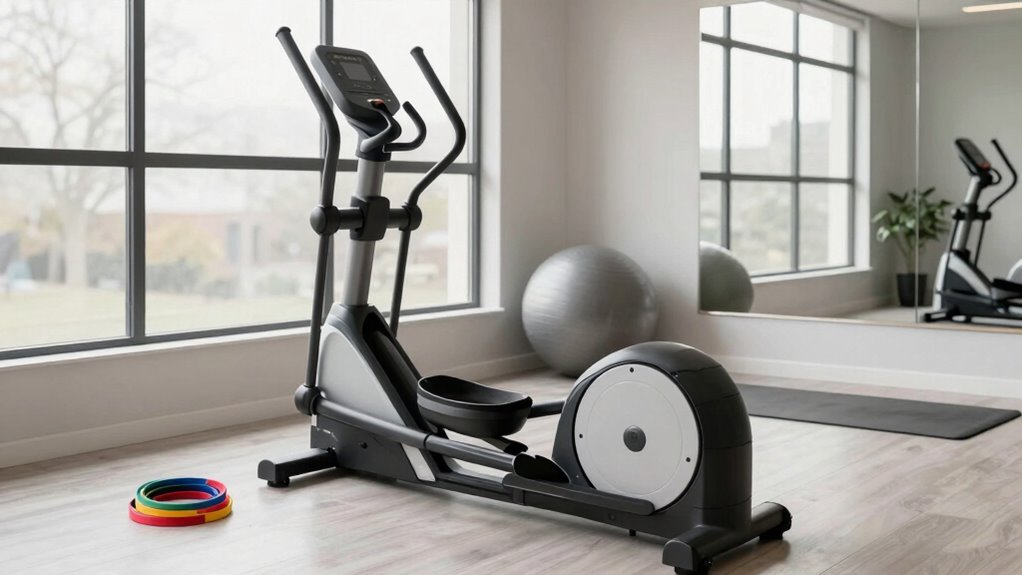
User safety is critical when focusing on joint-friendly training. The equipment should be designed to minimize impact and offer proper support to protect your joints. For example, machines with padded surfaces or adjustable settings can help you customize the fit, reducing undue strain. When selecting equipment like elliptical trainers, recumbent bikes, or rowing machines, guarantee they have smooth, controlled movements that don’t jerk or jar your joints. Safety features like secure foot straps, handrails, and easy-to-use controls also contribute to a safer workout experience. Take the time to familiarize yourself with each piece’s operation to avoid misuse that might lead to injury. Additionally, choosing impact-reducing equipment can further protect your joints during exercise. Incorporating ergonomic design principles into your equipment choices can also help ensure proper joint alignment during workouts, further reducing injury risk. Proper ergonomics and biomechanical support are essential for maintaining correct movement patterns and preventing unnecessary strain.
Another aspect to weigh is how well the equipment promotes proper biomechanics. Equipment that encourages correct movement patterns helps you avoid unnecessary joint stress. For example, adjustable resistance levels allow you to start with gentle settings and gradually increase intensity, which is especially important if you’re recovering from joint issues or arthritis. Proper ergonomics are key; equipment with ergonomic handles and seats can help maintain good posture and reduce strain. The right equipment not only protects your joints but also ensures that your workout remains effective and sustainable over time. Choosing equipment that supports joint-friendly biomechanics can significantly enhance your training experience and long-term joint health.
Finally, prioritize versatility and ease of use. Equipment that’s user-friendly encourages consistent training, which is crucial for joint health. Features like easy-to-read displays, simple controls, and adjustable settings make it easier to stick to your routine. When equipment is durable, safe, and user-friendly, you’re more likely to train regularly without risking injury. Remember, the goal is to create a workout environment that supports your joints, minimizes discomfort, and encourages long-term fitness. Choosing carefully with these factors in mind will help you achieve your joint-friendly training goals confidently and safely.
joint-friendly elliptical trainer
As an affiliate, we earn on qualifying purchases.
As an affiliate, we earn on qualifying purchases.
Frequently Asked Questions
Can Joint-Friendly Equipment Improve Overall Mobility Long-Term?
Yes, joint-friendly equipment can improve your overall mobility long-term. By focusing on joint preservation, you reduce wear and tear, which helps prevent injuries and chronic pain. This type of equipment encourages gentle, controlled movements that enhance mobility without stressing your joints. Over time, consistent use supports mobility enhancement, making daily activities easier and reducing the risk of joint issues as you age.
Are There Specific Brands Known for Joint-Friendly Exercise Machines?
While some brands stand out for joint-friendly exercise machines, you should focus on those with strong brand reputation and equipment durability. Brands like NuStep and Precor are known for their low-impact, high-quality machines that prioritize joint health. Their durability guarantees your workouts remain safe and effective over time, making them ideal choices for anyone seeking joint-friendly training. Be sure to check reviews to confirm they meet your specific needs.
How Often Should I Update My Joint-Friendly Exercise Equipment?
You should update your joint-friendly exercise equipment every 3 to 5 years, depending on its exercise equipment durability and how well it maintains its ergonomic design. Regularly inspect for wear and tear, and prioritize equipment that supports joint health and comfort. If you notice decreased performance or signs of damage, it’s time for an upgrade to guarantee continued joint protection and ideal workout safety.
Is There a Difference Between Low-Impact and Joint-Friendly Equipment?
Think of low-impact equipment as the modern-day knight versus high-impact gear as the jousting lance. Yes, there’s a difference: low-impact machines reduce stress on your joints, making them more joint-friendly, while high-impact options are more intense and often less durable for joint health. When choosing, consider equipment durability—opt for sturdy, well-made pieces that support your low-impact workouts, ensuring long-lasting, joint-friendly exercise sessions.
Can Joint-Friendly Equipment Accommodate Users With Severe Arthritis?
Yes, joint-friendly equipment can accommodate users with severe arthritis. Look for arthritis-friendly options designed with gentle resistance and ergonomic features. You can also explore equipment modifications, like adjusting seat height or using supportive grips, to reduce strain on painful joints. Always consult with a healthcare professional or a trained fitness specialist to guarantee the equipment suits your needs and to prevent further joint damage during your workouts.
ergonomic recumbent bike with adjustable resistance
As an affiliate, we earn on qualifying purchases.
As an affiliate, we earn on qualifying purchases.
Conclusion
So, next time you’re eyeing that shiny new machine, remember—more isn’t always better. Sometimes, gentle exercises with the right equipment do more for your joints than the latest high-intensity fad. Ironically, avoiding joint strain might just be the smartest move you make. After all, who knew that less pounding and more mindful movement could lead to happier knees and hips? Keep it gentle, stay consistent, and enjoy your pain-free journey!
As an affiliate, we earn on qualifying purchases.
padded exercise equipment for joint support
As an affiliate, we earn on qualifying purchases.
As an affiliate, we earn on qualifying purchases.
Fall Picks
fall essentials
As an affiliate, we earn on qualifying purchases.