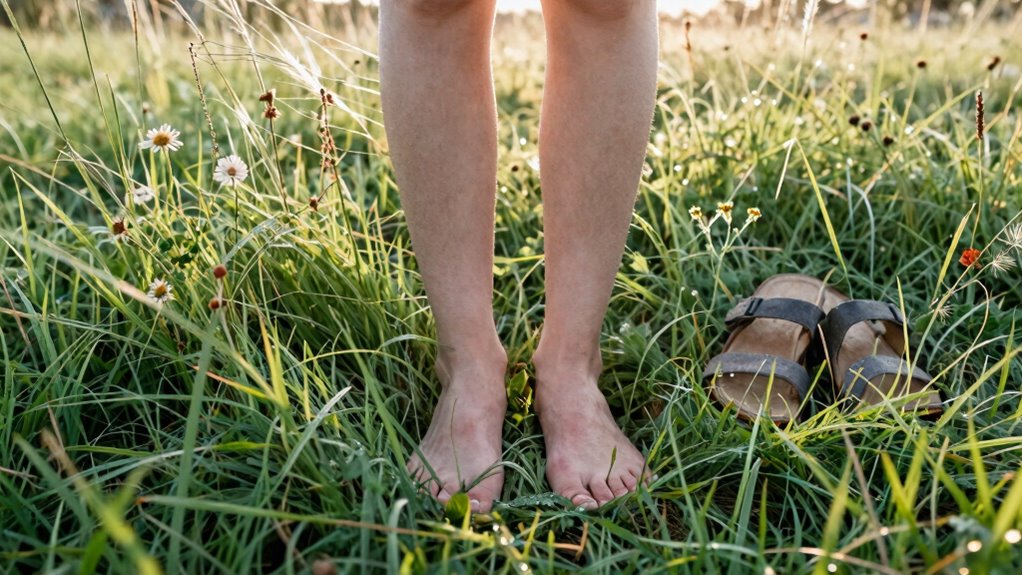

Barefoot standing feels amazing if your nervous and muscular systems are well adapted to ground contact, which can happen if you’ve conditioned your feet with minimal footwear. If you have heightened sensitivity or are used to cushioned shoes, direct ground contact might feel overwhelming or uncomfortable. Your experience also depends on your biomechanics and how your body responds to ground forces. If you’re curious about how to make barefoot standing more enjoyable, there’s more to understand below.

Get comfort and recovery gear delivered free with Prime
- Fast, free delivery on millions of items
- Prime Video, Amazon Music and more included
- Member-only deals all year
Key Takeaways
- Individuals with conditioned feet and stronger muscles experience more stability and comfort during barefoot standing.
- Sensory sensitivity varies, with less sensitive nervous systems perceiving ground contact as pleasurable.
- Preference for minimal footwear enhances natural foot function and ground connection, increasing barefoot comfort.
- Gradual adaptation reduces discomfort for those unaccustomed to direct ground contact.
- Proper biomechanics and force management minimize pain and improve stability, influencing barefoot standing experience.
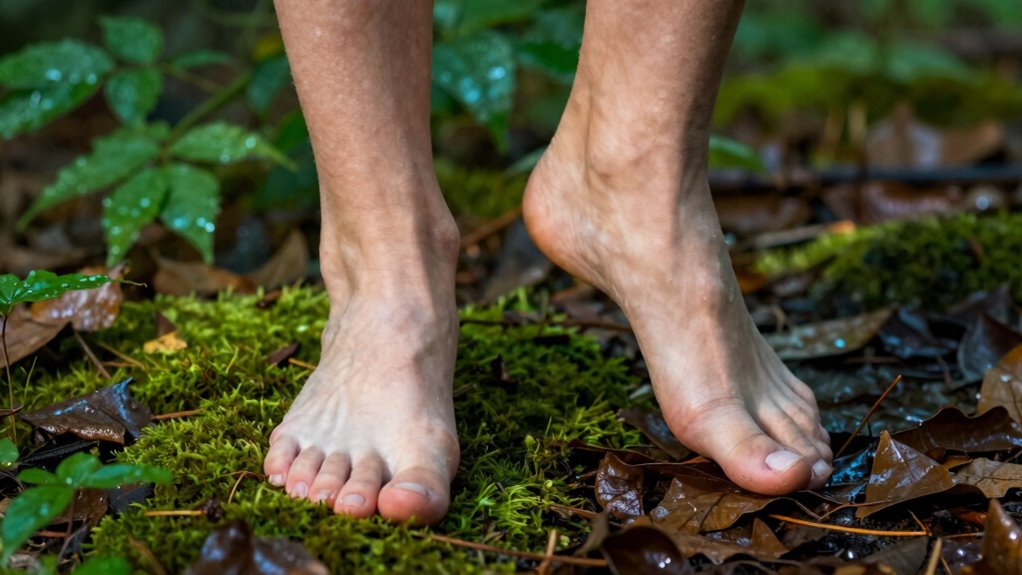
Many people find barefoot standing surprisingly comfortable, while others experience discomfort or even pain. This difference often puzzles folks, but it largely boils down to personal footwear preferences and sensory sensitivity. If you lean toward minimal footwear or prefer being barefoot, you probably find that standing without shoes feels natural and freeing. Conversely, if you’re used to cushioned or supportive shoes, going barefoot might initially feel unfamiliar or even uncomfortable. Your footwear choices shape how your feet and nervous system respond to direct ground contact.
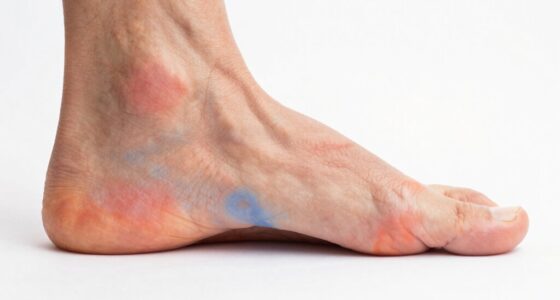
Sensory sensitivity plays a significant role here. Some individuals have heightened nerve responses in their feet, making them more aware of textures, temperature, and pressure. For these people, barefoot standing can be overwhelming or even painful because their nervous system registers every tiny sensation intensely. Others have a less sensitive nervous system, allowing them to enjoy the simple pleasure of feeling the ground beneath their feet without discomfort. This difference in sensory sensitivity influences not only comfort but also how you perceive touch and pressure during barefoot standing.
If you’re someone who prefers barefoot or minimal footwear, your feet may be conditioned to handle direct ground contact. Over time, your muscles, tendons, and ligaments adapt, providing better stability and reducing discomfort. Your foot’s natural arch and muscular support might be stronger, and you may experience a sense of grounding and balance that’s absent in heavily cushioned shoes. For you, barefoot standing can feel invigorating and even improve posture and foot strength.
On the other hand, if you’re accustomed to traditional footwear with thick soles and arch support, your feet might not be used to direct ground contact. This unfamiliarity can cause discomfort or fatigue when standing barefoot for long periods. Your sensory system might be overly responsive or under-responsive, leading to either heightened discomfort or a dull numbness, respectively. People with sensory sensitivities often find that shifting to barefoot standing requires gradual adjustment, as their nervous system needs time to adapt to new sensory inputs.
Additionally, ground reaction forces play a crucial role in how comfortable or challenging barefoot standing can be. Understanding these factors can help you make better choices about when and how to stand barefoot comfortably, ensuring that the experience remains enjoyable rather than painful. Recognizing the importance of foot biomechanics can also aid in developing a more comfortable barefoot stance, especially for those new to this practice.
minimal barefoot shoes for foot conditioning
As an affiliate, we earn on qualifying purchases.
As an affiliate, we earn on qualifying purchases.
Frequently Asked Questions
Can Barefoot Standing Improve Overall Foot Health Long-Term?
Yes, barefoot standing can improve your overall foot health long-term. It encourages the use of footwear alternatives like minimal shoes and promotes barefoot therapy, which strengthens foot muscles and enhances natural biomechanics. Regular barefoot standing helps increase circulation, improve balance, and reduce foot pain. However, start gradually to avoid injury, especially if you have existing foot issues. Over time, this practice can lead to healthier, more resilient feet.
How Quickly Can One Expect to Feel Benefits From Barefoot Standing?
You might start noticing benefits from barefoot standing within days to weeks, as your sensory adaptation begins to heighten your foot awareness and improve balance. The more you replace traditional footwear with alternatives that promote natural foot movement, the quicker you’ll feel these effects. Consistency is key—regularly practicing barefoot standing helps your muscles strengthen and your foot health improve over time.
Are There Specific Foot Conditions That Hinder Barefoot Standing Comfort?
About 10% of people suffer from plantar fasciitis, which can make barefoot standing uncomfortable. If you have poor arch support or experience heel pain, standing barefoot might aggravate your condition. Foot conditions like flat feet or high arches also hinder comfort, as they affect weight distribution and strain. To stay comfortable, consider supportive insoles or consult a specialist to address these issues before barefoot standing.
Does Barefoot Standing Help With Balance and Coordination?
Barefoot standing can improve your balance and coordination by enhancing foot muscle activation and providing sensory stimulation. When you stand barefoot, your muscles work harder to stabilize your body, sharpening your proprioception. This increased sensory feedback from the ground helps you adjust more quickly and accurately, boosting overall stability. Over time, this practice can lead to better coordination, making daily movements feel more natural and controlled.
Are There Risks Associated With Barefoot Standing on Certain Surfaces?
Standing barefoot on a sharp, uneven surface, like gravel, increases your surface sensitivity but also raises injury risk. For example, imagine stepping onto jagged stones—your feet could get cut or bruised. Certain surfaces heighten injury risk because they challenge your foot’s ability to adapt, especially if you’re not accustomed. Always assess the surface, and start slowly, to avoid potential injuries while enjoying the benefits of barefoot standing.
foot strengthening and balance training equipment
As an affiliate, we earn on qualifying purchases.
As an affiliate, we earn on qualifying purchases.
Conclusion
So, next time you stand barefoot, remember that your experience depends on your unique foot structure and muscle strength. Fascinatingly, a study found that nearly 60% of people report improved balance and comfort when barefoot, but the remaining 40% don’t feel the same. It’s all about your individual biomechanics and how your muscles and tendons adapt. Embrace your body’s response, and explore barefoot standing to discover what truly feels best for you.
grounding barefoot standing mats
As an affiliate, we earn on qualifying purchases.
As an affiliate, we earn on qualifying purchases.
As an affiliate, we earn on qualifying purchases.
Halloween Picks
halloween
As an affiliate, we earn on qualifying purchases.