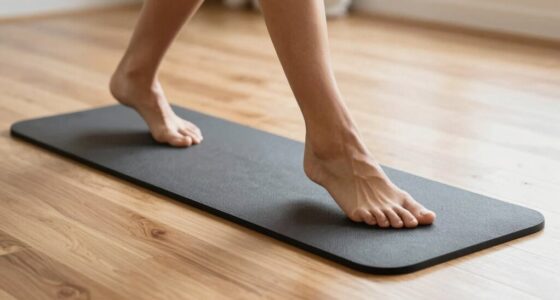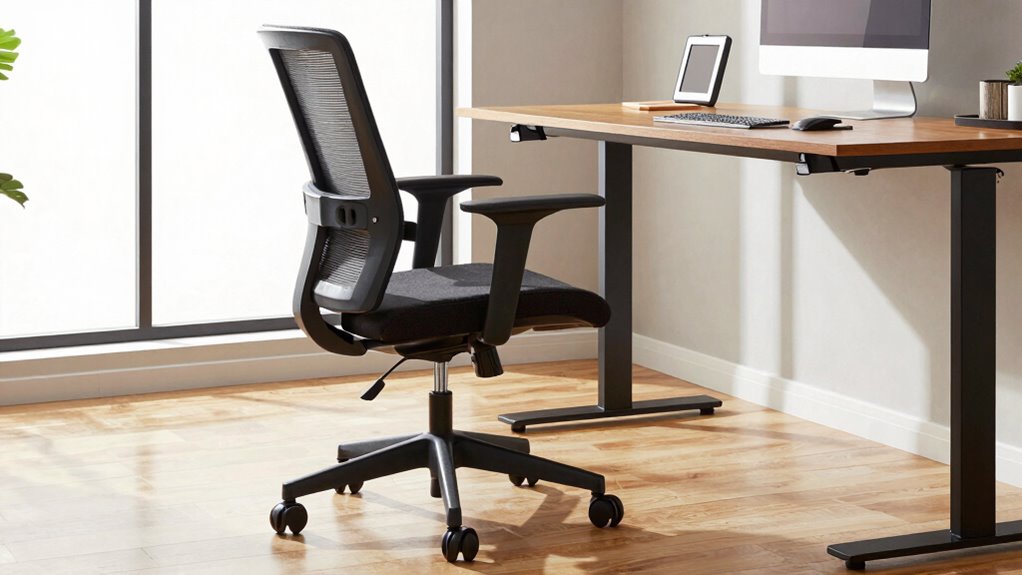

To shift smoothly between sitting and standing, start by engaging your core and shifting your weight gradually onto your feet. Use your hands on the desk or armrests for support and push up gently, avoiding forceful movements. Keep your shoulders relaxed, hips level with your knees, and maintain a slight knee bend for balance. If you want to discover more simple tips to improve your movements and stay comfortable, keep exploring these key ergonomic strategies.

Get comfort and recovery gear delivered free with Prime
- Fast, free delivery on millions of items
- Prime Video, Amazon Music and more included
- Member-only deals all year
Key Takeaways
- Engage core muscles and shift weight gradually onto your feet before standing.
- Use your hands on the desk or armrests for support during the transition.
- Maintain proper ergonomic setup with feet flat, knees at 90 degrees, and hips level.
- Rise slowly with a slight knee bend, keeping your back straight and shoulders relaxed.
- When sitting down, guide hips onto the chair gently, ensuring controlled and mindful movement.
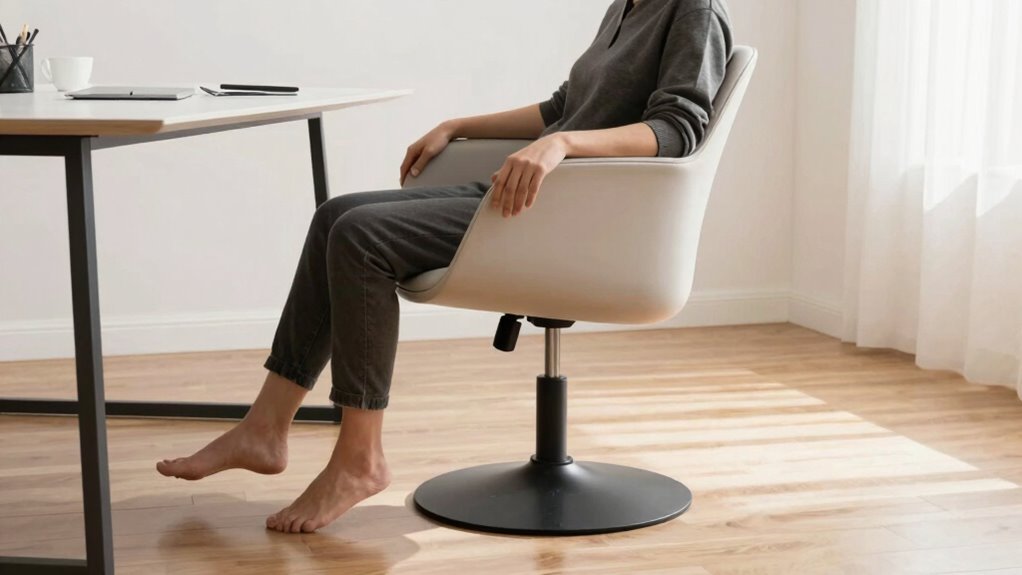
Switching smoothly between sitting and standing can prevent strain and improve your overall comfort, but rushing the shift often leads to discomfort or even injury. The key lies in making deliberate, controlled movements that prioritize your body’s needs. One of the most effective ways to do this is by paying close attention to ergonomic adjustments in your workspace. Ensure your desk, chair, and monitor are positioned to support natural alignment. Your feet should rest flat on the floor, your knees at a 90-degree angle, and your hips level with your knees. When these elements are optimized, transitioning between sitting and standing becomes less strenuous and more natural.
Proper ergonomic setup makes transitioning between sitting and standing safer and more comfortable.
Posture awareness plays a crucial role in maintaining comfort during these movements. As you prepare to stand, engage your core muscles to stabilize your spine. Keep your shoulders relaxed, and avoid hunching forward or arching your back. When you sit down, do so slowly, guiding your hips back into the chair rather than dropping suddenly. This controlled approach reduces the risk of muscle strain or joint discomfort. Throughout the process, stay mindful of your body’s cues—if you notice tension or imbalance, take a moment to adjust your posture before proceeding.
To transition effectively, start by shifting your weight gradually onto your feet. Use your hands to support yourself by placing them on your desk or armrests, then gently push yourself upward. Avoid using excessive force, which can cause unnecessary stress on your joints. Once standing, pause briefly to check your posture—your ears should be aligned over your shoulders, and your shoulders over your hips. From this standing position, maintain a slight bend in your knees to keep the load balanced and your back straight. Incorporating posture awareness into your routine can also help you develop better movement habits over time. Additionally, being mindful of your body mechanics during these transitions can further enhance safety and comfort. Developing an understanding of ergonomic principles can help you optimize your workspace for healthier movement.
When you sit down again, do so with control. Reach back with your hips and guide yourself onto the chair, ensuring your back remains straight and supported by the backrest. Avoid plopping down suddenly, as this can jolt your spine and lead to discomfort over time. Regularly practicing these ergonomic adjustments and cultivating posture awareness helps reinforce healthy movement habits. Over time, you’ll find that transitioning between sitting and standing becomes smoother, more comfortable, and less likely to cause strain or injury.
Incorporating these mindful practices into your routine not only enhances comfort but also promotes better musculoskeletal health. The more conscious you are of your body’s positioning, the easier it will become to move safely and efficiently throughout the day. Recognizing the importance of ergonomic adjustments can significantly improve your overall movement efficiency and comfort.
As an affiliate, we earn on qualifying purchases.
Frequently Asked Questions
How Often Should I Alternate Between Sitting and Standing?
You should alternate between sitting and standing every 30 to 60 minutes to reduce strain. Use ergonomic accessories like a supportive mat or adjustable ergonomic desk to make shifts easier and more comfortable. This frequent change helps prevent discomfort, improves circulation, and boosts productivity. Listen to your body—if you feel tired or strained, switch sooner. Consistently adjusting your posture with these ergonomic tools keeps you comfortable and focused throughout the day.
Are There Specific Exercises to Ease the Transition?
Yes, there are specific exercises to ease the changeover. Incorporate stretching routines like hamstring, calf, and hip stretches to loosen muscles. Use ergonomic accessories such as sit-stand desks or anti-fatigue mats to support smooth movement. These tools and exercises reduce strain and make switching between sitting and standing more comfortable. Regularly practicing these routines helps your body adapt, easing changeovers and preventing discomfort or injury.
What Signs Indicate I Should Stop Standing?
If you notice muscle fatigue or circulatory issues like dizziness or numbness, it’s time to pause your standing. These signs suggest your body needs a break, so gently sit down and rest. Ignoring these cues can lead to discomfort or even injury. Listen to your body’s whispers, and when they become louder, give yourself permission to sit and recover. Your well-being benefits from respecting these natural signals.
Can Improper Transitioning Cause Injuries?
Improper shifting can definitely cause injuries, especially if you don’t use proper movement techniques or ergonomic accessories. When you rush or twist awkwardly, you risk strains or sprains. Using ergonomic accessories like adjustable desks and applying correct movement techniques helps protect your muscles and joints. Take your time, move smoothly, and pay attention to your posture to avoid injuries during changes. Proper technique is key to staying safe.
How Can I Improve My Posture During Transitions?
Think of your body as a well-tuned machine; smooth shifts depend on good posture. To improve posture during changes, focus on posture correction and follow ergonomic tips like engaging your core, keeping your back straight, and moving slowly. Use your legs to push up instead of pulling with your arms. These small adjustments help prevent strain and make every movement safer and more comfortable.
ergonomic office chair with lumbar support
As an affiliate, we earn on qualifying purchases.
As an affiliate, we earn on qualifying purchases.
Conclusion
Remember, smoothly shifting between sitting and standing can boost your energy and reduce discomfort. Did you know that standing desks can improve focus and productivity by up to 45%? By adopting simple techniques like steady movements and proper posture, you’ll feel more comfortable and energized throughout the day. So, take small steps to make these changes easier—you’ll notice the difference in both your body and mind. Keep moving, and stay healthier!
As an affiliate, we earn on qualifying purchases.
As an affiliate, we earn on qualifying purchases.
Halloween Picks
halloween
As an affiliate, we earn on qualifying purchases.