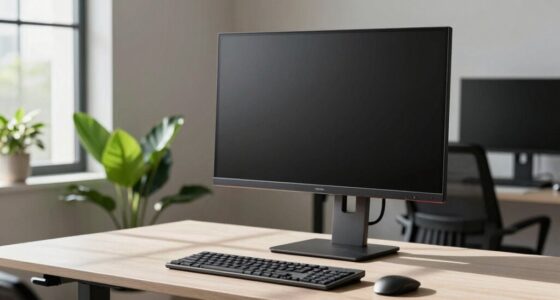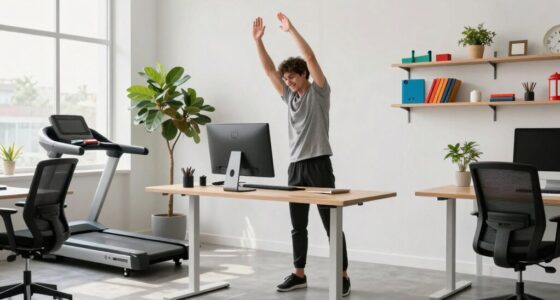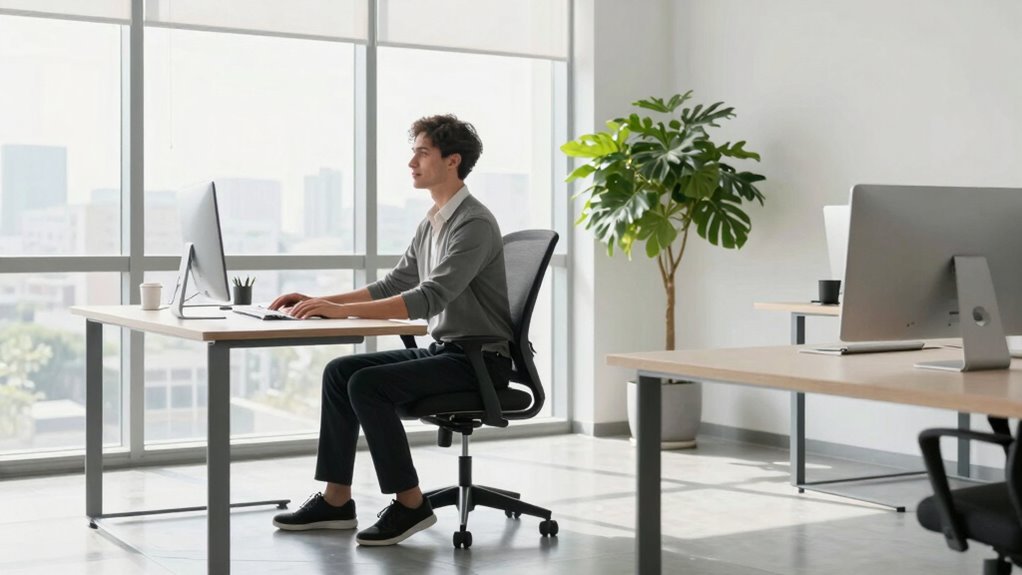

The smartest goal for a sit-stand workday isn’t just balancing sitting and standing time equally, but creating a sustainable, comfortable routine that fits your work style. Focus on establishing clear goals with gradual shifts, using ergonomic accessories to support proper posture, and listening to your body’s signals. Prioritize consistency over perfection, and remember that comfort and health come first. Keep exploring to discover how to build a flexible, health-boosting routine tailored just for you.

Get comfort and recovery gear delivered free with Prime
- Fast, free delivery on millions of items
- Prime Video, Amazon Music and more included
- Member-only deals all year
Key Takeaways
- Prioritize establishing a sustainable, comfortable routine over rigid time ratios between sitting and standing.
- Focus on listening to your body’s signals to determine when to switch positions.
- Use short, manageable intervals to gradually build endurance without causing fatigue.
- Incorporate ergonomic accessories to support proper posture and ease transitions.
- Aim for consistency and flexibility, enhancing overall health and productivity rather than chasing specific time targets.
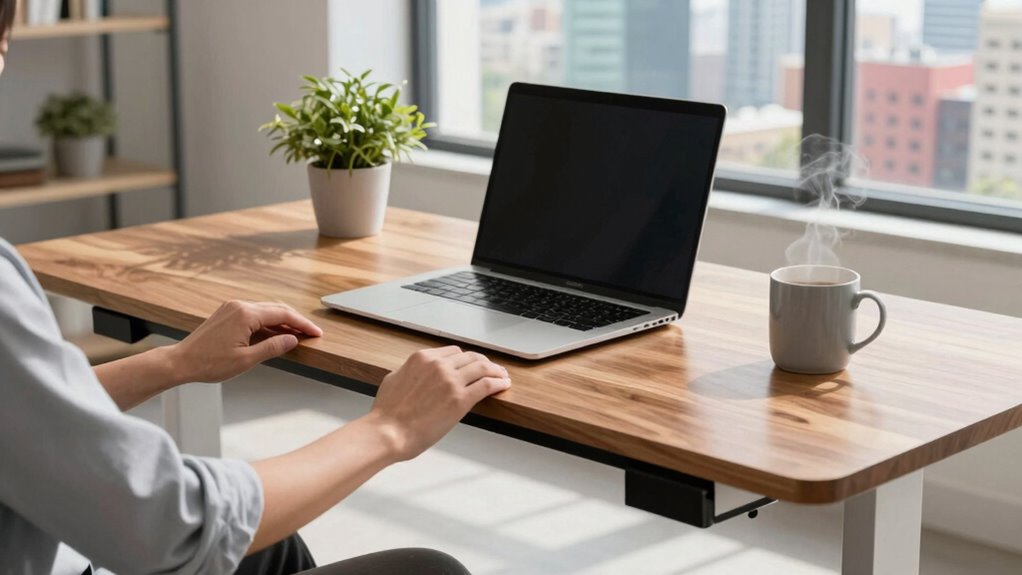
Balancing sitting and standing throughout your workday can boost your health and productivity, but without a clear goal, it’s easy to fall into inconsistent habits. The key isn’t just alternating between sitting and standing randomly; it’s about establishing a smart, sustainable approach. Your focus should be on creating a routine that maximizes comfort and efficiency, rather than simply moving more. To do this, you’ll want to leverage ergonomic accessories that support your posture and comfort, such as adjustable desks, supportive mats, and ergonomic chairs. These tools help you maintain proper alignment, reducing strain and fatigue, so you can stay focused longer.
Create a sustainable sit-stand routine with ergonomic tools to boost comfort, focus, and long-term health.
When setting your goals, don’t aim to stand or sit for equal amounts of time blindly. Instead, adopt productivity techniques that emphasize quality over quantity. For instance, if you find yourself more productive when standing, start with short intervals—say, 15 to 30 minutes—and gradually increase as your body adapts. Conversely, if sitting helps you concentrate on complex tasks, plan to sit during those times, then switch to standing during less demanding activities. The goal is to listen to your body and adjust based on how you feel and what you’re working on, rather than sticking to a rigid schedule that might cause discomfort or distraction. Incorporating ergonomic accessories into your workspace makes it easier to reach your goals. An adjustable sit-stand desk allows you to change positions effortlessly and maintain proper posture. Anti-fatigue mats encourage movement and reduce discomfort during standing periods. Meanwhile, ergonomic accessories like wrist supports and monitor risers keep your workspace aligned, so you can work longer without strain. These tools are investments that support your productivity techniques by making transitions smoother and your workspace more comfortable. Additionally, understanding the importance of ergonomic design can help you select the right tools that promote better health and comfort. Incorporating ergonomic principles into your setup ensures that your workspace supports your body’s natural movements, reducing the risk of musculoskeletal issues.
Ultimately, the smartest goal for a sit-stand workday isn’t about hitting a specific ratio of sitting to standing. It’s about creating a flexible routine that aligns with your work style and physical comfort. Incorporating ergonomic accessories helps you maintain proper posture and prevents discomfort, making it easier to stick to your routine. Integrate ergonomic accessories to support your posture, and use productivity techniques that focus on the quality of your work, not just the time spent in each position. By doing so, you’ll develop a sustainable habit that enhances your health, boosts your focus, and keeps your energy levels steady throughout the day. Remember, the goal is consistency and comfort, not perfection.
Products Worth Considering

LEVOIT Vital 200S-P Smart Air Purifier for Large Rooms

Ring Alarm 14-Piece Wireless Security System Kit

Roborock Q7 M5+ Robot Vacuum and Mop with Self-Emptying Dock
As an affiliate, we earn on qualifying purchases.
Frequently Asked Questions
How Often Should I Switch Between Sitting and Standing?
You should switch between sitting and standing roughly every 30 to 60 minutes to promote healthy sit-stand habits. Use ergonomic accessories like adjustable desks and anti-fatigue mats to make shifts smoother and maintain comfort. Regular movement prevents stiffness and boosts energy, so listen to your body and change positions when you start feeling uncomfortable. Consistent, intentional swaps help you stay productive and reduce health risks associated with prolonged sitting or standing.
What Is the Ideal Duration for Standing Intervals?
Research shows that standing for about 15 to 30 minutes per hour can reduce health risks. To maximize benefits, use ergonomic accessories like adjustable desks, which help maintain proper posture and support posture correction. Keep your standing intervals manageable to avoid fatigue, and incorporate movement during these periods. This way, you’ll stay comfortable, prevent strain, and improve overall posture during your workday.
Can Sit-Stand Desks Improve Overall Productivity?
Sit-stand desks can boost your overall productivity when combined with ergonomic accessories and proper posture optimization. By adjusting your workspace to support your body, you reduce discomfort and fatigue, allowing you to focus better. Incorporate ergonomic accessories like footrests or monitor stands, and switch between sitting and standing regularly. This approach keeps you energized, minimizes strain, and helps maintain concentration throughout your workday.
Are There Health Risks Associated With Prolonged Standing?
Standing too long is like a pendulum swinging wildly; it can strain your body. You might face health risks if you ignore posture awareness, leading to joint or back pain. Prolonged standing can hinder blood circulation, causing fatigue or swelling. To balance the scales, alternate between sitting and standing, stay mindful of your posture, and move regularly—this keeps your body aligned and blood flowing smoothly.
How Can I Stay Motivated to Maintain a Sit-Stand Routine?
To stay motivated in your sit-stand routine, incorporate ergonomic accessories like adjustable desks and anti-fatigue mats to make shifts easier. Set small, achievable goals and track your progress to boost motivation. Use motivational strategies like reminders or rewards for sticking to your schedule. Remember, consistency is key; by making it comfortable and rewarding, you’ll find it easier to maintain your routine and enjoy the health benefits.
Conclusion
So, next time you set your sit-stand work goal, remember: it’s not about standing all day like a modern-day gladiator. Instead, aim for balance—mix sitting and standing thoughtfully. Think of it as your own personal Renaissance—revitalizing your energy and focus. Don’t let the quest for perfection turn into a self-imposed Tower of Babel. Keep it simple, stay consistent, and enjoy the benefits of a smarter, healthier workday. Your body will thank you, just like a good squire to a noble knight.