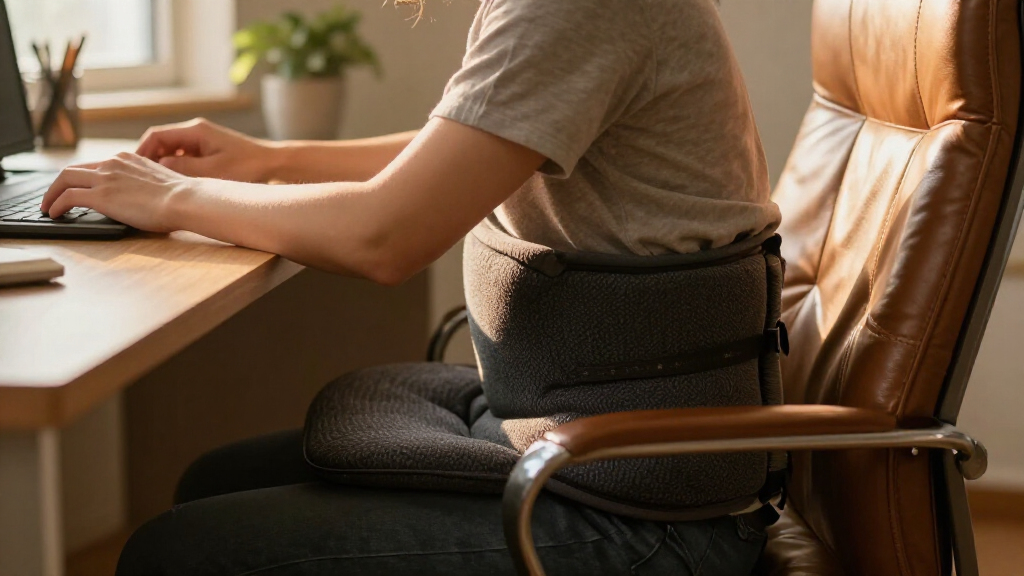

Choose and set up an ergonomic seat cushion to improve comfort while sitting at a desk, at home, or in a vehicle. This guide is for beginners comparing cushions or adjusting one they already own. Allow 30-60 minutes to check fit and setup, then use the cushion during ordinary sitting for several days to judge whether it suits you.

Get comfort and recovery gear delivered free with Prime
- Fast, free delivery on millions of items
- Prime Video, Amazon Music and more included
- Member-only deals all year

BlissTrends Memory Foam Seat Cushion for Car Seat & Office Chair, Black
- ✔ Fill: Polyurethane memory foam
- ✔ Cover material: Polyester
- ✔ Dimensions: 18.11 × 16.14 × 4.76 inches listed

Extra-Large Memory Foam Seat Cushion with Lumbar Support Pillow
- ✔ Brand: Lexeme
- ✔ Cushion fill: High-density memory foam
- ✔ Cover material: 80% cotton, 20% polyester

Office Seat Cushion with L-Shaped Ergonomic Design and Adjustable Strap
- ✔ Design: One-piece L-shaped seat cushion
- ✔ Fill: High-density memory foam
- ✔ Cover: 60% cotton, 40% polyester
Difficulty: Beginner | Time: 30-60 minutes, plus several days to assess comfort
What You’ll Need
Tools & Materials:
- The chair where you plan to use the cushion
- A tape measure or ruler
- A cushion product description or size label, if available
Knowledge:
- Ability to sit in your usual position and notice pressure or discomfort
- Basic familiarity with adjusting chair height
Consider where you will use the cushion most. A cushion that fits an office chair may not fit a car seat. If you have persistent pain, numbness, an injury, or a medical condition affecting sitting, ask a qualified clinician for advice about suitable support.
BlissTrends Memory Foam Seat Cushion for Car Seat & Office Chair, Black
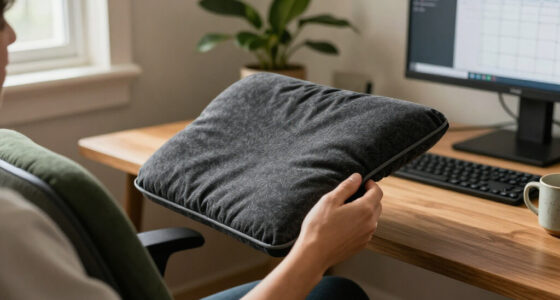
For a buyer who wants one ergonomic cushion to move between a desk chair and a car, BlissTrends is our best-balanced choice. Its stated 18.11-by-16.14-inch footprint gives us concrete dimensions to compare against a seat, while the 3.35-inch center thickness points to a noticeably raised sitting position. That may help someone seeking more padding, but it can also change how feet reach the floor or how a driver sits relative to the wheel. We would measure the chair and check desk or vehicle clearance before choosing it.The medium-firm memory foam, semicircular shape, and anti-slip bottom are aimed at supporting the seated area without adding a separate back pillow. Compared with the Lexeme, BlissTrends offers clearer size and cover-care details but does not advertise an extra-large seating surface or lumbar pillow. Compared with the L-shaped model, it is the simpler option for people who want seat support without a backrest section. Its removable polyester cover can be machine washed on a gentle cold cycle; the foam core itself cannot be washed, and the listing notes that foam firmness can shift with temperature. That maintenance distinction matters for everyday use.We would choose it for general sitting comfort, not as a treatment for sciatica or tailbone pain. Its height and broad footprint are meaningful compromises for compact chairs, shallow seats, or users who need a lower profile. The manufacturer explicitly disclaims guaranteed pain relief, so buyers should judge it as a cushion and check fit rather than expect a medical result.
Pros:
- Stated 18.11 × 16.14-inch footprint helps with seat-fit checks.
- 3.35-inch center thickness provides a substantial padded profile.
- Removable cover is machine washable on a gentle cold cycle.
- Anti-slip feature and car/office-chair positioning support versatile use.
Cons:
- Its height may raise the seating position more than some desks or vehicles allow.
- The foam core cannot be washed, and its firmness may vary with temperature.
- No integrated lumbar pillow is described.
Best for: People who want a clearly sized, portable memory foam cushion for a standard office chair or car seat.
Not ideal for: People with compact or shallow seats, anyone who needs integrated lumbar support, or users who need a low-profile cushion.
Bottom line: We rank BlissTrends first for its useful combination of stated dimensions, everyday versatility, and manageable cover care, provided its thick profile fits the seat.
“We rank BlissTrends first for its useful combination of stated dimensions, everyday versatility, and manageable cover care, provided its thick profile fits the seat.”
Extra-Large Memory Foam Seat Cushion with Lumbar Support Pillow
When a standard-size pad feels too narrow, the Lexeme cushion’s extra-large format is its defining advantage. The listing positions it for office chairs, car seats, wheelchairs, and home seating, and says its high-density memory foam is intended to resist deformation during prolonged use. For buyers focused on more room under the hips, that broader design may be a better starting point than BlissTrends, whose dimensions are specified but whose title does not claim an extra-large format.There is a notable information gap: the product title and description refer to a cushion with a lumbar support pillow, yet the specifications say one piece. We would confirm exactly what arrives before relying on the back-support part of the set. The listed recommended user weight is 100–220 pounds, which is a more specific boundary than either competitor provides; buyers outside that range should not assume the same fit or support. Unlike the BlissTrends listing, no cover-removal or washing instructions are supplied, so upkeep is harder to assess from the available details.Lexeme makes the most sense when a wider sitting surface matters more than precise dimensions or clearly documented cleaning. Its ergonomic contour is described as supporting the hips and back and reducing tailbone pressure, but those are product claims, not guarantees. Compared with the L-shaped cushion, it is less explicit about how its back support attaches or stays positioned. Compared with BlissTrends, it may offer more seating room, while BlissTrends gives us better measurements and care information. That tradeoff keeps Lexeme in the middle of our ranking.
Pros:
- Extra-large design is intended to provide more seating space.
- High-density memory foam is described as resisting deformation.
- Listed for office, car, wheelchair, home, and travel seating.
- Product description presents a contoured design for hip and back support.
Cons:
- Specifications list one piece even though the title and description mention a lumbar pillow.
- Recommended user weight is limited to 100–220 lb.
- Dimensions and cover-care details are not provided.
Best for: People seeking a wider memory foam seat pad and whose stated body weight falls within the listed 100–220 lb range.
Not ideal for: Buyers outside the listed weight range, those who need confirmed lumbar-pillow inclusion, or anyone prioritizing published dimensions and washing instructions.
Bottom line: We recommend Lexeme when added seat width is the priority, after confirming the package contents and checking that the stated user range fits.
“We recommend Lexeme when added seat width is the priority, after confirming the package contents and checking that the stated user range fits.”
Office Seat Cushion with L-Shaped Ergonomic Design and Adjustable Strap
The L-shaped one-piece design gives this cushion the most distinct ergonomic profile in the group. Its description says the contour supports the hips and lumbar area, while an adjustable strap is intended to hold it in place. That makes it a natural candidate for someone who wants a more guided sitting shape than the standalone BlissTrends pad. The hollow coccyx area is also described as promoting airflow, though the listing does not quantify cooling or explain how the opening feels across different body shapes.For fit, however, we have less to go on than we need. The supplied dimensions are 1 × 1 × 1 inch, which do not credibly describe the usable cushion size, and no weight range is given. We would confirm actual measurements before buying, especially for a wheelchair, car seat, or chair with fixed arms. The product offers a removable machine-washable cover and anti-slip dots, details that compare favorably with Lexeme’s unspecified care instructions. Its adjustable strap also gives it a clearer attachment method than the other two listings.We place it third because its ergonomic concept is compelling but fit information is incomplete. Compared with BlissTrends, it combines the seat and back contour rather than giving a single defined pad; compared with Lexeme, it provides more specific attachment and cover details but not a reliable size or stated user range. Buyers should treat the promised posture and pressure benefits as design intentions, not clinical claims. This is the most specialized pick, and it is best considered only after verifying the real dimensions and how the L-shaped section suits the target chair.
Pros:
- Integrated L-shaped design is intended to support both hips and lumbar area.
- Adjustable strap and anti-slip dots help secure it to a chair.
- Removable zippered cover is machine washable.
- Hollow coccyx area is designed to encourage airflow.
Cons:
- Listed dimensions of 1 × 1 × 1 inch do not provide useful fit guidance.
- No user-weight range or verified sizing is supplied.
- Posture and pressure-relief outcomes are not established by the product details.
Best for: People who want a strapped, one-piece seat-and-back contour and can verify its actual measurements before buying.
Not ideal for: Buyers who need dependable published sizing, a simple removable seat pad, or a product with a clearly specified user-weight range.
Bottom line: We consider this the most specialized option for a contoured, secured setup, but the unclear dimensions keep it behind the better-documented alternatives.
“We consider this the most specialized option for a contoured, secured setup, but the unclear dimensions keep it behind the better-documented alternatives.”
As an Amazon Associate we earn from qualifying purchases.
Before You Start
Think of a cushion as one part of your sitting setup, not a treatment for every cause of discomfort. Cushion designs vary: some have a flat surface, some have a tailbone cutout, and others use a wedge or contoured shape. No one design suits everyone. Check the dimensions, care instructions, return policy, and any product guidance about intended use before buying. Do not use a cushion that slides, blocks safe vehicle operation, or makes you feel unstable.
Step-by-Step Instructions
Step 1: Identify where sitting feels uncomfortable
Sit in your usual chair for 10-15 minutes and note where you feel pressure or discomfort. Record whether it is mainly under the sitting bones, near the tailbone, across the thighs, or elsewhere. Also note how long it takes to appear and whether you tend to lean forward, slump, or shift often. These observations help you compare cushion shapes without assuming that a particular style will fix the problem.
Tip: If discomfort is severe, worsening, or accompanied by numbness or weakness, get clinical advice before relying on a cushion.
Check: You can describe the area that needs support and the sitting position or duration associated with the discomfort.
Step 2: Measure the chair and check the sitting setup
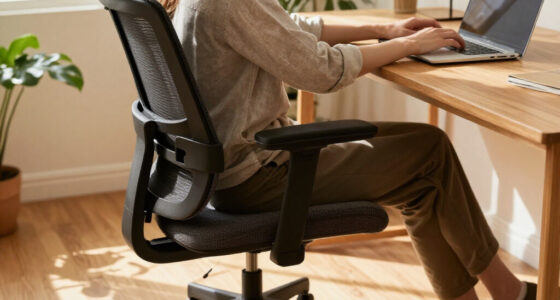
Measure the usable width and depth of the chair seat. Check whether armrests, a seat edge, or a backrest limits the space. Sit with your feet flat or supported, your knees comfortably bent, and your back supported by the chair. If the chair is adjustable, note its current height and settings. A thick cushion raises your sitting height, so you may need to lower the chair or add a footrest afterward.
Tip: Leave enough room for your thighs and avoid a cushion that extends so far forward that its edge presses into the backs of your knees.
Check: You have the seat dimensions and know whether the cushion will change your height or leg support.
Step 3: Choose a cushion shape and size
Compare the cushion’s listed width, depth, thickness, and shape with your measurements and the discomfort you noted. A flat cushion adds a layer of padding. A contoured cushion may guide where your weight rests, and a tailbone cutout leaves an open area at the rear. A wedge changes the seat angle. Choose a design that fits the chair and feels appropriate to try; product labels alone cannot predict personal comfort.
Tip: Check whether the cover can be removed and cleaned, whether the base is designed to grip the chair, and whether the manufacturer gives limits for use or weight.
Check: The cushion fits within the usable seat area, and you can explain why its shape is worth trying for your sitting needs.
Step 4: Place the cushion in the correct orientation
Put the cushion on a clean, dry seat and align it with the chair. Follow the product’s labels or instructions for front and back; a cutout is often intended to sit beneath the tailbone area, but designs differ. Smooth the cushion and cover so there are no folds or raised edges. Sit down gently and check that the cushion does not tilt or slide.
Tip: Do not assume a contoured surface or cutout faces a particular direction. Use the manufacturer’s orientation marks when available.
Check: The cushion lies flat, faces the intended direction, and stays in place as you sit.
Step 5: Adjust chair height and foot support
Sit on the cushion and adjust the chair so your feet rest on the floor or a stable footrest. Keep your knees comfortably bent and your thighs supported without the seat edge pressing behind your knees. Move the chair closer to the desk if the cushion has raised you above a comfortable working position. Adjust the desk or monitor only as needed to keep your shoulders relaxed and your screen easy to view.
Tip: If your feet dangle after adding the cushion, use a stable footrest or choose a thinner cushion. Do not perch on the chair edge to compensate.
Check: Your feet have stable support, your legs are not pressed by the seat edge, and you can reach your work area without hunching.
Step 6: Settle into a supported sitting position
Sit back so your pelvis and lower back are supported by the chair, if its shape allows. Keep your weight distributed comfortably across the cushion, with your feet supported. Relax your shoulders and avoid forcing yourself into a rigid posture. If the cushion prompts you to perch, twist, or lean to escape pressure, reposition it or reassess whether its shape suits you.
Tip: Comfortable support should not require you to hold a strained position.
Check: You can sit with relaxed shoulders and supported feet without feeling pushed forward or unstable.
Step 7: Test the cushion during normal sitting
Use the cushion during a typical sitting session, but take your usual standing and movement breaks. After 20-30 minutes, check for new pressure, heat, sliding, or changes in leg comfort. Make one adjustment at a time, such as shifting the cushion slightly or changing chair height, then notice whether that improves the fit. Repeat during a few ordinary sessions before deciding whether to keep it.
Tip: Do not try to adapt by ignoring increasing pain, tingling, or numbness. Stop using the cushion if it causes those symptoms.
Check: The cushion remains stable and does not create new discomfort during a normal sitting session.
Step 8: Clean and maintain the cushion
Read the care label before cleaning. Remove and wash a cover only as directed, and clean the cushion itself with the recommended method. Let damp components dry fully before putting them back on the chair. Inspect the cover, seams, and base from time to time; replace the cushion if it tears, loses its shape, or no longer stays securely in place.
Tip: Some foam materials can be damaged by soaking, heat, or strong cleaners. Follow the product’s care instructions.
Check: The cushion is clean, dry, and intact, with a cover and base that still fit securely.
Common Mistakes to Avoid
- Buying based on thickness or a product claim alone. — Compare dimensions and shape with your chair and sitting needs, and check the return policy so you can assess comfort during normal use.
- Leaving the chair at its old height after adding a thick cushion. — Recheck foot support, knee comfort, and desk reach while seated on the cushion; adjust the chair or add a stable footrest.
- Using the cushion in the wrong orientation or on a slippery seat. — Follow orientation marks and confirm the cushion stays flat and secure before settling in.
- Expecting the cushion to remove the need to move. — Keep taking regular movement breaks and change positions during long sitting periods.
Troubleshooting
Problem: The cushion slides when you sit down.
Solution: Check that the chair and cushion base are clean and dry, then align the cushion again. Use a compatible non-slip solution only if the manufacturer permits it. Stop using it if it remains unstable.
Problem: Your feet no longer reach the floor comfortably.
Solution: Lower the chair if possible or use a stable footrest. If those changes do not restore comfortable leg support, try a thinner cushion.
Problem: Pressure or discomfort increases after putting the cushion in place.
Solution: Check its orientation and position, then reassess after one small adjustment. Stop using it if discomfort persists or you develop tingling or numbness; seek clinical advice for ongoing symptoms.
Problem: The cushion feels too warm or firm.
Solution: Check whether the cover is breathable and whether the cushion has settled as described by its maker. Try shorter sessions while assessing it; if the material remains uncomfortable, consider a different design or return it within the seller’s stated period.
What Success Looks Like
Your cushion fits the chair, stays stable, and lets you sit with supported feet and relaxed shoulders. During ordinary use, it does not press behind your knees or cause new pain, tingling, or numbness. You can change positions and take breaks as usual. Comfort varies by person, so judge the setup over several typical sessions rather than by appearance alone.
Next Steps
Keep the cushion only if it remains comfortable during your usual sitting routine. Recheck chair height and foot support if you move it to another chair. Follow the care label, inspect it for wear, and replace it if it becomes unstable or loses its shape. If sitting discomfort continues despite a suitable setup and regular movement, discuss it with a qualified clinician.
Frequently Asked Questions
How long should I try a new seat cushion?
Try it during several ordinary sitting sessions over a few days, while keeping your usual movement breaks. Stop earlier if it causes pain, tingling, numbness, or instability. Follow the seller’s return deadline.
Should a seat cushion have a tailbone cutout?
It depends on your body, chair, and comfort. A cutout leaves space at the rear, while other shapes distribute pressure differently. Compare the fit and follow the product’s orientation instructions rather than assuming a cutout is necessary.
Can I use one cushion on both an office chair and a car seat?
Check the product instructions and test the fit in each seat. In a vehicle, the cushion must stay secure and must not interfere with the seat belt, pedals, steering, or safe driving position. Do not use it while driving if it shifts or changes your control of the vehicle.
Do I still need to take breaks when using a cushion?
Yes. A cushion does not replace movement or changes in posture. Stand, walk, or shift position regularly according to your needs and work routine.