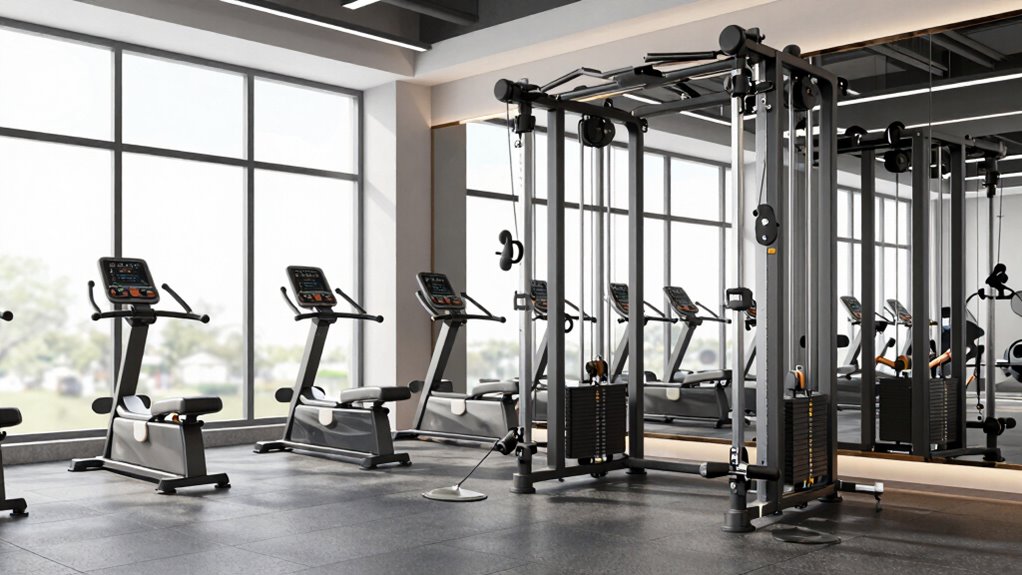

If you’re choosing between a functional trainer and an all-in-one home gym, consider your space, goals, and exercise preferences. Functional trainers are great for versatile, targeted workouts in smaller areas, offering adjustable pulleys and real-life movement simulation. All-in-one gyms provide a broader range of exercises, including cardio and strength options, but usually take up more space. To discover which fits your needs best, explore the differences further.

Get comfort and recovery gear delivered free — and shop member deals
- Fast, free delivery on millions of items
- Access to Prime Big Deal Days deals on October 6–7
- Prime Video, Amazon Music and more included
Key Takeaways
- Functional trainers focus on versatile, multi-directional cable exercises, ideal for functional movements and small spaces.
- All-in-one gyms combine various workout stations, offering comprehensive strength and cardio options in a larger footprint.
- Functional trainers are more adaptable for personalized routines and rehab, while all-in-one gyms suit those seeking a complete fitness setup.
- Space efficiency favors functional trainers for tight areas; all-in-one gyms require more room but consolidate multiple equipment types.
- Choice depends on space availability, fitness goals, and whether targeted functional training or full-body workouts are prioritized.
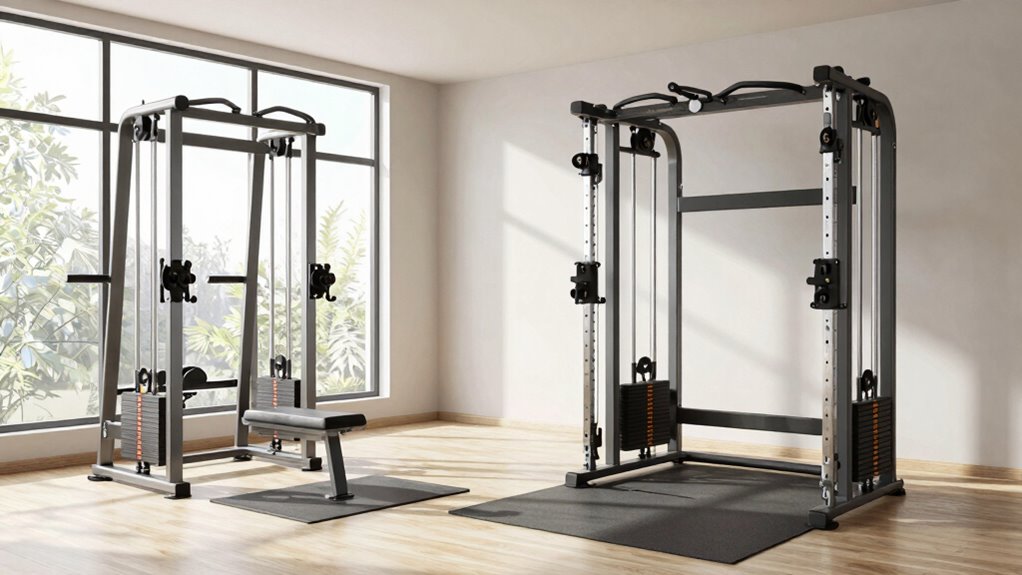
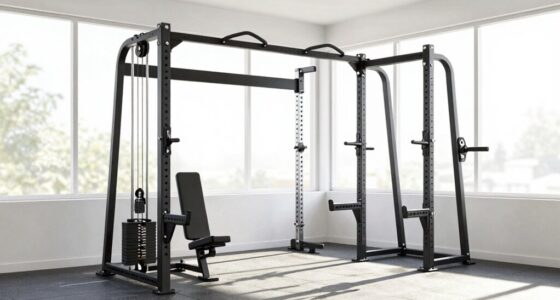
When choosing between a functional trainer and an all-in-one home gym, it’s important to understand how each option fits your fitness goals and space. Both setups aim to deliver versatile workouts, but they differ significantly in design, functionality, and how they utilize space. If you’re prioritizing a flexible workout with a focus on strength and mobility, a functional trainer could be your best choice. Its main feature is the cable system, which offers a broad range of motion and exercise options. The adjustable pulleys allow you to target specific muscle groups, mimic real-life movements, and perform both pulling and pushing exercises. This flexibility makes it ideal for personalized training routines, rehab, or functional fitness. Plus, a well-designed functional trainer often emphasizes space efficiency, with compact footprints that fit into smaller rooms or corners. You can set it up against a wall or in tight spaces without sacrificing too much room for movement, making it a perfect choice if your living area isn’t large. Additionally, many functional trainers incorporate space-saving features to maximize usability in limited areas. Furthermore, the cable-based design allows for multi-directional movement, which enhances the versatility of your workouts.
On the other hand, an all-in-one home gym is designed to combine multiple workout stations into a single, integrated unit. It typically includes weight stacks, pulleys, and sometimes even cardio equipment, giving you the ability to perform a variety of exercises without needing separate machines. While these units are generally larger, they’re built with space efficiency in mind, consolidating several workout options into one piece of equipment. This setup is excellent if you want a comprehensive gym experience in a single footprint, especially if you prefer having everything in one place. You might find that an all-in-one gym offers more variety for your workouts, including leg presses, chest presses, and rowing, all accessible from one station. However, because of their size and complexity, they tend to take up more space than a simple functional trainer.
Ultimately, your choice depends on your goals and available space. If you want to focus on functional movements, flexibility, and a smaller footprint, a functional trainer with its cable system and efficient design is likely the better fit. If you prefer a more comprehensive setup that combines strength training, cardio, and multiple exercises in a single machine, an all-in-one home gym could serve you better. Both options can deliver effective workouts, but understanding these differences ensures you select the equipment that aligns with your needs and space constraints.
functional trainer cable machine
As an affiliate, we earn on qualifying purchases.
As an affiliate, we earn on qualifying purchases.
Frequently Asked Questions
Which Type Offers Better Long-Term Durability and Maintenance?
You’ll find that functional trainers generally offer better long-term durability because they have simpler mechanisms and fewer moving parts, making maintenance easier. All-in-one home gyms might require more frequent upkeep due to their complex design and multiple features. When considering durability comparison and maintenance requirements, functional trainers tend to be more resilient over time, making them a smarter choice if you want a reliable piece of equipment that needs less ongoing care.
Can Both Systems Support Advanced Strength Training Routines?
Yes, both systems support advanced strength training routines, thanks to their resistance versatility and accessory options. Functional trainers excel with adjustable pulleys and diverse attachments, allowing you to target specific muscle groups effectively. All-in-one home gyms provide integrated weight stacks and multiple stations, making complex routines seamless. Your choice depends on your training focus, but both can adapt to advanced routines with the right accessories and settings.
Are There Space-Saving Options for Small Home Gyms?
Yes, there are space-saving options for small home gyms. Look for equipment with a compact design that fits easily into tight spaces. Many functional trainers and all-in-one gyms now prioritize equipment flexibility, allowing you to perform multiple exercises without needing extra room. These versatile units help maximize your limited space while providing an extensive workout, making them perfect for small home gyms without sacrificing functionality.
How Customizable Are These Gym Systems for Different Users?
You’ll find that these gym systems offer impressive adjustability options, allowing you to tailor the equipment to your specific needs. Many models feature user-specific customization, so you can easily modify settings for different exercises or users. This flexibility guarantees a comfortable, effective workout for everyone, regardless of fitness level or body type. With these options, you can optimize your home gym experience, making it uniquely suited to your goals.
Do They Include Digital or Smart Technology Features?
Many modern gym systems include digital integration and smart features to enhance your workout experience. You might find touchscreen displays, app connectivity, or workout tracking capabilities built-in, helping you stay motivated and monitor progress. Some models even offer virtual coaching or customizable programs. Whether you’re choosing a functional trainer or an all-in-one home gym, these smart features can add convenience, motivation, and advanced training options for users of all levels.
As an affiliate, we earn on qualifying purchases.
Conclusion
So, whether you choose a functional trainer or an all-in-one home gym, you’re about to unlock the secret to transforming your workouts into epic adventures! Imagine conquering mountains of muscle, defying limits, and achieving legendary strength—all from your living room. Don’t settle for mediocrity; embrace the power of these incredible machines and unleash your inner champion. Your fitness journey will never be the same—it’s time to crush your goals like never before!
compact functional trainer for small spaces
As an affiliate, we earn on qualifying purchases.
As an affiliate, we earn on qualifying purchases.
multi-station home gym with weight stacks
As an affiliate, we earn on qualifying purchases.
As an affiliate, we earn on qualifying purchases.
Evergreen bestsellers Picks
bestsellers
As an affiliate, we earn on qualifying purchases.