
Planning your home fitness storage from day one helps you create a safe, organized, and efficient workout space. It prevents clutter, reduces tripping hazards, and makes equipment easily accessible, boosting your motivation. Proper storage also adapts to your future fitness needs and keeps your environment tidy. Taking time to strategize now guarantees a smoother routine and long-term progress. Stay tuned to discover how to set up your space for lasting success.
Key Takeaways
- Planning storage early ensures efficient space utilization and prevents clutter as your fitness equipment collection grows.
- It promotes safety by reducing tripping hazards and organizing equipment for easy access.
- Early storage planning enhances workout motivation by creating an inviting and tidy exercise environment.
- Designing storage from the start simplifies maintenance and encourages consistent equipment organization.
- Proactive storage solutions accommodate future fitness needs and equipment expansion seamlessly.
Creating a well-organized home fitness space starts with effective storage planning. When you think ahead about how to store your equipment, you set yourself up for a smoother workout routine and a tidier environment. Proper equipment organization isn’t just about keeping things neat; it’s about making your space functional and safe. If you neglect storage from the beginning, you risk clutter that hampers your workouts and makes your home gym feel cramped. Planning for space optimization helps you utilize every inch efficiently, assure your equipment isn’t just stored away but accessible when you need it.
Effective storage planning creates a safe, functional, and clutter-free home gym environment.
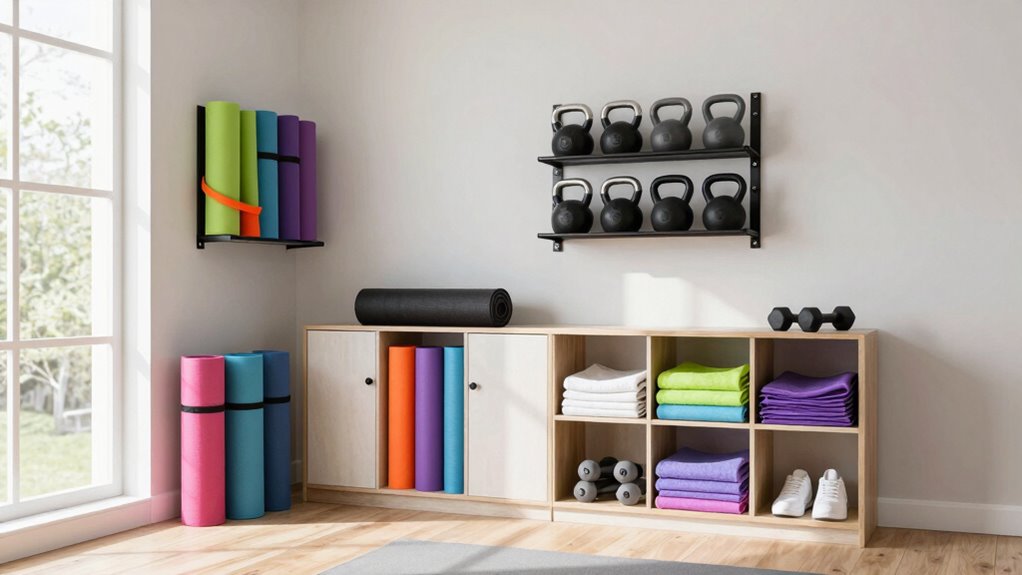
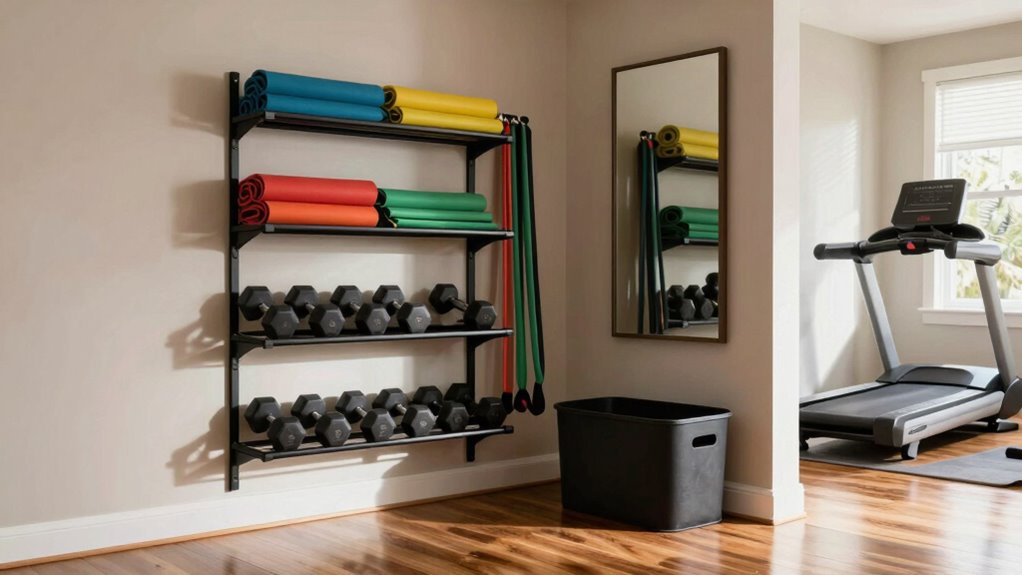
By considering storage early, you can choose the right furniture, shelves, or racks designed specifically for fitness gear. For instance, wall-mounted racks for weights or resistance bands free up valuable floor space. Compact storage units can hold smaller accessories like yoga mats, foam rollers, and dumbbells, keeping everything within reach but out of the way. When you invest in smart storage solutions, you prevent the chaos that often comes with a cluttered workout area. This not only saves space but also reduces the risk of accidents caused by tripping over equipment left on the floor. Additionally, home organization principles can guide you in creating a more efficient setup. Incorporating space optimization techniques ensures you maximize every available corner of your workout area. Understanding the importance of safety considerations in storage helps prevent injuries during workouts and while handling equipment.
Thinking about equipment organization from the start also means you can plan for future growth of your fitness collection. As you add new gear, your storage system should be adaptable. If you buy adjustable shelving or modular storage units, you can reconfigure your setup as your needs evolve. This forward-thinking approach ensures your space remains optimized over time, rather than becoming overwhelmed or disorganized. You’ll find it easier to maintain your workout routine when everything has a designated place, and you know exactly where to find your gear. Developing a strategy for space utilization early on can help you identify potential bottlenecks before they become problematic.
In addition, a well-planned storage system can motivate you to keep the space tidy. When your equipment is neatly stored and easily accessible, you’re more likely to put things away after each workout. This habit prevents clutter from building up and preserves the integrity of your space. Furthermore, efficient storage can even inspire you to work out more often because your environment feels inviting and ready for use at any time.
Ultimately, planning for storage from day one isn’t just about aesthetics; it’s a practical step that enhances your overall fitness experience. It allows you to maximize space, keeps your equipment organized, and makes your workouts more efficient. With thoughtful planning, your home gym becomes a place where fitness seamlessly fits into your life without chaos or frustration. Incorporating storage solutions into your planning process ensures your space remains functional and inspiring for years to come.
home gym wall mounted storage racks
As an affiliate, we earn on qualifying purchases.
As an affiliate, we earn on qualifying purchases.
Frequently Asked Questions
How Much Space Do I Need for Different Types of Fitness Equipment?
You’ll need about 50-100 square feet for a basic fitness room design with essential equipment like a treadmill or stationary bike. For larger setups including weights, benches, and mats, plan for 150-200 square feet. Consider your equipment layout carefully to maximize space and guarantee safe movement. Measure your gear beforehand and allocate extra room for easy access, making your fitness room both functional and comfortable.
What Are the Best Storage Solutions for Small Home Gyms?
Did you know that nearly 60% of small gym owners struggle with clutter? To maximize your space, consider using innovative shelving that adapts to your needs and compact containers to store smaller items efficiently. These solutions keep your workout area organized without sacrificing space. By investing in smart storage options, you create a functional, clutter-free environment that motivates you to stay consistent with your fitness routine.
How Can I Keep My Equipment Organized Over Time?
To keep your equipment organized over time, regularly clean and maintain your gear, ensuring it stays in good condition. Incorporate fitness room decor that doubles as storage, like wall-mounted racks or decorative baskets, to keep things tidy and visually appealing. Consistently put equipment back in designated spots after use, and schedule routine checks to prevent clutter, making your space inviting and easy to use every day.
Are There Safety Considerations for Storing Fitness Gear at Home?
Coincidentally, safety hazards can sneak up if you don’t prioritize secure storage from the start. You should always keep weights, dumbbells, and equipment in sturdy, well-placed containers or racks to prevent accidents. Proper storage minimizes the risk of injuries and guarantees your space stays safe for everyone. Remember, a well-organized area with secure storage isn’t just tidy—it’s a smart way to protect yourself and your family.
How Do I Budget for Home Fitness Storage Needs?
You should start by evaluating your workout accessories and estimating their storage needs. Budget for storage solutions like shelves or bins, considering both current and future gear. Include costs for maintenance tips, such as cleaning supplies or protective covers, to keep your equipment in top shape. Prioritize versatile storage options that grow with your fitness routine, ensuring affordability without sacrificing safety or organization from the beginning.
adjustable dumbbell storage rack
As an affiliate, we earn on qualifying purchases.
As an affiliate, we earn on qualifying purchases.
Conclusion
By planning your home fitness storage from the start, you set yourself up for success and convenience. Think of it like building a house: if you don’t lay a solid foundation, everything else can crumble. With smart storage solutions in place, you’ll keep your space organized, making workouts more enjoyable and less stressful. Remember, “A stitch in time saves nine”—address storage now, and you’ll enjoy a clutter-free fitness area for years to come.
compact yoga mat storage container
As an affiliate, we earn on qualifying purchases.
As an affiliate, we earn on qualifying purchases.
As an affiliate, we earn on qualifying purchases.