
Your sleep quality depends on several key bedroom features. Soft, warm lighting and a cool room temperature help your body relax and signal it’s time to sleep. Controlling noise with blackout curtains, eye masks, or white noise keeps you undisturbed. Comfortable bedding and a tidy space reduce discomfort and stress. Ensuring good air quality and adding natural elements create a calming atmosphere. If you want to improve your sleep environment further, there’s more you can do to optimize your room.

Get comfort and recovery gear delivered free — and shop member deals
- Fast, free delivery on millions of items
- Access to Prime Big Deal Days deals on October 6–7
- Prime Video, Amazon Music and more included
Key Takeaways
- Proper lighting, especially dim and warm, signals the body to prepare for sleep and reduces circadian disruption.
- Cooler room temperatures (60-67°F) enhance sleep quality and comfort.
- Eliminating noise with white noise or earplugs minimizes sleep disturbances.
- Comfortable bedding and supportive pillows promote relaxation and reduce nighttime awakenings.
- A clutter-free, organized environment creates a calming atmosphere that supports restful sleep.
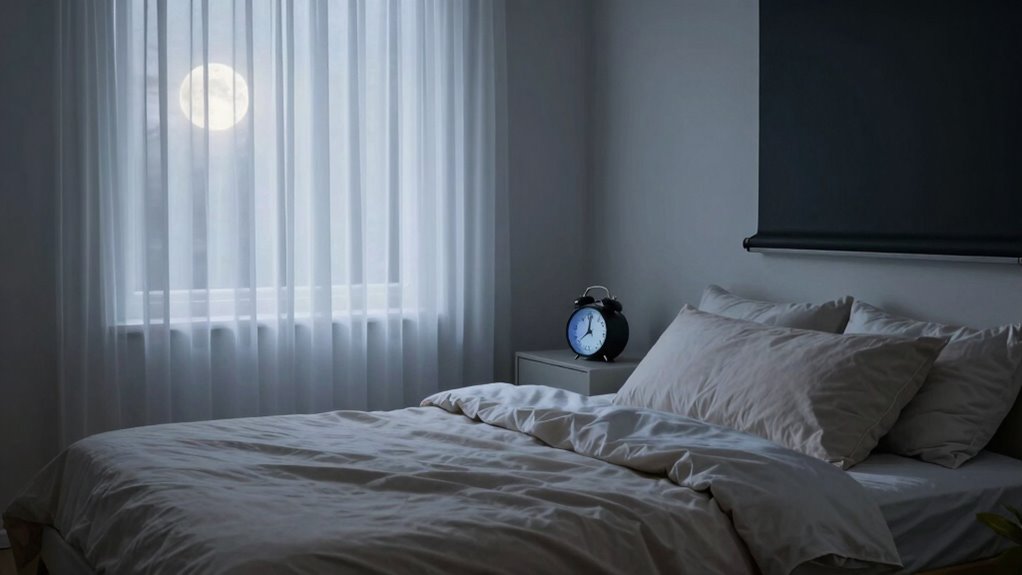
Your bedroom environment plays a essential role in the quality of your sleep, influencing how easily you fall asleep and stay asleep throughout the night. One of the most significant aspects is sleep hygiene, which encompasses habits and conditions that promote restful sleep. Maintaining good sleep hygiene starts with your bedroom setup, especially focusing on bedroom lighting. The lighting in your room can either signal your body that it’s time to wind down or keep you alert when you should be relaxing.
Bright, harsh lights before bed can interfere with your natural circadian rhythm, making it harder to fall asleep. You want to aim for soft, dim lighting in the evening—think warm-colored lamps or adjustable lights that can be lowered as bedtime approaches. Avoid screens with blue light, like smartphones and tablets, because they suppress melatonin production, a hormone essential for sleep. Instead, opt for calming activities like reading a book under gentle light or practicing relaxation techniques.
Dim, warm lighting and avoiding blue light screens help support your natural sleep cycle.
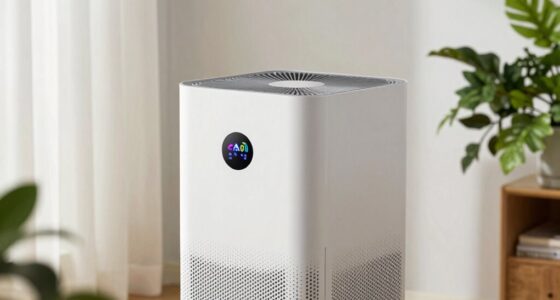
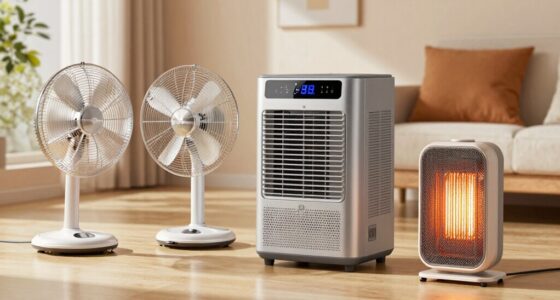
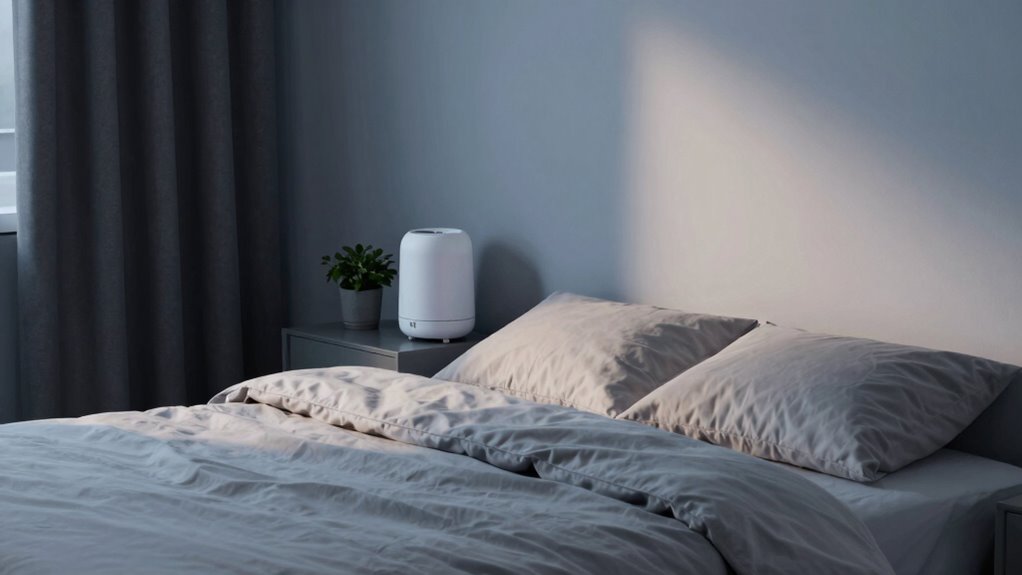
In terms of sleep hygiene, creating a sleep-friendly environment extends beyond lighting. Your bedroom should be cool, quiet, and dark. A cooler temperature, around 60-67°F (15-19°C), helps your body reach the ideal conditions for sleep. Use blackout curtains or an eye mask if outside light seeps in, and consider earplugs or white noise machines to block disruptive sounds. These steps help your body stay in a restful state throughout the night, reducing awakenings and improving sleep quality. Creating a consistent sleep environment can also reinforce your body’s internal clock, making it easier to fall asleep naturally. Additionally, incorporating natural elements like plants or natural materials in your bedroom can contribute to a calming atmosphere conducive to sleep. Ensuring proper air quality by maintaining good ventilation and reducing indoor pollutants can also support better sleep, as poor air quality may cause discomfort or breathing issues that disrupt rest. Maintaining a sleep-friendly atmosphere can also help reduce stress and promote relaxation before bedtime.
Your choice of bedding also impacts sleep hygiene. Invest in a comfortable mattress and pillows that support your preferred sleeping position. Comfortable bedding helps you relax more quickly and stay comfortable during the night, preventing discomfort that can wake you up. Consistency is key—try to keep your sleep environment the same every night, reinforcing your body’s internal clock and making it easier to fall asleep naturally.
Finally, declutter your room to create a peaceful, stress-free space. A tidy, inviting bedroom promotes relaxation and minimizes distractions that could keep your mind racing. When your environment aligns with sleep hygiene principles—appropriate lighting, temperature, noise level, and comfort—you set the stage for restorative sleep. Over time, these deliberate adjustments can make a significant difference in how well you sleep, leaving you refreshed and ready for each new day. Ensuring your bedroom is free of unnecessary distractions can also enhance your overall sleep hygiene and contribute to better sleep quality.
As an affiliate, we earn on qualifying purchases.
Frequently Asked Questions
How Does Room Temperature Influence Sleep Quality?
Room temperature directly influences your sleep quality by affecting sleep hormone regulation. When it’s too hot or cold, your body struggles to maintain ideal temperature, disrupting sleep cycles. A cooler room, around 60-67°F, promotes better sleep. Your bedding material choice also matters—breathable fabrics help regulate heat, supporting sleep hormone regulation. Keep your room comfortable and choose bedding that wicks away moisture for deeper, more restorative sleep.
Can Bedroom Colors Impact Sleep Patterns?
Yes, bedroom colors can impact your sleep patterns considerably. Studies show that blue hues promote relaxation, improving sleep quality by 30%, thanks to color psychology that encourages calmness. Warm tones like red or bright colors might boost mood and energy, but can interfere with rest. Choosing soothing, muted shades for your bedroom fosters mood enhancement and creates an environment conducive to restful sleep.
What Role Does Noise Pollution Play in Sleep Disruption?
Noise pollution can seriously disrupt your sleep by causing frequent awakenings and reducing sleep quality. You can combat this by using sound masking devices that generate soothing sounds or white noise to drown out disruptive noises. Noise-canceling techniques like earplugs or blackout curtains also help create a quieter environment. These strategies help you fall asleep faster and enjoy more restorative sleep, improving your overall well-being and daytime alertness.
How Does Mattress Firmness Affect Sleep Comfort?
Think of your mattress as the foundation of a sturdy house. If it’s too firm, it feels like sleeping on a rock, causing pressure points and discomfort. If it’s too soft, you sink in, losing support. The right mattress firmness, with ergonomic design and quality mattress material, cradles your body properly. This balance guarantees you stay comfortable, aligned, and get restful sleep night after night.
Do Air Purifiers Improve Sleep Environments?
Yes, air purifiers can improve your sleep environment by enhancing air quality. They effectively remove allergens, dust, and pollutants that might disrupt your rest or cause allergies. When choosing a purifier, consider its effectiveness in filtering out airborne irritants. A high-quality purifier can create a cleaner, healthier space, helping you breathe easier and fall asleep more comfortably. Good air quality directly contributes to better sleep quality overall.
As an affiliate, we earn on qualifying purchases.
Conclusion
So, next time you crawl into bed, remember that your perfect sleep sanctuary might be hiding in plain sight — or rather, under your pillow and behind your curtains. You’ve carefully chosen your mattress, yet forgot to turn off the lights or silence your phone. Ironically, the very environment meant to lull you into restful dreams can turn into a nightly battlefield of noise, light, and chaos. Sweet dreams—if your room finally cooperates.
As an affiliate, we earn on qualifying purchases.
As an affiliate, we earn on qualifying purchases.
Fall Picks
fall essentials
As an affiliate, we earn on qualifying purchases.