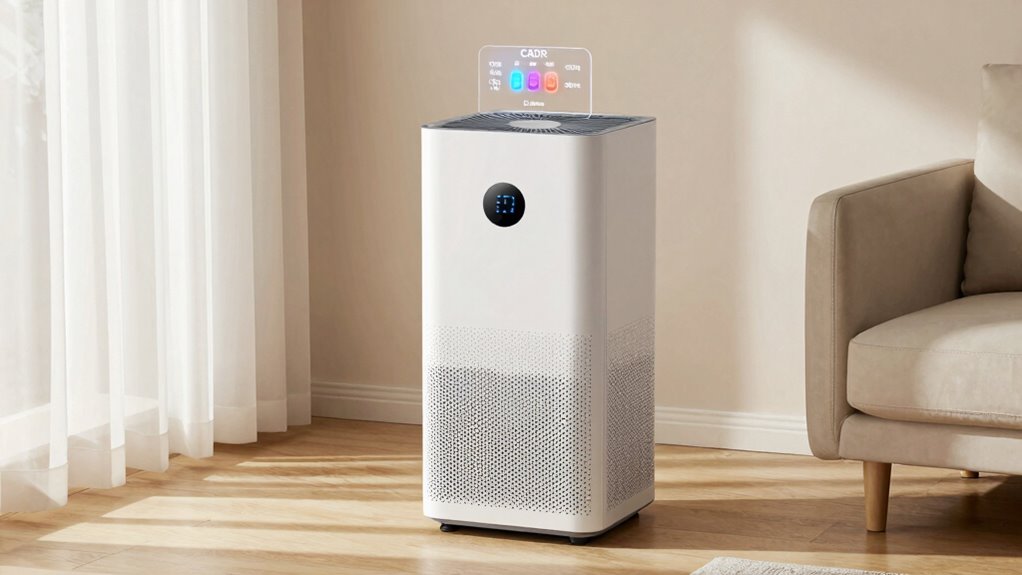
Understanding key terms like CADR, room size, and filtration helps you pick the right air purifier. CADR shows how fast it cleans your air, so a higher number means quicker results. Matching the purifier’s capacity to your room size guarantees better air flow and efficiency. Filters like HEPA and activated carbon target allergens, dust, and VOCs for cleaner air. If you want to know how these details work together for healthier air, keep exploring.

Get comfort and recovery gear delivered free — and shop member deals
- Fast, free delivery on millions of items
- Access to Prime Big Deal Days deals on October 6–7
- Prime Video, Amazon Music and more included
Key Takeaways
- CADR indicates the purifier’s speed in removing pollutants, with higher values cleaning air faster.
- Match the purifier’s capacity to your room size for effective air circulation and pollutant removal.
- HEPA filters capture allergens and bacteria, while activated carbon filters remove VOCs and odors.
- Proper sizing and features ensure efficient, cost-effective air purification tailored to your needs.
- Understanding these terms helps choose an air purifier that improves indoor air quality and health.
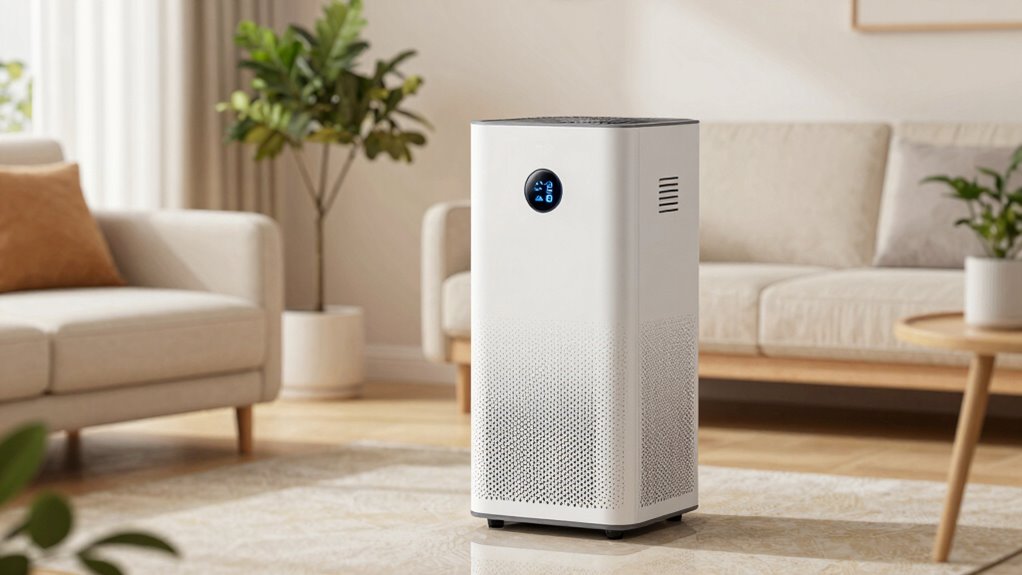
Have you ever wondered how to improve the air quality in your home or office? It’s a common concern, especially with so many airborne pollutants floating around. The good news is, choosing the right air purifier can make a big difference. When shopping around, you’ll notice terms like CADR, room size, HEPA filters, and VOC removal. Understanding these terms helps you pick the best device for your space and needs.
CADR, or Clean Air Delivery Rate, measures how effectively an air purifier cleans the air in a specific time. Think of it as the purifier’s horsepower—higher CADR means faster removal of dust, smoke, and pollen. If you have allergies or asthma, a higher CADR guarantees quicker, cleaner air. But don’t just focus on CADR numbers; match the purifier’s capacity to your room size. For example, a small room needs a lower CADR device, while larger spaces require a model with a higher CADR to keep the air fresh.
Higher CADR means faster removal of pollutants; match it to your room size for optimal air quality.
Room size is vital because an air purifier that’s too small won’t keep up with pollutants, leading to stagnant air. Check the manufacturer’s recommendations for room coverage. If your space is 200 square feet, pick a purifier designed to handle that size efficiently. Otherwise, you risk wasting money on a device that struggles to clean the air effectively. Knowing your **room coverage** needs ensures you select an appropriately sized purifier for optimal results. Additionally, understanding airflow capacity can help you choose models that provide consistent air circulation throughout your space. It’s also helpful to consider the energy efficiency of the unit, especially if you plan to run it continuously.
HEPA filters are the gold standard for capturing tiny particles. They trap allergens, pet dander, dust, and even some bacteria, making the air safer to breathe. If you suffer from allergies or respiratory issues, a purifier with a HEPA filter is indispensable. But don’t overlook VOC removal, which targets volatile organic compounds—gases emitted by paints, cleaning products, and furniture. Many advanced purifiers include activated carbon filters that adsorb these gases, reducing odors and harmful emissions.
When choosing an air purifier, consider how well it handles VOCs and allergens. A device with HEPA filtration combined with activated carbon offers complete protection. This combo helps you breathe easier, especially in environments with strong odors or chemical fumes. Additionally, understanding air purification technology can help you select models that incorporate the latest innovations for better performance. Ultimately, the right purifier balances high CADR, suitable room size, HEPA filtration, and VOC removal features. By understanding these terms, you make smarter choices that improve your indoor air quality, creating a healthier, more comfortable space for you and your loved ones.
As an affiliate, we earn on qualifying purchases.
Frequently Asked Questions
How Often Should I Change the Air Purifier Filters?
You should change your air purifier filters based on the filter lifespan, which typically ranges from 3 to 6 months, depending on use and air quality. Regular maintenance frequency helps keep your device functioning efficiently. Check the manufacturer’s recommendations and inspect filters regularly—replace them sooner if they look dirty or clogged. Doing so guarantees superior air purification and maintains healthy indoor air quality.
Do Air Purifiers Emit Harmful Ozone or Chemicals?
Air purifiers can emit low levels of ozone, especially models with ionizing features, which might raise ozone emissions concerns. While most modern purifiers are designed to minimize chemical concerns, some units release trace chemicals or byproducts from filters or materials. To stay safe, choose HEPA and activated carbon models, and check for ozone emission ratings. Regular maintenance also helps prevent chemical buildup, ensuring cleaner air without harmful byproducts.
Can Air Purifiers Remove Odors Effectively?
Think of your air purifier as a fresh breeze sweeping through a stuffy room, quickly tackling stubborn odors. It effectively removes odors through odor elimination, trapping smells in filters or breaking them down with specialized tech. While it’s great for air freshening, some purifiers excel more than others. Choose one with activated carbon filters for the best odor control, and enjoy a fresher, more inviting space every time.
Are Air Purifiers Noisy During Operation?
Air purifiers can be noisy during operation, especially on higher settings, but many models have quiet modes to reduce noise levels. Noise levels vary depending on the fan speed and design. Keep in mind, higher noise might affect your comfort, but it often correlates with better airflow. Also, consider filter lifespan, as a longer-lasting filter reduces maintenance and noise from frequent replacements. Choose a purifier that balances noise, efficiency, and filter durability.
How Do I Know if My Room Needs a Larger Purifier?
Think of your room as a thirsty plant—if it’s wilting or not thriving, it might need more water. Similarly, if your room’s size exceeds your purifier’s capacity, the air won’t get cleaned effectively. Check your room’s dimensions and compare them to your purifier’s coverage area. If the purifier isn’t covering enough square footage, it’s time for a larger one to guarantee your air stays fresh and healthy.
air purifier with high CADR for large room
As an affiliate, we earn on qualifying purchases.
As an affiliate, we earn on qualifying purchases.
Conclusion
Now that you’ve uncovered the basics of air purifiers, you’re just a decision away from transforming your space. Choosing the right unit might seem overwhelming, but the perfect fit is within reach—if you know what to look for. Imagine breathing cleaner, fresher air every day. Ready to take the next step? The secret to a healthier home is closer than you think. Don’t wait—your fresh air oasis is just one choice away.
activated carbon filter air purifier
As an affiliate, we earn on qualifying purchases.
As an affiliate, we earn on qualifying purchases.
compact air purifier for small spaces
As an affiliate, we earn on qualifying purchases.
As an affiliate, we earn on qualifying purchases.
Fall Picks
fall essentials
As an affiliate, we earn on qualifying purchases.