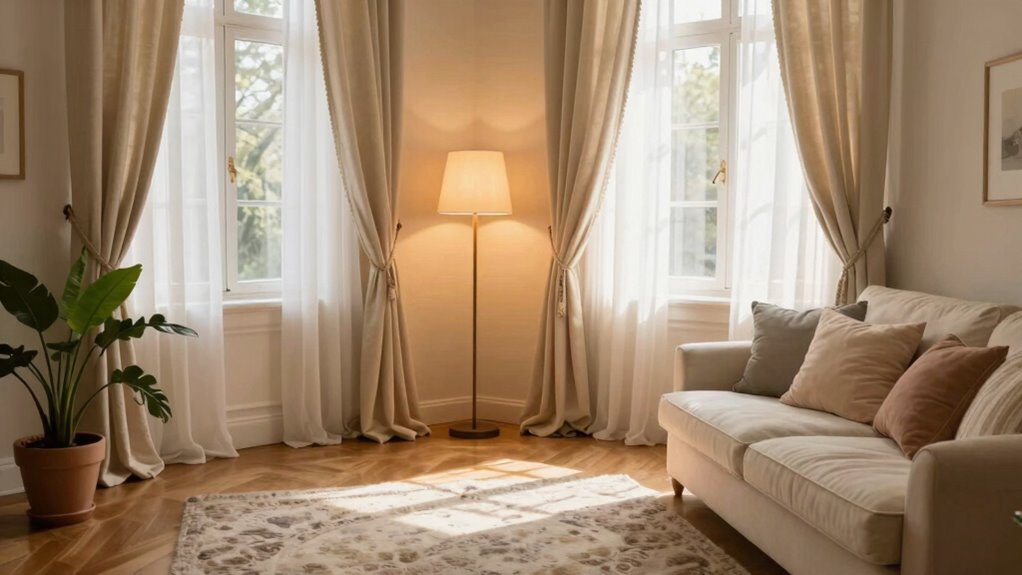

To quickly soften a harsh room, start by adding warm lighting with soft bulbs or dimming switches to create a cozy glow. Incorporate inviting textures like plush rugs or velvet cushions and use calming colors such as gentle blues or pastels on walls or accessories. Bringing in natural light through curtains or mirrors also helps brighten and warm the space. Small changes like these can make a big difference—keep exploring to discover even more simple ways to create a welcoming atmosphere.

Get comfort and recovery gear delivered free with Prime
- Fast, free delivery on millions of items
- Prime Video, Amazon Music and more included
- Member-only deals all year
Key Takeaways
- Use warm-colored bulbs and multiple light sources to create a cozy, layered glow.
- Introduce soft textures like plush rugs, velvet cushions, or draped curtains for tactile warmth.
- Incorporate calming hues such as pastel blues, greens, or blush in accessories or wall paint.
- Maximize natural light by opening curtains, adding mirrors, or placing plants to soften the space.
- Add greenery and natural elements to introduce organic softness and elevate the room’s inviting feel.

A room that feels harsh can make you uncomfortable and unwelcoming, but there are quick ways to soften its atmosphere. One of the most effective methods involves understanding color psychology. Colors influence emotions and perceptions more than you might realize. For instance, cool tones like soft blues and gentle greens tend to create calming environments, while warmer shades such as beige, blush, or pastel yellows make a space feel more inviting. If your room feels too stark or cold, adding accessories or walls painted in these soothing hues can immediately alter its vibe. You don’t need a complete overhaul—small touches like throw pillows, curtains, or artwork in calming colors can make a significant difference.
Soft blues and greens create calming, inviting spaces—small touches in soothing hues transform harsh rooms effortlessly.
Lighting techniques are another quick fix to combat harshness. Bright, direct lighting can intensify a room’s severity, so softening the light is key. Use warm-colored bulbs instead of cool white ones to add a cozy glow. Incorporate multiple light sources—table lamps, floor lamps, or wall sconces—rather than relying solely on ceiling fixtures. Dimming your lights during the evening can also help create a more relaxed and welcoming space. If there are harsh shadows or overly bright spots, consider diffusing the light with lampshades or frosted bulbs. Natural light can also be your ally: open up curtains or blinds to let in sunlight, which naturally softens the atmosphere and adds warmth. Additionally, choosing appropriate lighting techniques can further enhance the room’s mood.
You can further reduce the room’s harshness by adding textured fabrics and soft materials. Plush rugs, velvet cushions, or draped curtains absorb excess light and sound, making the space feel more intimate. Mirrors placed strategically can bounce light around the room, reducing shadows and creating a sense of openness without the starkness. Plants are another quick addition—greenery introduces organic softness and a touch of nature, which can instantly make a room feel more welcoming. Incorporating natural elements like plants not only improves aesthetics but also enhances the overall sense of well-being within the space.
In essence, adjusting your color palette and lighting setup can dramatically change a room’s atmosphere without much effort or expense. By choosing calming colors based on color psychology and employing lighting techniques that soften brightness, you can transform a stark, uninviting space into a cozy retreat in no time. Small changes like these have the power to make your environment more comfortable, warm, and inviting—perfect for relaxing, entertaining, or simply feeling at ease in your home.
As an affiliate, we earn on qualifying purchases.
Frequently Asked Questions
Can Adding Mirrors Improve Room Softness?
Adding mirrors can definitely improve room softness by introducing reflective surfaces that bounce light around, creating a more inviting atmosphere. Proper mirror placement is key—you want to position them where they catch natural light and reflect pleasant views. This not only enhances brightness but also softens harsh lines and shadows, making the space feel more balanced and cozy. Incorporate mirrors thoughtfully, and you’ll instantly notice a more welcoming, less stark environment.
How Do Window Treatments Affect Room Acoustics?
Imagine a quiet forest hiding behind your window. Window coverings, like curtains or shades, substantially influence sound absorption, softening echoes and muffling outside noise. They act as barriers, dampening harsh sounds and creating a cozy acoustic environment. By choosing the right window treatments, you control how much sound enters or leaves, making your room feel more inviting and less harsh. So, your window coverings become your silent allies in perfecting your room’s acoustics.
Are There Specific Paint Finishes That Reduce Harshness?
Matte or eggshell paint finishes help reduce harshness by diffusing light and minimizing glare. You should choose warm, soft color palettes to create a calming atmosphere. Incorporate texture layering with matte finishes, textured wall treatments, or fabric accents to soften sharp surfaces and add visual interest. These choices work together to make your space feel more inviting and less stark, creating a balanced, cozy environment.
What Role Do Plants Play in Softening a Room?
Plants are your secret weapon against a room that feels too harsh—think of indoor greenery as nature’s softening agent. They add natural textures that break up stark lines and harsh surfaces. Plus, their lush leaves and vibrant colors create a calming ambiance, making your space feel inviting rather than intimidating. So, don’t underestimate the power of greenery; it’s like a gentle hug from Mother Nature herself.
Does Furniture Placement Influence Room Warmth?
Yes, furniture placement influences room warmth by creating a cozy atmosphere. You can enhance this by balancing color contrast and texture layering; for example, positioning warm-toned furniture near lighter walls softens the space. Grouping pieces to form intimate zones and avoiding harsh edges helps, too. These strategies make your room feel inviting and less stark, inviting comfort through thoughtful arrangement and layered textures.
As an affiliate, we earn on qualifying purchases.
Conclusion
Transforming a room isn’t just about changing furniture or colors; it’s about softening the edges of harshness like a gentle breeze easing through a stiff room. With a few quick tweaks—adding cozy textiles, warm lighting, or inviting art—you turn a cold, unwelcoming space into a welcoming haven. Think of your room as a canvas; a few gentle strokes and touches will make it feel like a warm embrace, inviting you to stay longer and breathe easier.
As an affiliate, we earn on qualifying purchases.
As an affiliate, we earn on qualifying purchases.
Halloween Picks
halloween
As an affiliate, we earn on qualifying purchases.