
TL;DR

Get comfort and recovery gear delivered free with Prime
- Fast, free delivery on millions of items
- Prime Video, Amazon Music and more included
- Member-only deals all year
A Fit&Well report explains that heels lifting during a squat is often associated with limited ankle dorsiflexion, but hip mobility or strength may also play a role. It describes three scaled squat exercises—using suspension straps, a chair and heel supports—to practise range and control gradually.
Fit&Well has published guidance on why a person’s heels may lift during a squat and describes three modified squat exercises to practise mobility, strength and control. The report says limited ankle movement is a common explanation, but hip limitations may also contribute, meaning calf and ankle stretches may not address every case.
The report links lifting heels during a squat with restricted ankle dorsiflexion—the movement that lets the shin travel forward over the foot. Tightness in the calves or ankle joints can limit that movement. It also says that for some people, particularly those with weak or tight hips, the heel lift may act as a protective response. These are general explanations from the article, not a diagnosis of any individual’s movement or pain.
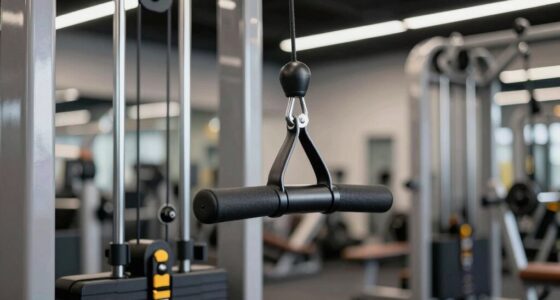
Its first suggested variation is a suspension-trainer squat. Holding the straps provides support while the person bends their knees and lowers into a squat, with feet around hip-width apart or slightly wider and toes angled slightly outward. The report advises pausing briefly at the lowest comfortable point, then pushing through the heels to stand. It suggests gradually relying less on the straps as control improves.
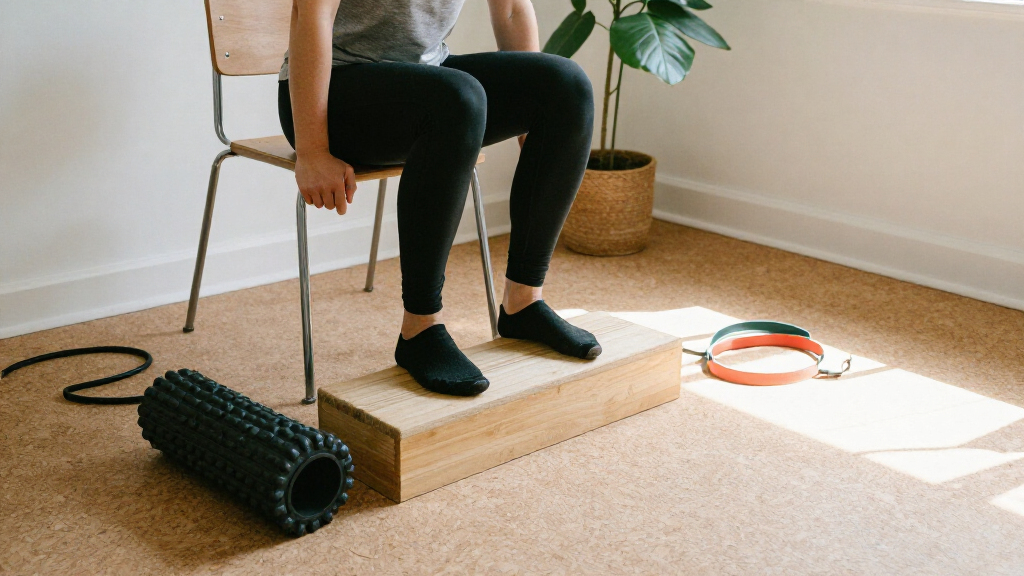
The second option is a slow sit-to-stand from a sturdy chair. The person rises without using their hands, then lowers back down slowly, focusing on control and keeping weight through the heels. The third is a supported, heel-elevated squat hold, using thin weight plates or wedges under the heels to make a deep position more accessible. The article recommends reducing the support height gradually as the movement becomes more comfortable.
Why Squat Heel Lift Has More Than One Cause
The report’s main point is that heel lift does not identify one definite problem. Ankle range may be part of it, but hip mobility and strength can also affect how someone reaches and controls a squat. That distinction matters because repeatedly stretching the calves or ankles may not be useful if those areas are not the main limitation.
The proposed exercises offer ways to adjust the movement rather than forcing a person to squat deeper immediately. Straps reduce the balance demand, a chair provides a clear depth target, and heel supports let someone practise a deep position with assistance. The article presents these as gradual practice options, not as a guaranteed fix or a substitute for an individual assessment.
For readers, the practical takeaway is to pay attention to comfort, control and gradual progress, not just depth or repetition counts. If a movement causes pain, or if a person has a medical condition or injury affecting exercise, the report does not provide tailored advice; seeking guidance from a qualified health professional or exercise specialist may be appropriate.
Products Worth Considering

Shark IZ362H Cordless Anti-Allergen Stick Vacuum, Red

Sony BRAVIA 5 85-Inch Mini LED 4K HDR Smart TV (K-85XR50)

Dyson Car+Boat Cordless Handheld Vacuum
As an affiliate, we earn on qualifying purchases.
The Three Squat Regressions
The report frames its suggestions as regressions of an unweighted squat: easier or more supported versions of the same general movement. It advises practising each version and exploring a comfortable range before worrying about the number of repetitions. Once technique feels familiar, it suggests three sets of each exercise, working for one minute and resting for one minute. That is the article’s suggested format, not a requirement suitable for everyone.
For the suspension variation, the straps are set around mid-length and held while the person squats. In the chair variation, the person starts seated near the edge of a sturdy chair and controls both the rise and descent. For the supported hold, the report says to keep the back flat, chest facing forward and knees apart, while using enough heel elevation to maintain a comfortable position. It describes lowering the support over time as a progression toward heels-flat squatting.
The source does not report clinical testing of the three exercises or provide evidence that they correct every cause of heel lift. Its advice is practical fitness guidance based on the author’s experience and explanation of the movement. Readers should treat the exercises as options to practise, rather than proof of what is causing their own squat pattern.
““Typically, it’s considered a sign of limited ankle dorsiflexion” due to calf or ankle tightness.”
— Fit&Well report
What the Guidance Cannot Diagnose
The report does not establish why any particular person’s heels lift. It presents ankle restriction and hip-related limitations as possible explanations, but does not provide a test to distinguish them or say how frequently each cause applies. A heel lift alone should not be treated as a diagnosis.
The supplied material also does not give a publication date, cite research testing these specific exercise progressions, or explain how long an individual should continue before expecting a change. Its suggestion to practise over a few weeks is general guidance; results and appropriate exercise choices may vary. The article does not discuss what to do if the movements cause pain, or how the advice should change for people with injuries or medical conditions.
Progress Only as Control Allows
The Fit&Well report recommends practising the variations regularly over a few weeks, then progressing as technique and strength improve. That could mean using the suspension straps less, lowering more slowly toward the chair, or reducing the height of the heel supports. Its suggested routine is three one-minute sets per exercise, with one minute of rest, once the person is confident with the technique.
The next step for readers is to judge progress by whether they can move with control and without discomfort, rather than forcing a deeper squat. Anyone experiencing pain, persistent movement difficulty or uncertainty about exercising with a health condition can seek advice from a qualified professional. The report does not set out a clinical follow-up or promise a specific result.
Key Questions
Does heel lift during a squat always mean my ankles are tight?
No. The Fit&Well report says limited ankle dorsiflexion is a common explanation, but hip tightness or weakness may also contribute. The movement alone does not identify the cause for an individual.
What are the three exercises in the report?
They are a suspension-trainer squat, a slow sit-to-stand from a sturdy chair, and a deep squat hold with the heels supported on plates or wedges.
How often should I do the exercises?
The report suggests practising regularly and, once comfortable with the technique, doing three one-minute sets of each exercise with one minute of rest. That is general guidance, not a personalised programme.
Should I keep doing the movements if they hurt?
The supplied report does not give a pain-management plan. Do not force a painful movement; consider asking a qualified health professional or exercise specialist for guidance, particularly if you have an injury or an existing medical condition.
Source: fitandwell.com