
TL;DR

Get comfort and recovery gear delivered free with Prime
- Fast, free delivery on millions of items
- Prime Video, Amazon Music and more included
- Member-only deals all year
A Fit&Well report recommends a weekly sequence of forward, side and curtsy lunges to work the glutes from different directions. It suggests 2–3 sets of 6–8 repetitions per leg for each variation, with bodyweight or dumbbells, while noting that the routine is an exercise recommendation rather than a guarantee of results.
Fit&Well has published a weekly leg-workout recommendation featuring forward, side and curtsy lunges, with dumbbells or bodyweight. The report suggests two or three sets of six to eight repetitions per leg for each variation, presenting the sequence as a way to train the glutes and other lower-body muscles from several directions.
The workout is built around three lunge patterns rather than a single exercise. The source says forward lunges work the lower body, while side and curtsy lunges add movement in different directions. It links the sequence to the gluteus maximus, gluteus medius and gluteus minimus, the three muscles that make up the gluteal group. The report does not provide research data comparing this routine with other workouts.
For each movement, Fit&Well recommends six to eight reps on each leg and two or three sets in total. The forward lunge begins with a step ahead and a controlled lowering of both knees; the side lunge steps out to one side while the other leg stays straight; and the curtsy lunge steps one foot diagonally behind the other. The instructions emphasize an upright chest and a controlled return to standing.
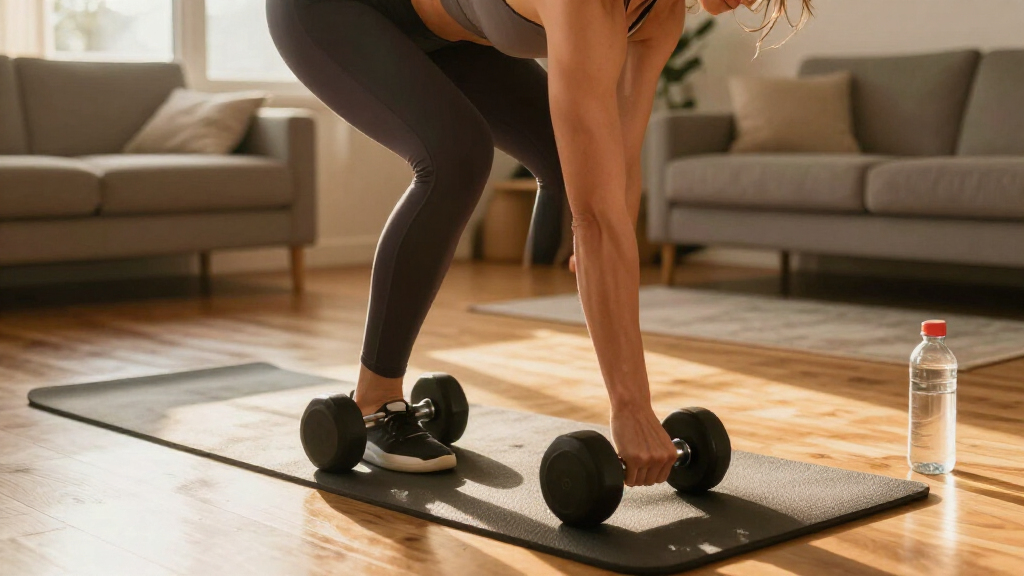
The sequence can be performed with bodyweight or dumbbells. The report suggests holding weights at the sides, on the shoulders or at the chest, and advises doing a bodyweight round first when adding resistance. It also recommends increasing load gradually. People who find alternating repetitions difficult can finish a set on one side before switching.
A Three-Direction Glute Session
The routine offers readers a compact structure for adding lower-body work to a weekly plan, without requiring a gym machine or a fixed weight. Its distinguishing feature is the mix of forward, lateral and crossing steps, rather than a claim that one movement can isolate every glute muscle. The variation may help make a session feel less repetitive, while bodyweight options give beginners a way to practice the movements before using dumbbells.
Fit&Well also describes the sequence as supporting hip and ankle mobility and lower-body stability because the movements load the joints in different directions. Those are the report’s stated benefits, not findings established in the supplied material. The article does not cite a clinical study or quantify how much strength or muscle a reader should expect to gain.
For readers planning exercise around their own ability, the useful takeaway is the adjustable format: reduce the range of motion, use bodyweight, or hold light weights while learning the steps. Anyone with pain, balance concerns or a prior injury should seek guidance from a qualified health or fitness professional before adding loaded lunges.
Products Worth Considering

Shark Rocket Corded Stick Vacuum for Carpet and Hard Floors, Gray/Orange, HV301

Levoit Vital 100S-P Air Purifier with Washable Pre-Filter

Blueair Blue Pure 511i Max Smart Air Purifier
As an affiliate, we earn on qualifying purchases.
How the Lunge Sequence Works
Fit&Well’s report is written from the perspective of a contributor who says lunges complement squats by engaging the legs through different movement patterns. It describes the gluteus maximus as the largest glute muscle, and the medius and minimus as muscles involved in moving the thigh and stabilizing the pelvis. These descriptions explain the report’s rationale for including several lunge directions.
The routine can be done as part of a broader weekly workout or on its own, according to the source. Its suggested dose is two to three sets per exercise, with six to eight repetitions per side; the recommendation is not presented as a personalized prescription. The source contributor also says side and curtsy lunges were useful during their own recovery after a bulging-disc diagnosis. That is a personal account, not evidence that the moves treat back conditions or are appropriate for everyone with back pain.
“The lunge”
— Fit&Well report
Results Depend on the Individual
The supplied report does not state when it was published, cite studies supporting the routine’s specific benefits, or define what counts as building “strong” glutes. It also gives no expected timeline for strength or muscle changes and does not compare once-weekly training with other schedules. Outcomes can vary with factors such as training experience, effort, recovery and the rest of a person’s program.
The personal account about lower-spine rehabilitation should not be read as medical advice. The source does not establish that lunges are safe or beneficial for people with a bulging disc, current back pain, knee problems or limited balance. It is also unclear what weight or progression would suit an individual reader; the report advises gradual increases but provides no load targets.
Use the Routine With Care
Fit&Well’s practical next step is to begin with a bodyweight warm-up, learn each movement with a comfortable range, then add light dumbbells only if the form remains controlled. Readers following the recommendation can start with two sets of six repetitions per side and adjust based on their ability, rather than treating the suggested range as a requirement. Stop if an exercise causes pain, and seek professional advice for a pre-existing condition or injury.
The report does not announce a follow-up study or a scheduled update. Whether a once-weekly session is enough for a particular person’s goals depends on their broader training plan and individual circumstances; the source offers a workout template, not a guaranteed outcome.
Key Questions
How often does the report recommend doing this workout?
The headline and report frame the sequence as a once-a-week workout. It can also be included within a broader weekly training plan, according to Fit&Well.
How many reps and sets are suggested?
Fit&Well recommends six to eight repetitions per leg for each of the three exercises, completing two or three sets in total.
Do I need dumbbells?
No. The report says the lunges can be done with bodyweight. For weighted versions, it suggests holding dumbbells at the sides, on the shoulders or at the chest, and building the load gradually.
Which lunge variations are included?
The sequence includes a forward lunge, side lunge and curtsy lunge. Each uses a different direction of movement, as described in Fit&Well’s instructions.
Is this routine suitable for someone with back or knee pain?
The source does not establish that the routine is suitable for people with pain or a diagnosed condition. Anyone with a pre-existing injury, back or knee concerns, or balance difficulties should ask a qualified health professional for guidance before attempting loaded lunges.
Source: fitandwell.com