TL;DR

Get comfort and recovery gear delivered free — and shop member deals
- Fast, free delivery on millions of items
- Access to Prime Big Deal Days deals on October 6–7
- Prime Video, Amazon Music and more included
A Fit&Well writer said a daily standing stretch was followed by longer pain-free runs during a two-week return-to-running experiment after pregnancy and postpartum recovery. Her knee pain returned at 4.5 miles, and physical therapist Zaki Afzal said the stretch targets hip muscles rather than lengthening the IT band. The personal account does not establish that the stretch alone caused the change.
A Fit&Well writer said she ran progressively farther before knee pain began during a two-week trial of a standing stretch after returning to running postpartum. She reached four pain-free miles by the second week, but pain returned at 4.5 miles on her final run, so her account does not show that the stretch eliminated the problem or that it caused the improvement.
The writer said she had taken an extended break from running during pregnancy and postpartum recovery and resumed after receiving medical clearance. She had a history of what she called IT band syndrome, which limited her early postpartum runs to about three miles before knee pain started. During the experiment, she ran twice a week and performed the stretch daily.
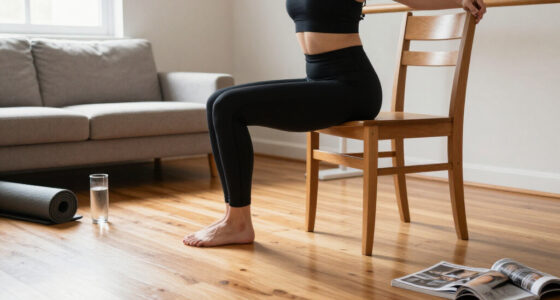
For the first week, she held the stretch for 30 seconds on each side; in the second week, she increased the hold to 45 seconds and leaned toward the side being stretched. On run days, she did it before and after running. She reported that her first run during the experiment reached 3.25 miles before pain, the next reached 3.5 miles, and a run in the second week reached four miles without the familiar pain.
On her final run, she aimed for five miles, a distance she said she used to run regularly before pregnancy. She stopped at 4.5 miles when pain returned. The report is an individual experience, not a controlled test: it cannot establish whether stretching, changes in training, recovery, or other factors accounted for the shift in distance.
What the Trial Can and Cannot Show
The account offers a practical example of how someone returning to running monitored symptoms while gradually increasing distance, but it is not evidence that one stretch treats knee pain. The writer’s improvement was partial, and pain returned when she pushed beyond the distance she had reached comfortably. Readers should not take the results as a guarantee that the same routine will work for them.
The physical therapist quoted in the report also cautioned against assuming the stretch physically lengthens the IT band. That distinction matters because a familiar label for an exercise can oversimplify what it does. The writer said she planned to keep the stretch alongside hip-strengthening exercises and reduce her running progression rather than repeat the push toward five miles.
hip stretching exercises for runners
As an affiliate, we earn on qualifying purchases.
As an affiliate, we earn on qualifying purchases.
Why the IT Band Label Can Mislead
Dr. Zaki Afzal, a physical therapist and founder of Optimize Physical Therapy and Performance, described IT band syndrome as lateral knee pain linked to the hip and lateral hip muscles. He explained that the IT band is dense connective tissue running from the hip area to the outside of the knee, where irritation and compression can occur.
Afzal said the band itself is not built to be stretched in the way the exercise name suggests. In his explanation, the stretch may affect the tensor fasciae latae (TFL) and other muscles at the side of the hip, which can create a feeling of reduced tightness around the knee. He also said hip strength and the ability to respond to force matter during running. The report does not include clinical testing of the writer’s condition or a comparison with a no-stretch routine.
As an affiliate, we earn on qualifying purchases.
What Caused the Distance Change
The report does not establish that the daily stretch caused the writer’s longer pain-free runs. It describes one runner over two weeks, with no control group, clinical assessment, or account of other training changes during the same period. It also does not confirm a diagnosis or identify the precise source of her knee pain.
It remains unclear how long the improvement lasted after the trial, whether the writer’s symptoms changed with a modified running plan, or whether the same routine would help other runners. The account says she had received clearance to return to running, but does not provide details of her postpartum assessment or any ongoing clinical care.
postpartum running recovery stretch
As an affiliate, we earn on qualifying purchases.
As an affiliate, we earn on qualifying purchases.
Her Plan for Returning to Distance
The writer said she intended to scale back her running progression after recognizing that increasing distance too quickly had contributed to her earlier problems. She planned to retain the stretch and add hip-strengthening work, but the report does not give a timetable for reaching five miles or a later update on her symptoms.
Fit&Well advised readers to consult a doctor before trying the stretch if knee pain could have another cause. It also suggested beginners seek guidance from a certified personal trainer or physical therapist to check technique and discuss modifications. Anyone with persistent or worsening pain should seek individualized professional advice rather than relying on a single exercise.
IT band syndrome relief foam roller
As an affiliate, we earn on qualifying purchases.
As an affiliate, we earn on qualifying purchases.
Key Questions
Did the stretch make the runner pain-free?
No. She reported reaching four miles without pain during the second week, but pain returned at 4.5 miles on her final run.
Did the report prove the stretch caused her improvement?
No. It is a single-person account without a control group or clinical testing, so it cannot show that the stretch caused the change.
What did the physical therapist say the stretch does?
Dr. Zaki Afzal said the IT band itself is not built to be stretched. He said the movement may affect the TFL and other lateral hip muscles.
Should runners try the stretch for knee pain?
The source advises checking with a doctor if the cause of knee pain is uncertain. Beginners may benefit from instruction by a physical therapist or certified trainer; a stretch should not replace assessment of persistent or worsening symptoms.
Source: rss
Halloween Picks
halloween
As an affiliate, we earn on qualifying purchases.