
TL;DR

Get comfort and recovery gear delivered free with Prime
- Fast, free delivery on millions of items
- Prime Video, Amazon Music and more included
- Member-only deals all year
A Fit&Well writer said year-round step-ups and Bulgarian split squats helped them feel steady during a hike to a 5,889-foot summit in Albania’s Alps. Both exercises train one leg at a time and can be adapted with a chair or step, though the account is personal experience, not evidence that the routine will produce the same result for every walker.
A Fit&Well writer reported that step-ups and Bulgarian split squats were part of their year-round training before reaching a 5,889-foot (1,795-metre) summit in Albania’s Alps. The account describes the exercises as useful preparation for uphill walking and uneven ground, but it is a personal report—not a controlled study showing that the routine will improve every walker’s performance.
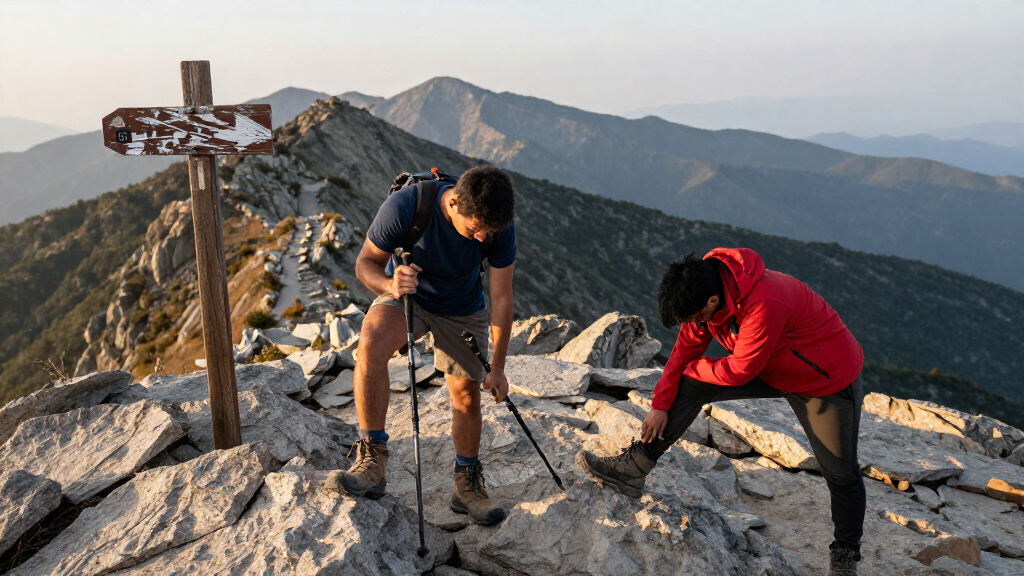
The writer said they live in London, where challenging terrain is not close at hand, and travel farther afield several times a year to hike. During the Albanian Alps trip, they described the climb as tough but said they felt steady stepping over boulders and large rocks. They also reported no knee discomfort on the descent. Those outcomes are the writer’s own observations.
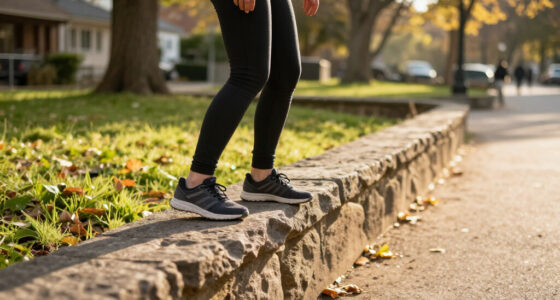
The two movements are step-ups and Bulgarian split squats. The report says both train the legs one side at a time and work the hips, hamstrings, quadriceps and glutes, while also challenging core stability. Step-ups, performed slowly and with control, resemble the motion of climbing onto a higher surface, although the report does not provide measurements of their effect on hiking ability.
For step-ups, the instructions call for placing one foot on a stable box or chair, pushing through that leg to stand, then lowering the other foot with control. The suggested range is 8–12 repetitions per side. A lower platform can make the movement easier; a higher one or a weight held at the chest can add difficulty. For a Bulgarian split squat, the rear foot rests on a chair or bench while the front leg bends and straightens. The report recommends the same repetition range per side and suggests adding weights to increase the challenge.
Strength Work for Steeper Trails
The report offers walkers a practical example of how single-leg strength exercises can fit into preparation for hills, where each step involves supporting and propelling the body on one leg. Step-ups also allow people to practise raising themselves onto a platform, a movement that shares some features with climbing. This makes the exercises relevant to people who want to build strength at home or in a gym before a trip.
The account should not be read as a guarantee of easier hiking, injury prevention or pain-free descents. The writer reports their own experience, and the source provides no comparison group, training schedule, or independent assessment. Terrain, pace, footwear, experience and individual health can all affect a hike. The useful takeaway is narrower: the writer used two adaptable strength movements as part of preparation, and described feeling confident on the route.
Products Worth Considering

eufy Security Video Doorbell E340 Kit with Chime, 2K Resolution and 8GB Local Storage

Shark Clean & Empty Cordless Stick Vacuum with Auto-Empty System, BU3521

Coway Mighty AP-1512HH(W) Air Purifier, White
As an affiliate, we earn on qualifying purchases.
How the Exercises Are Set Up
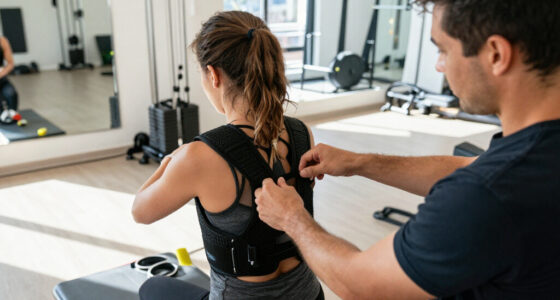
The Fit&Well report says a coach includes both movements in the writer’s plan, and that the writer also programs them for personal-training clients. It does not give the length or frequency of the writer’s training program, nor how long they had been practising each exercise before the Albanian hike. That missing information limits how closely other walkers can replicate the preparation.
Both exercises can be performed with body weight, and the report says a chair can be used at home. The step-up can be scaled by changing platform height; the split squat can be made harder by holding weights. The source does not provide a full warm-up, progression schedule or individualized coaching advice. Anyone unfamiliar with the movements should use a stable support and choose a range and load they can control; people with injuries or health concerns can seek guidance from a qualified professional.
What the Account Cannot Establish
The source does not identify the hike’s date, route, duration, elevation gain, or the writer’s training frequency and progression. It also does not report testing the two exercises against another training approach. As a result, it is not possible to tell how much they contributed to the summit attempt or whether they explain the writer’s reported steadiness and lack of knee discomfort.
The article’s headline invites broad application, but the evidence supplied is one person’s experience. It does not establish that these exercises prevent knee problems, make every uphill walk easier, or suit all fitness levels. People with pain, balance concerns or relevant medical conditions may need individual advice before beginning or increasing strength training.
Adapting Training Before a Hike
The report does not announce a new study, follow-up test or planned training program. Its practical guidance is to begin with controlled, body-weight repetitions and adjust the step height or resistance to ability. Walkers considering the exercises can practise the movements with a stable chair or platform, stop if they experience pain, and increase difficulty gradually rather than treating the suggested repetition count as a requirement.
Whether a routine carries over to a particular hike will depend on the person and the route. The next meaningful evidence would be more detailed information about training duration and performance, or research that compares outcomes across walkers. Neither is included in the report.
Key Questions
Which two exercises did the writer use?
The writer named step-ups and Bulgarian split squats, both performed one side at a time.
What summit did the writer reach?
The Fit&Well report says the writer reached a 5,889-foot (1,795-metre) summit in Albania’s Alps. It does not name the peak or give the route details.
How many repetitions does the report suggest?
It suggests 8–12 repetitions per side for each exercise. This is the report’s guidance, not a personalized prescription.
Does the report prove the exercises prevent knee pain?
No. The writer reported no knee discomfort during their descent, but that is an individual observation. The source does not establish that these exercises prevent pain or injury.
Can the movements be done at home?
The report says they can be done at home using a chair or similar stable platform. Start with a setup you can control, and seek professional guidance if you have an injury or health concern.
Source: fitandwell.com