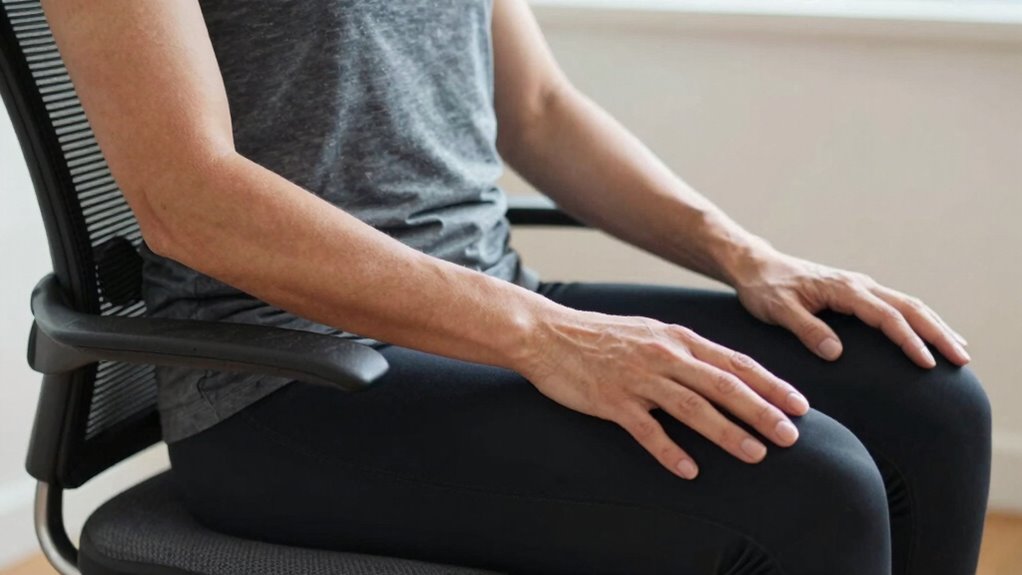

To support better sitting and reduce discomfort, spend 5 minutes daily on quick core and posture exercises. Focus on strengthening your abdominal muscles with planks, holding for 30 seconds to a minute, and perform scapular squeezes to improve shoulder blade posture. Incorporate doorway stretches to open up tight chest muscles. Consistency creates muscle memory, helping you maintain proper alignment effortlessly. Keep going, and you’ll discover more simple ways to improve your spinal health over time.

Get comfort and recovery gear delivered free — and shop member deals
- Fast, free delivery on millions of items
- Access to Prime Big Deal Days deals on October 6–7
- Prime Video, Amazon Music and more included
Key Takeaways
- Dedicate 5 minutes daily to core exercises like planks to strengthen abdominal muscles supporting proper posture.
- Perform scapular squeezes regularly to improve shoulder blade stability and prevent slouching.
- Incorporate doorway stretches to open chest muscles and counteract rounded shoulders from prolonged sitting.
- Strengthen deep spinal stabilizers through targeted exercises to enhance overall spinal alignment.
- Consistently practice mindful sitting and movement habits to reinforce muscle memory and maintain better posture.
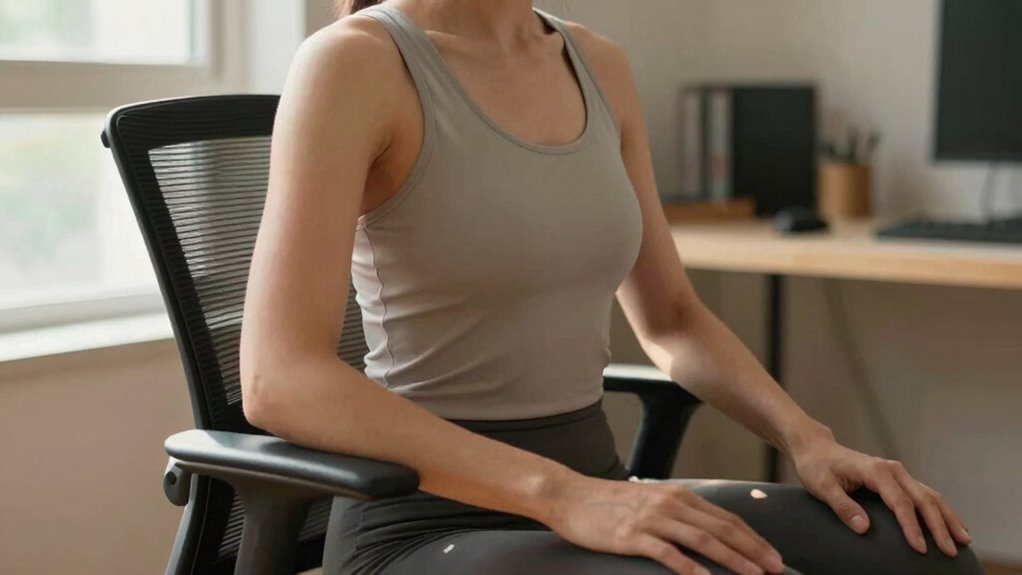
If you spend long hours sitting, establishing a quick daily strength habit can considerably improve your posture and reduce discomfort. Sitting for extended periods often leads to poor posture, which can cause neck, back, and shoulder pain. The good news is that with just five minutes each day dedicated to targeted exercises, you can support better sitting habits and strengthen the muscles that keep your spine aligned. Focus on core exercises and posture correction techniques that activate your deep stabilizers and promote proper alignment. These exercises don’t require special equipment and can easily fit into your busy schedule.
Start by engaging your core with simple yet effective movements. A strong core acts as the foundation for good posture, helping prevent slouching and reducing strain on your back. One effective core exercise is the plank. Get into a forearm plank position, keeping your body in a straight line from head to heels. Hold this position for 30 seconds to 1 minute, focusing on engaging your abdominal muscles and maintaining a neutral spine. If a full plank feels too challenging, modify by dropping your knees while keeping your back flat. These core exercises strengthen the muscles that support your spine and improve your posture correction efforts. Incorporating core stability exercises can further enhance your posture support.
Next, incorporate some posture correction exercises that target the upper back and shoulders. For instance, perform scapular squeezes by sitting or standing upright and pulling your shoulder blades together. Hold this squeeze for a few seconds before releasing. Repeat for 10 to 15 repetitions. This exercise helps counteract the hunching that comes from prolonged sitting, encouraging proper shoulder alignment. Additionally, do doorway stretches for your chest to open up tight muscles that pull your shoulders forward. Stand in a doorway with your arms at 90 degrees and step forward gently, feeling the stretch across your chest. Regularly practicing posture awareness can further enhance your posture benefits. Strengthening the deep stabilizers of your spine and practicing stretching and strengthening these areas promote better posture and decrease discomfort caused by slouching. Incorporating awareness of spinal health into your routine can further enhance your posture benefits. To maximize these efforts, consider maintaining mindful sitting habits that support proper spinal alignment throughout your day.
Consistency is key. Dedicate just five minutes daily to these core exercises and posture correction movements, and you’ll notice improvements in how you sit, stand, and feel throughout the day. Over time, these small habits will reinforce muscle memory and help you maintain a healthier posture even during long sitting sessions. Remember, the goal isn’t just to do these exercises but to integrate them into your daily routine so they become a natural part of how you care for your body. With regular practice, you can reduce pain, improve your sitting posture, and support overall spinal health—all within just five minutes a day.
As an affiliate, we earn on qualifying purchases.
Frequently Asked Questions
Can This Habit Prevent Long-Term Back Pain?
Yes, this habit can help prevent long-term back pain by promoting posture correction and muscle activation. When you consistently engage in this quick routine, you strengthen the muscles that support your spine, reducing strain during prolonged sitting. Better posture and active muscles improve spinal alignment and stability, decreasing the risk of chronic pain. Make this habit part of your daily routine to maintain a healthier back over time.
Is This Exercise Suitable for All Age Groups?
You might wonder if this exercise suits all age groups. Generally, it’s age-appropriate, but you should consider exercise modifications based on individual health and fitness levels. Younger people may perform more dynamic movements, while older adults might need gentler versions to prevent strain. Always listen to your body, and consult a healthcare professional if you have concerns or pre-existing conditions before starting new exercises.
How Often Should I Perform This Strength Routine?
You should perform this strength routine daily or at least 3-4 times a week for maximum benefits. Consistent exercise frequency helps build and maintain muscle strength, ensuring better sitting posture over time. Make routine consistency a priority; sticking to a regular schedule prevents gaps that could reduce effectiveness. By integrating this habit into your daily routine, you’ll notice improved comfort and support during long sitting periods, benefiting your overall posture health.
Are There Any Contraindications or Risks?
Think of your body as a delicate machine; ignoring maintenance can cause breakdowns. Medical contraindications and injury risks exist, especially if you have pre-existing conditions or recent injuries. If you experience pain or discomfort, stop immediately and consult a healthcare professional. Always listen to your body and avoid pushing through pain, as it can lead to setbacks. Prioritize safety to keep your strength routine a positive and sustainable habit.
What Equipment, if Any, Is Needed?
You don’t need special equipment for this quick strength habit—just your body weight. Minimal equipment, like a sturdy chair or a resistance band, can enhance your exercises if desired. Exercise modifications are simple: if any movement feels uncomfortable, reduce the range or intensity, or skip it altogether. The goal is to strengthen your posture muscles safely, so adjust equipment and modifications based on your comfort and fitness level.
As an affiliate, we earn on qualifying purchases.
Conclusion
By dedicating just five minutes a day to this simple strength habit, you’re actively improving your posture and sitting comfort. Imagine yourself effortlessly maintaining better alignment, feeling more energized and less strained throughout your day. Isn’t it worth investing just a few moments now to prevent discomfort later? Make this habit part of your routine, and you’ll notice how much easier sitting comfortably can become. Why not start today and transform your daily sitting experience?
ergonomic chair for back support
As an affiliate, we earn on qualifying purchases.
As an affiliate, we earn on qualifying purchases.
As an affiliate, we earn on qualifying purchases.
Fall Picks
fall essentials
As an affiliate, we earn on qualifying purchases.