TL;DR

Get comfort and recovery gear delivered free with Prime
- Fast, free delivery on millions of items
- Prime Video, Amazon Music and more included
- Member-only deals all year
Fit&Well published a four-exercise weights routine from Pilates instructor Victoria Repa that applies Pilates principles such as breathing, alignment and controlled movement to familiar resistance exercises. The suggested beginner plan is one round, with two rounds as confidence improves and 45 to 60 seconds of rest between exercises.
Fit&Well has published a four-exercise, Pilates-inspired weights workout from instructor Victoria Repa, combining familiar resistance exercises with an emphasis on breathing, alignment and controlled movement. The report presents the routine as an approachable option for people ready to add light weights to Pilates-style training, but it does not provide research showing that this specific sequence improves strength or posture.
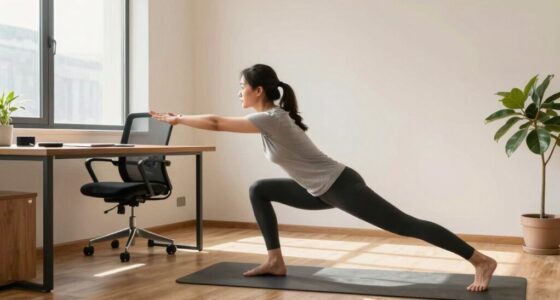
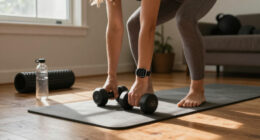
The routine includes a weighted squat, a standing lunge with light dumbbells, a weighted Pilates bridge and a side-lying leg lift with an ankle weight. Repa’s instructions emphasize maintaining control through each repetition, rather than moving quickly or choosing a load that makes good form difficult. She recommends selecting resistance that would still allow two or three more controlled repetitions at the end of a set.
For the beginner plan, Fit&Well advises completing one round of all four exercises, then trying two rounds as confidence with the movements grows. The source recommends 45 to 60 seconds of rest between exercises. Its repetition ranges are eight to 12 for squats, six to eight per side for lunges, 10 to 12 for bridges, and eight to 10 per side for leg lifts.
The instructions pair breathing with movement: inhale while lowering into the squat or lunge and exhale while standing; for the bridge, exhale to lift the hips and inhale to lower. In the side-lying lift, the top leg rises only a short distance, with the toes facing forward and the hips kept vertical. For the bridge, the dumbbell rests across the front of the hips, with a folded towel underneath for cushioning and both hands holding it securely.
Adding Resistance Without Losing Control
The workout offers a practical example of how a Pilates-inspired session can include external resistance without making speed or heavy loading its focus. That distinction may matter to readers who want to try weights while prioritizing posture, balance and deliberate movement. The plan also gives clear starting instructions—one round, specified repetition ranges and a rest interval—rather than leaving beginners to assemble a sequence themselves.
Repa says combining the approaches can develop strength alongside movement control. Fit&Well’s report also describes weight training as a way to support muscle mass and bone health, while associating Pilates with posture, mobility and alignment. These are general descriptions, not findings from a test of this four-exercise routine. The report supplies no trial data or measured outcomes for participants following the workout, so readers should not treat its benefits as guaranteed.
For readers, the main takeaway is the method: choose a manageable load, keep the movements controlled and build up gradually. People with injuries, pain, balance concerns or a health condition may need individual guidance before starting or changing an exercise routine. An exercise should be stopped if it causes pain or cannot be performed with control.
Products Worth Considering

Dyson Car+Boat Cordless Handheld Vacuum

TCL 65 Inch QM8L Series SQD-Mini LED QLED 4K Smart Google TV

eufy Security Floodlight Camera E340 with AC Cable, Dual-Lens
As an affiliate, we earn on qualifying purchases.
Pilates Principles Meet Dumbbells
The Fit&Well report says the original form of Pilates revolves around 34 mat movements, while contemporary versions may incorporate weights and a wider range of exercises. The routine follows that broader approach: the squat and lunge are common resistance exercises, but the report frames their execution around Pilates-related cues such as breathing, alignment and control.
Repa, identified by Fit&Well as a Pilates instructor and founder of the BetterMe workout app, presents adding weights as a possible next step for people who already enjoy Pilates and feel ready for more challenge. Her guidance is specific to this routine; the source does not compare it with traditional Pilates or a standard strength-training program.
“If you enjoy Pilates and feel ready for a little more of a challenge, adding weights can be an approachable next step.”
— Victoria Repa, Pilates instructor and BetterMe founder, as quoted by Fit&Well
Evidence and Individual Suitability
The source describes the exercises and Repa’s rationale, but does not report a study, participant results or measurements of changes in strength, posture, mobility or bone health. It is therefore unclear what outcomes people can expect from this particular four-move sequence, or how it compares with other exercise plans. The report also does not specify a schedule for repeating the workout, beyond suggesting one round initially and two once the participant feels more confident.
Individual suitability depends on factors the article does not assess, including a person’s experience, available weights, mobility and any existing injuries or health conditions. The routine is described as beginner-oriented, but that does not establish that every movement is appropriate for every reader. The report gives no individualized modifications or clinical advice.
Start With One Controlled Round
Fit&Well’s immediate guidance is to begin with one round, use resistance that leaves room for two or three additional controlled repetitions, and rest for 45 to 60 seconds between exercises. The report suggests progressing to two rounds when the movements feel more familiar. It does not set a calendar, weekly frequency or target date for that progression.
Readers who try the sequence can follow the stated repetition ranges and prioritize steady technique over heavier weights. Anyone uncertain about safe setup—particularly for the weighted bridge or ankle-weight lift—can seek instruction from a qualified fitness professional. Fit&Well’s source does not announce a follow-up study or further testing of the routine.
Key Questions
What exercises are in the routine?
It includes weighted squats, standing lunges with light dumbbells, a weighted Pilates bridge and side-lying leg lifts with an ankle weight.
How many rounds should a beginner do?
Fit&Well recommends starting with one round. It suggests trying two rounds once the movements feel more familiar and controlled.
How much rest does the workout prescribe?
The report recommends 45 to 60 seconds between exercises. It gives no separate weekly schedule for repeating the workout.
How heavy should the weights be?
Repa advises choosing resistance that would still allow two or three more controlled repetitions after the set. The report does not prescribe a specific weight.
Does the report prove this workout improves posture or strength?
No. It presents Repa’s exercise guidance and describes potential benefits of Pilates and weight training generally, but provides no study or measured results for this specific routine.
Source: fitandwell.com