TL;DR

Get comfort and recovery gear delivered free with Prime
- Fast, free delivery on millions of items
- Prime Video, Amazon Music and more included
- Member-only deals all year
Running coach Ania Gabb recommends raised squats, performed with the heels elevated, as a regular strength exercise for her running clients. She says the movement works several leg muscle groups and can help runners prepare for running demands, but the report does not establish that it prevents injuries.
Running coach Ania Gabb recommends heel-elevated squats as a regular strength exercise for her running clients, saying the variation works the calves, quadriceps, glutes and hamstrings while allowing a greater range of movement. The advice is relevant to runners building strength, but it is a coach’s training recommendation—not evidence that the exercise by itself prevents injury.
In the Fit&Well report, Gabb says the calves contribute through every phase of running, helping absorb impact and generate forward propulsion. She points to the soleus and gastrocnemius as key calf muscles that runners may overlook when they focus on other parts of the legs. Gabb also says she is seeing runners work their calves harder as carbon-plated shoes encourage a forefoot-focused running position.
Her recommended variation is a squat performed with the heels raised on thin wedges or weight plates. Gabb says this can make it easier for people with tight calves or ankles to squat while keeping their balance, and describes the exercise as a way to train several leg muscle groups through a larger range of motion. Those are her coaching explanations; the article does not provide clinical evidence or injury-rate data showing the movement prevents injuries.
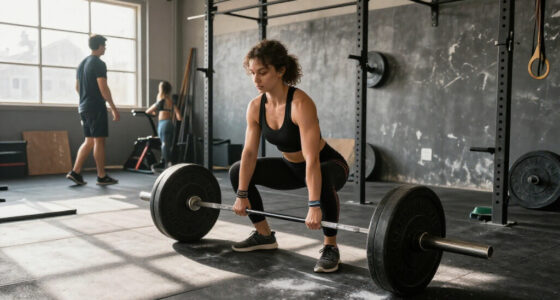
Gabb advises learning the movement first with bodyweight. For weighted sets, she suggests three sets of eight to 10 repetitions with a barbell, or three sets of 10 to 12 with lighter dumbbells. She also recommends pairing the squats with single-leg and regular deadlifts and calf raises a couple of times a week. The report advises doing the exercise barefoot or in flat-soled weightlifting shoes rather than running shoes, which may tip the wearer forward.
A Strength Option for Running Legs
The recommendation matters because strength work can complement running, which repeatedly loads the legs, ankles and feet. A heel-elevated squat offers runners a practical way to train multiple lower-body muscle groups in one movement, according to Gabb. For people who struggle to keep their heels down in a conventional squat, the raised position may also make the motion more accessible.
However, the headline claim about avoiding injury should be read cautiously. The source describes a coach’s practice and rationale, not a tested injury-prevention program. No exercise can be presented here as a guarantee against running injuries, and an individual’s training needs depend on factors such as experience, current symptoms and total workload. Readers with pain or a health condition should seek qualified professional advice before changing their training.
Products Worth Considering

LEVOIT Air Purifier for Home, Pets, Bedroom, Smart WiFi

Levoit Vital 100S-P Air Purifier for Home and Pets

Ring Floodlight Cam Wired Plus, 1080p HD Outdoor Security Camera with Motion-Activated Floodlights, Black
As an affiliate, we earn on qualifying purchases.
Why Gabb Focuses on Calves
Gabb is an experienced personal trainer and running coach. The source says she completed a Level 3 personal training qualification in 2003 and later completed UK Athletics’ Leadership in Running Fitness and Coach in Running Fitness courses. She is also identified as a community manager for the ASICS FrontRunner UK and Ireland team.
The report frames calf strength as relevant to running mechanics, noting that the calves help control and produce movement during a stride. It also links Gabb’s observations about increased calf demands to the use of carbon-plated running shoes. That point is presented as her coaching observation, not as a finding supported by comparative measurements in the article. The exercise itself is a familiar squat variation; the specific advice is to elevate the heels and build up gradually.
“When you run, your calves are one of the main muscle groups used through every phase of the running action.”
— Ania Gabb, running coach, speaking to Fit&Well
Limits of the Injury Claim
The source does not cite a study testing whether heel-elevated squats reduce running injuries, nor does it compare injury outcomes among runners who do and do not perform them. It also does not specify how many clients follow Gabb’s routine, how long they have used it or what results they reported. The claim that the exercise helps runners avoid injury is therefore not confirmed by the material provided.
There is also no single prescribed load or progression suitable for every runner. Gabb gives example repetitions and sets, but the report does not assess a reader’s strength, mobility or injury history. The effects of different shoe designs on an individual runner’s calf workload are not quantified in the article.
How Runners Can Start Safely
Runners interested in trying the movement can follow the report’s basic progression: begin with bodyweight, use a stable, low heel support and focus on controlled technique before adding a dumbbell or barbell. Gabb’s suggested weighted starting point is three sets of eight to 10 barbell repetitions or 10 to 12 repetitions with lighter dumbbells. These are general coaching suggestions, not a tailored program.
The source does not announce a study, clinical assessment or follow-up data. Readers should treat the advice as one possible addition to strength training, not a substitute for managing training load or responding to pain. Anyone with an existing injury, persistent symptoms or relevant medical concerns should consult a qualified health or fitness professional before starting or changing exercises.
Key Questions
What exercise does Ania Gabb recommend for runners?
Gabb recommends a heel-elevated squat, also called a raised squat, performed with the heels resting on thin wedges or weight plates.
Does the report prove that raised squats prevent running injuries?
No. It reports Gabb’s coaching recommendation and reasoning, but provides no injury data or study demonstrating that the exercise prevents injuries.
How should beginners try the exercise?
The report advises starting with bodyweight only to learn the movement before adding a dumbbell or barbell. Gabb offers example sets and repetitions for weighted versions, but those figures are not individualized guidance.
What equipment and footwear does the report suggest?
It describes using two thin weight plates or a wedge to raise the heels, and suggests exercising barefoot or in flat-soled weightlifting shoes rather than running shoes. Any support used should be stable.
What other exercises does Gabb suggest?
She recommends pairing raised squats with single-leg and regular deadlifts and calf raises a couple of times a week. The report does not specify an individualized weekly plan.
Source: fitandwell.com