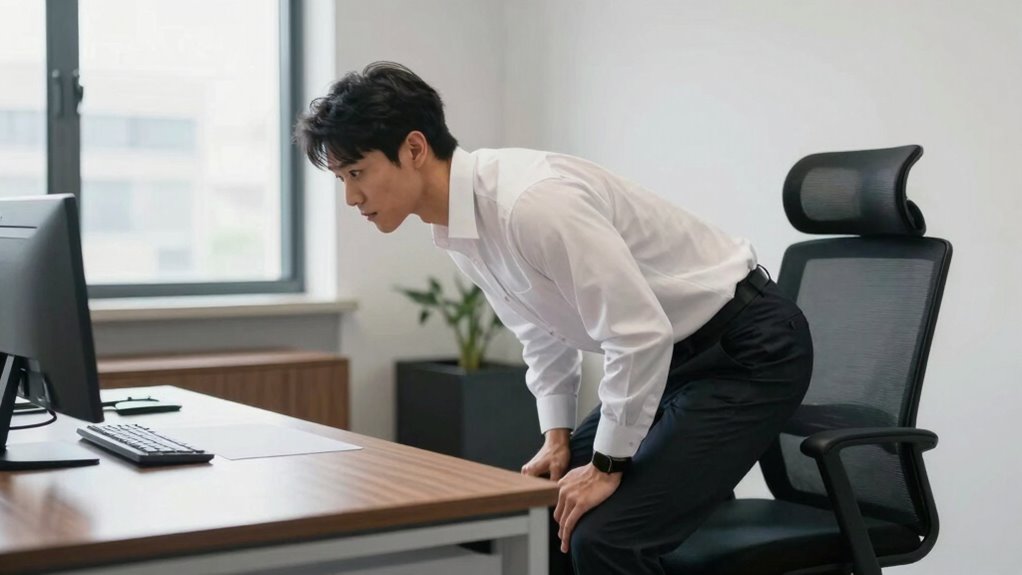

To master the desk worker’s hip hinge in just two minutes, focus on standing with feet hip-width apart and slightly bent knees. Engage your core and lead with your hips, hinge forward while keeping your spine neutral and chest lifted. Avoid rounding your back or tucking your pelvis incorrectly. Practicing this movement regularly will boost your hip mobility and prevent pain. Continue exploring for detailed tips and common mistakes to perfect your technique.

Get comfort and recovery gear delivered free with Prime
- Fast, free delivery on millions of items
- Prime Video, Amazon Music and more included
- Member-only deals all year
Key Takeaways
- Stand with feet hip-width, knees slightly bent, and engage your core for stability.
- Hinge at the hips by pushing them back, keeping your chest lifted and spine neutral.
- Avoid rounding or arching your back; focus on moving hips rather than lower back.
- Use a mirror or visual cues to ensure proper alignment and maintain safe posture.
- Practice regularly to build muscle memory, improve mobility, and prevent injury during desk work.
ergonomic office chair with lumbar support
As an affiliate, we earn on qualifying purchases.
As an affiliate, we earn on qualifying purchases.
How to Perform the Hip Hinge in Just 2 Minutes
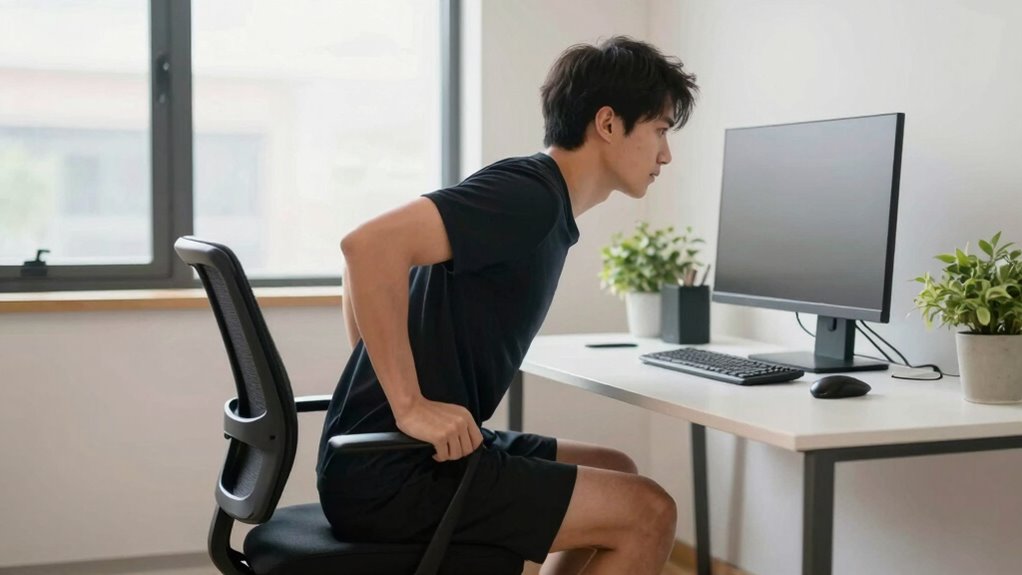
If you want to master the hip hinge quickly, dedicating just two minutes can make a big difference. Start by standing with your feet hip-width apart and your knees slightly bent. As you hinge forward, focus on engaging your core to support your spine and maintain stability. Keep your hips back and your chest lifted, emphasizing hip mobility by moving from your hips rather than your lower back. Imagine pushing your hips toward the wall behind you and feeling a stretch in your hamstrings. Use your core to control the movement, avoiding any rounding or arching of your back. Practicing this simple motion regularly helps develop muscle memory, improves hip mobility, and ensures your core stays engaged throughout the movement. Incorporating visual demonstrations into your routine can enhance your understanding and execution of the move. Recognizing the importance of proper technique can further prevent injury and maximize effectiveness. Additionally, paying attention to body alignment ensures you perform the movement safely and efficiently.
As an affiliate, we earn on qualifying purchases.
Common Hip Hinge Mistakes and How to Correct Them
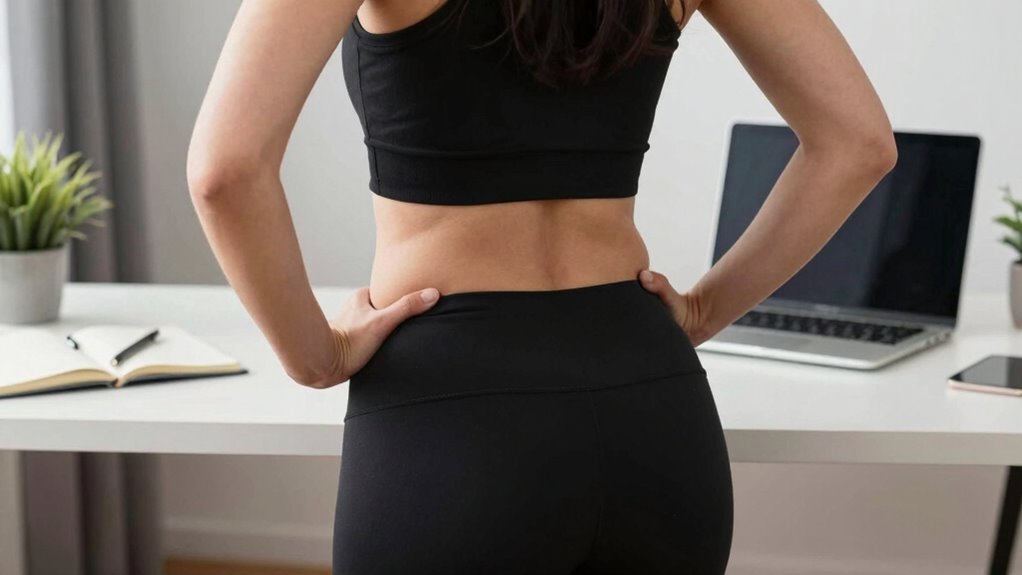
One common mistake during the hip hinge is rounding or arching the back instead of maintaining a neutral spine. This can compromise your lumbar safety and reduce hip mobility. When you tuck your pelvis incorrectly, you risk straining your lower back and limiting proper movement. To correct this, focus on engaging your core and keeping your chest lifted as you hinge forward. Think of your spine as a straight line from your head to your tailbone. Practice hip hinge drills in front of a mirror to develop awareness of your lumbar position. Improving your hip mobility will help you hinge correctly and protect your lumbar region. Consistently maintaining a neutral spine ensures safer, more effective movement and reduces injury risk. Understanding lumbar safety is essential for proper movement and injury prevention. Incorporating sound healing techniques can also enhance your focus and body awareness during training sessions.
As an affiliate, we earn on qualifying purchases.
Frequently Asked Questions
Can I Perform the Hip Hinge With Knee Pain?
Yes, you can perform the hip hinge with knee pain, but you should be cautious. The hip hinge offers benefits like improved posture and lower back strength, but common mistakes include overextending or using poor form. If your knee pain worsens or feels uncomfortable, stop immediately and consult a healthcare professional. Adjusting your stance or limiting range of motion can help protect your knees while still gaining the benefits of the exercise.
How Often Should I Practice the Hip Hinge?
You should practice the hip hinge 2 to 3 times a week for ideal results. Consistent practice helps reinforce proper form and builds strength over time. Focus on maintaining good technique during each session, even if you’re just starting out. By sticking to a regular schedule and practicing with intention, you’ll improve your hip hinge technique, reduce injury risk, and support better movement habits in your daily routine.
Is the Hip Hinge Safe for Pregnant Women?
Pregnancy safety is key, so you should consult your healthcare provider before practicing the hip hinge. Generally, if you have good hip flexibility and get approval, it can be safe, but avoid deep bends or strenuous movements. Focus on gentle, controlled motions to protect your belly and joints. Always listen to your body and stop if you feel discomfort. Prioritizing safety guarantees you maintain mobility without risking your pregnancy.
What Equipment Do I Need for the Hip Hinge?
You only need a few essentials to master the hip hinge! Grab a sturdy, flat surface like a chair or a bench for support, and consider adding a light resistance band for variation. Avoid common mistakes like rounding your back or overextending your hips. Keep it simple, stay focused, and practice with proper posture. This equipment helps refine your technique and guarantees safe, effective exercise variations every time.
How Do I Modify the Hip Hinge for Limited Mobility?
If you have limited mobility, you can modify the hip hinge by reducing the range of motion and using support like a chair or wall. Focus on mobility exercises to improve flexibility gradually. Keep your movements slow and controlled, and don’t force your body into positions that cause pain. Incorporate gentle stretching and mobility drills into your routine to enhance your ability to perform the hip hinge safely over time.
As an affiliate, we earn on qualifying purchases.
Conclusion
Mastering the hip hinge isn’t just about better posture—it’s about unleashing your body’s full potential. Some believe that proper movement can prevent injuries and boost productivity, and studies support this. When you get it right, you not only protect your hips and back but also improve your overall functional strength. So, give it a try today. Because sometimes, a simple move like the hip hinge can transform your daily routine and keep you active for years to come.
Halloween Picks
halloween
As an affiliate, we earn on qualifying purchases.