TL;DR

Get comfort and recovery gear delivered free with Prime
- Fast, free delivery on millions of items
- Prime Video, Amazon Music and more included
- Member-only deals all year
Fit&Well reports that personal trainer Chris Browning recommends shoulder presses, squats, planks, dumbbell rows and glute bridges for beginners exercising at home. The routine uses two to three sets per exercise, with repetitions or hold times adjusted to each movement; the report advises starting with fairly light dumbbells and increasing weight when the exercises become easy.
Fit&Well has outlined five exercises for beginner home strength training, citing personal trainer Chris Browning: a seated dumbbell shoulder press, bodyweight squat, plank, dumbbell row and glute bridge. Browning says the movements are relatively simple to learn and, together, work major muscle groups; the report recommends two to three sets of each, using light dumbbells for weighted moves.
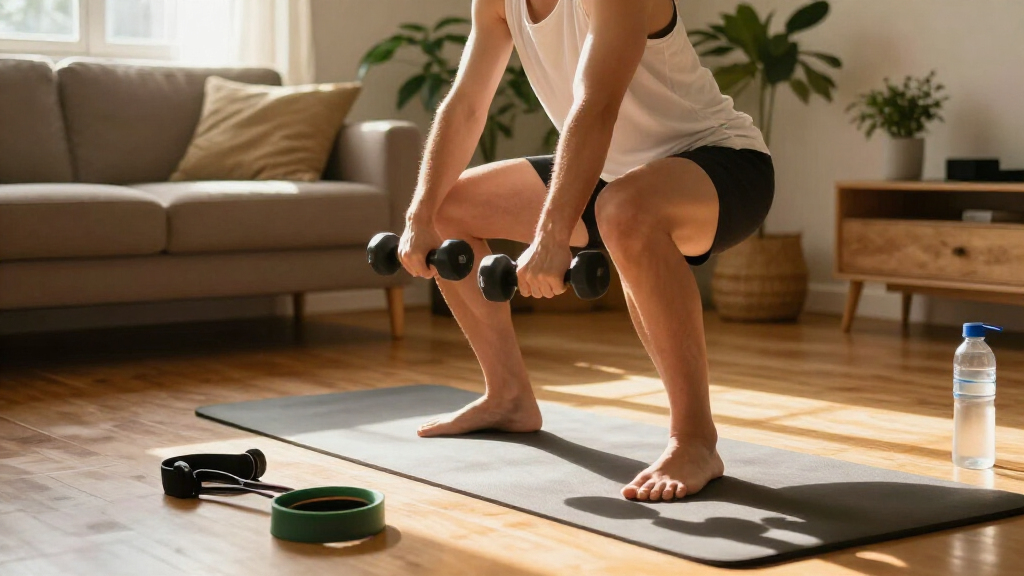
The suggested routine combines upper-body, lower-body and core work. For the shoulder press, sit on the floor with a dumbbell in each hand, raise the weights to shoulder height, then press them upward while keeping the torso upright. The report suggests 10 to 15 repetitions. For bodyweight squats, stand with feet about shoulder-width apart, bend at the hips and knees as far as comfortable, and return to standing; it also suggests 10 to 15 repetitions.
The plank is prescribed for 30 to 60 seconds. From hands and knees, step the feet back and rest on the forearms, keeping the elbows under the shoulders and the body in a straight line. Browning advises beginners to stop when the position becomes challenging or uncomfortable, or when they can no longer maintain good form. For the dumbbell row, start on hands and knees, pull a weight toward the hip with one arm while keeping the back flat, then lower it. Do 10 to 15 repetitions per side.
For the glute bridge, lie on your back with knees bent and feet flat, then lift the hips until the body forms a line from chest to knees, squeezing the glutes before lowering. The report suggests 10 to 15 repetitions. It recommends two to three sets for each exercise and says to begin with fairly light dumbbells. After practicing for a few weeks, increase the weight if the movements start to feel easy.
A Simple Full-Body Starting Routine
The list offers new exercisers a structured way to start at home without relying on machines or a gym membership. It pairs bodyweight movements with light dumbbells and covers several areas of the body, which may help beginners organize a basic session rather than choosing exercises at random. The proposed progression is gradual: practice the movements first, then consider heavier weights when the current load feels easy.
The report is guidance, not a study comparing these moves with other routines. Its value for readers is practical: it gives starting repetitions and hold times, along with form instructions and a stopping point for the plank. Those details can help readers understand what the routine involves, while individual ability and comfort will still vary.
Products Worth Considering

Blueair Blue Pure 511i Max Smart Air Purifier

Philips Hue Festavia 130-Foot Indoor/Outdoor Smart String Lights, 500 LEDs

LEVOIT Vital 200S-P Smart Air Purifier for Large Rooms
As an affiliate, we earn on qualifying purchases.
How the Five Moves Were Chosen
Fit&Well attributes the selection to Chris Browning, a personal trainer whom the report says has more than 20 years of experience creating home workouts for clients. Browning says he chose the exercises because they are relatively simple to teach and learn, allow progression and collectively target major muscles. That is his professional rationale as presented by the publication, not a claim that this is the only suitable beginner routine.
The supplied report describes movements that can be done at home with a pair of fairly light dumbbells for the presses and rows; the squat, plank and bridge use body weight. It does not provide a complete weekly schedule, rest intervals between sets or a formal assessment of who should use the routine. Readers may need to adjust the range of motion or exercise choice to their own circumstances.
Limits of the Published Guidance
The supplied report does not state its publication date, nor does it describe clinical testing or compare this routine with other exercise plans. It does not specify how many days per week to train, how long to rest between sets, or how to adapt every move for different levels of mobility or strength. The suggested repetitions and progression are general starting points, not individualized programming.
It is also not clear from the source whether a reader has injuries, health conditions or previous exercise experience. The report provides movement instructions but no individualized screening. Anyone uncertain about safe exercise, especially someone with a pre-existing condition or pain, can seek guidance from a qualified health professional or trainer. Stop if an exercise causes pain rather than ordinary exertion.
Progress by Rechecking Form
The next step in the report’s guidance is to practice the five movements with light weights and controlled form. If the exercises feel easy after a few weeks of practice, the report says to try increasing the dumbbell weight. It does not give a specific increase, training calendar or target date, so readers should avoid treating the suggested timeline as a guaranteed progression schedule.
For each session, beginners can use the listed sets and repetitions as a reference and adjust to what they can perform with good technique. For planks, Browning’s advice is to end the hold when form falters or the position becomes uncomfortable. The source offers no further schedule or follow-up assessment; how to build the routine over time depends on the exerciser’s response and goals.
Key Questions
What are the five exercises in the beginner routine?
Fit&Well lists a seated dumbbell shoulder press, bodyweight squat, plank, dumbbell row and glute bridge. The movements combine upper-body, lower-body and core exercises.
What equipment does the routine require?
The report calls for a pair of fairly light dumbbells for shoulder presses and rows. Squats, planks and glute bridges use body weight, and the described exercises are performed on the floor.
How many sets and repetitions are suggested?
The report suggests two to three sets per exercise. It gives 10 to 15 repetitions for the presses, squats, rows and bridges, and a 30-to-60-second plank, with Browning advising beginners to stop sooner if form fails or the position becomes uncomfortable.
When should a beginner increase the dumbbell weight?
The report says to practice for a few weeks and consider increasing the weight when the exercises start to feel easy. It does not specify a particular weight increase or training schedule.
Source: fitandwell.com