
TL;DR
Woxi is a new open-source project that reimplements the Wolfram Language in Rust. It provides a GUI, CLI, and integration options, aiming to offer an alternative to proprietary Wolfram products. The project is in early stages, with ongoing development and community interest.
Woxi, an open-source reimplementation of the Wolfram Language, has been launched, offering a new alternative for users interested in computational mathematics and symbolic programming. Developed in Rust, it includes a GUI similar to Mathematica and supports multiple interfaces, including CLI and Jupyter kernels. The project aims to provide an accessible, community-driven version of Wolfram Language functionalities.

Get comfort and recovery gear delivered free with Prime
- Fast, free delivery on millions of items
- Prime Video, Amazon Music and more included
- Member-only deals all year
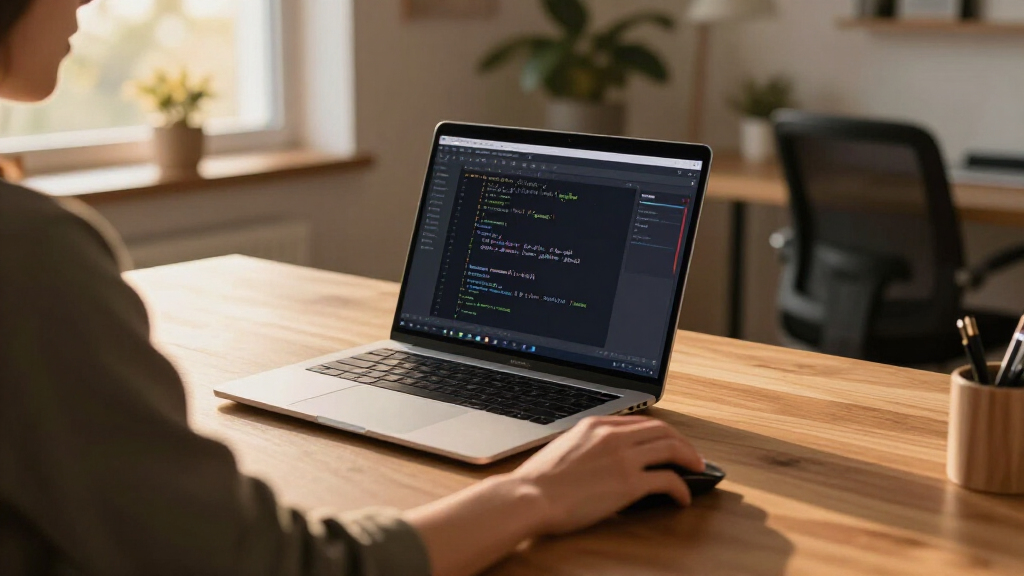
The project, called Woxi, is a work-in-progress interpreter for the Wolfram Language, created entirely in Rust. It features Woxi Studio, a graphical user interface built with the iced framework, designed to mimic the look and feel of Mathematica. In addition to the GUI, Woxi can be used via a command-line interface, integrated into Jupyter notebooks, and accessed through Python bindings, broadening its usability.
According to the developer, Woxi is intended as a community-driven project that aims to replicate core Wolfram Language features, including symbolic computation, data manipulation, and mathematical functions. The project is hosted on a public repository, with ongoing development and contributions encouraged. It is not yet a full replacement for Wolfram’s proprietary software but aims to serve as an open alternative for educational, research, and hobbyist purposes.
Potential Impact on Computational Software Ecosystem
The emergence of Woxi could influence the landscape of computational mathematics and symbolic programming by providing an open-source alternative to Wolfram Language, which is traditionally proprietary. If fully developed, it may lower barriers to access for students, researchers, and developers, fostering innovation and collaboration. Additionally, its Rust-based implementation emphasizes performance and safety, appealing to a broader developer community interested in open scientific tools.
Products Worth Considering

eufy C28 Robot Vacuum and Mop Combo with HydroJet Roller, 15,000 Pa Suction, and Self-Emptying Station

Dyson Airwrap i.d. Multi-Styler

Levoit Core 600S-P Smart Air Purifier for Large Rooms up to 2933 ft²
As an affiliate, we earn on qualifying purchases.
Background on Wolfram Language and Open-Source Initiatives
The Wolfram Language is a powerful, proprietary programming language used in Mathematica and Wolfram Alpha, known for symbolic computation, data analysis, and visualization. Historically, it has been closed-source, limiting community-driven modifications. In recent years, there has been growing interest in open-source alternatives, driven by the desire for transparency, customization, and cost reduction. Several projects have attempted to replicate parts of Wolfram’s functionalities, but none have gained widespread adoption.
The Woxi project, announced in March 2024, marks a notable step in this direction, aiming to build a comprehensive open-source implementation in Rust, a language valued for safety and performance. The project is still in early development, with core features being implemented and tested by contributors.
“Our goal is to create a community-driven, open-source alternative to Wolfram Language that is accessible and extensible.”
— Woxi developer
Development Stage and Feature Completeness
It is not yet clear how fully Woxi will replicate Wolfram Language’s core features or how quickly it will mature into a stable, production-ready tool. The project remains in early development, with many functionalities still under implementation and testing. Community contributions are ongoing, but the scope and timeline for completion are uncertain.
Upcoming Milestones and Community Involvement
Future steps include expanding core functionalities, improving the GUI, and increasing compatibility with existing notebooks and scripts. The project team plans to host more development updates, invite community contributions, and potentially establish collaborations with educational and research institutions. Monitoring GitHub activity and community feedback will be key indicators of progress.
Key Questions
Is Woxi a full replacement for Wolfram Language?
Currently, Woxi is an early-stage project aiming to replicate core features. It is not yet a complete replacement but offers a foundation for future development and community contributions.
Can I use Woxi now for serious projects?
As a developing project, Woxi is best suited for experimentation and learning rather than production use. Users should be aware of its ongoing development status.
How can I contribute to Woxi?
The project is hosted on GitHub, where contributors can submit code, report issues, and suggest features. Community involvement is actively encouraged.
What are the technical requirements to run Woxi?
Woxi is built in Rust and supports multiple interfaces, including CLI, GUI, and Jupyter notebooks. Specific setup instructions are available on its repository.
Source: hn