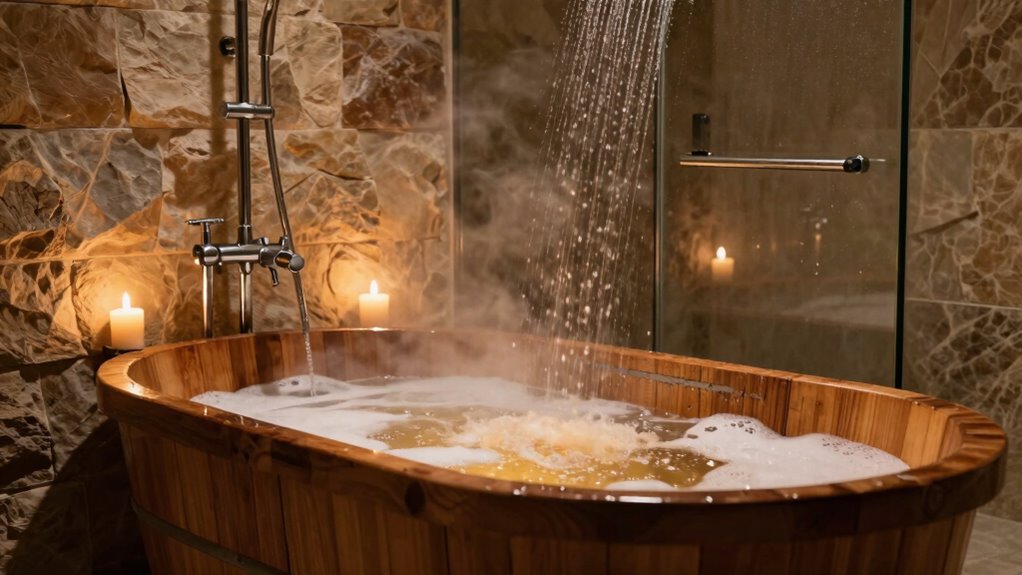
A hot bath helps you wind down faster because it offers a longer, immersive experience that promotes deep muscle relaxation and reduces tension through warmth and aromatherapy. Showers can boost alertness and refresh you quickly, but they don’t provide the same prolonged calming effect. If you want better relaxation and stress relief, a warm, scented bath is more effective. Keep exploring ways to maximize your relaxation routine for a smoother shift into calm.
Key Takeaways
- Hot baths promote deeper relaxation through prolonged warmth and aromatherapy, helping you wind down faster.
- Showers offer quick mood boosts and mental clarity, but may be less effective for lasting relaxation.
- Longer, warmer baths (20-30 min) better signal your body for sleep and stress relief than shorter showers.
- Baths with calming scents and temperature control enhance relaxation more than brief showers.
- Showers are practical for a quick refresh, but baths provide a more immersive, calming experience for winding down.
What Are the Benefits of Hot Baths for Relaxation?
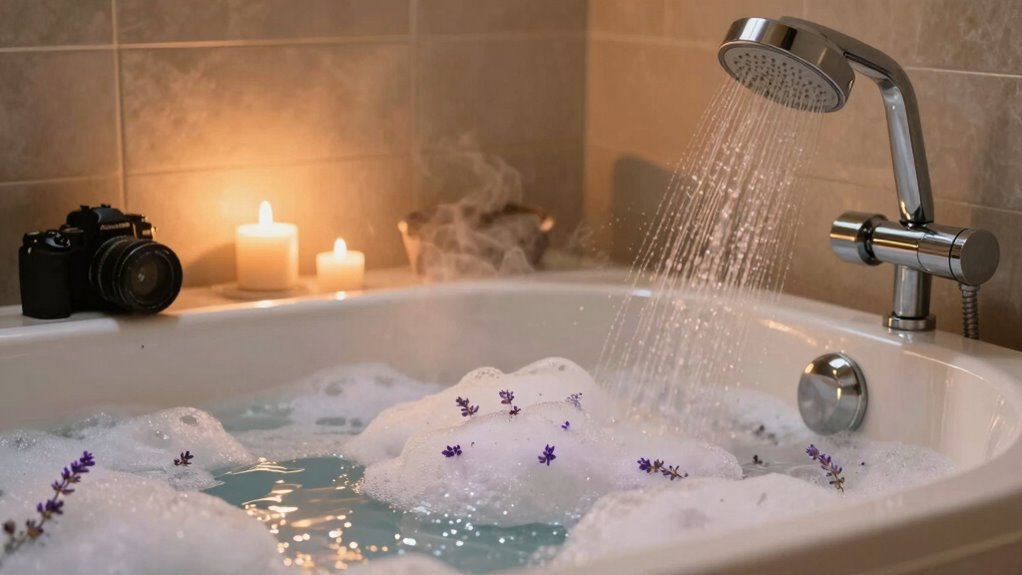
A hot bath can be one of the most effective ways to unwind after a stressful day. The warmth promotes aromatherapy benefits, especially if you add calming essential oils like lavender or chamomile, which enhance relaxation and reduce anxiety. Temperature regulation plays a key role here; soaking in hot water helps your muscles relax and eases tension. It also encourages better blood circulation, which can improve your overall sense of calm. A warm bath lowers cortisol levels, helping you feel more centered and less overwhelmed. Plus, the soothing heat creates a sensory experience that calms your mind. You’ll find that immersing yourself in a hot bath allows you to disconnect, recharge, and prepare mentally for the challenges ahead. Incorporating essential oils with known skin benefits can further enhance your relaxation experience. Additionally, the stress-reducing effects of a hot bath can support caregivers’ emotional well-being by providing a moment of peaceful solitude amidst their busy routines.
How Showers Help You Feel Refreshed and Calm
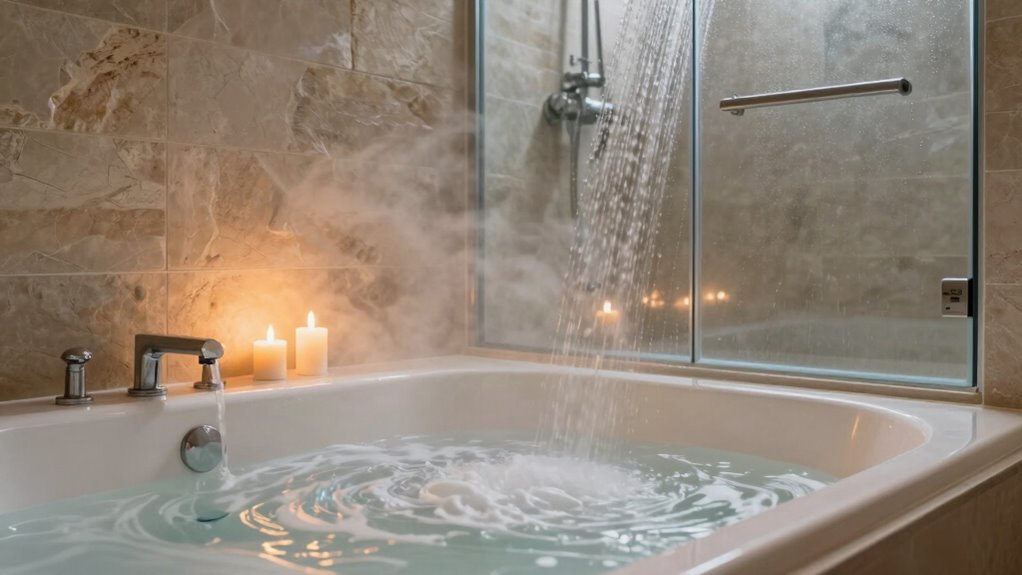
Have you ever noticed how a quick shower can instantly lift your mood and clear your mind? A revitalizing shower awakens your senses and leaves you feeling energized. The sensation of water hitting your skin boosts circulation, helping you feel more alert. Using scented shower gels with subtle aroma therapy can enhance this calming effect, making you feel more relaxed and focused. Plus, a shower helps improve skin hydration by rinsing away sweat and impurities, leaving your skin soft and rejuvenated. The cool or warm water stimulates your nervous system, reducing stress and promoting a sense of calm. Incorporating proper DIY safety tips while taking a shower can prevent accidents and ensure a relaxing experience. This simple act provides immediate mental clarity and physical renewal, helping you start your day or reset after a busy period. Additionally, choosing the right home projector setup can enhance your relaxation environment, making your unwinding routine even more enjoyable. It’s a quick, effective way to feel both revitalized and centered.
Which Method Better Prepares You for Sleep?
Deciding whether a hot bath or a shower better prepares you for sleep depends on how each method influences your body’s relaxation response. Your temperature preferences and duration differences play key roles. A warm bath, typically lasting longer, helps raise your core temperature gradually, then cools, signaling your body to wind down. Showers, often quicker and less warm, can still relax muscles but may not induce the same calming effect.
| Method | Temperature Preferences | Duration | Effectiveness | Relaxation Level |
|---|---|---|---|---|
| Bath | Warmer, longer | 20-30 min | Deep relaxation | High |
| Shower | Cooler, shorter | 5-10 min | Invigorating | Moderate |
| Bath | Adjustable | Varies | Calmness | Higher |
| Shower | Less warm, quick | Shorter | Wake-up | Lower |
| Bath | Soothing scents | Longer | Sleep-ready | Highest |
Bath or Shower: Which Helps Relieve Muscle Tension More?
While relaxation techniques like baths and showers are often chosen to improve sleep, they also play an essential role in relieving muscle tension. A warm bath can be especially effective if you add Epsom salts, which contain magnesium that helps relax muscles and reduce soreness. The prolonged soaking allows your muscles to loosen up, easing tightness and discomfort. Incorporating aromatherapy into your bath or shower enhances relaxation by releasing calming scents like lavender or eucalyptus, which help reduce muscle stress. Additionally, maintaining proper temperature control during your bath or shower optimizes muscle relaxation. Using temperature regulation devices can ensure consistent warmth, further aiding muscle relief. Proper water chemistry is also important to prevent skin irritation and enhance overall comfort during your relaxation routine. Incorporating relaxation techniques such as gentle stretching can amplify the benefits of your bath or shower, helping to release residual tension. For example, practicing mindful breathing during your soak can deepen your sense of relaxation. Ultimately, a bath with Epsom salts and aromatherapy offers a deeper, more soothing muscle relief, but a shower can be a faster, effective option when you’re short on time.
Choosing Between a Bath and Shower to Relax and Unwind
When choosing between a bath and a shower to relax and unwind, consider your time, preferences, and relaxation needs. A bath offers aromatherapy benefits, especially when you add calming essential oils like lavender or chamomile, enhancing relaxation. The water temperature effects also matter—warm water soothes muscles and promotes stress relief, but overly hot water can cause discomfort or dehydration. If you prefer a quick escape, a shower might be more practical, especially with adjustable water temperature for instant comfort. Both options can help you unwind, but your choice depends on whether you seek a longer, immersive experience or a faster, revitalizing rinse. Tailor your routine to what helps you relax best, balancing aromatherapy benefits and water temperature effects for ideal stress relief. Incorporating air fryer accessories into your relaxation routine can add a fun and rewarding element to your self-care. Additionally, understanding the benefits of warm water can help you optimize your bathing experience for maximum relaxation, including the effects of water temperature on muscle relaxation and stress relief. Using relaxation techniques such as deep breathing or meditation during your bath or shower can further enhance your stress reduction efforts.
Frequently Asked Questions
Does Water Temperature Affect Relaxation Benefits?
Yes, water temperature affects relaxation benefits. When you use warm or hot water, your muscles relax more, reducing tension and promoting better sleep. Hot water increases blood flow and stimulates the release of feel-good hormones, helping you wind down faster. Conversely, cooler water may invigorate you but isn’t as effective for relaxation. So, for maximum relaxation benefits, opt for warmer water during baths or showers.
How Long Should I Stay in a Bath or Shower to Relax?
You should stay in a bath or shower for about 15-20 minutes to fully unwind. During this time, add calming aromatherapy scents or bath salts to enhance relaxation. This duration is enough to relax your muscles and clear your mind, making you feel like a zen master. Just don’t rush—allow yourself this precious time to recharge and melt away stress completely.
Can Shower Pressure Influence Stress Relief?
Yes, water pressure can influence your stress relief. Higher water pressure provides a more invigorating massage effect, helping to relax tense muscles and improve circulation, which enhances your overall sense of calm. On the other hand, gentle pressure creates a soothing experience, perfect for unwinding. Adjusting your shower‘s water pressure to match your mood can make a significant difference in how effectively it helps you de-stress.
Are There Any Safety Concerns With Hot Baths?
Hot baths can be relaxing, but safety precautions are essential to prevent accidents. You should avoid extremely hot water to prevent burns, and never leave the bath unattended to reduce drowning risks. Keep an eye on water temperature and limit bath time to avoid dehydration or dizziness. Bath safety also includes installing grab bars and ensuring the tub surface isn’t slippery. Prioritize safety to enjoy the calming benefits without hazards.
Do Individual Preferences Impact Relaxation Effectiveness?
Research shows that personal comfort markedly enhances relaxation, with 75% of people feeling more at ease when their preferences are honored. Your individual preferences, shaped by cultural backgrounds and personal comfort levels, directly impact how quickly you unwind. Whether you prefer a hot bath or a shower, choosing what feels best helps you relax faster. Listening to your body and respecting your unique needs makes your wind-down routine more effective and enjoyable.
Conclusion
Choosing between a bath and a shower depends on what helps you unwind best. If you crave deep relaxation, a warm bath can boost your relaxation hormones and improve sleep quality. notably, a study shows that 92% of people felt more relaxed after a hot bath compared to a quick shower. So, if winding down is your goal, don’t underestimate the calming power of a soothing bath. Pick what feels best and enjoy your well-deserved relaxation.