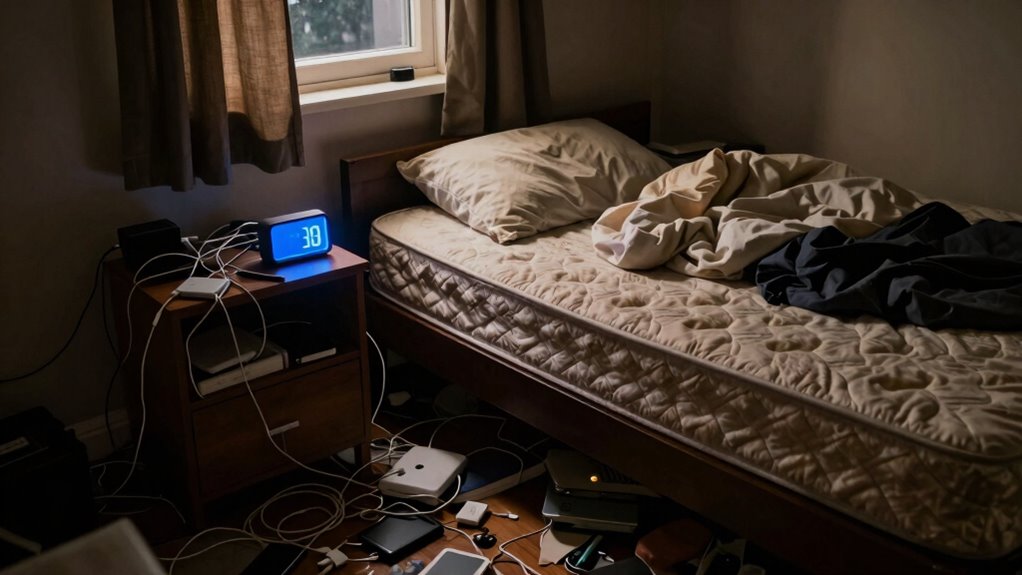

If your bedroom setup is hurting your sleep, you’ll notice things like bright lights or screens that mimic daytime, making it hard to fall asleep. You might feel uncomfortable because the temperature is too warm or cold, or notice poor air quality and stuffy air. Cluttered spaces, noisy environments, or bed placement that leaves you vulnerable can also disrupt rest. If these clues sound familiar, there’s more to uncover to improve your sleep environment.

Get comfort and recovery gear delivered free with Prime
- Fast, free delivery on millions of items
- Prime Video, Amazon Music and more included
- Member-only deals all year
Key Takeaways
- Excessive or harsh lighting, especially blue light from screens, delays melatonin production and hampers sleep onset.
- An uncomfortable room temperature outside 60-67°F (15.5-19.5°C) causes frequent awakenings or difficulty settling in.
- Poor ventilation and low air quality can lead to discomfort and disrupted sleep cycles.
- Cluttered or poorly positioned furniture increases environmental distractions and feelings of vulnerability.
- Inadequate bedding or improper bed placement can cause discomfort, leading to restless nights.
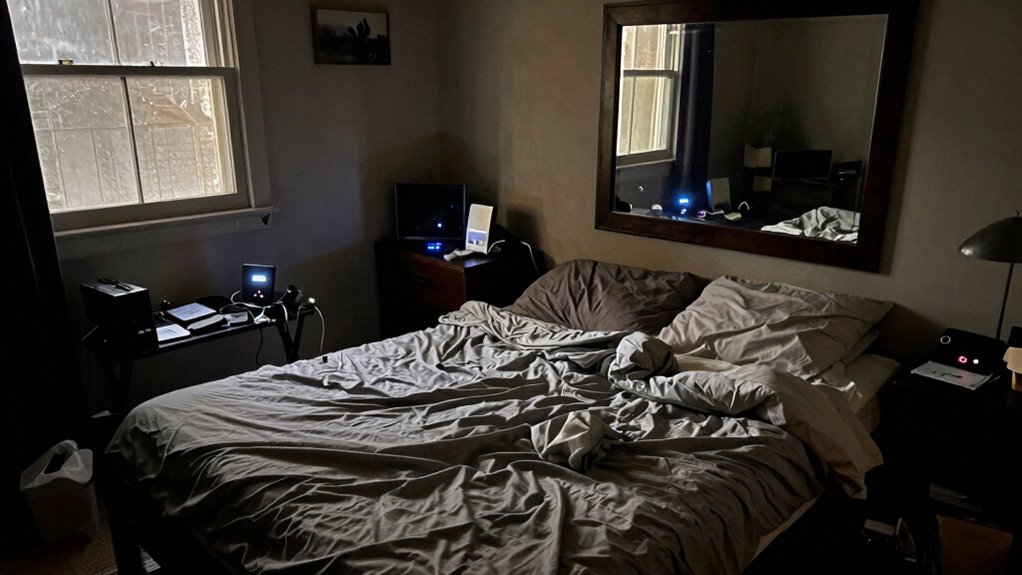
Your bedroom should be a sanctuary for restful sleep, but sometimes its setup can inadvertently sabotage your chances of a good night’s rest. One common way this happens is through poor lighting design. If your room is too bright when you’re trying to unwind, it can trick your brain into thinking it’s daytime, making it harder to fall asleep. Harsh overhead lights or screens from electronic devices can emit blue light, which suppresses melatonin production—the hormone that helps you feel sleepy. To improve your sleep environment, consider using dim, warm lighting in the evening, or install blackout curtains to block outside light. Avoid scrolling on your phone or watching TV right before bed, as these habits can keep your mind alert and delay sleep onset.
Temperature control is another critical factor that many overlook. If your room is too hot or too cold, it can disturb your sleep cycles. An overly warm room causes discomfort and frequent awakenings, while a cold environment can make it difficult to settle in. The ideal sleep temperature for most people falls between 60 and 67 degrees Fahrenheit (15.5 to 19.5 degrees Celsius). If you find yourself tossing and turning, check your thermostat or adjust your bedding accordingly. Lightweight, breathable sheets help maintain a comfortable temperature, and layering your blankets allows you to customize your comfort level throughout the night. If your bedroom lacks proper ventilation or your heating/cooling system isn’t efficient, it’s worth addressing those issues, as consistent temperature regulation promotes deeper, more restorative sleep. Ensuring proper ventilation can also help reduce indoor pollutants and enhance overall sleep quality. In addition, good air quality is essential for maintaining a healthy sleep environment, as indoor pollutants can negatively impact sleep.
Beyond lighting design and temperature control, other aspects of your bedroom setup might be undermining your sleep quality. Cluttered or distracting surroundings can make it hard to relax, so keep your space tidy and free of unnecessary noise. The placement of your bed also matters; avoid positioning it directly under a window or facing a door, as these spots can increase feelings of vulnerability or disturbance. Make sure your mattress and pillows support your body comfortably, reducing discomfort that could lead to waking up during the night. Additionally, proper ventilation plays a vital role in maintaining a healthy sleep environment, ensuring fresh air circulation and reducing indoor pollutants. Regularly checking indoor humidity levels can also help prevent issues like mold growth and dry air, which can affect sleep quality. By paying attention to these details—especially lighting and temperature—you create an environment that naturally cues your body to relax and prepare for sleep. When your bedroom is optimized for comfort, you’re more likely to fall asleep quickly and enjoy a restful, uninterrupted night.
Products Worth Considering

Philips Hue Large Smart Light Tube, Black – White and Color Ambiance LED Color-Changing Light – 1 Pack

Philips Hue Festavia Globe Outdoor String Lights, 32 Bulbs, 91 ft

Bose SoundLink Flex Bluetooth Speaker (2nd Gen), Portable Waterproof Speaker, Black
As an affiliate, we earn on qualifying purchases.
Frequently Asked Questions
Can Bedroom Color Affect Sleep Quality?
Yes, bedroom color can affect your sleep quality. According to color psychology, calming colors like blue or green promote relaxation and help improve sleep, while bright or harsh colors might increase alertness and disrupt rest. Your mood influence plays a significant role—so choosing soothing shades creates a peaceful environment, making it easier to unwind and fall asleep. Opt for soft, muted tones to enhance your sleep experience.
How Does Mattress Firmness Impact Sleep?
Think of your mattress firmness as the foundation of a house—vital for stability. A medium-firm mattress often offers the perfect balance, providing bed comfort and adequate mattress support. Too soft, and you sink, causing aches; too firm, and your pressure points suffer. The right firmness cradles your body, promotes proper spine alignment, and guarantees restful sleep, making every morning feel like a fresh start.
Does Room Temperature Influence Sleep Quality?
Yes, room temperature markedly influences sleep quality. Proper temperature regulation creates a prime sleep environment, helping you fall asleep faster and stay asleep longer. When your room is too hot or cold, it disrupts your sleep cycle, leading to restless nights. Keep your bedroom between 60-67°F (15-19°C) for the best sleep environment, ensuring temperature regulation supports restful, uninterrupted sleep and improves overall sleep quality.
Are Certain Lighting Types Better for Sleep?
Think of your bedroom as a sanctuary; the right lighting is key. You’ll want ambient lighting with sleep-friendly bulbs, which emit warm, dim glows that signal your body it’s time to wind down. Bright or blue-toned lights can disrupt your melatonin production, making it harder to fall asleep. Switch to soft, warm lights in the evening, and your sleep quality will thank you for the gentle shift into restful nights.
Can Electronic Devices in the Bedroom Disrupt Sleep?
Yes, electronic devices in your bedroom can disrupt sleep. Electronic distractions like smartphones, tablets, and TVs emit blue light, which interferes with melatonin production, making it harder to fall asleep. Additionally, engaging with these devices can lead to mental stimulation, further delaying sleep onset. To improve your sleep quality, consider removing or turning off electronic devices at least an hour before bed, creating a calmer, more restful environment.
Conclusion
Your bedroom is more than just a space; it’s the sanctuary where dreams take flight or falter. If these clues resonate, it’s time to reimagine your sanctuary—creating a haven that nurtures restful sleep. Think of your bedroom as a garden, where each element is a seed for tranquility. Tending to it with care transforms your nights from restless storms into peaceful dawns, revealing the true power of your sleep and the life it restores.