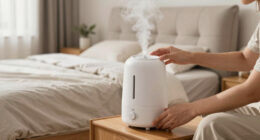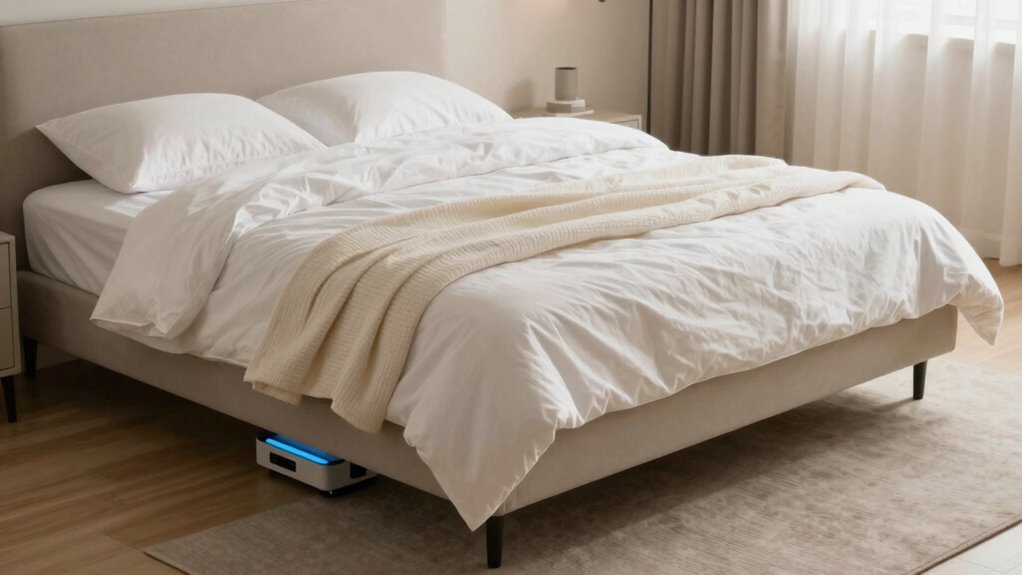

Bed cooling systems actively regulate temperature with cooled air or water, offering precise control and often being more effective in hot environments, but they can be costly and energy-consuming. Cooling bedding uses breathable fabrics like bamboo or linen to wick away moisture naturally, making it a low-cost, eco-friendly choice that’s easy to use. Your climate, budget, and preference for control or simplicity will guide your best option—keep exploring to discover more details.
Prime for Young Adults — start your free trial
Fast free delivery, streaming and member deals for eligible 18–24 year olds.
As an affiliate, we earn on qualifying purchases.
Key Takeaways
- Bed cooling systems actively regulate temperature using circulated cooled air or water, while cooling bedding passively wicks heat with breathable fabrics.
- Systems offer precise, adjustable temperature control, whereas cooling bedding relies on material properties for natural cooling.
- Bed cooling systems tend to be more expensive and require energy and maintenance, unlike low-cost, maintenance-free cooling bedding.
- Cooling bedding is eco-friendly, uses natural fabrics, and requires minimal upkeep, making it suitable for environmentally conscious users.
- Choose bed cooling systems for advanced control and high performance; cooling bedding for simplicity, affordability, and sustainability.
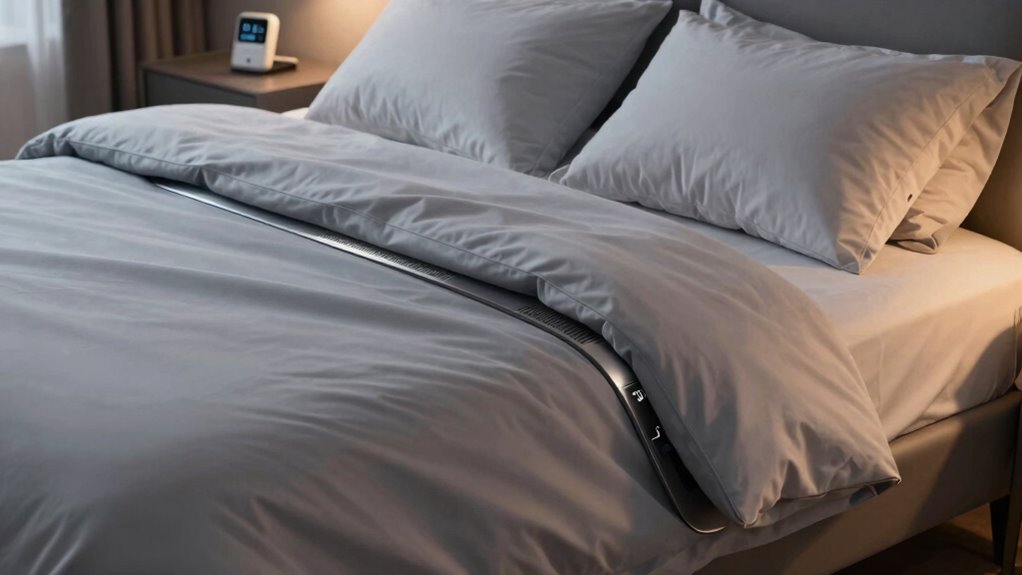
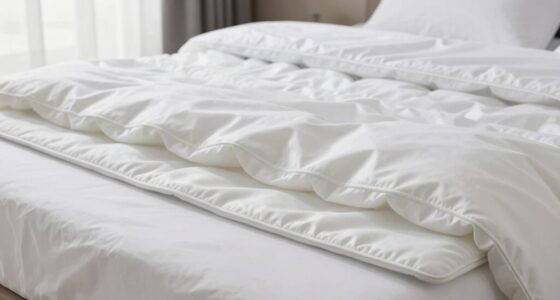
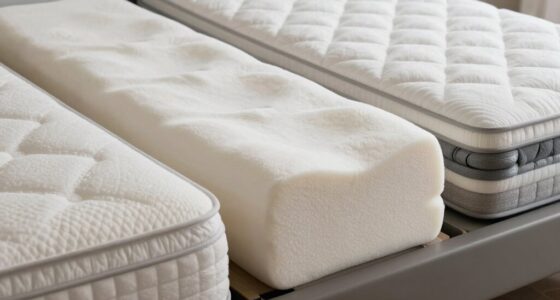
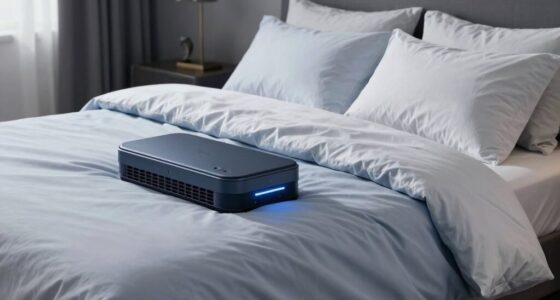
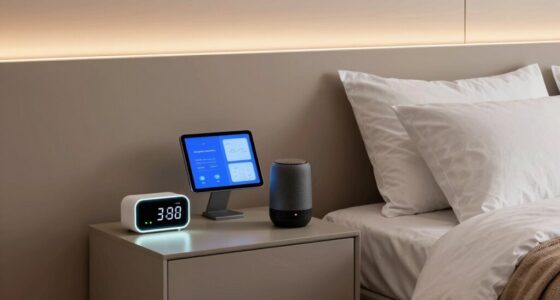
When it comes to staying cool at night, you have two main options: bed cooling systems and cooling bedding. Both are designed to help you beat the heat, but they work in different ways and offer distinct benefits. Your choice depends on your preferences, budget, and specific needs. Bed cooling systems, such as mattress pads or air-conditioned beds, actively regulate temperature by circulating cooled air or water beneath you. They’re often adjustable, allowing you to set your ideal temperature, which can significantly improve your sleep quality. When you sleep cooler, you tend to wake up less often and enjoy more restorative rest. Additionally, these systems tend to be energy-efficient, especially newer models that optimize power consumption, making them a practical choice if you’re mindful of your energy bills. Some models even incorporate smart technology, allowing for remote adjustments and personalized sleep environments. Cooling bedding, on the other hand, includes materials and fabrics designed to wick away heat and moisture, keeping you dry and comfortable throughout the night. Think of cooling sheets, pillowcases, and blankets made from breathable, moisture-wicking fabrics like bamboo, linen, or specially engineered cooling fibers. These options are generally less expensive upfront and easier to integrate into your existing bed setup. They don’t require electricity or maintenance beyond washing, making them a low-effort solution. While cooling bedding can help regulate surface temperature and improve sleep quality, it may not be as effective in extremely hot conditions or if you’re a particularly hot sleeper. Choosing the right option depends on your preferences, environment, and budget. Many people also consider the environmental impact of their cooling choices, especially if sustainability is a priority for you. Still, many find it a simple, effective way to stay comfortable without the noise or energy consumption associated with mechanical systems. Additionally, some cooling bedding products now incorporate advanced textiles that enhance moisture-wicking and temperature regulation. Incorporating temperature-sensitive fabrics can further enhance comfort by adapting to your body’s needs throughout the night. Choosing between the two often comes down to how much you prioritize convenience and control versus simplicity and cost. Bed cooling systems offer more precise temperature regulation and generally better sleep quality by directly controlling your environment. They’re especially helpful if you experience night sweats or live in a consistently hot climate. Conversely, cooling bedding is an excellent option if you want an easy, low-maintenance solution that enhances sleep comfort without significantly impacting your energy efficiency. It’s also a good choice if your budget is limited or if you prefer a more natural approach to cooling. Ultimately, both options aim to improve your sleep quality by reducing nighttime heat. If you want maximum control and are willing to invest in a more high-tech solution, a bed cooling system might be right for you. If you prefer simplicity, affordability, and eco-friendliness, cooling bedding can provide significant comfort. Either way, staying cool at night helps you wake up refreshed, energized, and ready to face the day.
bed cooling system with smart technology
As an affiliate, we earn on qualifying purchases.
As an affiliate, we earn on qualifying purchases.
Frequently Asked Questions
How Long Does It Take for Bed Cooling Systems to Cool a Room?
It typically takes about 15 to 30 minutes for bed cooling systems to substantially lower a room’s temperature, enhancing your sleep comfort. The time varies based on the system’s power, room size, and initial temperature. With effective temperature regulation, you’ll notice a cooler, more comfortable sleeping environment quickly, helping you fall asleep faster and enjoy better rest through the night.
Are Cooling Bedding Materials Suitable for All Sleep Positions?
Cooling bedding materials can suit most sleep postures, but their effectiveness depends on material compatibility with your sleep style. If you sleep on your side or stomach, look for breathable, moisture-wicking fabrics to prevent overheating. For back sleepers, softer, lightweight materials work well. Always choose bedding that aligns with your sleep posture to maximize comfort and cooling benefits, ensuring a restful night regardless of your preferred sleep position.
What Is the Maintenance Required for Bed Cooling Systems?
A stitch in time saves nine, so regular maintenance is key. You should check your bed cooling system’s filters and components weekly and follow the cleaning procedures outlined by the manufacturer. Maintenance frequency typically involves cleaning filters, inspecting hoses, and ensuring no leaks or blockages. By staying on top of these tasks, you’ll keep your system running efficiently and extend its lifespan, ensuring a cool, comfortable night’s sleep.
Can Cooling Bedding Be Used With Heated Mattresses?
Yes, cooling bedding can be used with heated mattresses, but compatibility varies. You should check if your cooling bedding is designed for use with heated mattresses, as some materials or systems might not work well together or could affect safety. To guarantee proper functionality and safety, look for cooling bedding specifically labeled as compatible with heated mattresses, and follow manufacturer guidelines carefully.
Which Option Is More Energy-Efficient for Long-Term Use?
Cooling bedding generally offers better energy savings for long-term use because it consumes less power compared to bed cooling systems. While cooling systems provide more precise temperature control, they often have higher energy costs and maintenance needs. For a cost comparison, cooling bedding is more economical, making it a smarter choice if you prioritize long-term savings and lower energy bills.
bamboo moisture-wicking cooling sheets
As an affiliate, we earn on qualifying purchases.
As an affiliate, we earn on qualifying purchases.
Conclusion
Choosing between bed cooling systems and cooling bedding is like picking the right tool for your comfort toolbox. Bed cooling systems offer high-tech relief, like a personal breeze at your fingertips, perfect if you crave instant, adjustable cooling. Cooling bedding, on the other hand, is more like a gentle ocean breeze—softer, natural, and cozy. Whichever you choose, think of it as your secret weapon against sleepless, sweaty nights—your comfort, your castle.
As an affiliate, we earn on qualifying purchases.
breathable linen cooling bedding
As an affiliate, we earn on qualifying purchases.
As an affiliate, we earn on qualifying purchases.
NFL season / tailgating Picks
team gear
As an affiliate, we earn on qualifying purchases.